You booked your first canvas tent and now the questions are piling up. What’s actually inside a bell tent glamping setup? Do you need to bring bedding, a stove, a torch? And which details should you check with the site before you arrive, so you’re not standing in a damp field at 9 p.m. wishing you’d asked about bathrooms?
This guide walks through the whole picture: what bell tent glamping actually is, when to go and what it typically costs, what to check before you book, and what to pack once you know what’s provided. We’ll also cover the comfort realities of canvas nights, who this style of stay suits best, and a short takeaway to tie it all together. Read it before you pay your deposit and you’ll know exactly what you’re getting into.
What Bell Tent Glamping Actually Is
A bell tent is exactly what it sounds like: a round canvas tent held up by a single central pole, with guy lines pulling the walls taut into that classic bell shape. Most are built on 3 to 5 meter (10 to 16 ft) diameter canvas frames, which gives far more usable floor space than the name “tent” suggests. They’re typically pitched on farms or campsites that specialize in glamping, so you arrive to a tent that’s already standing rather than wrestling with poles in a parking lot.
Inside, it’s not camping gear
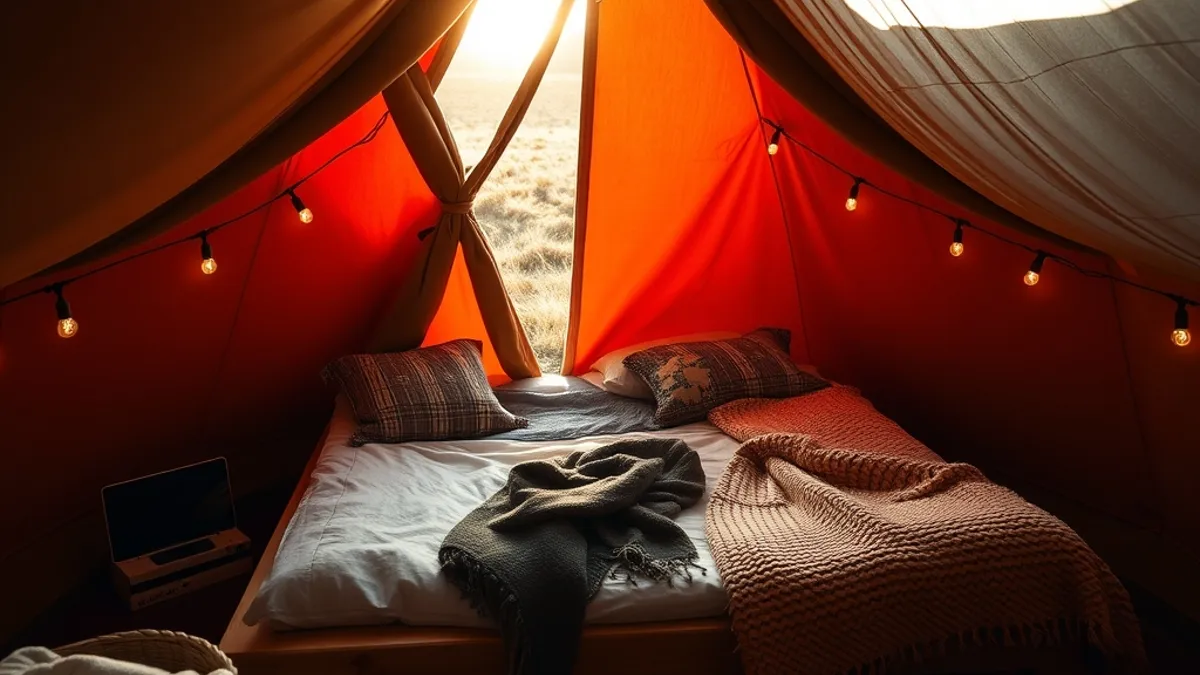
Step in and you’ll usually find real beds on frames or pallets, rugs underfoot, lanterns for light and often a wood stove for chilly evenings. Everything you’d normally haul in a car trunk is already set up and waiting. The canvas walls and central pole give the space a surprisingly roomy, almost yurt-like feel.
Most bell tents sleep 2 to 6 people, depending on bed configuration. That puts them in a genuine middle ground: more charm and space than a hotel room, far more comfort than a campsite pitch where you bring everything yourself. For many travelers, it’s the easiest first step into outdoor stays.
When to Go and What It Costs
Bell tent glamping in Europe is largely a warm-weather affair. The season generally runs May to September, when canvas nights are comfortable and sites keep their facilities fully open. If you want good weather without peak crowds, June and early September are the sweet spots: warm days, cooler evenings and fewer families around than in July and August.
What you’ll pay
In peak season, expect roughly $100 to $250 per night depending on location, tent size and facilities. Midweek stays are usually cheaper, and a small tent on a simple farm site will sit at the lower end of that range. Prices vary a lot by country and by how polished the setup is, so compare a few sites before committing.
Timing your booking
Summer weekends sell out first at the best-run sites, so book 2 to 3 months ahead if you have specific dates in mind. If your schedule is flexible, midweek or shoulder-season stays are much easier to arrange and often quieter too. For a sense of what a good farm-based site feels like, this review of a glamping farmstay in Bucine, Italy shows what’s on offer in Tuscany.
What to Check Before You Book
The photos on a booking page rarely tell the whole story, so it pays to ask a few specific questions before you pay your deposit. Sites vary enormously in what they provide, and two tents listed side by side can offer completely different levels of comfort. The answers you get will often make the difference between a cozy weekend and a cold, inconvenient one. Start with the practicalities below, then move on to the finer details of the pitch itself. Any site worth booking will answer clearly and without hesitation.
The questions that matter most
- Bathroom setup: shared bathroom blocks are common and en-suite setups are the upgrade. Confirm which one you’re getting, and ask how far you’ll walk to reach the showers, especially if you’re booking for a family with young children. Walking a long way to the toilets at midnight or in the rain changes the experience considerably.
- Cool-night provisions: ask whether the tent has heating or a wood stove, and whether firewood is included in the rate or sold on site. A hot water kettle is a small thing that matters enormously on a chilly morning, so check for one too.
- Pitch specifics: request the exact location of your tent rather than accepting “somewhere on the field”. Ask about afternoon shade, the distance to the bathroom block, and whether campfires are allowed only in designated fire pits.
- How the tent is pitched: a tent on grass with a zipped-in groundsheet stays warmer and keeps insects out better than an open-floor setup where canvas meets bare ground. Also ask about the slope of the pitch, since uneven ground under the bed is a common complaint.
Sites with strong reviews usually answer these questions happily and in detail, because they know a well-informed guest is a happy guest. A glamping stay like this one in Combe Martin, United Kingdom shows how much pitch location and thoughtful setup shape the experience. If a site is vague or evasive about bathrooms, heating or your exact pitch, treat that as useful information in itself and keep looking. There are usually plenty of alternatives in the same area, especially outside the busiest summer weekends.
What’s Inside and What to Pack
Step inside a bell tent and you will usually find the hard part of camping already done for you. Most sites provide proper beds on frames, made up with linens and extra blankets, plus some form of lighting, whether that is a lantern, fairy lights or a small solar lamp. It is a very different feeling from unrolling a sleeping bag on the ground.
That said, do not assume everything is covered. Towels are often left out of the package, and spare blankets are not always provided either. Some sites stock them for a small fee or on request, so it pays to ask when you book. A good example of what a well-equipped tent can look like is described in this review of a glamping site in Castel Volturno, Italy, which shows how much the details vary from one operator to the next.
Before you pack, run through a few items that make canvas life noticeably easier:
- Slippers or sandals: you will take shoes off at the door, and grass or canvas floors get cold underfoot after dark.
- A torch or headlamp: lighting inside the tent rarely reaches the bathroom block or the path back from the campfire.
- Warm layers: canvas cools quickly once the sun drops, so a fleece and socks make evenings comfortable.
- A power bank: outlets may only be available in the bathroom block, so charge phones and cameras on your own terms.
Finally, think about food storage. If the tent has no fridge, a soft cooler bag with ice packs solves breakfast and cold drinks. And before planning elaborate meals, confirm what kitchen access you actually have, because some sites offer a full shared kitchen while others provide little more than a kettle.
Weather, Comfort and Common Surprises
Canvas is a surprisingly clever material. Unlike a sealed cabin, it breathes, which keeps the inside noticeably cooler on hot afternoons. That same breathability has a flip side: on humid or rainy days the fabric can feel damp to the touch, and on cool nights you may wake to condensation on the walls. This is normal, not a sign of a bad tent, so avoid leaning bags or clothes directly against the canvas.
Sound travels further than you expect
A tent has no real sound insulation, so you will hear your neighbors’ conversation, birds starting up at dawn and wind moving through the trees. Most people find this charming for the first night and less charming at five in the morning. Earplugs are the single best thing you can toss in your bag, and light sleepers may want them plus a sleep mask for the early summer sunrise.
Ground and bugs are part of the deal
Even a well-pitched tent sits on grass, and grass is rarely flat. Expect slight unevenness underfoot and under the bed, so a small mat by the bed helps in the dark. Insects come with the territory too, especially near water or in long grass. When booking, it is worth asking whether the site sprays for mosquitoes or provides nets over the beds, since practices vary a lot between sites.
None of these surprises are dealbreakers, but knowing about them in advance turns minor annoyances into things you simply planned around.
Who Bell Tent Glamping Suits Best
Bell tent glamping occupies a sweet spot, and that means it does not suit everyone equally. The people who get the most out of it tend to fall into a few clear groups, and knowing whether you fit one of them saves you from booking the wrong kind of stay.
Couples often use a bell tent as a first taste of outdoor sleeping without giving up a real bed. You get the smell of grass in the morning, a campfire after dark and stars overhead, then a mattress at the end of it. If you have never camped before, this is a low-risk way to find out whether you like it.
Families with young kids also do well here. Children tend to love the novelty of sleeping in a round canvas tent, and parents like that nobody has to carry, pitch or pack away actual camping gear. The usual list looks like this:
- Couples testing the waters: a tent that sleeps two gives privacy, and many sites position couple tents slightly apart from family areas for a quieter night.
- Families with small children: kids can run between the tent and the fire pit within sight, and the low door threshold means little ones can get in and out on their own.
- Scenery-first travelers: if you accept shared bathroom blocks, you often get better views, larger pitches and campfire evenings that a hotel could never offer.
The common thread is a willingness to trade some convenience, especially around facilities, for atmosphere and location. If shared showers or a night of wind noise sound unbearable, a cabin or hotel is the better match. If they sound like part of the adventure, a bell tent will likely be exactly your kind of stay.
The Takeaway
Bell tent glamping takes the guesswork out of first-time canvas camping: you get a real bed, lanterns and rugs under round canvas, typically from May to September at roughly $100 to $250 a night. The difference between a great stay and a disappointing one usually comes down to what you confirm before booking, especially bathrooms, heating and the exact pitch location.
Pack warm layers, a torch and earplugs, and the quirks of canvas life stay charming rather than soggy. If you have stayed in a bell tent before, or you are planning your first trip, leave a comment or share this article with someone who needs it.