Picture this: you book what looks like the perfect lodge for a honeymoon, arrive exhausted after a long drive, and find yourself seated next to a table of toddlers at dinner, listening to footsteps through thin walls all night. It happens more often than couples expect. Many lodges market themselves as romantic but are really built around families, group tours and busy lobbies, leaving little privacy or atmosphere for two.
The good news is that a few smart checks before booking can save your escape. In this guide, we cover what actually makes a lodge right for couples, how to compare mountain, lake and forest settings, and how to verify privacy and room quality before you pay. We also look at dining and on-site experiences for two, the best timing for your trip, and what a romantic lodge stay really costs, so you can choose with confidence instead of crossing your fingers.
What Makes a Lodge Right for a Honeymoon or Couples Escape
The single biggest clue that a lodge will feel romantic is its size. A property with 30 rooms or fewer simply cannot get crowded the way a resort can, and that changes everything about the atmosphere. You will not fight for a seat by the fire, wait long at breakfast, or hear a stream of doors slamming down the hall. Staff also tend to learn your names by the second day, which makes the whole stay feel more personal.
Room count matters even more if you are hoping for a quiet escape rather than a busy honeymoon party scene. At a small lodge, you might share the common areas with a handful of other couples rather than dozens of families and groups.
Adults-Only and Child-Free Policies
If the sound of children at the pool would break the mood, look for lodges that market themselves as adults-only or child-free. These policies are most common in boutique lodges, and they remove the noise and pool-crowd issues that can otherwise dominate a property. You are not guaranteed silence anywhere, but an adults-only policy is one of the strongest filters you can apply when comparing options.
Room Features Worth Paying For
The right in-room features can turn an ordinary night into the highlight of the trip. When browsing room descriptions, look for:
- A fireplace – ideal for cooler evenings and instant atmosphere
- A private terrace or balcony – your own space for morning coffee
- A soaking tub – especially welcome after a day of hiking or travel
- A separate sitting area – so you are not sitting on the bed all evening
None of these are essential on paper, but together they decide whether your room is just a place to sleep or somewhere you actually want to linger. If a suite at a small, quiet lodge includes two or three of these features, it is usually worth the upgrade over a standard room.
Choosing the Setting: Mountains, Lakes and Forests
The setting you pick shapes every day of your trip, so start by thinking about how you two actually like to spend time together. A mountain lodge is the natural pick for active couples. If your idea of romance is lacing up boots at breakfast and hiking straight from the front door, look for lodges that sit at trailheads or inside parks, where you can earn your evening fire and dinner with a full day outdoors.
Lakefront lodges trade sweat for stillness. Water reflects and doubles the color of the sky, which is why the best sunsets you will ever photograph on a trip tend to happen over a lake. Mornings here are slow by design: coffee on the deck, canoes or kayaks after breakfast, and dinner timed to the last light on the water. If your partner’s must-have list includes a view worth staring at for an hour, a lake setting delivers it more reliably than any other.
Forest and national park lodges offer the deepest sense of seclusion, and for many couples that quiet is the whole point. The trade-off is distance. Some park lodges sit far from any town, which is wonderful at night and less wonderful when you realize the nearest restaurant or activity is a long drive away. For a classic example of a lodge built right into a dramatic national park setting, our Crater Lake Lodge review shows how stunning a park location can be when the logistics work.
- Ask about trail access before booking: some mountain lodges connect directly to marked hiking paths, while others require a short drive to the nearest trailhead, which changes how spontaneous your days can be.
- On lakes, room orientation matters more than anywhere else: request a west-facing room if sunsets are the priority, since east-facing lake rooms catch sunrise instead.
- In forest settings, check whether the lodge offers guided walks, wildlife viewing or evening programs, because these can fill your days when the nearest town is too far for a casual outing.
- Consider altitude if you are heading to the mountains: higher-elevation lodges can mean cooler evenings and thinner air, which matters if either of you is coming from sea level.
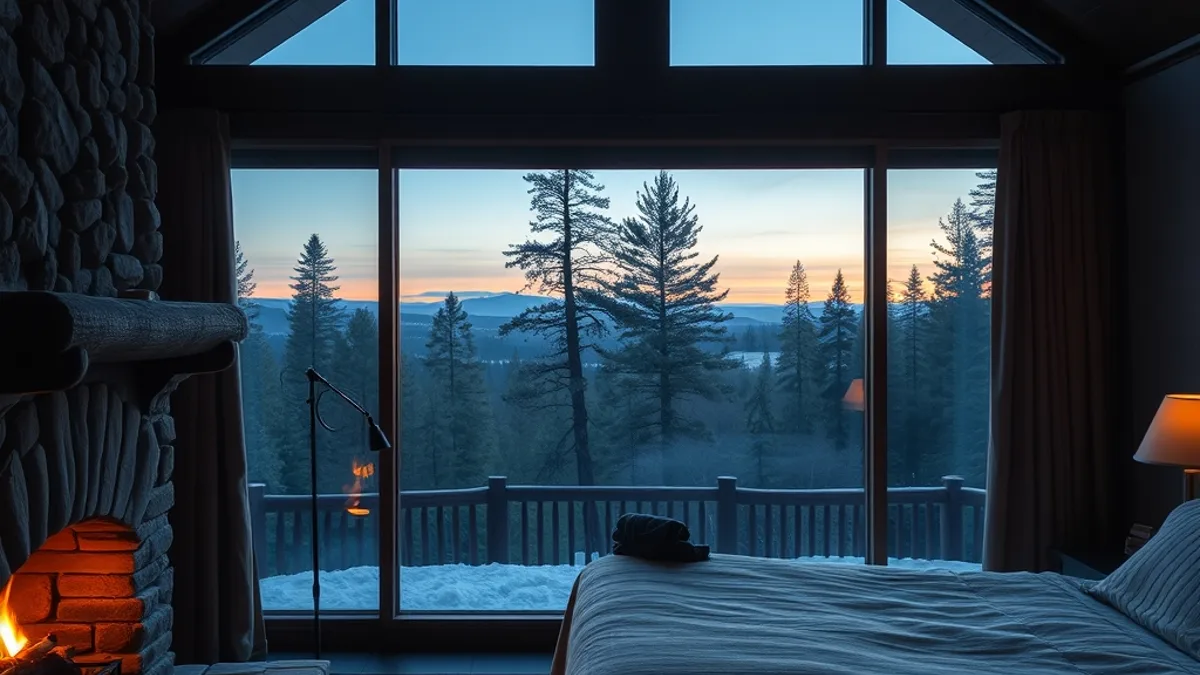
How to Check Privacy and Room Quality Before Booking
Photos and reviews can tell you more about privacy than any brochure. Before you commit to a suite for your honeymoon or couples escape, spend an evening doing a little detective work. A room can look gorgeous in wide-angle shots yet sit ten feet from a parking lot, so it pays to check the details before you hand over a deposit that could cover several nights of a $250-600 per night stay.
- Study the room photos closely. Zoom in on balcony shots and look for dividing walls, neighboring chairs, or railings that connect to the next room. Check where windows face in exterior photos of the building. A “private terrace” that shares an open balcony with the adjoining suite, or windows overlooking the parking area, will change the feel of your stay considerably.
- Email the lodge directly. Ask a specific question: which room category is the quietest and most private, and which ones back onto service areas, roads, or common terraces? A lodge that answers promptly and honestly is usually a lodge that cares about couples. Mention that you are booking a honeymoon or anniversary trip; many properties will note it and place you accordingly.
- Read recent reviews with filters. Search reviews for words like “romantic,” “quiet,” and “honeymoon,” then read the low-scoring ones too. Complaints about thin walls, group noise, or construction nearby are red flags that photos will never show. Reviews written in the last few months are the most reliable, since room assignments and management can change.
Doing this homework takes under an hour, and it is the difference between hoping for romance and actually getting it. For an example of a lodge that handles privacy well, our review of a mountain lodge in Renon, Italy shows what to look for in practice. Once you have confirmed the room itself, you can book with confidence and start planning the fun parts of the trip.
Dining and On-Site Experiences for Two
When you stay at a remote lodge, the on-site restaurant usually becomes your dinner spot every night of your trip. If the nearest town is 30 or more minutes away on dark country roads, a mediocre kitchen can seriously dent the romance, and there is no easy plan B. Before booking, read recent reviews with the food specifically in mind, and check whether the menu changes regularly or leans on local and seasonal ingredients. A lodge that treats dining as part of the experience, rather than an afterthought, will make your evenings memorable instead of something you merely tolerate. If the website shows sample menus, look at them together and see whether there are enough options you would both genuinely order.
It is also worth looking beyond the dining room itself. The best couples-focused lodges build in experiences designed for two, and these often cost less than arranging something similar on your own in a town you do not know. Ask what is available on-site before you book, so you are not left improvising once you arrive, and confirm how far in advance any private experiences need to be reserved.
- Spa treatments: many lodges offer couples massages in a shared treatment room or even in your suite, which saves you the logistics of traveling to a separate spa.
- Private dinners: some properties arrange candlelit meals on your terrace or in a separate dining nook, a step up from a crowded restaurant table.
- Firepit or hot tub access: check whether these are shared with all guests or reservable privately, since a shared hot tub feels very different from your own.
- Breakfast inclusion: remote lodges often have no morning alternatives within easy reach, so confirm whether breakfast is part of the rate or an added cost.
When to Go: Season and Timing
Timing shapes almost everything about a lodge stay, from what you pay to how much of the property you actually share with other guests. In peak season, which runs June through September, you get the most reliable weather: warm days, long evenings and full access to trails, water and on-site activities. The trade-off is that you will pay the highest rates of the year and compete with other couples for terrace seats, hot tubs and dinner reservations. If privacy is your priority, peak season can feel less intimate than the photos suggest.
The shoulder season advantage
May and October are the sweet spot for most couples escapes. Rates typically drop by 20-40% compared with peak dates, the lodge is noticeably quieter, and staff have more time to personalize your stay. The weather is usually still pleasant, though you should pack layers and confirm which activities and facilities operate in the off-months, since some lodges scale back services outside the main season.
Booking ahead and staying long enough
For a summer honeymoon, book 6-9 months ahead. The most romantic room categories, especially those with private terraces or the best views, tend to go first, and waiting often means settling for whatever is left. Also plan a minimum stay of 3-4 nights. Many remote lodges involve a long drive or a connecting flight, and a two-night trip leaves you barely settled before you turn around. A longer stay gives you at least one unhurried day with no plans at all, which is often the moment couples remember most.
Budgeting: What a Romantic Lodge Stay Really Costs
A genuine couples-oriented lodge suite typically runs $250-600 per night, and knowing what that money buys helps you compare options fairly. At the lower end you should expect a well-appointed room with a private terrace or fireplace, comfortable bedding and enough space for two people to spread out without tripping over each other. At the top of the range you are looking at standalone suites with soaking tubs, separate sitting areas and the kind of views that justify the splurge. If a lodge advertises rates far below that band while promising romance, scrutinize what you actually get, because the room category itself often makes the difference between a memorable stay and an ordinary one.
The nightly rate is only the starting point, though. Remote lodges rarely offer cheap alternatives, so on-site spending adds up faster than it would in a town with options. Build your budget around the total cost of the stay, not just the room, and factor in extras like drinks, activities and tips for staff.
- Spa and private dinners: couples treatments and arranged private meals can add roughly $100-300 per day, so decide in advance which extras matter and which you can skip.
- Drinks and extras: wine with dinner, cocktails by the firepit and small purchases at the lodge shop are convenient but priced accordingly; check whether your room includes a fridge or complimentary items.
- Gratuities and fees: some lodges add service charges or resort fees to the bill, so ask for the full picture when you request a quote.
- Shoulder-season upgrades: traveling in May or October is the easiest way to afford a top room category within the same overall budget, since the rate drop often more than offsets the cost of a better suite.
Wrapping Up Your Lodge Choice
The difference between a magical lodge stay and a disappointing one usually comes down to three things: small size, privacy and on-site dining. A lodge with 30 rooms or fewer, quiet room categories and a good restaurant will deliver the romantic escape you pictured, while a large family-focused property often leaves couples dealing with thin walls, crowded pools and no atmosphere at all.
Once those basics are covered, match the setting to how you both want to spend your days, whether that means hiking from the door, watching sunsets over a lake or simply doing nothing in the forest. Then time your trip in shoulder season and book early to lock in the best room at a friendlier rate. If this helped you plan your escape, leave a comment or share the article with another couple.