Torn between Istria’s rolling vineyards and the Dalmatian Coast’s island-hopping turquoise bays, villa seekers need a clear way to choose. Both promise stone houses, private pools and warm Adriatic water, yet the two regions deliver completely different holidays. Croatian villa holidays work best when the destination matches your travel style, not the other way around.
This guide breaks the decision down step by step. We compare the core character of each region, explain when to book for the best value, and then look closely at what a villa stay feels like in Istria and on the Dalmatian Coast. From there, we cover how to compare individual properties, how to get around once you arrive, and finally which region deserves your booking.
Istria vs Dalmatian Coast: The Core Difference
Istria, the heart-shaped peninsula in Croatia’s northwest, feels more Central European than Mediterranean. Inland, you’ll find hilltop villages like Motovun, famous for its truffles, surrounded by vineyards and olive groves. The shoreline is gentler and greener too, with low limestone coves rather than sheer cliffs, and the whole region carries a faint whiff of Italy just across the border.
The Dalmatian Coast, stretching from around Split down to Dubrovnik, is the classic Adriatic of postcards. Dramatic limestone islands rise from deep blue water, pebble beaches line the shore, and hubs like Split, Hvar and Dubrovnik buzz with restaurants, bars and day-trippers well into the evening. This is the Croatia of island-hopping, swimming off rocks and long seafood dinners by the harbor.
Matching the region to your travel style
Choose Istria if food, wine and slower rural luxury are the point of the trip. Mornings at the farmers market, an afternoon wine tasting and a long dinner in a konoba fit the rhythm here. Choose Dalmatia if you want island-hopping, daily swims and lively nights, with ferries and catamarans linking one island to the next.
Both regions offer beautiful stone-built villas with private pools, so the property itself rarely decides the question. What differs sharply is the setting around the villa: Istria’s villas sit among vineyards and hill towns, while Dalmatian villas perch above turquoise bays or cling to clifftops. Decide what you want to see when you step outside, then start comparing properties.
When to Book Croatian Villa Holidays for the Best Value
Timing shapes both the price and the experience of a Croatian villa holiday. Peak season runs from late June to early September, and July and August bring the highest prices and the biggest crowds. Sea temperatures peak around 24-26°C in August, which is exactly why demand, and rates, climb so steeply then.
The shoulder months are the smart traveler’s secret. May, June, September and October still deliver warm seas of roughly 20-26°C, while rates typically run 20-40% below August peaks. You trade a little heat for quieter beaches, easier restaurant bookings and more attentive hosts.
Booking windows differ by season. Reserve peak-season seafront villas 6-9 months ahead, because the best ones go first. Shoulder-season stays need only 2-4 months of lead time, which gives you flexibility if you’re planning on short notice.
Weekly budgets span roughly €1,000 for a simple two-bedroom villa to €5,000+ for a luxury seafront property in August. A few things move you along that scale:
- Seafront position: villas with direct beach or mooring access sit at the top of the price range, especially in August.
- Bedrooms and group size: larger groups often get better per-person value from a four or five-bedroom villa than from booking several smaller ones.
- Pool and extras: heated pools, saunas and full air conditioning push a property into a higher bracket, so only pay for them if you’ll actually use them.
- Season within the season: the first week of September can cost noticeably less than mid-August while still offering excellent swimming.
Check current rates directly with owners or booking platforms, as prices shift year to year and week to week.
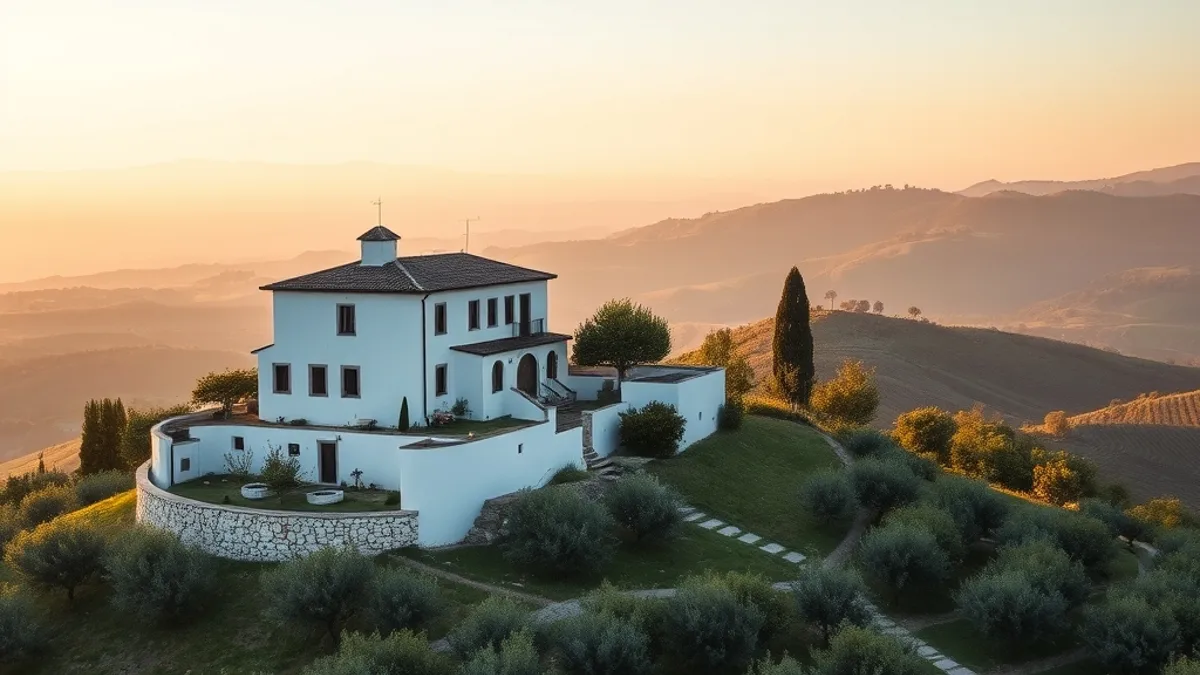
Villa Holidays in Istria: Hilltops, Truffles and Sunsets
Istria rewards travelers who want their villa holiday wrapped in countryside and coastline at once. The peninsula’s west-facing shore gives some of the best sunset views on the Adriatic, and the water is calm and swimmable. Base near Rovinj or Poreč for that sunset coastline and easy access to pebble coves, where you can swim in the morning and be back at your pool by lunch.
Inland: truffles and hill towns
Inland stays around Motovun and Grožnjan pair pool villas with truffle and wine country. Mornings might mean coffee on a terrace overlooking misty valleys, afternoons a drive to a hilltop village and evenings a truffle-rich dinner at a local konoba. The pace is slower than the coast, and many travelers find it the most restorative part of a Croatian trip.
Why Istria suits drivers
Istria works beautifully as a road trip region. It sits roughly 2-3 hours by car from Zagreb, and the distances between hill towns are short, so day trips to Motovun, Grožnjan and the wine villages stack up easily without long drives. A car is essentially essential here; public transport between inland villages is thin.
For the region’s signature stay, look for restored stone farmhouses with agritourism neighbors. These properties combine rustic character, thick stone walls that keep interiors cool, and the chance to buy olive oil, wine or cheese from the people next door. It’s a style of villa holiday Dalmatia can’t easily replicate, and it’s the reason many visitors return to Istria year after year.
Villa Holidays on the Dalmatian Coast: Islands and Turquoise Bays
The Dalmatian Coast is what most people picture when they dream of a Croatian villa holiday: limestone islands, turquoise bays and pebble beaches lapped by impossibly clear water. The villa scene here is built around the islands and the dramatic mainland stretches near Dubrovnik, and each base has a distinct personality.
Split works brilliantly as a mainland hub. Car ferries and catamarans from Split and nearby ports reach Hvar, Brač and Korčula in roughly 1-2 hours, so you can land at the airport, stock up at a market and be at your island villa the same day. It also means you can keep a rental car for mainland day trips while hopping across for island weeks.
For a taste of the most refined end of the island scene, it is hard to beat Hvar. The island attracts a polished crowd, and properties range from stone houses near the old town to modern villas perched above lavender fields. If you want a detailed look at what a high-end Hvar stay actually feels like day to day, this review of a luxury villa in Hvar gives a useful, honest picture.
Brač is the family favorite, largely thanks to Zlatni Rat near Bol, a striking pebble spit that shifts shape with the currents. Dubrovnik-area villas trade some convenience for drama: many sit on clifftops with sweeping sea views, and you get quick access to the old town for evenings out.
- If boat days are the heart of your trip, look for villas with a private mooring or a short walk to a harbor where you can charter a skippered boat for the week.
- Beach-proximity villas near Bol on Brač or along Hvar’s south coast save you daily drives down winding island roads to swim.
- Villas on Korčula tend to be quieter and better value than Hvar equivalents, with a similar island landscape and fewer crowds in the evenings.
- Ask whether your island villa offers grocery delivery or pre-arrival stocking; small island shops can have limited hours and thin selections outside summer.
How to Compare Villas Between the Two Regions
Villa listings can make two very different properties look identical on a booking site, so it pays to dig into the details before you commit. The most common surprise is the “sea view”: some villas have a full-frontal panorama from the terrace and pool, while others offer a sliver of blue between rooftops or through trees. Dalmatian clifftop villas often justify their premium with genuinely sweeping views, so if the view is a big part of why you are paying more, ask the owner or agency for recent photos taken from the terrace rather than the listing’s hero shot.
In Istria, the season question matters more than the view. Evenings in May and October can cool to 12-15°C, which turns an unheated pool from a daily pleasure into a quick dip. If swimming is central to your stay in those months, verify that the pool is heated and whether heating costs extra. In July and August, the priority flips: inland Istria can hit 30°C or more, so air conditioning throughout the villa, including bedrooms, is essential rather than a nice-to-have.
Access is the detail travelers most often overlook. Istrian hill villages were built for donkeys, not cars, and island driveways can be steep, narrow or shared. A villa that looks perfect online can mean tense arrivals and awkward parking if you arrive with a large car and heavy luggage.
- Ask for the exact distance to the nearest swimming spot and whether it is a pebble cove, a rocky platform or a sandy patch, since Dalmatian beaches are rarely sandy.
- Check the number of dedicated parking spaces and whether the last stretch of road is paved; some island properties end at a rough track.
- Confirm whether the pool is private or shared, and whether it is fenced if you are traveling with small children.
- Ask about outdoor living space: shaded terraces, a summer kitchen or a built-in barbecue can matter more than an extra bedroom in summer.
Getting There and Getting Around
Getting to your villa is straightforward once you match the airport to the region. Fly into Pula for Istria, or into Split and Dubrovrik for the Dalmatian Coast — Split and Dubrovnik anchor that stretch of shoreline, so either works depending on whether you are heading for the islands or the southern clifftops. Zagreb can also serve Istria, but it makes sense mainly if you find a better flight or fare there; otherwise the coastal airport is the easier choice.
Getting around in Istria
Istria is a driving region. A rental car is the practical way to reach hilltop towns, wineries and inland truffle restaurants, and roads are generally good with short distances between sights. Base yourself with parking in mind, especially in the older stone villages where streets are narrow and driveways can be tight for larger vehicles.
Getting around on the Dalmatian Coast
Dalmatia rewards a mixed approach: keep a car for mainland stretches and Dubrovnik-area stays, then use car ferries and catamarans for the islands. Car ferries and catamarans connect Split and Split-area ports to Hvar, Brač and Korčula in roughly 1-2 hours, which makes island villa stays far more accessible than they might sound. If your villa is on Hvar or Korčula, plan around ferry timetables, especially outside the summer months when sailings are less frequent. Check schedules before booking and again before travel, and build buffer time into your arrival and departure days rather than booking a villa handover right after a ferry lands.
If you want to combine both regions in one trip, allow roughly half a day of transfer time between them. It is a scenic journey, but it eats into a week quickly, so it works best with ten days or more. Otherwise, pick one region and explore it properly; both reward depth over speed. And whichever you choose, book your car at the same time as your villa in peak season — rental availability tightens along the coast in July and August, and last-minute rates climb quickly.
Which Croatian Villa Region Should You Choose?
So, which region wins? If your ideal villa holiday centers on food, wine and slow countryside mornings, Istria is the stronger pick. Its food-led, countryside villa stays come with sunset coastline and a lower-key pace, all within easy reach of hill towns and truffle country. If you picture yourself swimming off a boat, hopping between islands and soaking up classic Adriatic drama, the Dalmatian Coast is your answer.
Timing matters as much as geography. Shoulder season softens prices and crowds in both regions by 20-40% versus August, and the sea stays comfortable for swimming from June to September. Whichever way you lean, match the region to your travel style first, then book 6-9 months out for peak-season seafront villas. Torn between the two? Tell us which side you’d choose in the comments, or share this article with a fellow villa hunter.