Cyprus has three very different resort towns, and choosing the wrong one can quietly ruin an otherwise well-planned island holiday. A couple dreaming of quiet evenings and ancient ruins will feel out of place in a town built around beach bars, while a group of friends after sand and nightlife may find themselves bored in a harbor village. This Cyprus resort guide breaks down Paphos, Limassol and Ayia Napa so you can match the town to your travel style before you book anything.
We start with a quick comparison of how the three differ at a glance, then look at each town in detail: Paphos for history and a slower pace, Limassol for city energy by the sea, and Ayia Napa for beaches and nightlife. You’ll also find practical advice on when to book and what you’ll pay, a simple decision framework for choosing between them, and a bottom-line summary to make the final call easy.
How the Three Resort Towns Differ at a Glance
On paper, all three towns offer sun, sea and resorts. In practice, they attract very different travelers, and the atmosphere shifts noticeably the moment you arrive. Paphos sits on the southwest coast and feels like a town built around its heritage, with a working harbor, archaeological sites within walking distance of the center, and low-rise resort development rather than high-rise blocks. It’s the kind of place where the evening entertainment is a long taverna dinner, not a foam party.
Limassol, roughly an hour’s drive east along the coast, is the biggest and most cosmopolitan of the three. It has the feel of a proper city that happens to sit on the sea: a long promenade, a marina, a busy old town and the polish that comes with a strong business-travel crowd. Ayia Napa, in the southeast, is the classic beach resort, famous for Nissi Beach, shallow turquoise water and a compact nightlife core that keeps the town humming in summer.
- Paphos: home to remarkable mosaics and archaeological parks close to the harbor, so you can sightsee in the morning and be back at your hotel pool by lunchtime.
- Limassol: the marina district pairs waterfront dining with designer and high-street shopping, giving it a more urban, year-round rhythm than the other two.
- Ayia Napa: the shallow, gently shelving water at Nissi Beach makes it especially forgiving for casual swimmers and families with children.
The quick framing: Paphos suits culture and calm, Limassol suits city-plus-sea, and Ayia Napa suits pure beach holidays. Everything else in this guide flows from that basic split.
Paphos: Best for History and a Slower Pace
Paphos rewards travelers who like their beach holiday with a generous side of history. The town is built around a picturesque harbor, and the archaeological park with its famous Roman mosaics sits close by. Location matters here: base yourself near the harbor or out at Coral Bay, which puts you about 15-20 minutes from the archaeological park, so you can fit site visits around swims and meals without any rushed logistics.
Evenings built for long dinners
Expect a quieter evening scene than in Limassol or Ayia Napa. The rhythm here is tavernas rather than clubs: tables spilling onto pavements, fresh fish and meze, and conversations that stretch past midnight because nobody is in a hurry. If your ideal night involves dancing until dawn, Paphos will feel sleepy; if it involves wine, grilled halloumi and a slow walk back to the hotel, it’s close to perfect.
Where to swim
Beach quality varies more in Paphos than in the other towns. Coral Bay’s sandy crescent is the most swimmer-friendly stretch, with soft sand and easy water entry, and it’s the headline beach of the town. The beaches closer to the harbor and town center are rockier, so pack water shoes or plan your swimming days around Coral Bay. Many travelers simply split the difference: a hotel near town for sightseeing, with regular trips out to Coral Bay.
Paphos works especially well for couples and older travelers who want walks, ruins and long dinners. It’s also a comfortable base for exploring the wine villages inland, which adds another dimension to days when you’ve had enough of the pool.
Limassol: Best for City Energy by the Sea
Limassol is the pick for travelers who want a city with their sea. The town’s great asset is its 15 km promenade, which links the marina, the old town and the beachfront resorts into one walkable line. That means you can step out of your hotel and walk to dinner, shops and evening drinks without ever getting in a car, which changes the feel of a holiday compared with resort towns where everything requires a taxi.
Know what the beaches are like
Be honest with yourself about the sand here. Limassol’s beaches are darker sand and pebblier than Ayia Napa’s, and they can’t compete on swimming conditions alone. The smart move is to choose a resort with good pool and sea-deck facilities, so the beach becomes a pleasant walk rather than the main event. Treat the seafront as your daily stroll and the hotel pool as your swimming spot, and Limassol delivers beautifully.
The best base for day trips
Limassol’s central position on the south coast makes it the best pick if you want to explore. It’s roughly a 1-hour drive to Paphos, and under an hour to the Troodos foothills, where mountain villages and wineries make an easy change of scene. No other resort town gives you this range of day trips from a single base.
Above all, Limassol suits travelers who find pure beach towns too quiet after three days. If you want restaurants, shopping, a marina atmosphere and the option to sightsee inland, this is the town that keeps your evenings and your itinerary equally full.
Ayia Napa: Best for Beaches and Nightlife
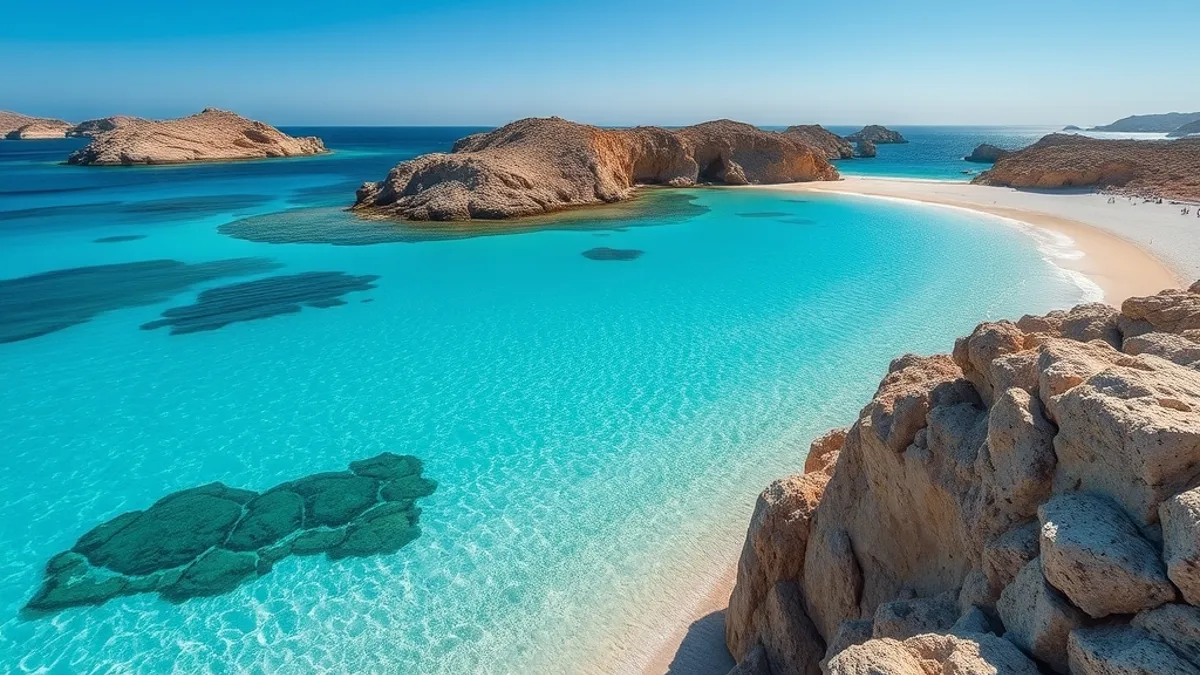
Ayia Napa is where you come to Cyprus for the beach itself. Nissi Beach and the small coves around it have the whitest sand on the island, and the water here is shallow and calm for long stretches, so you can wade out a good distance before it gets deep. If swimming and sand time are the main point of your trip, this is the strongest case of the three towns.
The trade-off is noise. In July and August the town center stays loud until late, with bars and clubs running at full volume through the peak weeks. If you want to sleep before two in the morning, look at accommodation on the outskirts rather than in the middle of town.
That said, Ayia Napa is not only for party crowds. There are family-friendly zones east of the center with quieter hotels and easier beach access. Before you book, check the actual walking distance to the club strip on a map, because “near the center” can mean anything from a two-minute stroll to a 20-minute uphill walk.
For groups of friends and anyone planning a beach-first holiday in peak season, this town usually offers the best value of the three, with plenty of mid-range rooms competing for the same dates.
- Ask for a room facing away from the strip. Even hotels a few streets back can pick up bass from late-night venues, so a rear-facing or pool-facing room makes a real difference in summer.
- Look at the coves beyond Nissi. Smaller bays nearby often have the same pale sand and shallow entry with fewer people, especially earlier in the morning.
- Water sports concentrate here. Nissi’s calm shallows make it the go-to spot for pedal boats, parasailing and similar activities, so expect more equipment and people on the sand.
- Outskirts means a short drive or bus ride at night. If you stay outside the center for quiet, factor in how you’ll get back after evenings out rather than assuming a quick walk.
When to Book and What You’ll Pay
Timing your booking matters more in Cyprus than in many Mediterranean resorts, because high-season rates climb steeply in a short window. To avoid the steepest prices for July and August stays, aim to book 3-6 months ahead. This usually secures the best high-season resort rates in all three towns, and it also gives you a real choice of rooms rather than whatever is left.
The price spread between seasons is wide. Mid-range resort rooms typically cost around €100-180 per night in the shoulder months of May, June, September and October, versus roughly €180-350 in high season. That difference alone can pay for several extra nights or a nicer room category.
Why the shoulder months work so well
The sea around Cyprus is warm enough for swimming from roughly late April to late October, so the shoulder months lose very little except peak heat and crowds. Water temperatures peak around 27°C in August, but even in May and October the sea is comfortably swimmable for most travelers. High season is July and August, when resort rates often run 40-60% above shoulder-season prices.
August is the busiest and priciest month island-wide, so if your dates are flexible, shift either side of it. September is the sweet spot for sea temperature versus price: the water has had all summer to warm up, the crowds thin out, and rates drop back toward shoulder-season levels. If you want the best combination of warm swimming and value, start there.
Choosing Between Them: A Quick Decision Framework
Once you know what each town does best, the decision usually makes itself. The mistake most travelers make is picking a resort first and a town second, then discovering the pace isn’t right for them. Start by asking yourself what a perfect day actually looks like: a morning at an archaeological site, a long seafront stroll with stops for coffee and shopping, or hours of swimming followed by a lively evening? Your answer points straight to the right base, and choosing the specific hotel afterward becomes far simpler.
It also helps to be realistic about geography. The three towns sit far enough apart that hopping between them daily is not practical, so treat this as a genuine either-or choice for your base rather than a list of day-trip options from a single hotel. A “quick look” at another town consumes most of a day once you factor in the drive each way.
A few quick signposts can settle it. If your perfect day involves ruins, hillside wine villages and quiet taverna dinners, Paphos is the natural fit, and the surrounding countryside adds variety beyond the beach. If you want restaurants, shopping and a walkable seafront, Limassol delivers, and its position also makes it the strongest hub for day trips, with both the Paphos direction and the Troodos foothills within roughly an hour’s reach. If the best sand and calmest swimming top your list, Ayia Napa wins — just decide your noise tolerance before booking, because the difference between a central and an outskirt hotel shapes the whole stay.
The Bottom Line on Cyprus Resorts
So which Cyprus resort town is right for you? Match the town to your travel style first, then pick the specific resort within it. Paphos delivers history and calm, Limassol brings city energy by the sea, and Ayia Napa offers the island’s best beaches. Get that first decision right and almost everything else falls into place.
Timing helps too. A shoulder-season trip in May, June, September or October cuts rates by 40-60% compared with high season, with barely any trade-off in water temperature. Wherever you land, the right town at the right time turns a good holiday into a great one. If this guide helped you choose, leave a comment or share it with a fellow traveler.