Eco glamping promises the best of both worlds: close contact with nature and a stay that leaves it intact. The trouble is that plenty of operators use the green label as marketing rather than practice. A tent with a view can still run on a diesel generator, serve breakfast on single-use plastics and ship its furniture halfway around the world. Without a way to separate substance from slogans, it’s hard to know whether your money is protecting a landscape or just buying a prettier version of mass tourism.
This guide gives you that filter. We’ll break down what separates a genuinely sustainable site from a greenwashed one, which certifications and questions to use before booking, how to pick a location and season that lighten your footprint, and which accommodation types, materials and on-site practices actually matter. We’ll also look at food, local hiring and conservation, then pull everything into a final checklist you can keep open while you browse.
What Makes Eco Glamping Truly Sustainable (and What Is Just Greenwashing)
Real eco glamping starts with restraint. A site that limits how many units it builds is protecting soil, vegetation and wildlife habitat instead of clearing land to squeeze in as many paying guests as possible. Low-density operations typically host fewer than 20 units, keep structures on wooden platforms rather than sealed ground and leave most of the property untouched. That restraint is the single biggest difference between a low-impact stay and a resort that happens to use tents.
Greenwashing red flags to watch for
The warning signs are easy to spot once you know what to look for. Be skeptical when you see any of these:
- Vague claims like “eco-friendly” or “in harmony with nature” with no specifics about energy, water or waste
- Diesel generators framed as “off-grid charm” rather than the pollution source they are
- Single-use plastics at breakfast, disposable cups at the coffee station or miniature toiletry bottles in every unit
A genuinely sustainable stay does the opposite: it publishes concrete details. Look for a website or listing that states its energy source, how water is treated, what happens to waste and whether staff are hired locally. Transparency is a habit, and operators who practice it usually practice sustainability too.
Location matters as much as infrastructure. Sites inside or beside protected landscapes carry extra responsibility, and serious operators explain how they minimize trail erosion and wildlife disturbance. If a site borders a national park or reserve, check whether it describes marked paths, quiet hours or restrictions on where guests can roam. Silence on those questions usually means the impact hasn’t been considered.
Certifications and Questions to Ask Before Booking
Self-declared green badges cost nothing to print. Third-party certification, on the other hand, requires an operator to open its books and facilities to outside inspection, which is exactly why it’s a useful filter when you book. A logo that looks official may turn out to be an in-house marketing creation, so the first habit to build is simple: verify before you trust. Before you commit to a stay, run through a short sequence of checks that takes less than an hour and filters out most of the greenwash.
- Check for recognized labels. Look for certifications such as Green Key, EU Ecolabel or standards recognized by the Global Sustainable Tourism Council. These involve audits, not just application forms. If a site displays a badge you’ve never heard of, search who issues it and whether it requires on-site verification. A legitimate certifier will publish its criteria publicly and be happy to answer questions about what its audit actually covers.
- Email the host three direct questions. Ask what percentage of their power comes from renewables, how greywater from showers and sinks is handled, and where their waste actually goes. Vague answers like “we care deeply about nature” tell you little; a real operator can describe solar capacity, filtration systems or composting arrangements in a sentence or two. Response time matters too: a host who answers within a few days is usually one who actually manages the property day to day.
- Ask where the tents and furniture come from. Regional sourcing keeps transport emissions down, while canvas and timber shipped from overseas carry a hidden footprint that no amount of on-site recycling offsets. A confident operator knows its suppliers and can name them.
You can see how this plays out in practice in our review of a glamping stay at Laghi Nabi in Castel Volturno, Italy. As a rule of thumb: hosts who reply with numbers and specifics within a few days are usually the ones genuinely running a low-impact operation, while those who dodge or over-market are telling you something too. If a host refuses to answer basic questions before you pay, expect the same silence once you’ve checked in. Keep screenshots of the answers you get, so you have something to refer back to if the reality on site doesn’t match the promises made at booking time.
Choosing the Right Location and Season for a Low-Impact Stay
Where and when you book shapes your footprint as much as the site’s own practices. A well-run tent in the wrong place, or at the wrong moment, can still add real pressure to a fragile landscape. Here’s how to get both decisions right.
Location: outside the core, on existing roads
Sites near national parks and protected areas should sit outside core conservation zones and use existing access roads rather than carving new ones. Building on already-disturbed land is one of the clearest signs an operator takes its setting seriously. If a listing brags about being “deep inside” a reserve, ask what that means for the habitat. You can see this balance in action in our review of Under Canvas Lake Powell – Grand Staircase in Big Water, United States, a site that operates right at the edge of remarkable protected scenery.
Timing: book early or travel in the shoulder season
The most responsible sites are often the smallest, which means their June-August peak-season spots go fast. Booking 3-6 months ahead is the reliable way to secure a place at a low-density operation in summer. If your dates are flexible, consider traveling in May, September or October instead: rates often drop by 20-30% compared with summer peaks, and the ecosystems around the site face far less pressure from visitor traffic.
One more filter that’s easy to overlook: how you get there. Choosing a site reachable by rail or bus keeps your overall trip footprint far lower than a remote drive-in location, especially once you factor in the fuel of a long rural drive. A site that’s slightly less isolated but transit-accessible often beats a wilderness hideaway you can only reach by car.
Accommodation Types and Materials That Actually Lower Impact
The structure you sleep in matters more than most travelers realize. Canvas tents raised on wooden platforms, yurts and safari-style lodges all share one advantage: the ground beneath them stays unsealed. Rain can soak in, roots keep growing and soil life continues underneath. A concrete-floored cabin, by contrast, permanently seals that patch of land, and once soil is sealed it rarely recovers.
Materials tell you a lot about a host’s priorities. The best operators source regionally, which cuts transport emissions and supports local craftspeople. Timber from certified forestry, wool insulation and linen bedding instead of synthetics are all signs that someone thought about the full life cycle of the build, not just the photos for the listing page.
Scale matters just as much. A low-density site hosting fewer than 20 units generally disturbs far less land than a resort-scale glamping village with rows of identical tents, shared concrete paths and parking lots. Smaller sites also tend to be quieter, which is better for wildlife and for you.
On price, expect typical rates of $150-$400 per night depending on region and season. If a stay charges well above that range, the premium should be justified by genuine infrastructure such as solar power, on-site water treatment or serious insulation, not by designer furniture and mood lighting.
- Platform design: look for decks built on screw piles or adjustable feet rather than poured footings, so the platform can be removed later and the ground fully recovers.
- Roofing and coverings: a canvas or breathable membrane roof handles condensation better than plastic sheeting, which traps moisture and ages fast in the sun.
- Heating: a small wood stove using locally sourced, properly seasoned firewood is lower impact than electric heaters drawing on a diesel generator.
- Repairs over replacement: ask whether tents are patched, re-waterproofed and re-fitted over the years; a well-maintained tent can last far longer than a cheap one that gets swapped every season.
Energy, Water and Waste: The On-Site Practices to Check
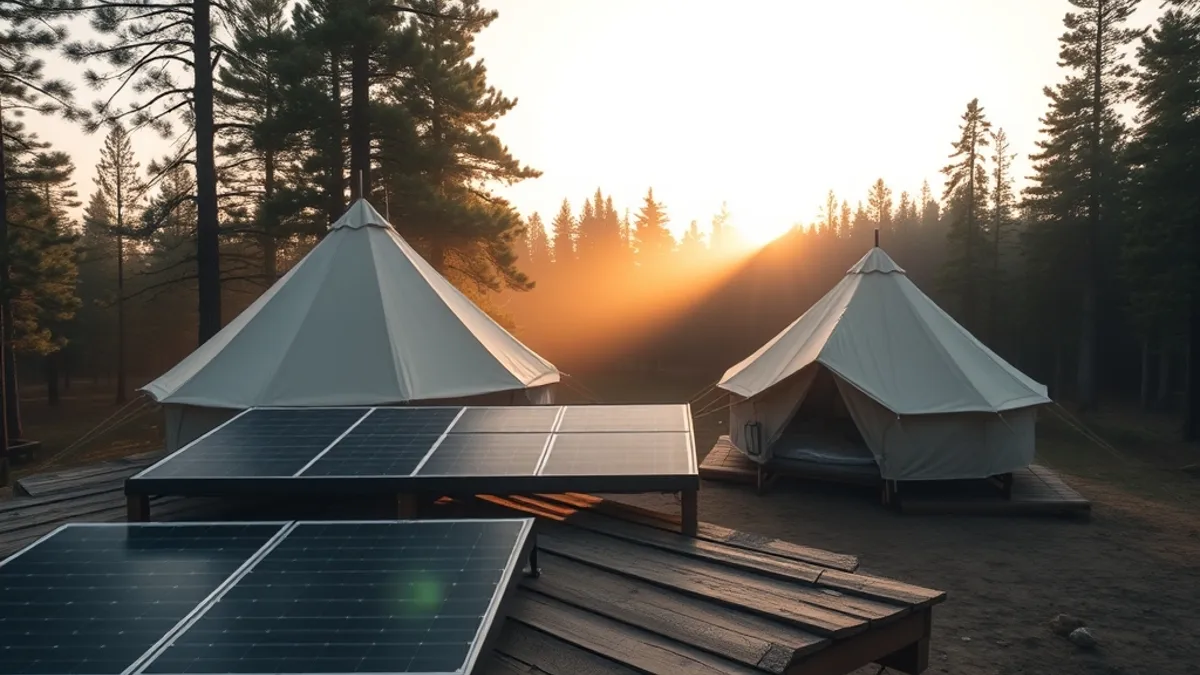
Marketing photos can show anything, but the infrastructure on site tells the real story. Solar arrays, composting toilets and rainwater collection are the clearest signs of a functioning low-impact setup. If you can see panels on the roof of the reception building, a composting system behind the units and tanks catching roof runoff, the operation is doing more than talking about sustainability.
Water is where many sites quietly fall short. Ask directly whether greywater from showers and sinks is filtered on site, for example through a reed bed or sand filter, instead of being piped straight into the ground or a stream. Hot water matters too: solar heaters are a much better sign than gas boilers, especially in a sunny region where solar should be the obvious choice.
Waste policies you can actually see
Good sites run zero-single-use policies. That means refill stations for drinking water, toiletries in bulk dispensers rather than tiny plastic bottles, and real dishes and cutlery at breakfast instead of disposables. If your welcome drink arrives in a plastic cup, take that as a signal about how the rest of the operation runs.
Finally, check the unit itself. Recycling bins and food-waste separation should be visible in your tent or cabin, not just claimed on the website. A host who has thought through waste will make it easy for you to sort your trash without even asking. If you have to hunt for a single bin that takes everything, the policy probably exists only on the homepage.
Food, Community and Supporting the Local Economy
Food is one of the easiest ways to judge whether an eco glamping stay is rooted in its region or just styled to look that way. Menus that source ingredients from within roughly 50 km cut food miles dramatically and put money in the hands of nearby growers. Ask the host which farms supply the kitchen; a serious operator will name them without hesitation.
Hiring matters just as much as sourcing. The best eco glamping stays employ local staff and partner with local guides for hikes, wildlife walks and cultural visits, keeping tourism income circulating in the region instead of leaking out to a distant owner. When your guide grew up in the valley, you also get a better experience: they know where the owls nest and which trail floods after rain.
Signs a stay is genuinely rooted in its landscape
Look for an on-site kitchen garden, a few farm animals and activities like foraging walks. These are hard to fake, because they require seasons of work and real knowledge. A stay that grows some of its own vegetables and can explain its soil, its harvest calendar and its composting loop is clearly invested in the place rather than parachuted in.
One more question worth asking before you book: does the site contribute to conservation projects or land restoration? Serious operators often fund tree planting, habitat work or trail maintenance nearby, and they can describe those projects in concrete terms. For a good example of how a small farm-based stay can tie food, land and guest experience together, see this review of a farm camp stay in Katori, Japan.
Wrapping Up Your Eco Glamping Checklist
Telling real sustainability from greenwashing comes down to specifics. A genuinely eco glamping stay combines low site density with fewer than 20 units, most of its power from solar or other renewables, certified or verifiable practices, and local sourcing. Vague marketing, diesel generators pitched as charm and single-use plastics at breakfast are dealbreakers, not quirks.
Practically speaking: book 3-6 months ahead if you want a June-August spot at one of the small, responsible sites, or shift to May, September or October to save 20-30% and travel lighter on fragile ecosystems. Budget $150-$400 per night, and expect hosts to answer your questions with numbers rather than slogans. If a stay ticks those boxes, you can book it with confidence. Have you found a glamping site that truly walks the talk? Share your experience in the comments or pass this article along to a fellow traveler.