Tenting with kids sounds magical until you picture the reality: a midnight bathroom trek across a dark field, a child who cannot settle without their stuffed rabbit, and a night of broken sleep that leaves everyone cranky. Many parents love the idea of glamping but quietly worry that tent life will turn into whining, lost sleep and forgotten gear. The good news is that most of those problems can be solved before you ever zip open the tent door. These family glamping tips focus on the decisions that matter most, from picking a site with real beds and nearby toilets to timing your booking for the best rates.
Below you will find practical advice on choosing a site that actually works with kids, deciding when to book and when to go, packing light without forgetting the comfort items that keep children calm, setting up the tent for easy nights, and keeping bedtime and daytime routines simple. Follow these steps and tent life with kids becomes a trip worth repeating.
Choosing a Family Glamping Site That Actually Works with Kids
The single biggest mistake families make is booking a glamping site based on pretty photos alone. What looks romantic in pictures can be a logistical nightmare with a tired five-year-old. Start with the tent itself: prioritize sites that offer proper family tents sleeping 4-6 people, with real beds instead of air mattresses. A real bed means no middle-of-the-night air leaks, no pumping, and children who actually stay asleep once they drift off. If a site lists its tent types, look for words like “family tent,” “safari tent” or “lodge tent” rather than small two-person bell tents.
Next, think about the walk to the bathroom. Kids make nighttime trips, and a toilet that is a short walk from your tent is the difference between a two-minute errand and a twenty-minute ordeal with a flashlight. Ask the site exactly how far the nearest toilets and showers are, and whether they are lit at night. Beyond the basics, the extras matter just as much. A playground, a few farm animals or a shallow swimming spot can occupy kids for hours and give parents a genuine break.
- Family tents with separate sleeping areas: some 4-6 person tents have a partitioned corner for kids, which helps everyone fall asleep at their own pace instead of in one shared space.
- Showers with hot water and family cubbies: larger sites often have family shower rooms where you can wrangle two kids and their towels at once, worth confirming if you have toddlers.
- Playgrounds and play fields: a site with a swing set, sandpit or open grass gives kids a place to burn energy right after breakfast and before dinner.
- Farm animals or animal feeding times: sites with goats, chickens or ponies often let children help with morning feeding, which becomes a highlight of the trip.
- Shallow, supervised swimming spots: a lake edge or pool with a gradual entry is far easier to manage with young swimmers than deep water.
- The walk from parking: most glamping sites are a 5-20 minute walk from the parking area, so confirm the distance for your site and whether staff offer luggage help with carts or wheelbarrows.
When to Book and When to Go
Timing is where family glamping trips are won or lost, both in price and in sanity. July and August are the peak family season, and the best family tents get snapped up early. Book 3-6 months ahead for July and August stays, especially if you need a specific tent size or want adjacent tents for traveling with friends. Leaving it late usually means choosing between leftover dates or leftover tents, rarely both.
If your schedule allows flexibility, aim for May-June or September instead. You will find milder crowds, quieter sites and lower rates, and the weather in most of Europe and North America is still warm enough for tent life. School-age kids may need you to work around term dates, but a long weekend in June or September often feels more relaxed than a full week in high summer.
What family glamping typically costs
Budget-wise, expect family glamping stays to usually range from $120 to $350 per night depending on the region, tent size and season. Many sites also require minimum 2-night stays on weekends, so a one-night taster is often only possible midweek. Check these conditions before you fall in love with a particular tent, because a two-night minimum changes the total cost quickly.
Ask about kids’ rates before you book
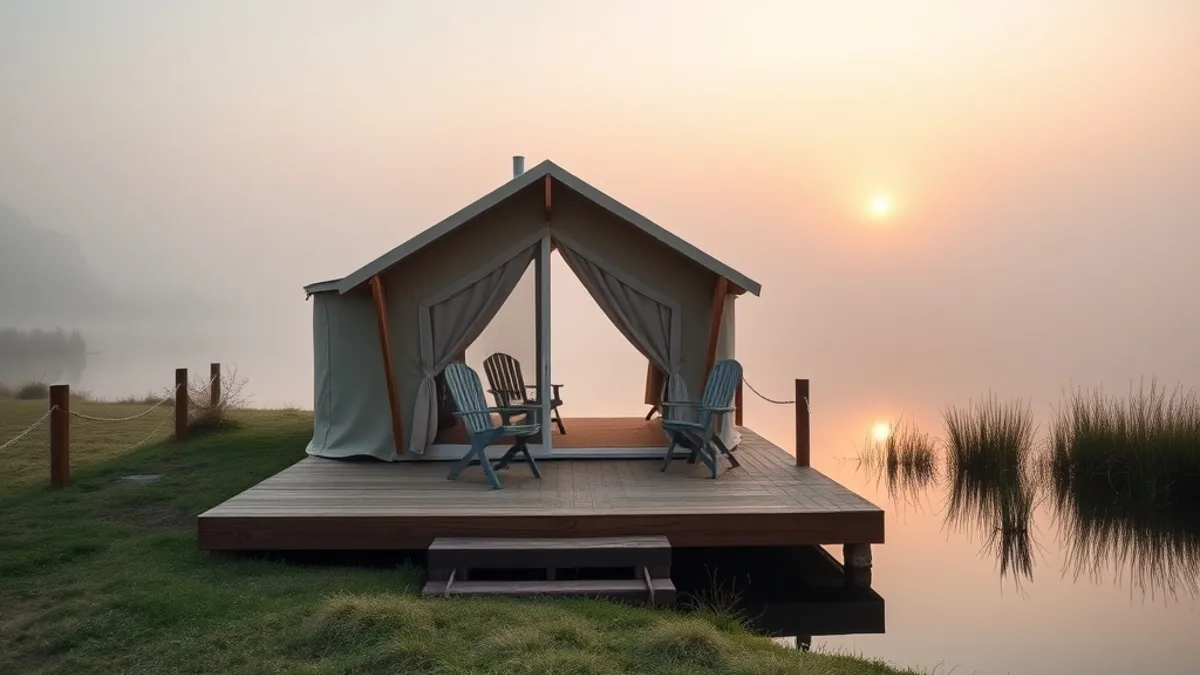
Here is a question many parents forget to ask: kids under 12 often stay free or at reduced rates at family-oriented sites. That can shave a meaningful amount off a four-person booking, so mention your children’s ages when you inquire rather than assuming everyone pays the full rate. For a concrete example of what a family-friendly glamping site looks like in practice, this review of a lakeside glamping site in Castel Volturno, Italy shows what to look for when comparing options.
Packing for Family Glamping: What to Bring and What to Skip
Packing for glamping trips families up faster than almost anything else, because parents pack for every possible scenario. Resist that urge. The core principle is simple: glamping sites provide beds, linens and lighting, so skip the bulky camping gear entirely. No sleeping bags, no camp stove, no air pump, no folding chairs. Every one of those items takes up car space you will want for snacks and spare shoes. Check your site’s packing list before you leave, since most send one, and only bring what they genuinely do not supply.
What you should pack carefully is clothing for temperature swings. Nights can drop 10-15°C below daytime highs, even in summer, and a child who fell asleep in a T-shirt will wake up cold at two in the morning. Pack layers for everyone: a warm hoodie, long pajamas and an extra blanket per person. Just as important are the familiar comfort items from home. A favorite stuffed animal, a small night light and their own pillow can turn an unfamiliar canvas room into a place a child actually wants to sleep in.
- A nature scavenger list: write or print a simple list of ten things to find, like a pinecone, a feather, something yellow and a bird’s feather print, and hand each kid a small bag to collect with.
- One headlamp per child: kids love having their own light, and it doubles as a bedtime tool and a bathroom-trip companion, so pick ones with a red-light mode that won’t wake siblings.
- Card games and a small bag of mini figures: these cover quiet evenings in the tent and rainy afternoons, and they pack flat into a zip pouch that lives in the tent all trip.
- A zippered bag per child for treasures: sticks, smooth stones and “special” rocks accumulate fast, and a dedicated bag keeps them contained instead of scattered across the sleeping area.
- Easy layers labeled by kid: pack each child’s layers in their own packing cube so the cold-night hoodie is findable in seconds without unpacking the whole duffel.
- Wipes and a small first-aid pouch: even with real bathrooms nearby, you will use both far more than you expect, especially for scraped knees and sticky marshmallow hands.
Setting Up the Tent for Easy Nights
Arriving at a glamping tent feels exciting for about five minutes, and then the questions start: where does everyone sleep, where do the shoes go, and how does this lantern work? Sorting those things out in daylight makes the whole stay smoother. Kids tire quickly after a travel day, and a tent that feels chaotic at nine in the evening feels manageable at four in the afternoon. A simple order of operations works well with kids in tow, and it takes surprisingly little effort once you know the sequence.
- Get there before dark. Kids need time to explore the tent, the porch and the surrounding site while they can still see. Daylight arrival also gives you a calm look at the layout instead of a flashlight-lit scramble after a long drive.
- Claim sleeping spots right away. Before bags are even unpacked, let each child pick their bed or corner. Ownership matters: a child who chose their spot is far less likely to protest at bedtime, and you avoid the negotiation happening at nine at night.
- Build a landing zone by the door. Designate one small area for shoes, headlamps and water bottles. It keeps dirt out of the sleeping area and means nobody is digging through dark luggage looking for a flashlight or a drink.
- Test the lighting before bedtime. Check the lantern and any site lighting in the evening while everyone is still awake and patient. Discovering dead batteries or a fiddly switch after lights-out is a preventable meltdown.
- Do a quick safety walk. Point out the fire pit, any low ropes or guy lines, and the path to the toilets so kids know the boundaries without a lecture later.
Thirty minutes of setup discipline buys you a calm evening. Once the beds are claimed, the door zone is set, the lights work and the kids know where they can roam, you can actually enjoy the part everyone came for. Parents who arrive late often spend their first night troubleshooting instead of relaxing, which is exactly the outcome this routine is designed to prevent.
Bedtime Routines That Keep Tent Life Calm
Tent life throws kids off less than you might expect, as long as the bedtime routine travels with you. Keep the same wind-down order you use at home: pajamas, teeth, a story, lights out. Familiar pajamas and the same bedtime book signal to a child’s brain that this is still bedtime, even if the ceiling is canvas instead of plaster. A small night light from home can help kids who are nervous about the dark in an unfamiliar space.
Comfort is the other half of the equation. Summer evenings at a glamping site turn chilly fast once the sun goes down, and a child who falls asleep warm may wake up cold at two in the morning. Pack warm sleep sacks or extra blankets for everyone, and layer them within reach so you can add one without fully waking the tent. A hot water bottle tucked into the sleeping bag before bedtime is a small trick that pays off.
Plan the bathroom trip before lights-out
Agree on a final bathroom visit as part of the routine, every night, before the lantern goes off. A predictable pre-bed trip prevents the midnight treks across a dark site, which are the number one sleep disruptor in a family tent. If a child does wake up needing to go, keep a headlamp by the landing zone so the trip is quick and low-drama.
Finally, set expectations for night one. Many kids sleep restlessly the first night in a new place, and that is normal. Plan a low-key second day, with nothing scheduled before late morning, so tired children can catch up. Families who treat day two as a recovery day often find night two goes far better than night one.
Making the Days Fun Without Overpacking the Schedule
The biggest mistake families make on a glamping trip is treating it like a resort itinerary. Kids do not need three activities a day; they need one good one and the freedom to be bored in a beautiful place. A slower pace is exactly what makes glamping by the lakes such a restorative style of travel, and the same principle applies wherever you go.
One anchor per day
Pick a single anchor activity each morning: a lake swim, a visit to farm animals, a short nature trail. That is the day’s centerpiece, and everything else stays flexible. If the anchor goes well and everyone is happy, great. If the weather turns or the kids melt down, nothing else is lost, because nothing else was scheduled.
Leave generous stretches of unstructured time, especially around the tent. Kids often love the canvas space itself, and hanging out in a big tent with cards or sticks collected from the ground counts as a perfectly good afternoon. You do not need to entertain them every minute.
Keep food simple
Resist ambitious camp cooking. Simple meals, site BBQs and easy one-pan dinners keep everyone fed without turning you into the tent’s short-order cook. And hand kids small jobs: filling water bottles, collecting dishes, carrying firewood. Small responsibilities build ownership, and children who feel like part of the camp crew tend to complain a lot less about everything else.
Wrapping Up Your Family Glamping Plan
Family glamping works when the site fits kids, the season fits the budget and the packing list covers cold nights. Get those three things right and the worry about whining, lost sleep and forgotten gear mostly disappears. A tent with real beds, toilets a short walk away and room for the whole family turns “sleeping outside” into something kids talk about for weeks.
Timing matters more than most parents expect. Booking 3-6 months ahead for summer and choosing May-June or September keeps stress and costs down, especially with weekend minimum stays and nightly rates that add up fast. Once you arrive, simple routines for setup and bedtime do the rest: claim beds early, keep the familiar wind-down order and plan for the first restless night. That’s what turns tent life with kids into a trip worth repeating. Have you tried glamping with your kids? Share your experience or tips in the comments below.