Most beginners book a first safari tent stay expecting camping hardship: thin sleeping bags, cold ground and a fight with tent poles. What they actually find is a real bed, warm lighting and a bathroom a few steps away. The surprise cuts both ways, though. Glamping is far more comfortable than camping, but it is also noisier, brighter at dawn and more exposed to temperature swings than a hotel room ever would be.
This guide walks you through what a safari tent really is, why canvas life sounds so different, and how to handle the temperature swings that catch most newcomers off guard. We will also cover when to book, what to pack, and how to choose a site where first-timers are happiest. By the end, you will know exactly what to expect from your first night under canvas.
What a Safari Tent Actually Is (and Isn’t)
The biggest misconception is right there in the word “tent.” A safari tent is not something you pitch yourself after a long drive. It is a permanent canvas structure on a fixed wooden platform, already standing when you arrive. You park, walk up the deck, unzip the door and move in. There is no assembly, no guy ropes and no wrestling with poles in the dark.
Inside, it feels like a small lodge
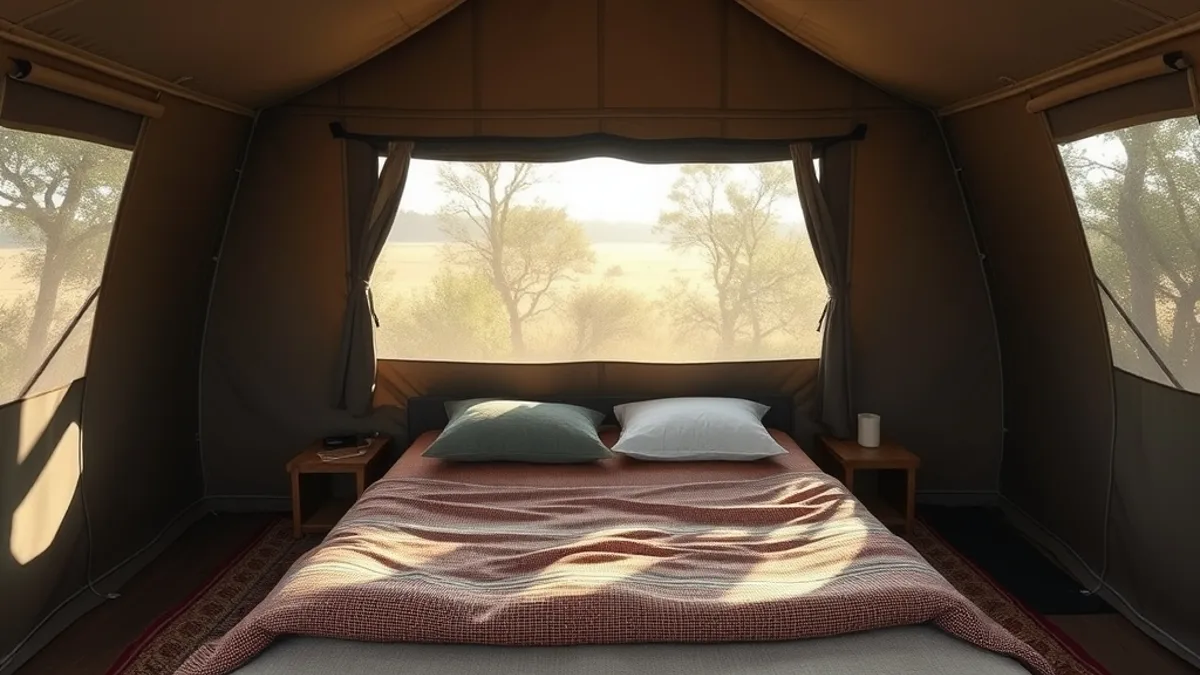
Step through the door and you will usually find real beds with proper linens, solid furniture, and lighting powered by solar panels or mains electricity. Many sites provide a private bathroom as well. If you can sleep in a hotel room, you can sleep in a safari tent. No camping skills are required, which is exactly why glamping appeals to people who would never set foot in a traditional tent.
Check the bathroom situation before booking
This is the detail that changes the experience most. Some tents have an ensuite bathroom attached, while others share a clean washblock a short walk away across the site. Neither is wrong, but they are very different experiences, especially at night or in the rain. Look carefully at the listing, and if it is not clear, ask the host directly before you book. It is the single question most worth asking.
The Sounds and Smiles of Canvas Life
Canvas is a thin membrane, and it does nothing to muffle the world. Dawn birdsong arrives at full volume, wind makes the fabric flap and ripple, and rain drums overhead like applause. Sound travels the other way too: conversations and laughter from tents two sites over come through as clearly as if they were next door. Most first-timers describe the first night as surprisingly loud, and most describe it as oddly charming by the second. If you are a light sleeper, this is the single biggest adjustment to plan for.
Light behaves the same way. The fabric glows softly as the sun rises, so most tents are fully bright by 6-7am even if you planned to sleep in. An eye mask is the single best purchase a beginner can make, and it costs almost nothing.
Then there is the zip. Safari tent doors close with a long, loud zipper that announces every exit, and late-night trips to the bathroom become a small adventure you learn to plan around. A little preparation makes those trips far easier.
- Practice the zip in daylight. Some zips run on a track and jam if you pull at an angle; learning the motion before dark saves fumbling later.
- Keep a shoe spot by the door. Decks and paths can collect dew or rain, so leaving one pair of shoes in the same place every time makes midnight walks quicker and drier.
- Download sounds or podcasts in advance. If you use audio to fall asleep, remember your phone is also your alarm and possibly your only light, so charge it before bed.
Temperature Swings: The Biggest Surprise
If one thing surprises beginners more than anything else, it is the temperature. Canvas insulates poorly, so a tent that feels pleasantly warm in the afternoon can turn cool fast once the sun goes down. Night temperatures inside canvas can drop 5-10°C below daytime highs, which means you should pack layers even in the middle of summer.
Know what climate control you are actually getting
Many safari tents offer only a fan or a small heater, not the full climate control you would find in a hotel. Some have neither, relying on bedding and cross-ventilation instead. Check the listing before you book, and if heating is mentioned at all, ask whether it runs all night or only in the evening. This matters most in spring and autumn, when the gap between day and night is widest.
The sleep setup that works
Veterans of canvas life swear by a simple routine. Warm socks to bed. A hoodie kept within reach for evenings spent on the deck watching the stars. And bedding tucked closed around you, because drafts sneak along the edges of the bed nearest the canvas walls. None of this requires special gear; it just requires thinking like someone who knows the temperature is going to fall. Do that, and the cool night air becomes part of the charm rather than a complaint.
When to Book and What You’ll Pay
The biggest mistake first-timers make with safari tents is waiting too long to book. Popular glamping regions — think national park gateways, coastlines and lake districts — see peak-season weekends sell out three to six months ahead. If you have your heart set on a July or August Friday and Saturday, treat the booking like a flight reservation and lock it in early. Midweek stays are a different story: sites often have plenty of availability from Monday to Thursday, even in high summer.
On price, expect typical rates of roughly $120 to $350 per night depending on region and season. The lower end of that range usually belongs to shoulder-season midweek dates, while large family tents in prime locations command the top of it. Unlike a hotel room, the rate rarely changes based on occupancy, so a half-empty site in May can cost the same as a packed one in August — which is exactly why flexible travelers get better value.
Timing matters too. In most of Europe, the safari tent season runs roughly May to September. Outside those months, many sites close entirely or operate with reduced facilities, and canvas nights get noticeably colder.
- Book directly with the site when you can. Owners sometimes hold their best-located tents for direct bookings, and you are more likely to get clear answers about bathroom setups and heating before you commit.
- Check cancellation terms carefully. Weather-dependent trips benefit from flexible rates, and some sites offer them for a modest difference in price.
- Ask about minimum stays. Peak weekends at established glamping sites often require two or three nights, which can shape whether a long weekend or a full week makes more sense.
- Watch for school holiday surges. Family-oriented sites fill fastest during local school breaks, so adults-only travelers can often find good midweek availability even in peak months.
Packing for Your First Safari Tent Stay
Packing for a safari tent is closer to packing for a cabin stay than for camping, but a few items make a real difference. The first is a torch or headlamp. Paths between tents are usually dimly lit by design — sites keep lighting low to preserve the night sky and the atmosphere — so walking to the bathroom or back from the car after dark means navigating by your own light. A headlamp beats a phone flashlight because it keeps your hands free for unzipping doors.
Footwear and power are the next considerations. If your tent has a shared bathroom block rather than an ensuite, flip-flops will earn their place in your bag on day one. Many canvas tents have only one or two outlets, sometimes running on solar power, so a power bank keeps phones and cameras charged without competing for sockets. Insect repellent is worth applying from late afternoon onward, since dusk is when mosquitoes and midges are most active around decks and open zip windows.
What you can leave at home: nearly all the traditional camping kit. Cooking equipment, bedding, towels and furniture are provided at glamping sites, so there is no need for sleeping bags, stoves or coolers. For a sense of what a well-equipped tent actually includes, our review of a lakeside glamping stay in Castel Volturno, Italy walks through the full setup.
- Pack a small day bag for the bathroom walk. A zip pouch with toiletries and a microfiber towel saves awkward juggling when the facilities are in a separate block.
- Bring a book or downloaded entertainment. Wi-Fi at safari tent sites is often limited or restricted to a reception area, and evenings on the deck go better with a backup plan.
- Include a soft bag rather than a hard suitcase. Canvas floors and narrow entryways make wheeled luggage noisier and clumsier than a duffel.
- Throw in a reusable water bottle. Many sites use tank or well water, and having your own bottle for the deck saves repeated trips to a shared kitchen or tap.
Where Beginners Are Happiest: Picking Your First Site
Where you book matters as much as what you pack. First-timers are consistently happiest at established glamping sites with onsite hosts, rather than remote standalone tents with no one around. A host on site can relight a heater, explain the quirks of a zip door or recommend a dinner spot — small interventions that rescue a first canvas night. Remote tents can be magical, but they reward experience you do not have yet.
Three features worth filtering for
When comparing sites, put an ensuite bathroom at the top of your list. It is the single detail that changes the experience most, especially on rainy nights or 2 a.m. trips. A covered deck comes second: it gives you an outdoor living space that works even when the weather turns, which happens more often than the brochure photos suggest. Third, look for a location within a short drive of a town, so easy meals and groceries are a quick errand rather than an expedition.
Read reviews like a detective
Photo galleries show tents at their sunniest hour. Recent guest reviews tell you what those photos cannot: whether the neighboring tent carries every conversation across the canvas, whether nights were colder than expected, and whether the site delivered on its promises. Search reviews specifically for mentions of noise and temperature — those two words reveal more about your likely experience than any professionally shot image. To see how a smooth, beginner-friendly stay actually plays out, read our review of a glamping stay near Lake Powell and Grand Staircase in the United States.
Wrapping Up Your First Canvas Night
Most beginners arrive expecting camping hardship and leave surprised by how comfortable the days feel. Real beds, linens and lighting mean you get the fresh-air setting without the aching back — yet the nights stay wonderfully raw, with wildlife, wind and canvas all around you. That mix of comfort and nature is exactly what catches people off guard.
The good news is that the most common complaints are easy to solve. Book peak-season weekends 3-6 months ahead, pack layers for cooler nights and bring a headlamp for dark paths. Choose an established site with ensuite options and your first canvas night will likely turn you into a repeat glamper. If this helped, leave a comment or share the article with a friend planning their first stay.