Planning a lodge escape can feel discouraging when you scroll through summer listings: prices are at their highest, the best cabins are snapped up months in advance, and popular trails resemble queues more than wilderness. Many travelers simply assume that a comfortable forest lodges in autumn stay is out of reach. The good news is that the assumption is backwards — autumn is arguably the best time of the entire year to book one.
Between mid-September and late October, forests put on their most photogenic show, rates drop well below summer peaks, and the crowds thin out dramatically. This guide walks you through everything you need to plan the trip properly: why autumn is the sweet spot, how to pick the right forest region for foliage, what features make a lodge worth booking, smart off-peak booking tactics, handling shorter days and cooler weather, and the activities that make the season special. By the end, you’ll know exactly how to turn the shoulder season into your favorite travel window.
Why Autumn Is the Sweet Spot for Forest Lodges
Foliage season transforms an ordinary forest stay into something extraordinary. From mid-September to late October, temperate forests across the Northern Hemisphere turn gold, amber and deep red, giving your lodge the most photogenic backdrop it will have all year. The view from the deck in July is pleasant; the same view in October can stop you mid-sentence.
The savings are just as convincing. Autumn shoulder-season rates typically run 20-40% below summer peak prices, and October weekend nights often cost 30-50% less than the same dates in July or August. That gap can be the difference between a modest cabin and the lodge you actually wanted, without stretching your budget.
Quieter Trails, Quieter Lodges
Once school holidays end, the atmosphere changes noticeably. Trails that were busy in August empty out, popular viewpoints no longer require an early alarm to enjoy alone, and lodge facilities — pools, saunas, dining rooms — feel relaxed rather than crowded. You get the same property, the same service and better scenery, with a fraction of the people. For anyone who books a forest lodge partly to escape crowds, autumn delivers that promise more honestly than any other season.
Choosing the Right Forest Region for Foliage
Not all forests peak at the same time, so the first decision is matching your destination to your travel window. Higher elevations and northern forests turn color earliest, with foliage typically peaking in late September. Lowland forests follow, reaching their best color in mid-to-late October. If you can only travel in a specific week, choose altitude and latitude accordingly rather than hoping for luck.
Deciduous, Mixed or Coniferous?
The type of forest matters as much as the timing. Deciduous-heavy forests — think beech and maple stands — deliver the strongest, most dramatic color of the season. Mixed forests offer a broader palette and a slightly longer display, while coniferous forests provide a longer but subtler season, with splashes of larch gold against evergreen green. If vivid foliage photography is your goal, favor deciduous regions; if you want a calm, extended autumn atmosphere, mixed and coniferous areas reward you too.
A few regions manage to combine reliable color with a genuine lodge culture built around the season. The Black Forest in Germany and the Alps both fit that description, with well-established lodge traditions, seasonal food and trails designed for exactly this time of year. If the Black Forest appeals to you, our guide to Black Forest lodges for deep calm is a good place to start comparing options.
What to Look for in an Autumn Lodge
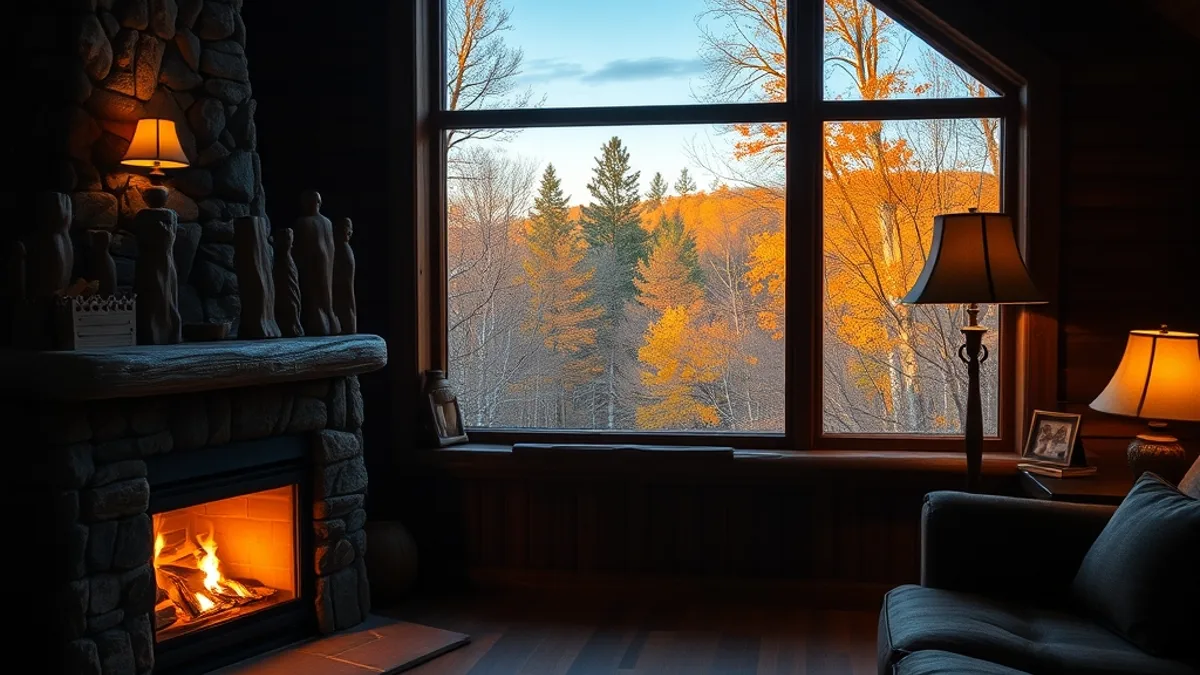
Autumn changes what matters in a lodge. Daytime temperatures in forest regions typically range from 10-18°C (50-64°F), which is comfortable for hiking but means evenings turn distinctly cool. That makes warmth features a priority rather than a luxury. A lodge with a fireplace, sauna or hot tub stops being an optional upgrade and becomes the reason the trip feels special — there are few better travel moments than stepping out of a cold forest walk into a steaming sauna.
The second thing to scrutinize is the view. In foliage season, the forest itself is the main attraction, so check whether the lodge faces the trees directly rather than a parking area or neighboring rooftops. Listing photos can be misleading, so look at recent guest reviews and, if possible, a map to confirm the orientation. Finally, consider food: autumn is harvest season in forest regions, and kitchens or nearby restaurants serving seasonal produce — mushrooms, squash, game, apples — are a hallmark of the time of year.
Beyond those priorities, a few practical details separate a good autumn lodge from a great one:
- Drying facilities: a heated boot dryer, drying rack or utility room keeps wet gear usable across several days of changeable weather.
- Lighting and blackout balance: good reading lamps near seating areas matter when dusk arrives early, but windows should still let you watch the forest by day.
- Walkable access to trails: a lodge where you can start a foliage walk directly from the door saves you driving on narrow forest roads.
- Heated outdoor space: a covered terrace, fire pit or heated balcony lets you enjoy the view and crisp air even on damp evenings.
Booking Strategy for Off-Peak Stays
Autumn lodge stays reward planners. The scenery is at its best, but the calendar fills faster than many travelers expect, especially in regions famous for their color. Because peak foliage in most temperate forests runs from mid-September to late October, the window when the best lodges shine is short and predictable — and everyone who has visited in autumn before knows exactly when it is. A little strategy goes a long way toward getting the lodge you actually want, at a price that reflects the shoulder season rather than peak demand.
- Book 2-3 months ahead. Foliage season has a loyal following, and the most photogenic lodges — the ones with forest-facing terraces and wood-burning fireplaces — are the first to go. Booking two to three months in advance locks in your dates before color-chasers claim the best rooms, and it often means a wider choice of room types too.
- Favor midweek nights in October. Weekend availability tightens quickly, but midweek stays in October can be 15-25% cheaper than the same weekends. You also get quieter trails and a more relaxed pace at the lodge itself, with staff less stretched and facilities easier to enjoy.
- Read the cancellation policy carefully. Autumn weather is far less predictable than summer, and a storm or an early cold snap can genuinely change your plans. Flexible terms cost little and can save the whole trip.
Treat booking like part of the trip planning, not an afterthought. Check the policy details before you pay, note any deadlines in your calendar, and confirm your reservation directly if anything seems unclear. The travelers who secure the best autumn lodges are usually the ones who picked dates early, compared a few properties, and kept their options open until the cancellation terms were clear. A shortlist of two or three lodges gives you a backup if your first choice fills up — and filling up is exactly what the good ones do.
Planning Around Shorter Days and Cooler Weather
Autumn gives you beautiful days, but fewer of them. By mid-October at mid-latitudes, daylight shrinks to roughly 10-11 hours, which means your window for hiking, scenic drives and photography is genuinely shorter than in summer. The fix is simple: put your outdoor plans first. Schedule hikes and drives for the morning, when light is good and you have hours in reserve if a trail takes longer than expected.
Packing for changeable conditions
Leave the summer kit at home. Autumn forest weather can swing from crisp sunshine to drizzle within a single afternoon, and daytime temperatures typically sit between 10-18°C (50-64°F). Pack in layers — a base layer, a warm mid-layer and a waterproof jacket — so you can adjust on the move. Sturdy, water-resistant footwear matters more than in any other season, since leaf-covered trails can be slick.
Make indoor time part of the plan
Don’t treat the evenings and rainy stretches as dead time. Reading by the fire, a long sauna session or a slow dinner at the lodge are not fallbacks — they are half the reason an autumn forest stay feels restorative. Build them into your itinerary deliberately, and the shorter days start working in your favor rather than against you.
Activities That Shine in the Autumn Forest
Autumn changes what a forest offers, and the shift favors travelers who like slow, sensory experiences. The trails are quieter, the light is lower and warmer, and the forest itself is busier than at any time since spring. Squirrels and jays noisily stockpile acorns and beech mast, the air smells of damp leaves and woodsmoke, and mornings often start with mist drifting between the trunks. A handful of activities are at their absolute best in this season, and all of them reward travelers who are willing to slow down and let the forest set the pace rather than racing between sights.
- Golden hour photography. The sun sits lower in autumn, and that soft, angled light saturates the reds and golds rather than washing them out. The hour after sunrise and before sunset turns even ordinary forest paths into striking shots. Morning mist adds atmosphere, and fallen leaves make excellent foregrounds — bring a tripod for the dim light under the canopy.
- Mushroom season and foraging. In many forest regions, autumn is prime mushroom season, and some lodges and local guides run foraging walks. Never eat anything you find without expert confirmation, as toxic species often resemble edible ones. Harvest festivals celebrating chestnuts, pumpkins and regional produce are also common — check what’s on near your lodge, as these events are highly region-specific.
- Wildlife watching. Animals forage actively ahead of winter, and with the foliage thinning, visibility through the trees improves noticeably. Deer are often easier to spot in October than in dense summer growth. Move quietly, keep your distance, and bring binoculars — early morning is usually the most productive time.
The common thread is that autumn activities reward patience rather than stamina. You don’t need ambitious plans — just time outdoors, a camera and an appetite for whatever the season is serving locally. Ask your lodge host about guided walks and local events; their recommendations are often the difference between a nice stay and a memorable one.
The Off-Peak Advantage, Summed Up
Summer crowds and peak-season prices make many travelers assume a forest lodge getaway is out of reach, but autumn tells a different story. Once the school holidays end, the forest becomes a calmer place: trails and viewpoints empty out, and lodges drop their prices for the season. You get the same setting, the same amenities and arguably better scenery, all at a friendlier cost.
There is also a rhythm to an autumn lodge stay that summer simply cannot offer. Mornings start cool and misty, afternoons are made for slow walks under changing leaves, and evenings end by a crackling fire. It is a trip that rewards slowing down rather than packing in activities.
Have you tried a forest lodge stay in autumn, or are you planning one? Leave a comment below or share this article with someone who loves the fall season.