You’ve seen the photos: rows of purple stretching to the horizon, a canvas tent glowing at golden hour, cicadas humming in the warm evening air. But when you actually start planning, the questions pile up. When does the lavender really bloom? Will you arrive to find fields already cut? And which village or plateau should you sleep near to make the most of it?
This guide to glamping in Provence sorts it out. We’ll cover when lavender season actually happens and how bloom timing shifts between the lowlands and higher ground. Then we’ll compare the best places to base yourself, from the Valensole Plateau to the Luberon, and look at what kind of tent or lodge stay suits your trip. You’ll also find practical advice on booking ahead, getting there and getting around, and how to pair your lavender days with markets, vineyards and a swim in the Verdon. By the end, you’ll know exactly when to go and where to pitch your (temporary) tent.
When Lavender Season Really Happens in Provence
Lavender in Provence follows a fairly reliable rhythm, though exact timing shifts a little each year with weather and altitude. The overall bloom runs roughly from mid-June to early August, with peak color across the region in early to mid-July. That’s when the fields look their most vivid and the air carries that unmistakable scent.
Timing within that window matters more than most first-time visitors expect. Lower, warmer areas such as the Valensole Plateau bloom and are harvested earlier, with cutting typically starting in late July. If you arrive at the very end of the month, you may well find neat, cut rows rather than flowering ones — atmospheric in its own way, but not the postcard you had in mind.
Chasing the later bloom
Higher ground around Sault works on a different clock. The cooler mountain air pushes the bloom back, so fields there can still be flowering in early August, after the lowland harvest has finished. If your travel dates fall in late July or early August, heading for altitude is your best chance of catching color.
There’s also a sweet spot for quieter travel: late June. By then the fields have usually reached full color, but the July crowds haven’t arrived in force. You get the same purple landscapes, easier parking at viewpoints and more relaxed village mornings — often with a little more availability in the tents, too.
Where to Base Yourself for Glamping in Provence
Provence is bigger than it looks on a map, and lavender country is spread across several distinct zones. The right base depends on what you want most: dramatic fields, cooler evenings, pretty villages or easy logistics. Many travelers comparing glamping regions in southern Europe find it helpful to read a review of a glamping site on the Italian coast to see what different tent setups actually feel like on the ground.
Here’s how the main bases compare:
- Valensole Plateau: the classic endless-rows landscape, with long straight lines and lone trees made for photography — expect the most dramatic photo spots and the earliest harvest.
- Sault and Mont Ventoux: higher altitude means cooler nights for sleeping and a later bloom, a smart pick if your trip lands toward the end of the season.
- The Luberon: the best all-rounder, where lavender fields sit alongside hilltop villages, weekly markets and vineyard-covered valleys.
- Near Aix-en-Provence or Avignon: the practical choice, with simple airport transfers, TGV connections and easy day-trip access to multiple lavender zones.
If photographing lavender is your priority, base near Valensole and plan sunrise outings — the light on those rows is worth the early alarm. If you want a fuller Provence experience beyond the fields, the Luberon wins: you can browse a market in the morning, taste wine at lunch and still reach lavender viewpoints by late afternoon. And if your trip is short, staying within reach of Aix or Avignon keeps driving to a minimum while still putting you within easy reach of the Valensole Plateau.
What Kind of Glamping Stay to Choose
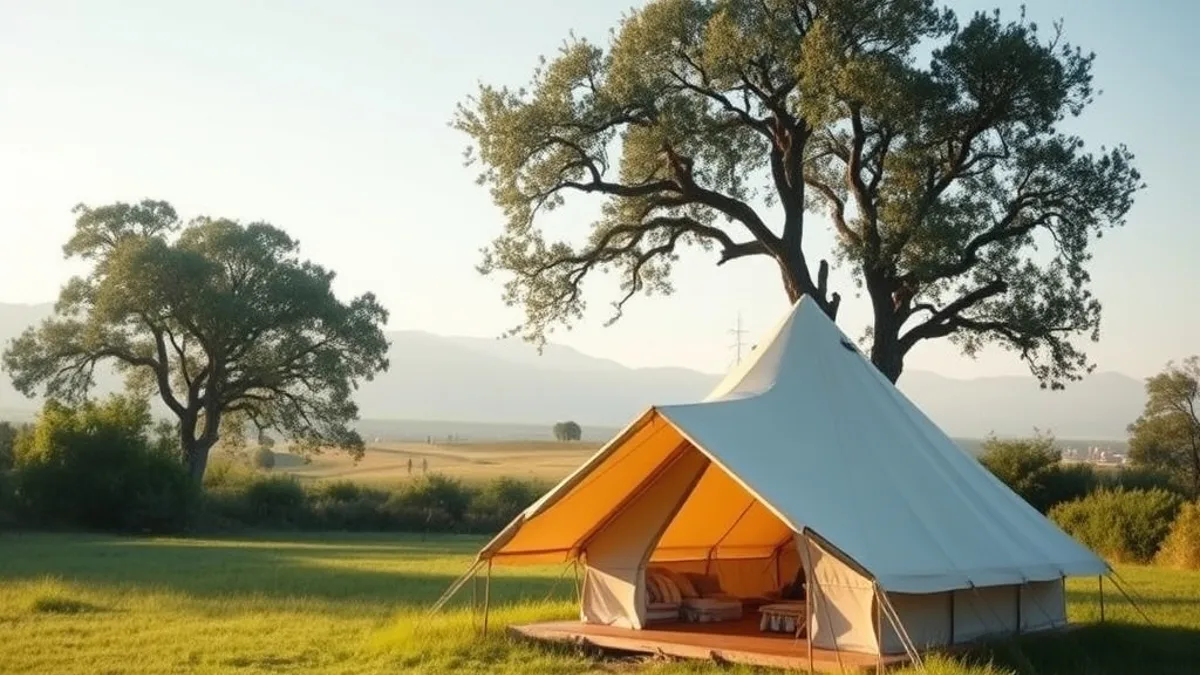
Glamping in Provence comes in a few distinct flavors, and picking the right one shapes your whole trip. The classic choice is the safari-style canvas tent: spacious, often raised on a wooden deck, with proper beds, furniture and sometimes a small terrace facing the fields. In high season, these tents typically run €90-€250 per night depending on size, location and level of comfort.
Farm stays and family campsites
Farm stays are the romantic option. You sleep in a tent set among the owner’s vines, orchards or lavender, wake to roosters and the smell of the fields, and often can buy produce or oil directly from the farm. For a sense of how charming this style of countryside glamping can be, it’s worth reading a farm-stay glamping review from Tuscany — the atmosphere in Provence is very similar.
Larger campsites with lodge tents suit families and travelers who want more on-site life. These add swimming pools, playgrounds, shops and sometimes evening entertainment, and lodge tents usually cost less than standalone safari tents in the countryside.
One detail deserves a close look before you book: bathrooms. Some tents are fully en-suite with private showers and toilets, while others share a bathroom block a short walk away. In July heat, that walk matters, especially with children. Check the listing carefully, and if it’s unclear, message the host directly before reserving — it’s the difference between comfortable and compromising.
How and When to Book
Glamping in Provence during lavender season is popular for a reason, and the best tents are the first things to go. The most characterful properties, especially small farm stays with just a handful of canvas tents, often fill their summer calendars months before casual travelers start looking. A little planning makes the difference between snapping up a safari tent with a private terrace overlooking the fields and settling for whatever is left. Here is how to approach booking, step by step, so you spend your trip watching the light fade over purple rows instead of scrolling through sold-out listings.
- Reserve 4-6 months ahead for July dates. The most characterful tents, especially those with private terraces or views over the fields, sell out first. Once operators open their calendars for the following summer, lock in your dates rather than waiting for a deal that may never appear.
- Consider the shoulder months instead. Late May and September bring lower rates and easier availability, and you still get warm days, blooming gardens and quiet villages. If your dates are flexible, this is the easiest way to save.
- Ask hosts about minimum stays. During the lavender peak, many properties require two to three nights, sometimes longer on weekends. Knowing this before you fall in love with a tent saves disappointment.
- Confirm cancellation terms in writing. Summer storms, heat waves and flight changes can affect travel plans, so check how flexible your booking is and whether travel insurance covers it.
One more practical tip: message hosts directly with any questions about shade, fans or air conditioning, since July nights in a canvas tent can be warmer than you expect. Ask whether the tent has proper blackout options for early mornings, too, when the light comes up fast in summer. A quick exchange before booking tells you a lot about how responsive the owner will be if anything goes wrong during your stay, and hosts who reply promptly and helpfully usually run the kind of property you want to book.
Getting There and Getting Around
Most travelers reach Provence through one of two gateways: Marseille airport or the Avignon TGV station. Marseille works well if you are flying in from elsewhere in Europe or beyond, while the high-speed rail link makes Avignon a comfortable option from Paris. Both give you straightforward access to a hire car, which you will want from day one.
Driving to the lavender country
Valensole sits about 1.5 hours’ drive from Aix-en-Provence and from Marseille airport, making it an easy first stop after you land. The roads are generally good, but the final stretch onto the plateau involves smaller country lanes that slow you down. Build in a coffee stop in a market town rather than racing straight to your tent.
Why you need your own wheels
A car is essential here, not optional. Lavender routes, village markets and evening restaurant runs all depend on it, and public transport between the small hilltop villages is thin. Plan your days loosely, because country roads narrow near the fields and traffic builds during the July peak. Allow extra time for short distances, especially around sunrise and sunset when everyone, photographers included, heads for the same viewpoints. Parking at popular spots fills quickly, so arriving early or later in the evening usually makes for a calmer experience overall.
Beyond the Fields: Pairing Lavender with Provence Life
Lavender is the headline act, but a good Provence glamping trip mixes it with everything else the region does well. Markets, vineyards, rivers and slow lunches are all within easy reach of your tent, and the rhythm of a Provençal day rewards those who linger rather than rush. Many tents sit on working farms, so you might start the day with a short walk past the fields before breakfast, then head out to explore. The trick is to plan a loose framework and leave room for spontaneity, which is exactly the kind of slow travel mindset that works beautifully here, and elsewhere too, as this take on lake glamping for slow travelers shows.
- Market mornings: Plan a morning in villages like Gordes, Lourmarin or Banon. Go early for produce and cheese before the day-trippers arrive, and bring a basket for olive oil, herbs and honey.
- Vineyard afternoons: In the Luberon, pair a lavender drive with a vineyard tasting and a long lunch on a shaded terrace. Many domaines welcome walk-in visitors outside the busiest weeks.
- Verdon escapes: If you base near Valensole, build in a swim or a gorge walk in the Verdon area. The turquoise water is a striking contrast to the purple fields, and the cooler air is welcome in July.
- A flexible bloom day: Keep one day unplanned so you can chase the best bloom conditions at altitude, heading higher if the fields near your base have already been cut.
Balance is the whole point. A morning among the lavender rows, an afternoon at a market or winery and an evening back at your tent with a glass of local rosé is a genuinely restorative way to spend a summer week. Pack light layers, since country evenings can cool off quickly even after a hot afternoon, and keep a cooler bag in the car for market finds. If you are traveling with children, alternate busy sightseeing days with slower ones by the tent pool or a riverside picnic spot. The goal is not to tick off every village on the map, but to leave Provence feeling rested, well fed and already planning a return.
Wrapping Up Your Provence Glamping Trip
Sleeping among Provence’s lavender fields comes down to two decisions: when to go and where to stay. Time your trip for mid-June to mid-July to catch the lavender at its best, and remember that harvest begins in late July in lower areas, so late-month visitors may find cut fields rather than blooming rows.
Then choose your base by bloom timing: Valensole for early peaks, Sault for later color. Book 4-6 months out for July dates, and if your schedule allows, travel in the shoulder months of late May and September for better value and quieter roads. Wherever you pitch your tent, Provence rewards travelers who plan around the lavender rather than around it. If this guide helped you plan your trip, leave a comment or share it with a fellow traveler.