Glamping in Norway’s Fjords looks like the ultimate bucket-list stay: a transparent dome perched above mirror-still water, mountains rising straight out of the fjord. But between a short season, locations scattered across hundreds of kilometers and nightly rates that swing wildly with demand, many travelers freeze at the booking stage and end up either overpaying or missing out entirely.
This guide sorts it out for you. We’ll look at why the fjords suit glamping so well, which season matches your goals – midnight sun, autumn colors or winter lights – and compare the best areas to base yourself, from Geiranger to Lysefjord. You’ll also find a rundown of stay types, realistic costs, booking timing advice and practical tips so you can plan a comfortable fjord stay with confidence.
Why the Fjords Suit Glamping So Well
The fjords deliver scenery that most destinations make you hike, drive or pay for – here it comes free from your tent. Geirangerfjord and Nærøyfjord are both UNESCO-listed, and waking up to waterfalls cascading down sheer rock walls is exactly the kind of view glamping promises. You don’t need a balcony upgrade or a hotel with a view; the entire landscape is the view.
Long days that stretch your stay
Summer adds another advantage: daylight. Around late June, you get 18-19 hour days, which stretches the usable day well beyond normal camping hours. You can kayak after dinner, hike at nine in the evening and still read your book in natural light. For travelers coming from southern latitudes, it genuinely feels like the day never ends.
Comfort is the third piece of the puzzle. Traditional camping in Norway means wrestling with cold nights and damp gear, but glamping structures like domes and heated cabins keep 10-18°C summer nights comfortable without heavy expedition gear. You bring ordinary clothing and a sense of adventure; the structure handles the rest. That combination – world-class scenery, endless summer light and a warm bed – is hard to beat anywhere in Europe.
Choosing Your Season: Midnight Sun, Autumn Colors and Winter Lights
Timing is everything in the fjords, because the season is short and the experience changes dramatically from month to month. Pick the wrong window and you’ll find closed sites, empty viewpoints in the wrong way or crowds that spoil the silence you came for.
The core season: late May to early September
The main glamping season runs from late May to early September. During this window, sites are fully open, ferries run frequently and temperatures typically sit in the 10-18°C range – comfortable with a few good layers. If it’s your first fjord trip, this is the safest bet for reliable transport and full services.
June is the standout month for daylight, with near-endless evenings around the midnight sun. It’s ideal for evening kayaking and late hikes when the water is at its calmest – but it’s also the busiest month, so expect company on the trails and book well ahead.
September and the winter niche
September rewards flexible travelers: fewer crowds, mountain slopes turning red, and a first chance of northern lights. The trade-offs are cooler nights and some sites closing early in the month, so confirm your chosen site’s season before committing.
Winter glamping is a genuine niche aimed at aurora chasers, with northern lights visible from September to March in northern Norway. It’s limited to heated cabins and domes rather than tents, so pack expectations accordingly – this is a warm-room experience under dark skies, not a summer fjord stay.
The Best Fjord Areas to Base Yourself
Norway’s fjords are long, and driving between them takes real time, so your choice of base matters more than your choice of tent. Each area has a distinct character: some are built for postcard photos, others for hiking boots or slow, car-free wandering. Here’s how the four main options compare.
- Geirangerfjord: the postcard classic, about 100 km by road from Ålesund, with cliffside domes and easy access to Eagle Road viewpoints.
- Nærøyfjord and Aurland: the narrowest fjord arms, with walkable villages like Flåm and Undredal, ideal for car-free travelers arriving by the Bergen railway.
- Hardangerfjord: orchards and milder weather, best visited in late summer fruit season and easy to combine with the Folgefonna glacier area.
- Lysefjord near Stavanger: reachable in under an hour by car plus ferry to Preikestolen, the practical pick for hikers targeting Kjerag and Pulpit Rock.
If you’re new to glamping and want to test the concept before committing to a big Norway trip, it can help to start smaller. Our stay at a lakeside glamping site near Naples shows what to look for in a site, from platform quality to how views are actually positioned. The same checklist applies when comparing fjord domes: check what sits directly outside your door, how far the nearest shop or restaurant is, and whether the structure stays comfortable when the weather turns.
Hikers should lean toward Lysefjord, photographers toward Geiranger, and slow travelers without a car toward the Nærøyfjord area. Match the base to your main goal and the rest of the trip falls into place.
Stay Types: Domes, Safari Tents, Cabins and Floating Lodges
The structure you sleep in shapes the whole experience of a fjord glamping trip, so it pays to match it to your travel style and budget. The four main options differ not just in price, but in how close they put you to the water, how warm they keep you, and how late in the year you can realistically use them.
Geodesic domes are the showstoppers. Their transparent panels let you watch the sky from bed, which makes them the natural choice for stargazing in autumn or for those near-endless midnight-sun nights in late June. That view comes at a price: domes are usually the priciest category, typically running NOK 2,500-4,000 per night.
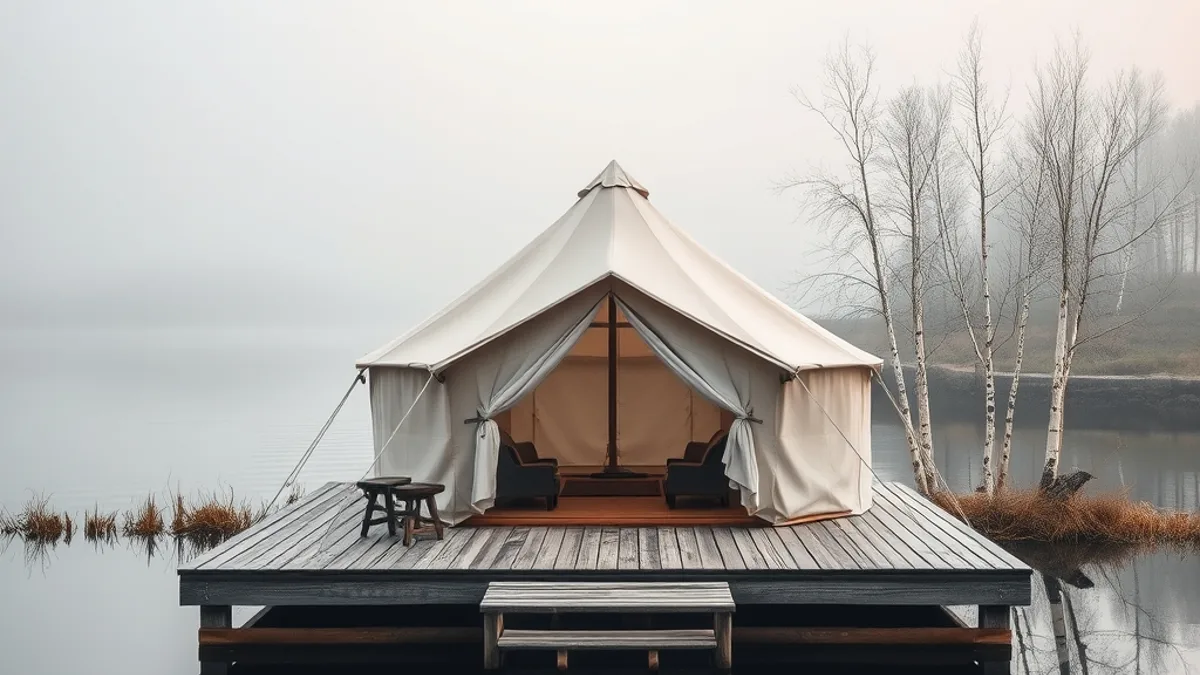
Safari tents on wooden platforms deliver the classic lakeside-fjord feel at mid-range rates of around NOK 1,500-2,500. Heated cabins and floating lodges, meanwhile, extend the season into spring and autumn and are the only realistic winter option when tents and domes simply get too cold.
- Domes: transparent panels mean you get the sunrise and sunset from bed, but expect less privacy than a cabin, especially at sites where domes sit within sight of each other on the same ridge.
- Safari tents: raised wooden platforms keep you dry above wet ground, but you will usually share bathroom and kitchen facilities in a separate service building rather than having your own.
- Heated cabins: insulation and proper heating mean you can shower, cook and dry wet hiking gear indoors, which matters more than it sounds after a rainy day on the trail.
- Floating lodges: sitting directly on the water, they give you the sound of the fjord and sometimes a small deck or ladder for a bracing swim in water that sits around 12-16°C in summer.
Whichever structure you pick, lakeside and waterside sites reward slow travelers. If you like settling in and letting a place sink in, staying three or more nights at one waterside site beats hopping between fjords. This slow-travel approach works beautifully elsewhere too, as this Masurian lake glamping guide for slow travelers shows with its lakeside stays.
Costs and How to Book Before Sites Sell Out
Glamping in the fjords is not cheap by camping standards, but it is far below hotel prices for comparable views. Expect roughly NOK 1,500-4,000 (about €130-350) per night, with the exact figure depending on the structure type, the view you get and the season you travel. A lakeside safari tent in September will sit at one end of that range; a panoramic dome over a fjord arm in July will sit at the other.
Timing your booking
For July and August, book 3-6 months ahead. The best-positioned domes and tents, the ones facing straight down the fjord rather than into a hillside, sell out first, and by late spring your choices shrink to leftovers. If you have your heart set on a specific site or a specific view, treat the booking window as a hard deadline.
Shoulder-season stays in late May or September often cost less and can sometimes be booked just a few weeks out. You trade some warmth and full site services for quieter surroundings and more flexible planning, which suits many travelers perfectly.
What the price actually includes
Before comparing rates, check what is bundled in. Bedding, heating and kayak or boat hire are the usual add-ons, and together they can shift the real price by €20-50 per night. A dome that looks expensive may actually be good value if linen, firewood and a canoe come included, while a bargain tent can quietly grow once you add essentials. Always read the inclusions list on the site’s booking page before you commit.
Practical Tips for a Comfortable Fjord Stay
Fjord weather is famously changeable, and the difference between a magical stay and a miserable one usually comes down to preparation rather than luck. Even in midsummer, air temperatures stay on the mild side rather than warm, and that can feel chilly once wind funnels down the fjord or a shower rolls in without warning. Pack in layers: a warm mid-layer and a waterproof shell will handle almost anything a fjord summer throws at you.
Getting around deserves some thought too. Renting a car gives you real flexibility around Geiranger and Hardanger, where viewpoints and trailheads are spread out. Around the Nærøyfjord, though, you can happily travel car-free using the Flåm railway and the ferries that connect the villages.
- Eye mask: around the midnight sun period in late June, daylight stretches deep into the night, and thin tent fabric blocks out very little of it, so a proper sleep mask makes the difference between sleeping in and waking at 4 a.m.
- Power bank: some remote sites have limited in-tent charging, so bring a decent power bank for phones and cameras if you plan to shoot the midnight sun all evening.
- Quick-dry towel and sandals: shared bathroom blocks are standard at safari tent sites, and your own towel and shower sandals make communal facilities far more pleasant.
- Mosquito repellent: calm evenings near still water can bring out midges and mosquitoes, especially at lakeside sites, so pack repellent even though fjord breezes often keep them away.
Finally, plan one buffer day into your itinerary. Fjord ferries and mountain roads can be delayed by weather even in high summer, and having a spare day means a cancelled crossing becomes a slow morning by the water instead of a missed flight.
Wrapping Up Your Fjord Glamping Plan
The fjords look like the ultimate glamping destination, but a short season, scattered locations and wild price swings can make planning feel tricky. The good news is that the answers are simple once you know them. Match the season to your goal: midnight sun in June, or September’s red slopes with the possibility of an early aurora showing. Then pick your base first – Geiranger, Nærøyfjord, Hardanger or Lysefjord – and choose a dome, safari tent or heated cabin that fits that season.
From there it comes down to timing and packing. Lock in 3-6 months of lead time for summer dates, budget roughly NOK 1,500-4,000 per night, and pack in layers for changeable fjord weather. Do those three things and the dramatic scenery takes care of the rest. If this helped you plan your trip, leave a comment or share the article with a fellow traveler.