Booking a glamping trip sounds simple until you start comparing listings and realize how wildly different the experiences are. A five-tent farm stay and a 60-dome resort both call themselves glamping, yet they deliver completely different nights, price tags and levels of noise. This is where understanding glamping site sizes saves you from booking the wrong kind of trip.
The size of a site shapes almost everything: what you pay per night, whether you’ll chat with the owner over a campfire or queue for a pool lounger, and how far ahead you need to book for summer weekends. In this guide, we break down what small, mid-size and large sites actually mean, compare prices and facilities, look at atmosphere and booking windows, and help you match site size to your travel style and budget. By the end, you’ll know exactly which type fits your next trip.
What Glamping Site Sizes Actually Mean
Glamping operators vary enormously, and the number of units on a site is the clearest way to sort them. Small sites are typically home to just 2-10 units, and they’re often family-run affairs on farms or private land. Think a shepherd’s hut in an orchard, a couple of safari tents in a wildflower meadow, or a bell tent or two beside a farmhouse. The owners usually live on site or nearby, which shapes the whole experience: personal recommendations, flexible check-ins and a genuine sense of being a guest rather than a customer.
Mid-size sites: the middle ground
Mid-size sites run roughly 10-25 units and blend the intimacy of a small operation with a step up in facilities. You’ll often find a shared reception building, a small café or honesty shop, and better-developed bathroom blocks. There are enough fellow travelers to create a bit of atmosphere, but rarely enough to feel crowded. For many travelers, this range hits the sweet spot between quiet and convenience.
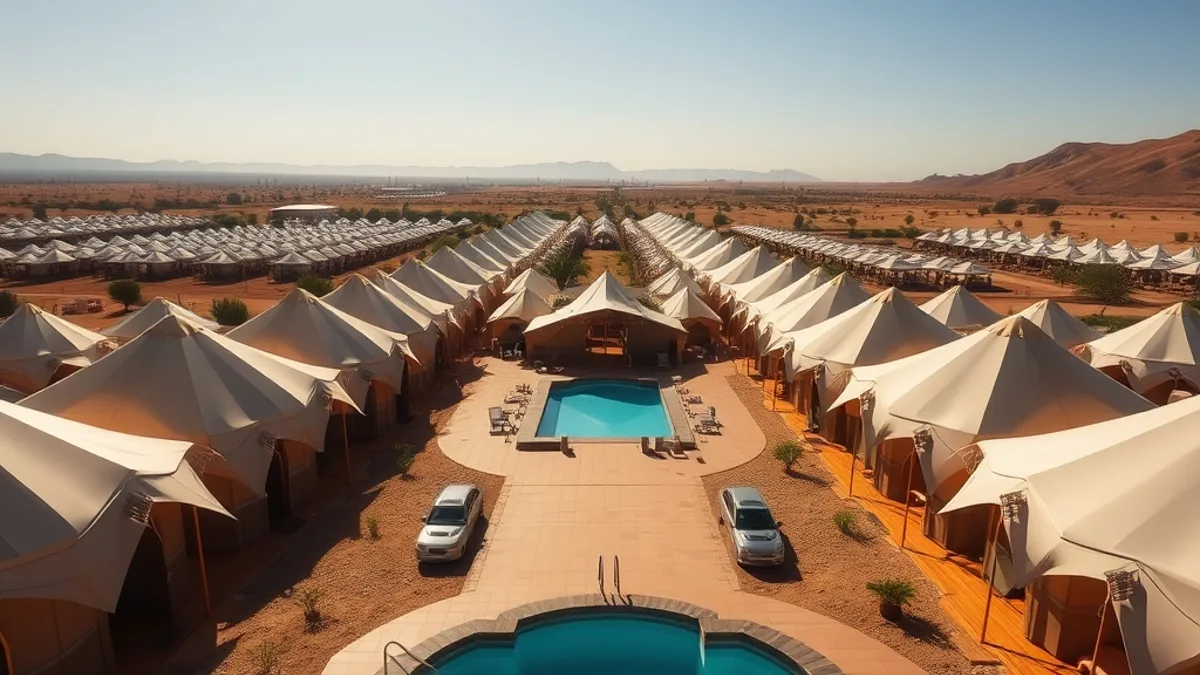
At the top end, big resorts exceed 50 units and operate more like hotels with tent or dome accommodation. They have dedicated staff teams, structured check-in procedures, restaurants, activity programs and the polished consistency you’d expect from a hotel brand. The accommodation itself may be spectacular, but the experience is deliberately scaled up. Knowing which of these three categories a listing falls into, which is usually obvious from the unit count in photos and descriptions, tells you more about your upcoming stay than star ratings or glossy photos ever will.
Price Differences Between Small Sites and Big Resorts
Price is one of the sharpest dividing lines between small sites and big resorts. Small sites usually cost $80-180 per night, and part of the reason is that there are simply fewer upsells. You pay for the accommodation, maybe breakfast, and that’s largely it. There’s no activity desk, no spa menu and no pressure to add extras to your bill.
Big resorts commonly charge $150-400 per night, and the sticker price is often just the starting point. Add-ons like guided activities, equipment rentals, restaurant meals and spa treatments stack up quickly, and it’s easy to spend noticeably more than the nightly rate suggested. A stay at a large resort, such as the one described in this review of a lakeside glamping resort in Castel Volturno, Italy, shows how the on-site extras can shape the total cost of a trip.
Watch the minimum stay rules
Resorts often enforce 2-3 night minimum stays on weekends, which quietly raises the total trip cost even when the per-night rate looks reasonable. A $200 night becomes a $400-600 commitment before you’ve added a single extra. Small sites, with fewer units to fill, tend to be more flexible about one-night bookings, though popular ones may ask for two nights in peak season. Before you book anywhere, check the minimum stay policy and calculate the real total, not just the nightly rate. Your budget will thank you later.
Atmosphere: Quiet Retreat vs Organized Resort Energy
Atmosphere is where small sites and big resorts diverge most sharply, and it’s the hardest difference to judge from photos alone. At a small site, the owner often greets you personally, points you toward local beaches, pubs or trails you’d never find online, and may light a shared campfire where guests gather once the sun drops. The pace is slower, the nights are darker and quieter, and you might hear nothing but birdsong and distant sheep. A good example of that personal, owner-led feel is the coastal glamping stay in Combe Martin, United Kingdom, where the hosts shape much of the experience.
Big resorts, by contrast, deliver organized energy: pools lined with loungers, restaurants with set service hours, kids’ clubs running scheduled sessions and evening entertainment posted on a calendar. Noise and foot traffic rise with unit count, so expect voices, music and movement throughout the day. Neither style is better, but they suit different travelers: small sites favor couples and solo travelers seeking calm, while resorts favor groups and families who want everything on tap.
- Soundscape: small sites lean on natural sound like wind and wildlife, while resorts add poolside music, activity announcements and general guest chatter from early morning onward.
- Meal rhythm: small sites may serve farm-to-table breakfasts at a set time or leave you to cook, while resorts run full restaurant schedules with room service options.
- Evening plans: at a small site, your evening is the campfire and the stars; at a resort, there’s a program of events, bars and entertainment to fill the hours.
- Privacy trade-off: fewer units means fewer neighbors and more open space around your tent, while resort layouts pack amenities and accommodation closer together.
Facilities and Comfort Levels Compared
Facilities are where the gap between a small site and a big resort shows up fastest. At a small glamping site, you can expect the essentials: a shared bathroom block with one or two bathrooms, sometimes a basic kitchen or communal cooking area, and little else. It feels closer to camping, just with a proper bed and a roof over your head.
Big resorts operate on a different level entirely. Tents and domes often come with en-suite bathrooms, and the property adds layers of comfort you would normally associate with a hotel: spa treatments, a gym, multiple dining options and sometimes a pool. At a large property like the one covered in this Under Canvas Lake Powell review, you can see how a big glamping operation balances tent-style accommodation with resort-grade services.
Before you book either type, make a short list of the comforts you genuinely cannot go without. Heating, Wi-Fi and private bathrooms are the three that catch travelers out most often, especially in cooler months or at remote locations. Small sites may offer none of these or only in shared spaces, while resorts usually include them as standard. A few other facility differences to weigh:
- Shared bathrooms at small sites often mean morning queues, so ask how many units share each facility before committing.
- Small-site kitchens are typically self-catering only, while resorts run restaurants or bars that save you from cooking after a long day out.
- Wi-Fi at small sites may be slow, metered or limited to a common area; resorts generally offer stronger connectivity across the property.
- Housekeeping and towel changes are standard at resorts but often on request at smaller operations.
- Resorts may add laundry facilities, gear rental and shuttle services that small sites simply lack the staff to provide.
Booking Windows and Seasonal Availability
Glamping availability is tighter than most travelers expect, and the pattern differs between small sites and big resorts. A family-run site with a handful of units has very little slack in its calendar, while a large resort spreads demand across dozens of accommodations. The steps below walk you through how to plan around both realities.
- Lock in peak season dates early. For June-August travel in the Northern Hemisphere, both small sites and large resorts typically book out 3-6 months ahead. If you want a summer weekend, put a reminder in your calendar and book the moment your dates are firm.
- Check cancellation policies before committing. At small sites, a single cancellation can suddenly open up a unit that is otherwise sold out for weeks, so it pays to ask whether they keep a waitlist. Resorts rarely have this kind of turnover, since they manage dozens of units.
- Consider shoulder season for better access. May and September often bring the best rates and the widest open calendars at large resorts, because demand drops after the school holidays. You get the same facilities without competing with peak-season crowds.
- Read the fine print on stay requirements. Many resorts set arrival and departure rules on weekends that shape which dates you can actually combine. If your schedule only allows a single night, small sites or midweek dates usually give you far more freedom.
One more practical tip: smaller sites often manage bookings personally, so a quick email or phone call can uncover flexibility that a booking platform won’t show. If a site appears full, it’s sometimes worth asking directly about cancellations or midweek gaps, because the owner knows exactly when a unit might free up. Resorts, on the other hand, reward early planning and repeat visits, since their calendars fill in predictable waves around holidays and school breaks.
Timing also works differently once your trip is booked. Small sites may confirm your reservation with a personal note and directions from the owner, while resorts send automated confirmations with check-in details and activity schedules. Whichever you choose, save the confirmation and recheck your dates a week before travel, as seasonal weather and maintenance closures can occasionally shift plans at either type of property.
How to Choose the Right Glamping Site Size for Your Trip
The easiest way to decide is to start with who you’re traveling with and what you want from the trip. Small sites, typically hosting 2-10 units, shine for romance and authenticity. You’ll often get owner-led local tips, farm-to-table breakfasts, and a setting that feels genuinely tied to the land around it. If your goal is a quiet anniversary escape or a slow weekend with a book and a campfire, a small site is usually the better match.
Big resorts, with 50-plus units, are built for a different kind of traveler. Families with kids benefit from kids’ clubs and on-site activities, and first-timers appreciate that everything — dining, entertainment, facilities — is handled for them. If you want guaranteed amenities and don’t mind sharing the space with other guests, a resort removes most of the uncertainty from the trip.
Match the site size to your trip length
Trip length matters more than most people realize. Short breaks of one or two nights suit resorts well, because you can arrive, plug into the schedule, and enjoy the facilities without needing to settle in. Longer, slow-travel stays of several nights or more tend to suit small sites, where the pace is gentler and the surroundings reward lingering rather than activity-hopping.
A simple rule of thumb: if you can describe your ideal evening as “structured,” choose a resort; if you’d call it “unhurried,” choose a small site. Neither is better — they simply serve different trips.
Wrapping Up the Small Site vs Big Resort Decision
Glamping site sizes run the full spectrum, from a tiny farm stay where the owner hands you fresh eggs in the morning to sprawling 50-plus-unit resorts that feel closer to a hotel with canvas walls. Price, atmosphere, facilities and booking lead times all differ sharply between the two ends of that range, so it pays to know which end suits you before you start searching.
The good news is that the decision comes down to two simple questions: who you travel with and how much structure you want. Couples often thrive at small sites with shared campfires and slow mornings, while families and first-timers usually get more value from a resort with on-site amenities. Weigh those factors against your budget, and the rest falls into place. If this helped you plan your trip, leave a comment or share the article with a fellow traveler.