You open the fridge to chill your own bottle of water, think nothing of it, and a day later there is a $6 charge on your bill for a soda you never touched. If this has happened to you, you are not alone — it is one of the most common complaints travelers have about their hotel stay, and it is almost always avoidable once you understand how these fridges work.
This guide to hotel minibar policies explains how charges are actually recorded, what you can expect to pay for a can of soda or a miniature bottle of spirits, and the honest mistakes that lead to false charges. You will also find practical ways to avoid the fees altogether, what to do if you are billed in error, and how to tell when the fridge in your room is genuinely free to use. A few minutes of reading can save you an awkward conversation at checkout.
How hotel minibar policies and charges actually work
Hotel minibar policies work in one of two ways, and knowing which system your room uses explains most surprise charges. In the traditional setup, staff physically check the minibar each day, note what is missing, and add the cost to your room account. Because this is done after the fact, you might drink a soda on Tuesday and not see the charge until Thursday — long after you have forgotten about it.
Modern hotels have largely moved to sensor-based minibars. Each item sits on a weight sensor or RFID pad, and the moment you lift it, the system logs the exact time. Billing is automatic and often happens within 30-60 seconds, which is why charges can appear on your in-room folio almost instantly. These systems do not care whether you consumed anything; lifting an item is enough to start the clock.
The extra fees hiding behind the price list
At some hotels, particularly resorts, the listed price is not the whole story. A restocking fee per item can be added on top, covering the cost of sending staff up to replace what you took. The listed prices themselves are usually printed on a card inside the fridge or on the door, but many guests never read it — which is exactly how a $4 water bottle turns into an unwelcome surprise at checkout.
Typical minibar prices you can expect
Minibar pricing varies by hotel category and destination, but the pattern is consistent: you pay a healthy premium for convenience. Before you reach for that can, it helps to know the typical ranges so you can decide whether the convenience is worth it. The listed prices are usually posted somewhere on or beside the fridge, so take a quick look before you lift anything out.
- Soft drinks and bottled water: generally $3-$10, with the higher end common at resorts and luxury properties where even a small bottle of water carries a markup.
- Beer: usually $5-$15 per can or bottle, and premium or imported labels tend to sit at the top of that range.
- Spirits miniatures and small wine bottles: typically $8-$25, making these the most expensive items per ounce in the entire fridge.
- Snacks like nuts and chocolate: often priced at 2-4 times what the same package costs at a supermarket, and some hotels add a restocking fee on top of the sticker price.
Keep in mind that these figures are general ranges, and actual prices differ by property and country. If the price list shows a price plus a separate restocking fee, read both lines carefully — the fee can meaningfully change what you pay for a single item.
It also pays to compare the fridge against the alternatives before you spend anything. A quick run to a nearby supermarket or convenience store typically costs 50-80% less than the same items from the minibar, which adds up quickly over a multi-night stay. If your room includes complimentary drinks, that is obviously the better deal, but confirm what is actually free before assuming anything in the fridge came with your room rate.
Common ways guests get charged by mistake
Common ways guests accidentally trigger minibar charges
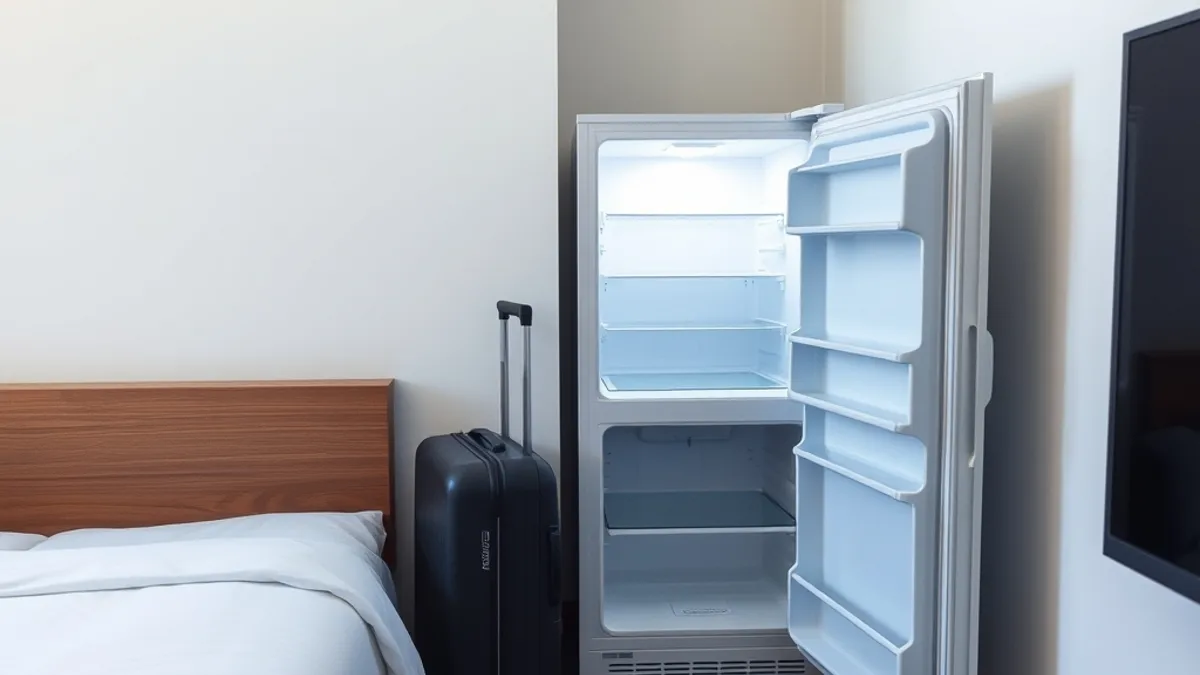
Plenty of minibar charges are genuine, but a surprising number are honest mistakes made by well-meaning guests. Sensor-based fridges in particular are unforgiving: they log movement, not consumption, and they cannot tell the difference between a thirsty guest and someone who is simply rearranging the shelves. Because a weight-sensor minibar can trigger a charge within 30-60 seconds of lifting an item, even a moment of curiosity can end up on your bill. Understanding the common triggers helps you steer clear of them.
- Reading a label: picking up a bottle to check what it is — or lifting it briefly to make room for your own items — can trigger the weight sensor, even if you put it straight back.
- Making space in the fridge: moving an item to rearrange the shelves can trigger a sensor charge even if nothing is consumed, so avoid touching items you do not plan to buy.
- Quick swaps: an item removed and replaced within seconds is still logged by sensor systems, so “I only touched it” rarely holds up as an explanation.
- Storing your own food: shifting minibar items around to fit your leftovers can move them off their sensor pads, producing false charges for things you never touched.
- Leftover charges at check-in: some hotels fail to clear the previous guest’s minibar charges from the room account, so it is worth asking at the front desk whether your folio starts clean.
The safest habit is simple: treat a sensor minibar as a display case. Look at the price card, decide from a distance, and only lift an item if you fully intend to pay for it. If you need chilled storage for your own drinks, ask the front desk whether the fridge can be emptied or unlocked — many hotels will do this on request, and it removes the risk of accidental charges altogether.
How to avoid minibar charges entirely
Avoiding minibar charges is mostly about knowing what kind of fridge you have and planning ahead. The single most useful move happens at check-in, when you can ask two quick questions: is the fridge sensor-based, and are any items inside free of charge? Many guests skip this conversation and end up paying for water they assumed was complimentary, when in fact many 4-5 star hotels include non-alcoholic drinks at no cost. It takes thirty seconds to ask and can save you from small, annoying charges throughout your stay.
Once you know the rules, stock up elsewhere. A supermarket or convenience store run typically costs 50-80% less than the same items from the minibar, and most neighborhoods around hotels have at least one option within a short walk. A few bottles of water, some soda and a couple of snacks will usually cost less than a single minibar beer. If you are staying somewhere for several days, one shopping trip on arrival day covers you for the whole visit.
It also pays to keep an eye on your account as you go. Here are the habits that make the biggest difference:
- Ask about the fridge type at check-in. If staff confirm it is sensor-based, treat the fridge as sealed display storage and keep your hands out entirely, since even repositioning items can log a charge.
- Bring a collapsible cooler bag. If your room only has a minibar fridge you should not touch, a soft cooler keeps your own drinks and snacks cold without touching hotel property, and it packs flat in your luggage.
- Review your folio mid-stay. Drop by the front desk or check the in-room TV or app a day or two into your stay, so a mistaken charge gets caught while it is easy to fix rather than at a busy checkout line.
- Note what you actually consumed. A quick photo of the fridge on arrival gives you a baseline if a charge from a previous guest ever lands on your account.
What to do if you are wrongly charged
Mistaken minibar charges are common, and hotels deal with them daily, so there is no reason to feel awkward about disputing one. Front desk staff can usually remove a mistaken charge in under 5 minutes, especially if you raise it before you leave. The key is acting quickly and knowing what to ask for. Most front desk agents have heard these disputes many times before, and reversing a line item is a routine task for them, not a favor they are granting you.
- Report the charge at the front desk right away. Whether you spot it on your folio during your stay or at checkout, walk up and ask about it directly. Most agents can pull up your room’s minibar record on the spot and reverse the line item in a few minutes. Bring your room number and, if you have it, your checkout receipt so the conversation starts smoothly.
- Ask for the minibar log or timestamp if you are challenged. Sensor-based fridges record the exact time an item is lifted, so that record often shows you never actually consumed anything, or that the charge predates your arrival. Politely requesting the log usually settles the matter, because staff would rather check the data than argue with a guest.
- Call the hotel if the charge shows up after checkout. Some charges post a day late. Have your folio number ready when you call, describe the item in question, and ask for a refund to the card you used. Keep your folio copy until the refund appears on your statement, and note the date and name of anyone you speak with.
Staying calm and specific makes these conversations go faster. State which item, which date and why you believe the charge is wrong, and the vast majority of disputes end with the charge removed and no further fuss. If the first agent cannot help, politely ask for a duty manager rather than repeating the same argument.
Minibar etiquette and when the fridge is actually free
Not every room fridge is a trap. Many 4-5 star hotels offer complimentary non-alcoholic drinks in the room fridge, and this is stated at check-in or on the room information card. If the water, soda and sometimes even the beer are free, the fridge becomes a perk rather than a hazard, so it is always worth confirming the policy when you arrive.
If you do use the minibar
When you consume a minibar item, tell housekeeping the same day so the bill stays accurate. A quick mention at the door, or a note left in the room, prevents the kind of lag that turns an honest charge into a disputed one. This is especially helpful in hotels where staff check the fridge only once a day and charges can post after the fact.
One thing you should never do
Never swap a consumed item with a store-bought replacement. It might seem like a harmless shortcut, but hotels treat this as theft and may add penalties to your bill. The replacement rarely matches the exact brand or size, and staff notice. If you want cheaper drinks, keep them in a cooler bag or ask the front desk whether the fridge can be emptied for your use, which some hotels will do on request.
Wrapping up minibar charges and how to beat them
That surprise $6 charge for water you never drank comes down to how hotel minibar policies work. Sensor fridges can bill you within 30-60 seconds of lifting an item, and typical minibar prices run $3-$25 depending on what you take. The good news is that most fees are easy to sidestep once you know the system.
Stocking up at a supermarket or convenience store instead of raiding the fridge typically saves you 50-80%, and checking your folio during your stay catches mistakes before checkout. When a wrong charge does appear, questioning it at the front desk usually resolves things in minutes. If this guide saved you from a sneaky minibar fee, share it with a fellow traveler or leave a comment about your own experience.