That turquoise pool in the listing photos looks perfect, but photos can’t tell you whether the water is heated, who can see the terrace from the neighboring villa, or whether heating costs extra. A villa with a private pool is usually the most expensive part of your booking, and the most common complaints — cold water, overlooked terraces, surprise fees — are all things you can check before paying.
This guide walks through the practical checks that matter: pool size, depth and heating; privacy and sun exposure; safety features for children; real driving distances and access; and the timing, budget and questions to settle with the host in writing. Work through each section before you book, and you’ll avoid the disappointments that ruin otherwise lovely villa stays.
Why a villa with a private pool is worth the checklist
A private pool is often the single biggest cost driver in a villa rental, which is exactly why it deserves scrutiny before you pay. A booking in the 1,500-5,000 euro per week range is a serious investment, and the difference between a great pool and a disappointing one comes down to details that rarely appear in a listing description.
Listing photos are the main culprit. They show water at its bluest on a sunny day, but they almost never show water temperature, the buildings surrounding the terrace, or who else can actually see you while you swim. A drone shot taken from above can make a cramped, overlooked pool look like a private resort.
The three complaints that ruin most pool holidays
Ask anyone who has rented a villa with a private pool and the same complaints come up again and again: water too cold to enjoy, a pool that feels anything but private, and an unexpected heating fee added at the end. All three are avoidable with a short checklist.
The sections that follow cover the technical checks, the privacy questions, the safety points for families, the practicalities of location and access, and the booking questions to ask in writing. Ten minutes of asking now beats a week of disappointment later.
Pool size, depth and heating: the technical checks
Start with the numbers. Ask the host for the exact dimensions of the pool, because “private pool” covers everything from a proper swimming pool to a glorified bathtub. Private villa pools in Europe commonly range from 8 to 12 meters long, which is enough for laps and comfortable for a family. A plunge pool under 5 meters is fine for cooling off, but nobody is swimming laps in it.
Heating is the second big question, and it matters more than most travelers expect. Unheated pools in southern Europe are often around 22-25°C even in summer shoulder months, which feels refreshing rather than warm. From October to April, an unheated pool in southern Europe is often simply too cold for daily swimming. If you’re traveling outside high summer, ask whether heating is available and budget an extra 150-400 euros per week — a significant add-on that some hosts only mention at booking.
- Cleaning schedule: ask how often the pool is cleaned during your stay — daily, every other day or once a week makes a visible difference in water quality by day five.
- Maintenance visits: confirm whether a technician or gardener enters the property while you’re there, and whether they need advance notice or access to the pool area while you’re using it.
- Heating lead time: some heated pools need a day or two to reach temperature after being switched on, so ask whether the owner heats the pool before your arrival or only after you request it.
Privacy and position: what the photos hide
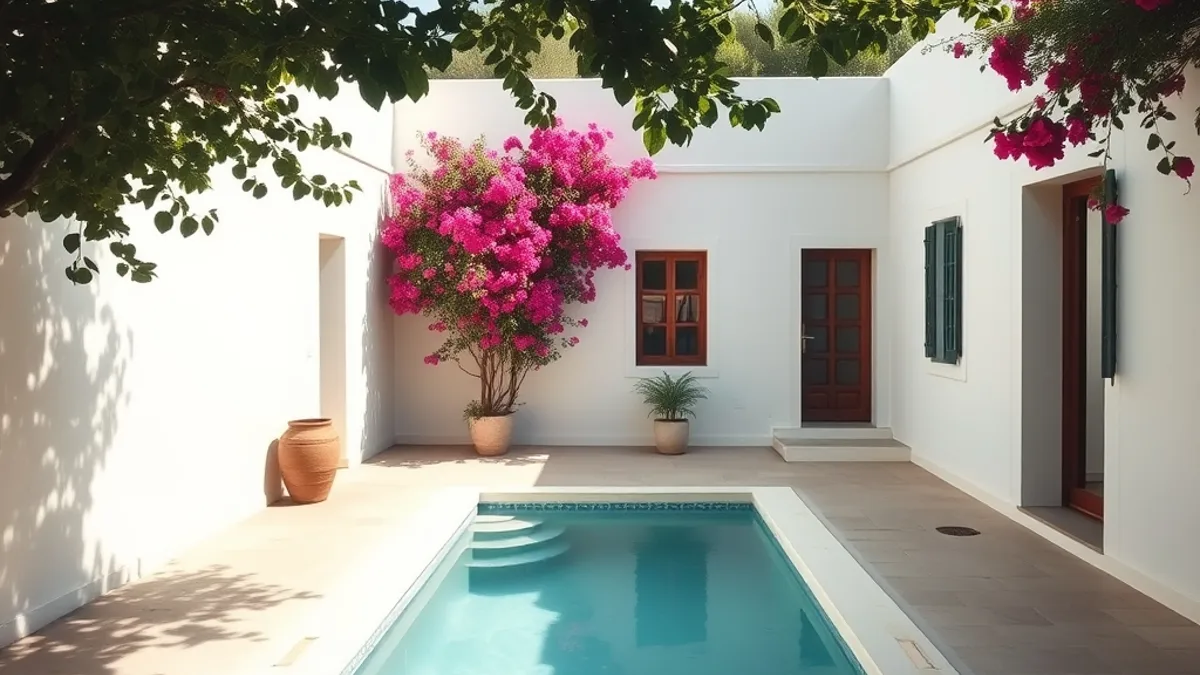
Privacy is the promise of a private pool, and it’s also the thing photos distort most. Wide-angle shots taken from above with a drone make any terrace look completely secluded, even when three neighboring properties have a clear view of the water. Instead of relying on the listing gallery, request recent photos taken from the pool area itself in every direction — toward the house, toward each boundary and toward any neighboring property. What those photos show is what you’ll actually experience lying on a lounger, so it’s fair to ask for them before you pay a deposit.
Then ask directly what overlooks the terrace. Neighboring villas with upper floors, hillside houses built above the plot and public walking paths can all put you on display even when the pool sits inside your own fence. A pool that feels private at ground level can still be visible from a bedroom window two terraces up, so it’s worth asking the host to describe the sightlines in detail rather than trusting a single flattering aerial shot.
- Shared versus exclusive use: confirm in writing that the pool is for your use only — some “private pool” villas share the pool with guests in a second apartment or with the owner, who may live on site in a separate wing.
- Sun exposure: ask which way the pool faces; a north-facing pool loses afternoon light in shoulder seasons, so the terrace feels gloomy by mid-afternoon even if the water itself stays pleasant.
- Noise and sightlines at night: if the terrace is overlooked by a neighboring property, ask whether lights or windows face the pool after dark, which matters if you plan to swim or dine outside in the evening.
Safety and family suitability
A pool looks harmless in photos, but for families with young children it is the one feature that deserves the most questions before booking. Drowning risks aside, most villa pool incidents are actually minor injuries: slips on wet tiles, stubbed toes on hidden steps and falls from uneven edges. None of these show up in listing photos, and few hosts mention them unless asked. A good host will answer safety questions directly, and hesitation is itself useful information. If replies are vague or slow, treat that as a signal about how the rest of your stay will be handled.
Start by confirming what protection exists around the pool itself. In family-oriented villas in France and Spain, a fence, alarm or rigid cover is standard, so treat its absence as a red flag rather than a quirk. Ask which system is installed and whether it is active year-round, since some owners remove covers or switch off alarms outside peak season. Then think about the water itself and everything between the house and the water.
- Ask for the exact depth at both ends, and whether there is a shallow step or shelf where young swimmers can stand with their head above water.
- Request photos of the pool steps or ladder, since dark or narrow steps are hard to see underwater and a common cause of stumbles.
- Ask what material surrounds the pool: smooth ceramic tiles become slick when wet, while textured stone or wood decking offers far better grip for running children.
- If you have a toddler, check whether the pool area can be closed off at night with a self-latching gate or a door children cannot open.
- Ask whether pool lighting works if you expect evening swims, since poorly lit water makes depth and steps harder to judge.
Finally, ask whether the pool is supervised in any way during maintenance visits, and note the emergency setup: a first-aid kit on site and the nearest hospital or clinic within reasonable driving distance. These small checks take minutes to confirm by message and make the difference between a relaxing family week and a stressful one.
Location, access and practicalities
Villa listings love the phrase “close to the beach,” but closeness is measured in driving time, not kilometers. A village two kilometers away can take twenty minutes if the route is a winding mountain road, and that changes your daily rhythm: quick lunch trips become half-day expeditions, and evening restaurant visits need a designated driver. Ask the host how long the drive actually takes to the nearest beach, supermarket and a good restaurant, not just how far. It also helps to ask whether the nearest beach is swimmable or simply the closest stretch of coastline, since rocky coves and shallow family bays can sit in opposite directions from the same villa.
The road itself matters as much as its length. Some villas sit at the end of an unpaved track that becomes muddy after rain or uncomfortable in a small rental car. Confirm whether the final approach is paved and whether a standard rental car is sufficient, or whether you should request a vehicle with higher clearance. If the track is steep, ask whether it stays usable in wet weather and whether there is somewhere to park a second car if friends join you midweek.
- Ask how many parking spaces are on-site and whether they are shaded, which matters more than you would think in high summer.
- If you plan to work from the villa, ask for the wifi speed in megabits and whether the signal reaches the bedrooms and terrace, not just the living room.
- Confirm that air conditioning is in the bedrooms, not only the main living area, and whether it is included in the rate or metered separately.
- For remote villas, clarify check-in logistics in advance: whether someone meets you at a landmark, sends a pin location or leaves a key in a lockbox.
Booking timing, budget and questions to ask the host
Once you have found a villa that passes the pool, privacy and access checks, the booking itself becomes the final test. This is where a great deal gets locked in or lost, so treat it as a short process with clear steps rather than a quick click. A little patience here protects both your budget and your holiday.
- Book early for peak summer. For July and August stays in high-demand regions like Mallorca or Corfu, aim to reserve 6-9 months ahead, when the best family villas are still available and prices have not yet peaked. Leaving it late usually means choosing from the leftovers.
- Set a realistic budget. A 3-bedroom villa with a private pool typically runs 1,500-5,000 euros per week in high season, and the position within that range usually reflects view, privacy and walking distance to town. Decide which of those three matters most to you before comparing listings.
- Get inclusions in writing. Ask the host to confirm exactly what the rate covers: pool towels, mid-stay cleaning, pool maintenance visits and heating, plus the size of any damage deposit and when it is refunded. Vague answers at this stage often turn into extra charges later.
- Ask for recent reviews that mention the pool. Comments about the house tell you little; you want guests from the last season describing water temperature, cleanliness and how private the pool area really is. If no review mentions the pool at all, ask the host directly why.
Keep the host’s written answers with your booking confirmation. If a dispute arises over heating costs, cleaning or the deposit, that message thread is your clearest reference point, and hosts are generally far more careful with promises once they are typed out. A printed copy in your travel folder works just as well as a phone screen if your connection drops at check-in.
The essentials, recapped
A private pool often ends up being the priciest single element of your trip, and photos alone will not tell you whether it is warm, private or actually usable. The most common complaints, cold water, overlooked terraces and surprise heating fees, are all avoidable with a short checklist before you pay.
So verify the pool size, heating costs and cleaning schedule before booking. Check privacy, safety features and real driving distances rather than trusting the photos. And for peak summer in high-demand regions, book 6-9 months ahead and confirm exactly what is included in writing. If this checklist helped you, leave a comment or share the article with a friend planning a villa trip.