Every parent knows the fear: the resort photos look perfect, the reviews mention a “kids’ paradise,” and then you arrive with a two-year-old to find a deep pool, a kids’ club for ages four and up, and a restaurant with no high chairs. Choosing a resort for toddlers is a different exercise from booking a regular family holiday, and the details that matter are easy to miss online.
This guide walks you through what actually counts when you travel with little ones. We’ll cover why toddler-friendly resorts are a different category, how to keep airport transfers and locations manageable, which pool and play facilities are worth checking, what to look for in rooms and sleeping setups, how mealtimes can make or break the trip, and the booking timing and questions that help you verify everything before you pay. Get these right, and traveling with a toddler becomes far more relaxing.
Why Picking a Resort for Toddlers Is Different
Toddlers travel on their own schedule, and that schedule revolves around shallow water, shade and sleep. A resort that works beautifully for adults or school-age children can be a poor fit for a two-year-old: the pools are too deep, the sun loungers sit in full sun, and the entertainment runs late into the evening. What looks like a luxury property in the brochure may simply have nothing your toddler can safely enjoy.
The kids’ club age gap
One of the biggest surprises for parents of very young children is that most kids’ clubs accept children from age 3 or 4. If you’re traveling with an under-three, the club won’t take them, which means you’ll rely on a cot in your room, paid babysitting, and your own supervision for the whole trip. That’s not a dealbreaker, but it changes what you need from the property: shaded space to play together, a safe pool area, and staff who are genuinely comfortable around babies and toddlers.
Grounds and getting around
With a stroller, a nap schedule and small legs, walkable flat grounds matter far more than they would otherwise. A resort spread across steep hills or connected by shuttle buses turns every trip to breakfast into a project. Short airport transfers count too, because a long ride at the start or end of the trip can undo a good nap routine. Before you book, look at the layout, check the terrain, and think about how every journey will feel with a toddler in tow.
Choose the Right Location and Transfer Time
The journey to your resort sets the tone for the whole trip, and with a toddler, transfer time is one of the most important filters you can apply. Aim for a 20-30 minute transfer from the airport as a sensible maximum. A tired toddler on a long bus ride, or worse, a boat transfer with no room to move, can unravel quickly, and that stress lands on everyone. If a resort you love sits further out, ask whether a private transfer can shorten the journey, and plan it around nap time.
Water conditions matter more than views
Cliffside resorts with dramatic ocean views often mean steps, ledges and deep water right off the edge. Surf-heavy beaches look exciting in photos but leave few places where a toddler can splash safely. Beach-entry locations with calm, shallow water are far better for young kids, because they can wade in at their own pace while you sit close by. When comparing resorts, prioritize the water conditions over the postcard scenery.
Practical backup nearby
Finally, think about what happens if something goes wrong. A toddler who gets a fever or an ear infection, or a forgotten bag of diapers, turns a remote paradise into a logistics problem. Check that supermarkets, pharmacies and a clinic are within a short drive of the resort. This is the kind of detail rarely shown on booking sites, so it’s worth an email to the property before you commit.
Check the Pool and Play Facilities
The pool area is where your toddler will spend most of the trip, so it deserves the closest inspection. Look for a dedicated toddler pool around 30-40 cm deep, where little ones can stand and splash without you hovering at arm’s length every second. Just as important is what surrounds that pool: shaded loungers nearby mean you can keep naps and sun protection on track without trekking back to your room every hour.
How a resort manages pool safety tells you a lot about how seriously it takes young families. Fenced or gated pool areas and visible lifeguard cover are strong signals of a genuinely family-focused property, not just one that markets itself that way. If you can’t tell from photos, ask directly whether the children’s pool is separated from the deep pools and whether lifeguards are on duty.
Play facilities matter too, especially for the hours when the sun is strongest or the weather turns. Before booking, check the details that make a real difference day to day:
- Soft flooring under playground equipment reduces the impact of the inevitable tumble, so ask whether the play area has rubber or sand surfaces rather than concrete or tile.
- Shaded sandpits give toddlers a slow, calm activity they can do for long stretches, but only if they’re usable at midday rather than too hot to touch.
- An indoor play space covers rainy days and gives you somewhere cool to retreat during peak heat, which can rescue an otherwise difficult afternoon.
Resorts that get these details right usually advertise them proudly. If the website is vague, that itself is an answer, and a quick email with specific questions will tell you what you need to know.
Rooms, Cots and Sleeping Arrangements
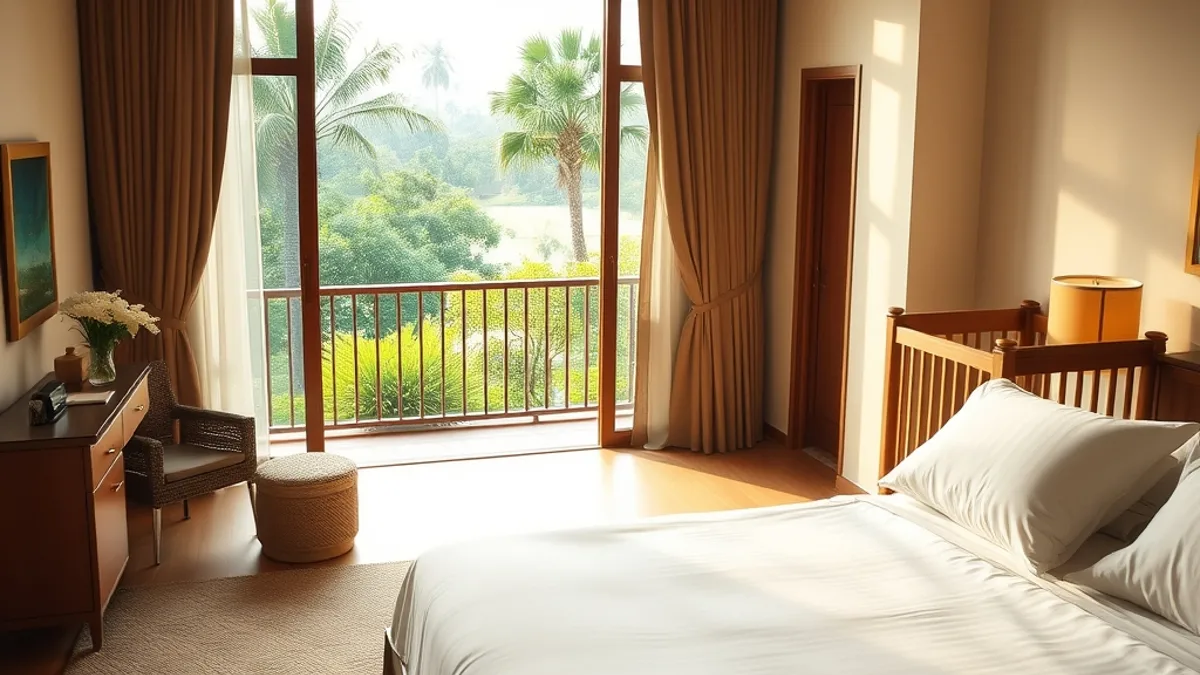
Sleep is the part of a toddler holiday that can make or break it, so it pays to get the room right before you book. Start with the bed situation. Baby cots are usually designed for children up to roughly age 2. If your toddler is older, a cot will be cramped and unsafe, so you will need either a rollaway bed or a family room with real beds. Ask specifically what the resort provides for your child’s age rather than assuming “cot” means something usable.
Next, compare prices carefully. Family rooms or connecting rooms typically run 30-50% above a standard double, and that difference adds up over a week. Price both options before booking: sometimes two standard rooms with a connecting door cost less than a branded family suite, and sometimes the suite works out better once you factor in space for a stroller and luggage.
Small requests that make a big difference
When you reserve, ask for three things. A blackout curtain or darkening blind helps a toddler who wakes with the sunrise. A fridge in the room keeps milk, snacks and baby food cold overnight. And a room set back from the pool bar and evening entertainment means naps and early bedtimes are not ruined by noise. Resorts can rarely promise everything, but a property that answers these requests willingly is usually one that genuinely understands families with little ones.
Food and Mealtimes for Little Ones
Feeding a toddler on holiday is easier when the resort has thought about it. Before booking, confirm that high chairs are actually available in the main restaurant, not just in theory. Ask how many they have, because popular family resorts can run out during busy periods, leaving you balancing a wriggly child on your lap at every meal.
Meal timing matters just as much. Many young children eat dinner at five or six in the evening and are asleep soon after, so check whether the resort offers an early kids’ buffet seating, typically around 5:30-7 pm. An early seating lets your toddler eat in a calmer room and still leaves the evening free for a short swim or a stroll before bed.
Why all-inclusive can be worth it
All-inclusive plans can trim food spending by 20-40% compared with eating out for every meal, and the savings are only part of the appeal. With a plan in place you skip the nightly hunt for a restaurant that welcomes toddlers, has high chairs and serves something your child will actually eat. Breakfast, lunch and dinner are all a short walk from your room, which is exactly what you want with a hungry two-year-old.
Finally, ask the kitchen directly what it can do for small children. Can it prepare simple purees, plain pasta or steamed vegetables on request? A flexible kitchen that happily cooks off-menu for a toddler is one of the strongest signs you have found a genuinely family-welcoming resort.
Booking Timing, Budget and Questions to Ask
The difference between a smooth family holiday and a stressful one often comes down to the questions you ask before paying. A resort can look perfect in photos and still fall short once you arrive with a toddler in tow. A few emails and a bit of simple arithmetic now can save you a week of surprises, so treat the booking process itself as part of the trip. The good news is that it only takes an evening to do it properly.
- Book early for peak season. Aim to reserve 4-6 months ahead if you are traveling in June-August or during school holidays. Family rooms are the most sought-after category and they sell out first, so waiting until the last minute usually means paying more or settling for a standard room that does not fit a family of three or four.
- Email the resort your checklist before paying. Put your key questions in writing: what type of cot they provide and up to what age, current babysitting rates, the depth of the toddler pool, and the minimum age for the kids’ club. Written answers give you something to refer back to if anything does not match expectations on arrival, and a slow or vague reply is useful information in itself.
- Compare total costs, not headline rates. A cheap per-night price can hide a lot. Child supplements, extra-bed charges and the family room upgrade all vary widely between resorts, so add up the full price for your family for the whole stay and compare that figure across properties. Remember that family rooms typically cost 30-50% more than a standard double, so price both options before deciding.
Once you have written answers to your checklist and a true total price, you can book with confidence. A resort that responds clearly and willingly to specific questions about cots, pools and mealtimes is showing you exactly how it will treat your family once you arrive. If the answers come back slow, vague or evasive, take that as a signal and keep looking elsewhere.
The Right Resort Makes Toddler Travel Easy
It is easy to be fooled by glossy photos of a resort that looks family-friendly online, only to arrive and find a deep pool, no shade and nothing for a two-year-old to do. The difference between a relaxing holiday and an exhausting one usually comes down to a handful of basics: a short transfer, shallow shaded pools, real family rooms and flexible mealtimes that actually work around a toddler’s schedule.
Before you pay, verify those details directly with the property rather than trusting the listing, and book 4-6 months out if you are traveling in peak season, when family rooms sell out first. Get the basics right and even a first holiday with a two-year-old can feel genuinely relaxed rather than like hard work. If this helped you plan, leave a comment or share the article with another traveling family.