Planning a stay in Marrakech usually brings you to the same fork in the road: the morocco riads vs hotels debate. On one side, you picture yourself sipping mint tea on a rooftop terrace, tucked inside a centuries-old townhouse in the medina. On the other, you imagine the reliability of a proper hotel — a big pool, an elevator, a taxi at the door. Both sound appealing, and both are genuinely good options, which is exactly why the choice feels so hard.
This guide breaks the decision down piece by piece. We’ll explain what a riad actually is (and what it isn’t), compare medina riads with hotels in Gueliz and Hivernage, look at what each really costs per night, and cover when to book for the best rates and availability. Then we’ll help you match your stay to your travel style, explain why this choice matters more in Marrakech than in most cities, and finish with a clear verdict. By the end, you’ll know exactly where to sleep on your Marrakech trip.
What a Riad Actually Is (and What It Isn’t)
A riad is a traditional Moroccan townhouse built around an inner courtyard, and that layout shapes everything about staying in one. From the street, you’ll see almost nothing: just a plain door, often unmarked, set into the medina’s walls. Step inside and the house opens up around the courtyard, with rooms looking onto a garden or fountain instead of a road. Most riads are small — usually 5 to 15 rooms — which means you’re sharing the space with a handful of other guests rather than hundreds.
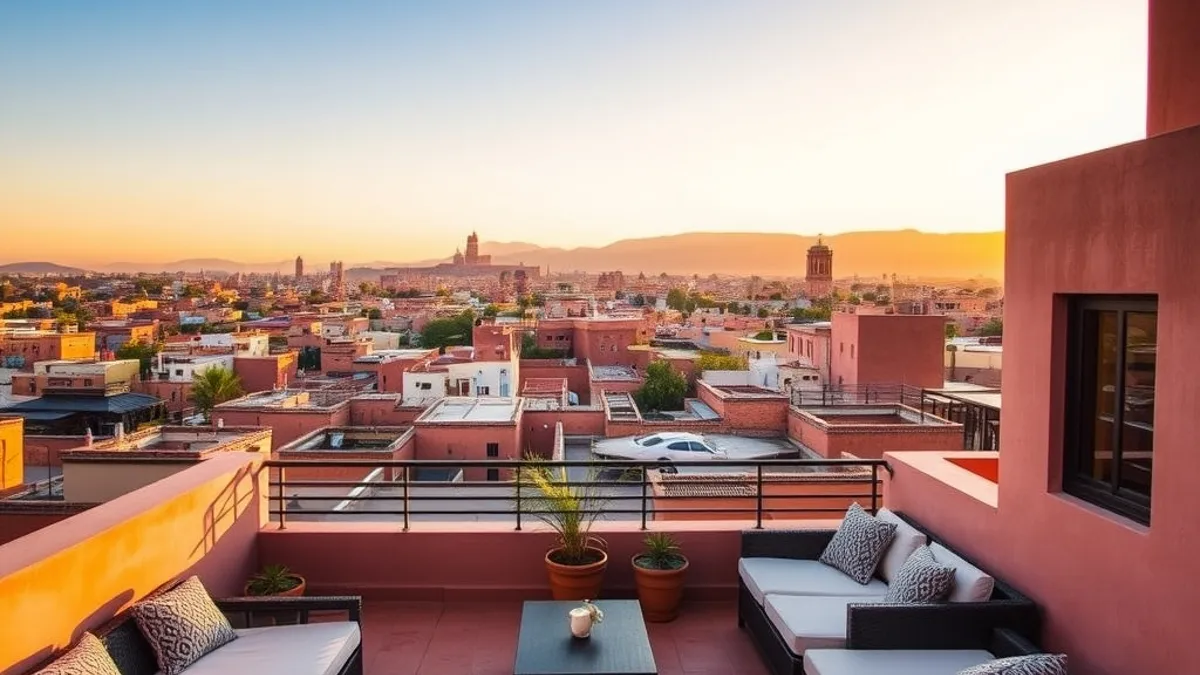
That small scale changes the daily rhythm of your stay. Most riads serve breakfast in the courtyard or up on the rooftop terrace, and many offer a small plunge pool for cooling off and a hammam for a traditional scrub and steam. Service tends to be personal, often with the same few staff members throughout your visit.
Not a budget guesthouse
Here’s the biggest misconception: a riad is not a guesthouse in the cheap sense. The top riads in Marrakech match boutique hotels on design, service and food, with individually styled rooms, serious kitchens and staff who arrange everything from airport transfers to guides. You’re getting boutique-hotel quality wrapped in traditional architecture — you just have to walk down an alley to reach it.
Where You Sleep: Medina Riads vs Gueliz and Hivernage Hotels
Location is where the riad-versus-hotel trade-off becomes very real. Medina riads put you 10-20 minutes on foot from Jemaa el-Fnaa, the famous main square, so you can wander out for dinner and the evening spectacle without planning much. The catch: taxis cannot reach the door. You’ll walk the final stretch through narrow alleys, and that means dragging your luggage over uneven stones, sometimes for several minutes. Good riads solve this by sending someone to meet you at the nearest taxi drop-off — ask before you book.
What hotels do better
Hotels in Gueliz, the modern district, and in Hivernage play a different game. They offer drivable access, on-site parking, larger pools, gyms and elevators — the things that matter if you’re traveling with kids, lots of luggage, or simply want a proper workout before breakfast. You can arrive by taxi at the entrance and be in your room in minutes.
So who wins? Riads take atmosphere and immersion: waking to birdsong in a courtyard, breakfast on a rooftop, the medina at your doorstep. Hotels take convenience, space and facilities. Neither is wrong — they’re just different versions of Marrakech, and the rest of this guide will help you pick the one that fits your trip.
Price Comparison: What Riads and Hotels Really Cost
On price, riads often look like the better deal — and in many cases they are. Mid-range riads in the medina typically run $60-150 per night, and that rate frequently includes breakfast served in the courtyard or on the roof. Luxury riads reach $200-400 per night, but at that level you’re getting design, service and dining that compete with proper boutique hotels.
What hotels charge
International hotels near Gueliz and Hivernage typically cost $120-300 per night. Unlike riads, though, that headline price doesn’t always cover everything: breakfast is sometimes priced separately, and pool access or spa facilities can carry extra charges depending on the property. A four-night hotel stay can quietly grow by a meaningful amount once meals and extras are added.
This is why comparing total costs matters more than comparing headline prices. A riad’s base rate usually bundles in more — breakfast is the big one, but many also throw in airport pickups, hammam access or tea on arrival. A hotel’s base rate is often just the start, with the amenities you actually came for billed on top. Before booking either, add up what your stay will really cost: room, breakfast, transfers and any facility fees. You may find that a $90 riad with breakfast included beats a $130 hotel room where breakfast costs extra — or the reverse, if the hotel’s included facilities are ones you’ll genuinely use every day.
When to Book: Season and Lead Times for Marrakech Stays
Timing matters in Marrakech, and it matters differently for riads than for hotels. The season you pick shapes how comfortable your stay feels, and the lead time you allow decides whether you get your first choice or your fifth. A riad with a popular rooftop terrace or a small plunge pool can be fully booked months before arrival, especially in the cooler months when everyone wants the same courtyards. Here is a simple order of operations.
- Pick your season first. Travel October to April for comfortable temperatures. July and August regularly exceed 40°C (104°F), which makes courtyard riads hotter to sleep in than airier, larger hotel rooms. If you do travel in high summer, prioritize a room with strong air conditioning over a cheaper courtyard option.
- Book riads 2-3 months ahead for high-season trips. That window usually gives you a real choice of rooms and rooftop spots without paying panic prices. Small properties also tend to release their best rooms early, so late bookers often see only the leftovers.
- Allow 4-6 months for Christmas and New Year. The best riads sell out first for the holidays, and the ones left over are rarely the ones you wanted.
- Leave more slack for last-minute hotel plans. Large hotels in Gueliz and Hivernage keep availability even in peak months, so they forgive late booking in a way riads cannot.
The reason for all this lead time is simple arithmetic. A riad has only 5-15 rooms, so a handful of bookings can fill the whole house, while a hotel with hundreds of rooms absorbs demand for far longer. That scarcity also means cancellation policies at riads are often stricter, so read the terms before you commit. Book early for the dates that matter, and stay flexible if you decide to go in the hottest weeks. If your dates are fixed and you are booking inside a month of travel, check hotels first and treat a riad as a bonus rather than a plan.
How to Choose: Match the Stay to Your Travel Style
The right stay depends less on budget and more on who is traveling and what your days look like. A couple chasing quiet evenings and a family with two kids under ten need completely different things from a property, and Marrakech offers both — you just have to match them honestly to how you actually travel.
Choose a riad if you are a couple or a cultural traveler who wants atmosphere, personal service and evenings on a quiet rooftop above the medina, with breakfast served in the courtyard before you head out. Choose a hotel if you are a family needing elevators, bigger pools and kids’ facilities, or if your trip is business or resort-style and drivable access matters more than charm.
Whichever way you lean, check riad details carefully before booking, because small properties vary enormously from one converted townhouse to the next:
- Room size: conversions of old townhouses often produce small or oddly shaped rooms, so check square meters rather than judging from wide-angle photos.
- Air conditioning: confirm it is in the room itself, not just the common areas, especially if you travel in warmer months when sleeping matters most.
- Luggage help: taxis cannot reach the door in the medina, so ask whether staff will collect you at the closest drop-off point and carry your bags through the alleys to the entrance.
- Minimum-age rules: many riads are adult-only, welcoming guests 16 or 18 and over, which matters if you travel with teenagers.
Ten minutes spent checking these four points saves you from the most common riad regrets, and it takes less time than choosing a restaurant for your first night in the medina.
Why Stay Type Matters More in Marrakech Than Most Cities
In most cities, the hotel you pick is a detail — nice room, good location, move on. Marrakech is one of the few cities where the accommodation choice changes the whole experience. A riad walls you off from the medina’s noise behind a plain door, so you sleep in silence and step out each morning straight into the souks. A hotel in Gueliz or Hivernage connects you to modern Morocco: wide streets, cafes, malls and the kind of polished comfort you recognize from anywhere in the world.
The split-stay trick
You do not actually have to choose. Many travelers split their stay — a few nights in a riad, a few in a hotel — and get the best of both. You wake to medina mornings, with mint tea on a rooftop before the crowds arrive, then finish the trip with pool-and-spa afternoons and an easy taxi ride to the airport. It also spreads your spending across two very different price points.
A pattern beyond Marrakech
The same trade-off appears in other medina-style destinations, from Fez to the old towns of coastal North Africa. Boutique historic properties behave very differently from large hotels: smaller, more atmospheric, harder to reach by car and quicker to fill up. Once you understand that pattern in Marrakech, you will recognize it — and book better — wherever your travels take you next.
Final Word: Riad or Hotel for Your Marrakech Trip
So, riad or hotel? If you want medina location, character and lower rates — typically $60-150 per night — a riad is hard to beat. If you prefer facilities, comfort and easier access, a hotel in Gueliz or Hivernage will suit you better. The decision really comes down to your travel style, the season you visit, and how much walking with luggage you can tolerate.
Whichever you choose, booking ahead for the October to April season gives you the best pick of Marrakech’s stays. Have you stayed in a riad before, or are you leaning toward a hotel? Share your plans or questions in the comments, and feel free to pass this article along to a fellow traveler.