Planning Namibia lodge stays can feel overwhelming. The country is vast, the distances between regions are enormous, and lodge quality varies widely from basic desert camps to polished luxury retreats. Choosing the wrong base can mean long, tiring drives or missing out on the experiences that drew you here in the first place.
This guide breaks down the three most popular lodge regions: Sossusvlei, with its red dunes; Damaraland, with its rugged scenery and rock art; and the Etosha area, the country’s wildlife heartland. You’ll find out what to expect from lodges in each region, how rates and inclusions typically work, and when to book for the best availability. We also cover how to compare lodges for genuine value and how to string them together into a sensible driving route, so your accommodation choices support the trip rather than complicate it.
Why Namibia Lodge Stays Work Differently From Other Safari Countries
Namibia doesn’t reward the resort-style approach that works in smaller safari countries. The distances between Sossusvlei, the coast, Damaraland and Etosha are so large that most travelers drive between regions, often covering several hundred kilometers in a day. Lodges here are less like destination resorts and more like well-placed overnight stops on a road itinerary, and their location on your route matters as much as their facilities.
Small lodges, tight availability
Most Namibian lodges are small, often with just 10 to 20 rooms. That intimacy is part of the appeal: personal service, quiet settings and dinner shared with fellow travelers. It also means availability is tight, especially in peak season, and the property you pick effectively defines the whole experience. There’s rarely another lodge down the road to fall back on.
How rates usually work
Full-board or all-inclusive rates are common, with meals and sometimes activities bundled in. This changes how you should compare prices: a lodge that looks expensive per night may include three meals and guided drives, while a cheaper room rate can balloon once you add dining and activities. Always check what’s included before comparing nightly prices between properties.
Sossusvlei Area: Desert Lodges and What to Expect
The Sossusvlei area is all about the dunes, and lodge choice here revolves around one practical question: how quickly can you reach the dunes at sunrise? Lodges cluster in two ways, either close to the Sesriem gate or on private reserves roughly 30-60 minutes away from the public entrance.
Gate proximity matters
Staying near Sesriem gate puts you first in line when the park opens, which matters if you want to climb the dunes in the soft morning light before the heat sets in. The drive from the gate into Sossusvlei itself takes time, so every minute saved at the start counts. Windhoek to the Sossusvlei area is roughly 300-380 km, about 4.5-5.5 hours of driving, so most travelers arrive the evening before their dune morning.
Private-reserve lodges cost more, but they offer dune access without the public gate queue. You can often be on the sand at first light on your own schedule, which many travelers find worth the premium.
What to expect from rates and seasons
Mid-range desert lodges typically run around US$150-350 per night for two, while luxury properties often charge US$400-800+ per night for two, usually with meals included. April to October brings cooler mornings to the desert, which suits early dune climbs far better than the hotter summer months. Check current rates directly, as they shift with season and availability.
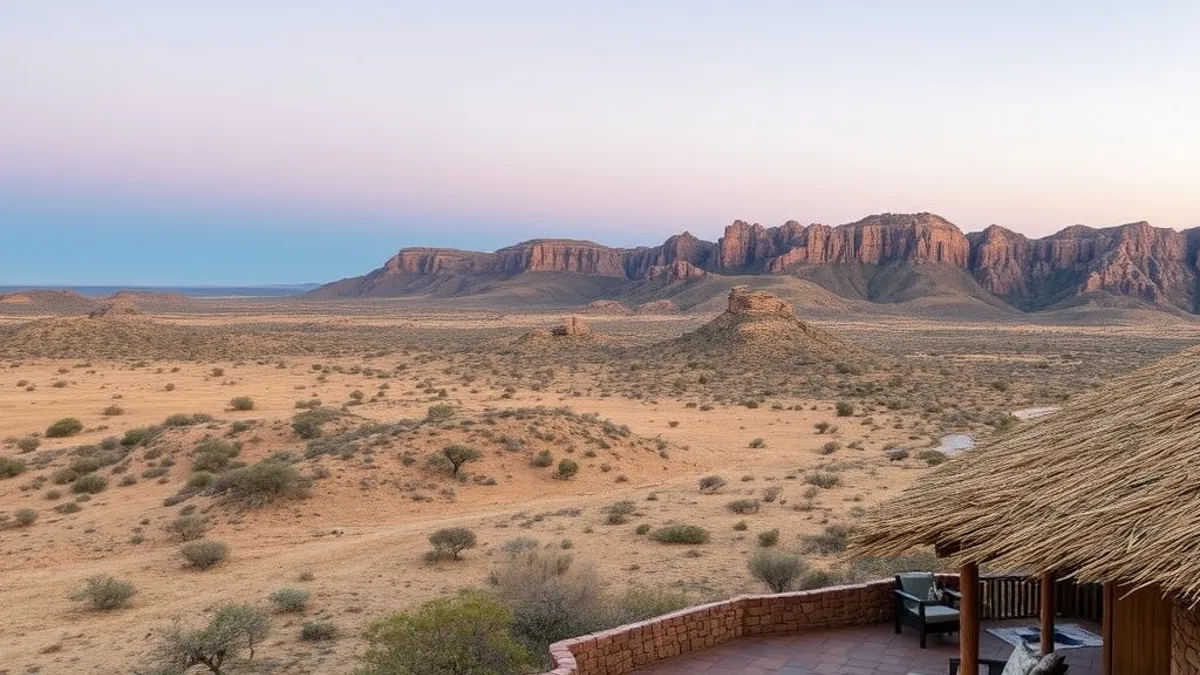
Damaraland: Remote Lodges Between the Desert and the Coast
Damaraland is the wild, rocky heart of northwestern Namibia, and the lodges here reflect that character. Rather than polished resort comforts, the focus is on dramatic scenery, ancient rock art sites such as Twyfelfontein, and guided drives in search of desert-adapted wildlife that survives in one of the harshest environments on the continent.
Eco-style camps in rocky terrain
Many Damaraland properties are eco-style camps built into the rocky landscape, often running on solar power with limited Wi-Fi and a deliberately low-impact feel. That’s part of the charm, but it’s worth knowing in advance: don’t expect the connectivity or constant power supply of a city hotel. What you get instead is silence, extraordinary night skies and guides who know the terrain intimately.
A natural stop on a northern loop
Geography makes Damaraland an easy fit for a road trip. It sits roughly 250-300 km from Etosha’s Andersson Gate, about 3-4 hours of driving, which makes it a natural two-night stop on a northern loop between the coast and the park. Two nights gives you time for both the rock art sites and a proper wildlife drive, rather than rushing through on a single evening. Guided desert-adapted wildlife drives, searching for animals like desert elephants, are usually the highlight, so check whether activities are included in your rate when comparing lodges.
Etosha Area Lodges: Inside the Park vs Outside the Gates
Etosha is one of Africa’s great game-viewing parks, and where you sleep shapes how much of it you actually see. The park spans about 22,000 square kilometers, with waterholes concentrated along the eastern and central edge, so lodge choice matters more here than in almost any other Namibian region.
Accommodation inside the park consists of government-run rest camps, and these rooms book out fastest of anything in the country. Many travelers reserve them a year ahead. Outside the gates, private lodges near Andersson, Okaukuejo and Namutoni offer more comfort, better food and larger rooms, often at comparable rates once meals and activities are included.
The big advantage of outside lodges is that many sit on their own private reserves with constructed waterholes. That means game viewing continues after the park gates close and before they open in the morning, which is often when nocturnal visitors like rhino and porcupine appear at the floodlit waterhole in front of the bar.
Timing matters too. May to October is prime dry-season wildlife viewing, when animals crowd the waterholes and vegetation thins out, making sightings far easier than in the greener months.
- Gate position shapes your daily routine: staying near Okaukuejo puts you in reach of the central waterhole circuit at first light, while Namutoni-side lodges suit travelers heading toward the richer eastern grasslands.
- Rest camp waterholes are public: inside-the-park camps have viewing areas shared with day visitors, whereas private lodge waterholes are usually for guests only, which means fewer people and longer, quieter sightings.
- Self-drive vs guided drives: inside the park you drive yourself on the gravel network, while many outside lodges include open-vehicle game drives with a guide who knows where lions and cheetahs were seen that morning.
- Book inside-the-park rooms first: because rest camp availability disappears earliest, secure those nights before locking in the rest of your route.
When to Book Namibia Lodge Stays and How Far Ahead
Namibia rewards early planners more than most safari destinations. The lodges that define a trip are small, often with 10 to 20 rooms, so a single busy week can fill a property completely. For travel between June and October, aim to book 6 to 12 months ahead. This is especially true for the small desert lodges around Sossusvlei and for any accommodation inside Etosha, both of which sell out earliest.
Green Season Flexibility
Traveling in the green season from November to March changes the picture entirely. You typically only need 3 to 6 months of lead time, and rates often come down noticeably. You trade some wildlife density for lower prices, dramatic skies and fewer vehicles at sightings, which suits travelers who value value over peak conditions.
Don’t Forget the Vehicle
One mistake first-time visitors make: reserving lodges and only then looking for a car. Reserve your 4×4 vehicle at the same time as your rooms, because fleet availability is often tighter than room availability. During peak months, camping-equipped 4x4s can be fully booked well before the best lodges are, and without one, much of your lodge-based route simply doesn’t work. Book both together, and if your dates are flexible, ask operators which vehicles they still hold before committing to specific properties.
How to Compare Lodges and Spot Genuine Value
Comparing Namibian lodges by nightly price alone is one of the easiest ways to overpay. Rates vary enormously in what they include, and a seemingly expensive lodge can work out cheaper once meals and activities are factored in. The same logic applies to any lodge stay anywhere in the world; even a ski-country property like this lodge review from Hakuba, Japan shows how much inclusions and location change the real value of a nightly rate.
Before you compare two lodges side by side, check whether each rate is full board or all-inclusive. In Namibia, many lodges quote a room-only or breakfast rate, then add dinners and guided activities on top, which can double the effective cost. Also look hard at location: a cheap lodge 100 km off your loop can cost you a full day of driving, and in Namibia a day of driving is a day of your trip.
- Read reviews for guides, not just rooms: a beautiful suite means little if the game drives are poor; look for reviewer comments on guide knowledge, spotting ability and how long drives last.
- Check waterhole reports: at lodges with their own waterholes, recent reviews often mention what guests actually saw at night, which tells you far more than marketing photos.
- Confirm activity inclusions in writing: guided drives, park fees and sundowner stops are sometimes billed separately, so ask exactly what your rate covers before booking.
- Ask about meal flexibility: some remote lodges serve set menus at fixed times, which matters if you plan early departures for sunrise dune access or dawn game drives.
Putting Your Namibia Route Together
Choosing where to base yourself in a country this size comes down to one idea: let the lodges shape the route, not the other way around. A classic loop linking Sossusvlei, Swakopmund, Damaraland and Etosha works well with two to three nights per area, giving each region enough time to justify the drive between them.
Timing matters too. Dry season from May to October suits wildlife viewing in Etosha, while April to October keeps desert mornings comfortable for early dune climbs. And because the small lodges that define Namibia lodge stays fill up fast, booking 6-12 months ahead for peak season makes the difference between your first choice and your fallback. Plan the loop around the lodges you actually want, and the distances take care of themselves. If this helped you plan your trip, leave a comment or share the article.