You have a villa budget for one trip, and you can’t stretch it to cover both options. Do you pay for total privacy with your own pool, where you can swim at midnight without seeing another guest? Or do you spend it on a beachfront villa, where the sand is a few steps from your terrace and the waves are your alarm clock? This private pool villa vs beachfront villa question trips up even experienced travelers, because both upgrades feel essential until you see the price tags side by side.
The honest answer depends on who you’re traveling with, when you’re going, and how much you value stepping onto sand versus slipping into your own water. In this guide, we’ll break down what each villa type actually delivers, compare the real costs, look at how season and location change the equation, and finish with a clear verdict for different kinds of trips.
What a Private Pool Villa Actually Gets You
A private pool villa is, above all, a privacy purchase. You can swim before breakfast, sunbathe without a stitch of clothing, and eat dinner beside the water without a single stranger sharing the space. There’s no claiming loungers at dawn, no queue for the shallow end, and no one else’s music drifting over the fence. For many travelers, that alone justifies the cost.
The second big advantage is freedom of timing. The pool is open whenever you are, whether that’s a 6 a.m. lap session or a midnight dip under the stars. You never check the weather, the wind, or the sea state before deciding to swim, and you never walk anywhere to get there.
Families with small children tend to benefit most. A private pool is contained water: you can see the whole pool from a sun lounger, and there are no currents, waves, or crowds to worry about. That kind of supervision is far easier than managing toddlers on an open beach.
Before you book, here’s what to look at closely:
- Price premium: expect to pay 20-40% more than a comparable villa without a pool in the same area, so weigh that against how many days you’ll actually use it.
- Heating: many pools are unheated, which matters if your dates fall at the edges of the warm season; ask before booking.
- True privacy: some “private” pools sit in view of neighboring terraces or are shared between units, so request photos or a floor plan.
- Safety features: if you’re traveling with young children, check whether the pool has steps, shallow areas, or a cover you can lock.
What a Beachfront Villa Actually Gets You
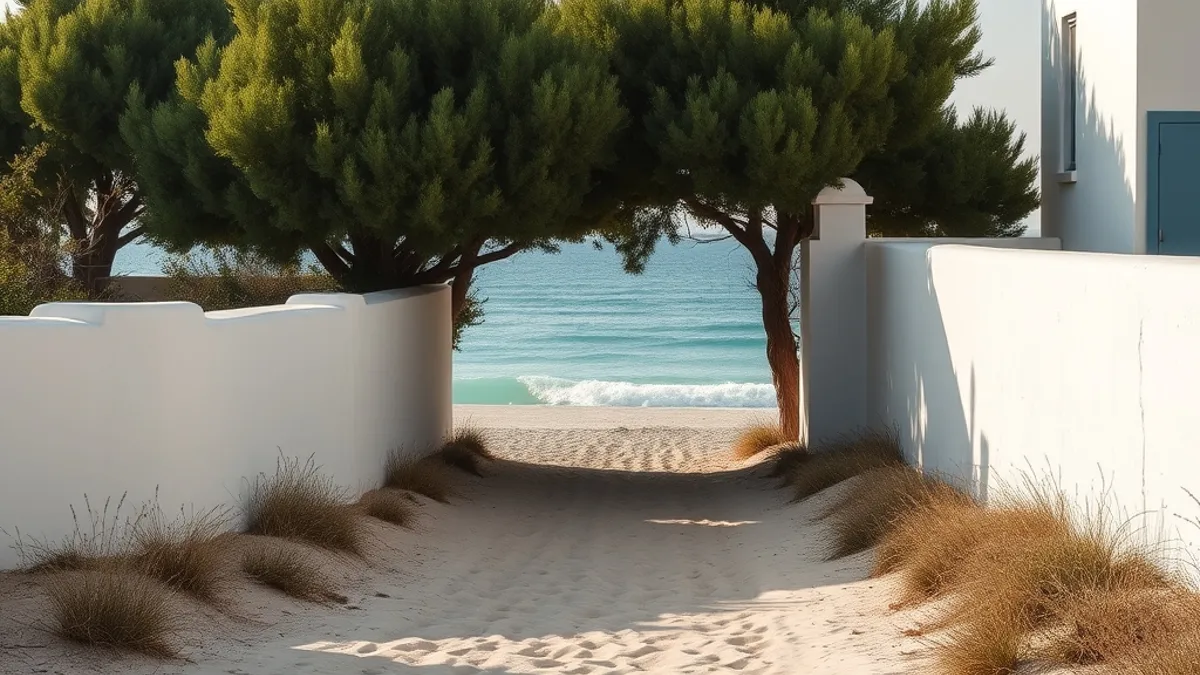
A beachfront villa buys you something a pool can’t: the sea itself, right at your door. There’s no car, no drive, no cooler to pack and carry. You wake up, walk thirty seconds, and you’re on the sand. A “beach day” stops being a planned outing and becomes a normal part of your morning, afternoon, and evening. If you’ve ever abandoned a beach trip because the drive felt like too much effort, this convenience alone can transform a holiday.
The setting also works on you even when you’re not on the beach. Sea views from the bedroom and terrace, and the sound of waves at night, are part of the stay rather than something you drive to see. Many travelers find this alone changes the quality of their sleep and their whole pace of the trip. Mornings with coffee on a terrace facing open water tend to be slower, quieter, and less rushed than mornings anywhere else.
Beachfront locations also put the shoreline’s amenities within reach. Instead of driving to dinner or booking excursions, you simply stroll along the sand. Here’s what that typically means in practice:
- Beach bars and tavernas: many beachfront stretches have restaurants and bars a short walk away, so lunch or a sunset drink needs no planning or parking.
- Water sports: paddleboards, kayaks, snorkeling gear, and boat trips are often rented directly on the beach you’re staying on.
- Evening atmosphere: promenades and beachfront strips tend to stay lively after dark, giving you entertainment without a taxi ride.
- Easier logistics with kids: sand toys, towels, and forgotten snacks are only steps away, so beach days need far less packing and you can pop back to the villa for naps, shade breaks, or lunch instead of committing to a full day out.
- Privacy trade-off: in July and August, beaches draw crowds, and passers-by may walk along the sand in front of your terrace, so check how exposed the villa is before booking.
Private Pool Villa vs Beachfront Villa: Cost Breakdown
Here’s where the math gets uncomfortable: if you want both features, you pay for both. A beachfront villa with its own private pool can carry a combined premium of 50% or more over a standard inland villa without either feature. In popular destinations, that difference can be the cost of an entire extra week elsewhere, so it’s worth deciding which feature you’d genuinely use every day.
When shoulder season evens things out
If your dates are flexible, travel in May-June or September-October. In shoulder season, the price gap between the two villa types narrows considerably, because demand for both beach access and pools drops. You can often afford a beachfront villa with a pool in June that would cost dramatically more in August, with warm water and quieter beaches as a bonus.
The budget-friendly compromise
If the combined premium is out of reach, consider a hillside private pool villa located 1-3 km from the nearest beach. These typically save 20-30% versus a beachfront equivalent while still giving you the pool, the privacy, and often better views. You’ll need a rental car for beach trips, but if you’re renting one anyway, you’re essentially getting the pool upgrade for free. Check current rates for your specific dates and destination, since premiums vary by season and demand.
How Season and Climate Change the Answer
The Mediterranean pool season runs roughly from May to October, and that single fact should shape your whole decision. Book a private pool villa in November or March and you will likely pay a premium for water that is too cold to enjoy, since most pools sit unheated outside the main season. A pool adds cost without value in those months.
In July and August, the equation flips completely. When midday heat makes the sand uncomfortable and the sea feels like a bath, a private pool becomes the daily centrepiece of your stay. You can swim before breakfast, cool off at nap time and relax in the evening without leaving home. In cooler months, the beach matters less anyway — you are probably there for walks, food and scenery rather than swimming, so beachfront access loses some of its appeal too.
Winter-Sun Destinations Play by Different Rules
Head to the Canary Islands or similar year-round destinations and the logic reverses again. Beachfront stays useful all year because the sea and sand remain part of your daily routine, while villa pools may sit unheated and uninviting even in December. If you are chasing winter sun, our guide to Canary villas for winter sun breaks down where beachfront beats a pool. As a rule of thumb: match the feature to the season you are actually traveling in, not the one in the listing photos.
Location Trade-offs: Hillside Privacy vs Sand at Your Door
Hillside and olive-grove pool villas trade convenience for atmosphere. You get sweeping views, genuine quiet and often more space for your money, but the coast usually requires a short drive, so a rental car becomes essential rather than optional. Villas set among the groves of Corfu are a classic example — read more in our piece on Corfu villas for olive groves. If you plan your days around restaurants and beach walks rather than time behind the wheel, factor that in before you book.
Beachfront villas work the other way around. You step out the door and you are at the water, with tavernas, shops and beach bars within walking distance. Mornings are easier too: there is no loading up a car just to spend an hour by the sea. The trade-off comes in July and August, when foot traffic, beach noise and passing crowds can erode the privacy you paid a premium for.
Before booking, verify what “beachfront” actually means. Listings often blur the line between direct sand access and a beach across the road, and the difference matters daily. Ask these questions:
- Direct access or road crossing? A quiet coastal lane is manageable; a busy main road between your terrace and the sand changes the trip entirely, especially with children.
- What is between the villa and the water? Some “beachfront” properties sit behind a public promenade or a strip of beach clubs, which brings music and foot traffic to your terrace.
- How exposed is the terrace? Ground-floor beachfront terraces often sit in view of passers-by, while upper floors or set-back positions restore some privacy.
- Is parking included? Even walkable beachfront villages can have tight parking in peak season, so confirm where you will leave a rental car.
How to Book: Timing and Questions to Ask
Good villa bookings come down to timing and asking the right questions before you pay. The difference between a dream stay and a disappointing one often lies in the details that listings gloss over, so it pays to be methodical. Here is how to work through both.
- Book beachfront first, and early. Reserve beachfront villas 4-6 months ahead if you want July or August dates. These properties have the smallest inventory and sell out first, so waiting usually means paying more or settling for a lesser location. If you are traveling in a group or with another family, coordinate your dates before you start searching, because the best beachfront options rarely last long once summer calendars fill.
- Give private pool villas 2-3 months. Pool villas are more numerous in most destinations, so a shorter lead time typically works — but book earlier for large family sizes or peak weeks. That said, do not assume availability means a good deal; popular hillside and olive-grove properties still fill up well before the high season arrives.
- Interrogate the pool. Ask whether it is heated, its approximate size and depth, and whether it is truly private or shared with other units on the property. A “shared infinity pool” is a very different product from your own. It is also worth asking about safety features such as fencing or covers if small children are coming along.
- Pin down the beach distance. Get the exact distance to the sand in meters, not vague phrases like “close to the beach.” A 300-meter walk is easy; a 15-minute downhill trek with beach gear is not. If the villa is inland or on a hillside, ask about parking at the beach too, since some coves have very limited spaces in summer.
- Confirm the beach kit. Ask whether loungers, shade (umbrella or pergola) and beach towels are included, so you know what to pack or rent locally. This matters especially at villas farther from shops, where renting or buying gear on arrival can be a hassle.
Finally, get the answers in writing — an email from the owner or agent is enough. Written confirmations of pool privacy, beach distance and inclusions give you something to fall back on if the property does not match the listing, and they make refund conversations far simpler if anything falls short on arrival. A short email before you pay costs you five minutes; sorting out a mismatched villa after check-in can cost you a whole holiday.
The Verdict for Your Trip
So which villa wins with one budget and one trip? If you are traveling with small children or simply want total privacy, a private pool villa between May and October gives you the most value for your money. Swim when you like, dine by the water, and never share a deck with anyone.
If your idea of a holiday is barefoot mornings on the sand and you are traveling in the quieter shoulder season, pay for beachfront and skip the pool premium. For many travelers, though, the sweet spot is a hillside pool villa near the coast: quieter, cheaper, and still close to the sea. Whichever way you lean, tell us in the comments or share this article with someone planning the same decision.