Scrolling through a resort’s room options, you stop at two listings side by side: a standard room at one price, and a swim-up suite with direct pool access at a number that makes you wince. The resort rooms vs swim-up suites question comes down to more than just the sticker difference, because what you get for that premium varies a lot from property to property.
This guide walks through what a swim-up suite actually includes, how big the real price gap is between room types, and when the upgrade genuinely pays off. We’ll also cover when a standard room is the smarter spend, how to compare swim-up suites before booking, and a few middle-ground options that deliver some of the pool convenience without the full price. By the end, you’ll be able to match the room type to how you actually spend your vacation days.
What a Swim-Up Suite Actually Includes
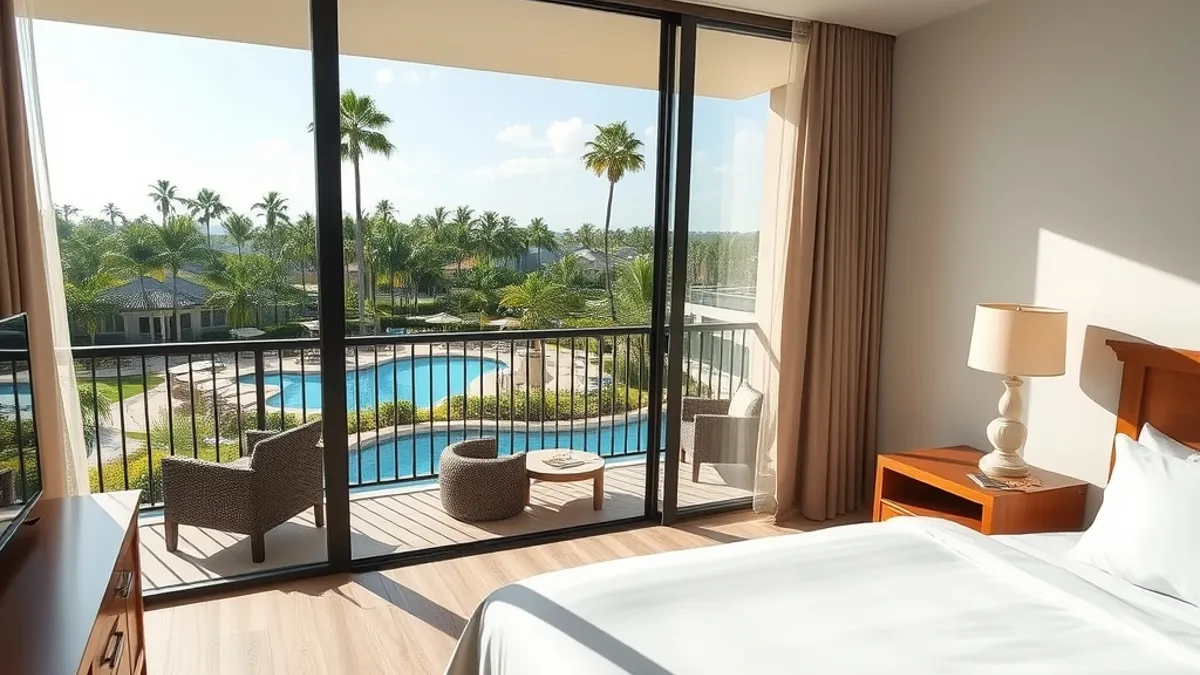
A swim-up suite sounds exactly like what it promises: water at your doorstep. In practice, you step from your private terrace directly into a pool, usually one that runs along a row of ground-floor suites. In most cases that pool is shared with neighboring suites rather than yours alone, though some resorts offer semi-private sections with only a few suites per stretch of water.
What you give up for that access
The trade-off is location. Swim-up suites sit on the ground floor by design, which means you lose the elevated ocean views that higher-floor rooms enjoy. Your terrace often looks onto the pool lane and whatever landscaping surrounds it, and privacy can be limited if neighboring guests float right past your lounge chairs.
Space, however, usually works in your favor. Standard resort rooms commonly run 300-500 sq ft, while swim-up suites typically span 500-800 sq ft, giving you a separate sitting area or a larger terrace alongside the water access.
Who fits in one
Before you picture the whole family spreading out, check the occupancy rules. Most swim-up layouts sleep 2-3 adults, so larger families often need to look at other room categories. If you’re a couple, though, the extra square footage and the water at your feet can make these suites feel like a private villa inside a full-service resort.
The Real Price Gap Between Room Types
So how much more does a swim-up suite actually cost? At the same resort and for the same dates, expect a 30-60% premium over a standard room. That’s a wide range because pricing depends on the resort’s positioning, how many swim-up units it has, and how in-demand those units are.
Why timing changes the gap
Peak season is when the difference stings the most. In the Caribbean and Mexico, peak season runs December through April, and base rates can climb 40-80% during those months. Since the swim-up premium is calculated on top of those inflated base rates, the absolute dollar gap between a standard room and a swim-up suite widens considerably when everyone wants to escape winter.
Shoulder months shrink that dollar difference the most. In May-June and October-November, base rates drop, which pulls the swim-up premium down with them. The percentage gap may stay similar, but the actual amount you pay extra for water access is often noticeably smaller than in high season.
The practical takeaway: if you’re flexible on dates, booking a swim-up suite in a shoulder month can get you the same room for hundreds less over a week. If you’re locked into a December or February trip, budget for the premium to be at its widest, and compare a few resorts before committing, since some price their swim-up inventory far more aggressively than others.
When the Upgrade Pays Off
The swim-up premium only makes sense if you’ll actually use what you’re paying for, and for certain travelers, the answer is a clear yes. The strongest case comes from couples on a 5-7 night trip. Over that length of stay, pool access becomes part of your daily rhythm rather than a novelty you try once, so the cost spreads across a week of regular use instead of a couple of afternoons. Honeymooners and anniversary travelers fit this pattern especially well, since slow mornings and long afternoons by the water are often the whole point of the trip.
There’s also a comfort factor that’s easy to underestimate until you’ve experienced the alternative. At many large resorts, the shared main pool can sit 100+ rooms away from the standard-room buildings, which means crossing hot deck surfaces with everything you need for the day. Multiply that walk by three or four trips daily and the convenience starts to feel less like a luxury and more like sanity preservation.
- The logistics test: If the thought of hauling towels, a cooler, sunscreen, floaties and snacks across a scorching deck with kids in tow makes you tired before you’ve left the room, a swim-up terrace eliminates that entire routine.
- The morning routine: With water at your terrace, an early swim before breakfast becomes effortless, and you can cool off again in the afternoon without packing up and relocating.
- Views versus water: Some guests would rather step straight into a pool from their terrace than gaze at the ocean from a fifth-floor balcony, and if that’s you, the ground-floor trade-off costs you nothing.
If any of these describe your typical vacation style, the upgrade tends to earn its price. If none do, you’re likely paying for access you’ll rarely touch, and that money could fund excursions, spa treatments or an extra night elsewhere.
When a Standard Room Is the Smarter Spend
There is real appeal in walking out your door and sliding into water, but that appeal comes at a price premium that not every traveler should pay. A standard room often delivers everything you actually need from a resort stay, and in several common situations it is clearly the better financial decision.
The first situation is a short trip. On a two- or three-night stay, you will likely spend one of those days arriving and settling in and another heading home, which leaves very little time to enjoy a private pool terrace. The premium you pay for direct pool access gets spread over just a handful of waking hours, and the math rarely works in your favor. Save the swim-up splurge for a trip of a week or more.
Families face an even more practical constraint. Most swim-up suites are built for couples and cap out at two or three adults, so a family of four or five would need to book two suites, roughly doubling an already expensive room category. A standard family room sleeps everyone together under one roof, usually at a fraction of the cost of two swim-up units.
- Excursion-heavy itineraries: If your days are booked with catamaran trips, ruin tours, zip-lining or scuba diving, you will return to your room only to shower and sleep. Paying for a pool at your doorstep makes little sense when you are rarely there during daylight hours.
- Beach-first travelers: Many guests spend their afternoons on the sand rather than at the pool. If the ocean is your main draw, a standard room keeps your budget free for beachfront loungers, water sports or a nicer dinner reservation.
- Budget reallocation: The money saved by skipping the swim-up upgrade can fund spa treatments, off-site dining or an extra night at the resort, which for many travelers delivers more lasting memories than a private pool entrance.
How to Compare Swim-Up Suites Before Booking
Swim-up suites vary far more between resorts than standard rooms do, so a little research before booking pays off. Two suites with the same name at different properties can offer completely different experiences, and the details that matter most are rarely shown in the listing photos. Marketing shots tend to highlight the pool itself while skipping the practical questions that shape your daily experience once you arrive. Before you pay the premium, spend twenty minutes asking the right questions. Here are the four that matter most.
- Find out who shares the pool. Many swim-up suites open onto a long channel-style pool shared with six to ten other suites, while a handful of layouts offer a genuinely private plunge pool. Ask the resort or your travel agent directly which type you are booking, since the price difference between the two can be significant. Also ask whether other guests can swim past your terrace, which is common on channel pools.
- Check the sun exposure. Ground-floor terraces are shaded by the building above, and units facing north or tucked into courtyards can lose direct sun for much of the afternoon. If lying in the sun on your terrace is the whole point, confirm the orientation before you commit. A shaded terrace can be a blessing in high summer and a disappointment in winter.
- Map the walk to shared facilities. Some swim-up blocks sit at the far edge of the property, which means a long trek to the beach, the main restaurants or the lobby. At large resorts, shared main pools can sit 100+ rooms away from standard-room buildings, so ask specifically how far your suite is from the facilities you will actually use. Look at the resort map and ask how many minutes the walk takes, especially if you plan to leave your suite often.
- Book well in advance. Swim-up suites exist in small numbers per resort, so they sell out first. Reserving four to six months ahead usually secures the best selection of layouts and orientations, which matters even more for high season dates.
A quick email to the resort covering these four points will tell you more than any photo gallery. Ask for specific answers in writing, such as the number of suites sharing your pool and the direction your terrace faces. Getting clear answers before you pay the premium is the difference between a suite you love and one that disappoints.
Middle-Ground Options Worth Knowing
If a full swim-up suite feels like too much money for your trip, several middle-ground options deliver a portion of the convenience at a smaller premium. These alternatives are worth comparing against the upgrade before you commit, because for many travelers they land right between cost and comfort. The key is figuring out which part of the swim-up experience you actually want: the water access, the private outdoor space, or simply a quieter corner of the resort.
Pool-view rooms and ground-floor terrace rooms are the most common compromise. You still step outside onto your own patio, often just a short walk from a shared pool, but you skip the premium of a true swim-up layout. The savings can be substantial at the same resort and the same dates. One caveat: at large properties, the main shared pool can sit 100+ rooms away from standard-room buildings, so check the map before assuming a pool-view room puts you close to the water.
Another route is to rent the experience for a single day instead of the whole week. Many large resorts offer cabana or daybed rentals at the main pool, giving you reserved shade, drink service and a private-feeling spot without changing your room category at all. It is an easy way to test whether you would genuinely use that kind of setup every day.
Making the Call for Your Trip
So, is the swim-up suite worth it? If you are a couple planning a 5-7 night, pool-focused trip, that 30-60% premium often buys exactly the experience you want: water at your terrace, no crowds, no hauling gear across hot decks. For longer stays, the daily use spreads the extra cost thin.
On the other hand, standard rooms win for families of 4-5, short 2-3 night trips, and travelers who spend their days on excursions or at the beach. The honest test is simple: count how many waking hours you will actually spend at the pool. If the answer is “most of them,” upgrade. If it is “an hour after dinner,” keep your money for something else. Have you stayed in a swim-up suite? Tell us how it went in the comments, or share this article with someone planning a trip.