Many lodges market themselves as “wildlife-friendly” while running practices that stress or endanger the very animals guests travel to see. Vehicles crowd a single leopard, handlers offer elephant rides, and marketing brochures promise conservation that never appears in the community. Sorting genuine operations from clever greenwashing has become the hardest part of planning a safari or wildlife getaway.
This guide walks you through what responsible wildlife lodges actually do differently, from viewing distances and vehicle limits to certified local guides. You will learn how to verify certifications, spot red flags before you pay a deposit, and choose locations near real habitat rather than fenced compounds. We will also cover the seasons when viewing is most ethical, how to budget sensibly, and the exact questions to ask a lodge before confirming your stay.
What Responsible Wildlife Lodges Actually Do Differently
The difference between a responsible lodge and an ordinary one shows up in the rules that govern every game drive. Ethical operations enforce viewing distances of 25-100 meters from most large animals, and they keep more space from predators. They also cap sightings at roughly 2 vehicles, so a leopard or lion never ends up surrounded by a circle of land cruisers with nowhere to retreat.
Trained guides, not casual spotters
On a good property, guides are locally trained and certified professionals rather than casual spotters hired for the season. They know how to read animal behaviour, and they brief guests before every outing: when to stay quiet, why you never stand up in the vehicle, and what a stressed animal looks like. That briefing is not a formality. It is what prevents a guest from pushing for a closer photo at the wrong moment.
The third marker is money. Responsible lodges document their revenue-sharing with local communities and their habitat restoration projects, with reports or audited figures rather than vague claims in a brochure. If a lodge can show you where the money goes and who benefits, that is a strong sign the rest of its wildlife practices are genuine too.
Certifications and Red Flags: How to Vet a Lodge Before Booking
Certifications give you a starting point, but only if you verify them. Look for schemes recognized by the Global Sustainable Tourism Council, or approval from Green Globe or the Rainforest Alliance. Do not take a logo on the website at face value, because greenwashed marketing copies real certification marks all the time. Genuine certifiers keep public directories of approved properties, so set aside ten minutes to check the lodge’s listing directly on the certifier’s own website before you pay a deposit. If the lodge claims a certification you cannot find in the directory, email them and ask for their certificate number.
The faster filter, though, is the animal experiences on the activities menu. Some practices should end your interest in a lodge immediately, no matter how polished the photography on their Instagram looks. Watch for these red flags:
- Captive animal encounters: any exhibit where wild animals are held for guest entertainment, especially nocturnal species kept awake for daytime viewing, signals the property prioritises photos over welfare.
- Petting or riding wildlife: touching, feeding or riding animals almost always means early separation from mothers and harsh training behind the scenes.
- Baiting for photos: luring predators or birds with food or calls to guarantee a sighting changes natural behaviour and trains animals to approach vehicles.
- Off-road chasing: drivers cutting across sensitive habitat or pursuing animals that clearly want to move away break the most basic rule of ethical viewing.
Finally, ask the lodge directly for their wildlife viewing policy in writing before you confirm anything. A serious operation will send you its distances, vehicle limits and guide protocols without hesitation, often within a day. Vague answers like “we respect nature” are a warning sign that no real policy exists, and you should take your booking elsewhere.
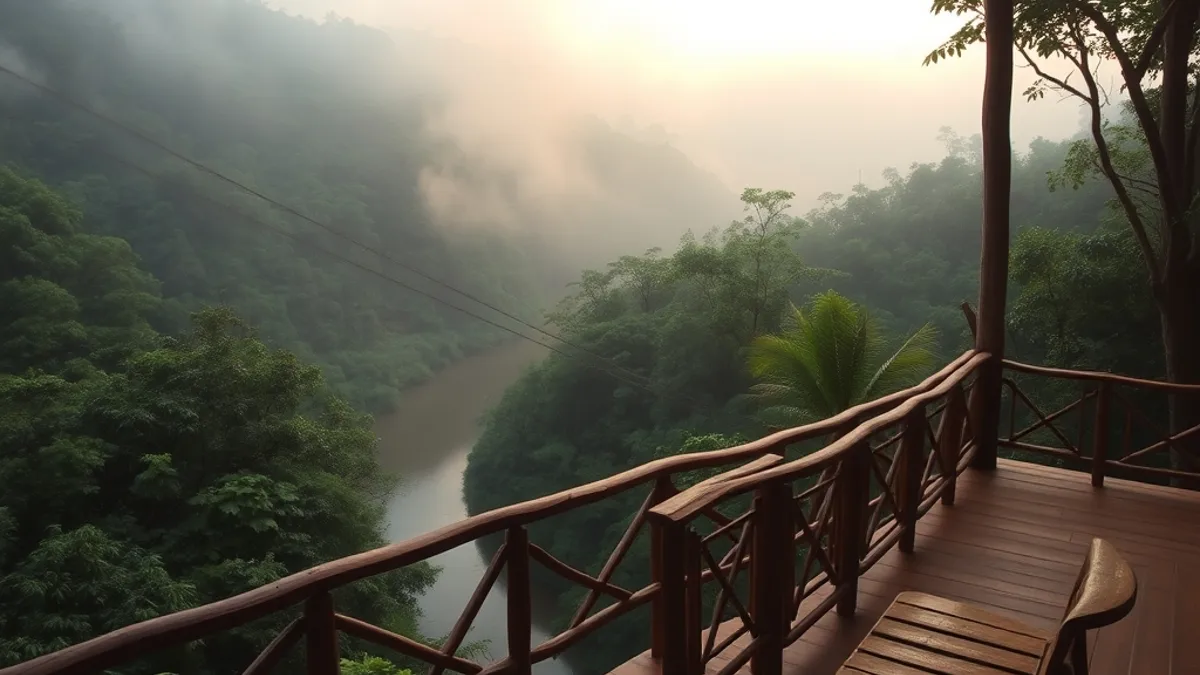
Location Matters: Choosing Lodges Near Genuine Habitat, Not Fenced Parks
Where a lodge sits tells you a lot about how its wildlife is treated. Prefer lodges bordering national parks, reserves or established wildlife corridors, where animals move freely on their own terms. Fenced private compounds are a different proposition entirely: when a property is enclosed, the animals inside it are effectively captive, and no amount of eco-branding changes that.
Size and land use matter more than marketing
Lodge scale is the second factor. Smaller properties of 10-20 rooms near protected areas usually mean lower disturbance than 100+ room resorts, simply because fewer vehicles head out each morning and sightings stay quieter. A small camp also tends to employ staff from the immediate area, which strengthens the local stake in conservation.
Third, look at the land itself. Some of the best lodges operate inside conservation areas where the land is leased back to wildlife rather than developed, with strict limits on what can be built and where vehicles may drive. Ask the lodge to describe its land arrangement. If the answer involves genuine protected status or a lease that keeps habitat intact, you have found the kind of property worth supporting. If it involves fenced enclosures and imported animals, book elsewhere.
Timing Your Stay: Seasons When Wildlife Viewing Is Most Ethical
When you book matters almost as much as where you book. During dry months, water becomes scarce and animals gather around rivers and waterholes, which means guides can position vehicles on established tracks instead of cutting across grassland to chase moving herds. That single factor does a lot to reduce habitat damage. In East Africa, the main dry-season window runs from June through October, while southern Africa’s typically falls between May and September.
Seasons to think twice about
Calving and breeding seasons are when wildlife is most vulnerable. Young animals have little stamina, and mothers are easily separated from their offspring by vehicles pushing too close for a better angle. If a lodge advertises close-up sightings of newborn animals, treat that as a warning rather than a selling point. Ask how they adjust their viewing practices during these sensitive periods.
Shoulder seasons deserve more attention than they usually get. With fewer visitors in the reserve, you’ll often share a sighting with fewer vehicles, which is better for the animals and better for your photos. Rates at responsible lodges also tend to soften outside peak weeks. Check with your operator or the lodge directly, since exact shoulder-season dates shift by region and from year to year depending on rainfall patterns.
Budgeting for Responsible Wildlife Lodges
Responsible wildlife lodges are not automatically expensive, but they are rarely the cheapest rooms on the market. As a rough guide, mid-range responsible lodges commonly run $150-400 per night, while top-tier eco-lodges typically charge $500-1,500. These are broad ranges, and rates vary by country, season and what is included, so always confirm current prices with the lodge itself.
What your money actually funds
That price gap often reflects real costs, not marketing. Higher rates frequently include conservation levies, park or concession fees, and direct funding for community projects such as schools, clinics or employment programs. A lodge paying fair wages to local guides and leasing land for wildlife habitat simply cannot match the rates of a property that skips these commitments. If a deal looks suspiciously cheap for a prime wildlife area, ask what is being left out.
Timing your booking matters too. Lodges that limit group sizes and cap the number of vehicles per sighting have fewer rooms to sell, so high-season dates fill early. Book 6-12 months ahead for peak-season stays at these properties. Last-minute bargains do appear in quieter months, but waiting rarely works at small lodges with strict capacity rules.
Questions to Ask Before You Confirm Your Wildlife Lodge Stay
Once you have a shortlist, the fastest way to separate genuine operations from greenwashed ones is to ask direct questions and pay attention to how the lodge answers. Responsible properties respond quickly, in writing and with specifics. Vague replies, or answers that pivot to scenery and luxury, tell you what you need to know before you hand over a deposit.
Start with a single email covering the essentials, then go deeper on anything unclear. A lodge with a real wildlife policy will have answers ready, because staff hear these questions often and should be able to reply without checking with head office. Beyond the core questions below, ask about maximum group sizes on guided walks, whether night drives are offered and under what rules, and how guides handle a sighting when an animal shows signs of stress such as repeated alarm calls or moving away from vehicles.
- Ask how the policy is enforced on the ground: who intervenes when a driver from another operator pushes too close, and whether the lodge reports violations to park authorities.
- Ask for concrete examples of what the conservation contribution funded in the past year, such as anti-poaching patrols, ranger salaries or a named community project, with evidence rather than brochure language.
- Ask how guides are trained and recertified, and whether they receive regular refresher training on animal behaviour and guest safety.
- Ask whether any animals on the property are fed, enclosed or handled for guest entertainment, and what the lodge’s stance is on neighboring facilities that do.
Keep copies of the replies. If a lodge eventually breaks its own written policy during your stay, you will have grounds for a refund request and a factual review that helps other travelers.
Wrapping Up Your Responsible Wildlife Lodge Choice
Choosing a wildlife lodge that genuinely protects animals comes down to a handful of clear signals. Responsible lodges enforce viewing distances, limit vehicles, employ certified local guides and document their conservation work. The ones that only talk about being wildlife-friendly tend to show it in vague brochures rather than written policies, and that difference matters when the animals you came to see are the ones being stressed.
Before you book, verify certifications, match your dates to dry-season viewing windows and budget $150-1,500 per night depending on tier. Asking direct questions about vehicle limits and community revenue before booking is the simplest way to filter out greenwashing. If a lodge can’t answer clearly, take your money somewhere that can. If this helped you plan a more ethical safari, leave a comment or share the article with a fellow traveler.