Santorini vs Crete villas is one of the most common dilemmas travelers face when planning a Greek island escape, and for good reason. Santorini promises that world-famous caldera view from a cliffside terrace, while Crete offers space, private pools and beaches at a fraction of the price. Both are beautiful. They simply reward very different kinds of trips.
This guide breaks the choice down into the decisions that actually matter: how each island’s villa market works, what your budget realistically buys on each one, when to book for the best rates, and how you’ll get around once you arrive. By the end, you should be able to match the island to your trip length, travel style and budget with confidence, rather than agonizing over photos of infinity pools and whitewashed cave houses.
Two Islands, Two Very Different Villa Experiences
The first thing to understand is that these two islands operate on completely different scales. Santorini covers about 76 km², which makes it one of the smaller inhabited Greek islands. It is built around a ring of cliffside villages perched on the caldera rim, and that geography shapes everything about villa life there. Space is scarce, so villas trade square footage for the view. You pay for the terrace and the sunset, not for sprawling interiors.
Crete is Greece’s largest island at roughly 8,300 km², more than a hundred times bigger. Villas here sit in olive groves and hillside gardens, often with full-size private pools, multiple bedrooms and outdoor dining areas. Room to spread out is the default, not a luxury upgrade.
Let your itinerary decide the island
This size difference explains why the islands suit different stays. Santorini works best for short, scenery-focused trips of two to four nights, where your days revolve around the view, village walks and long dinners. Crete rewards week-long stays, because that is how long it takes to enjoy its beaches, gorges, archaeological sites and day trips without rushing.
So start with your calendar, not your wishlist. If you have a long weekend, a Santorini villa gives you everything you came for. If you have a full week or more, a Crete villa will give you far more variety and comfort for the same money. Deciding this first changes what a villa can realistically deliver on either island.
Santorini Villas: Paying for the Caldera View
In Santorini, the view is the product, and the price reflects it. Caldera-side villages like Oia, Imerovigli and Fira command the highest villa rates on the island, typically €250-800+ per night in July and August for properties with a proper sunset-facing terrace. The closer your villa sits to the caldera rim, the steeper the premium, and the most photographed positions in Oia tend to book out long before summer.
Cross to the east coast and the math changes. Villages such as Kamari and Perissa sit on the beach side of the island, where rates drop noticeably. The trade-off is simple: no caldera views and no sunset drama from your terrace, though you gain easy access to the island’s long black-sand beaches. Some travelers split the difference by staying east and visiting the caldera villages for evenings out.
Most caldera-side villas are cave-style conversions, carved into the soft volcanic rock. They are atmospheric, with curved white ceilings and shaded terraces, but often compact. Bedrooms can be small and ceilings low, and many properties offer plunge pools rather than full-size swimming pools, simply because there is no room for anything bigger on the cliff.
Before booking, read the fine print on access. Cliffside villages are steep, and many villas involve flights of steps from the nearest road or parking area. That matters if you have mobility limitations or heavy luggage, so ask the host directly about the route from drop-off point to door.
- Ask about luggage handling. Some caldera villas offer porter help or donkey-assisted transfers up the steps, but many expect you to carry bags yourself, so confirm before arrival.
- Check the terrace orientation. A “caldera view” can mean a full sunset panorama or a partial glimpse from an angle; listings and guest photos will tell you which you are paying for.
- Look at the pool realistically. A plunge pool suits cooling off, not swimming, so families with children may prefer east-coast properties with larger pools.
- Consider noise and foot traffic. Villas on Oia’s main sunset-viewing lanes get heavy evening crowds passing by, while properties in Imerovigli tend to sit in quieter stretches of the caldera path.
If you want a sense of what a caldera-view stay actually feels like day to day, the Ikies Santorini review of a cave villa in Oia walks through the whole experience in detail, from the steps at check-in to evenings on the sunset terrace.
Crete Villas: Space, Pools and Village Life
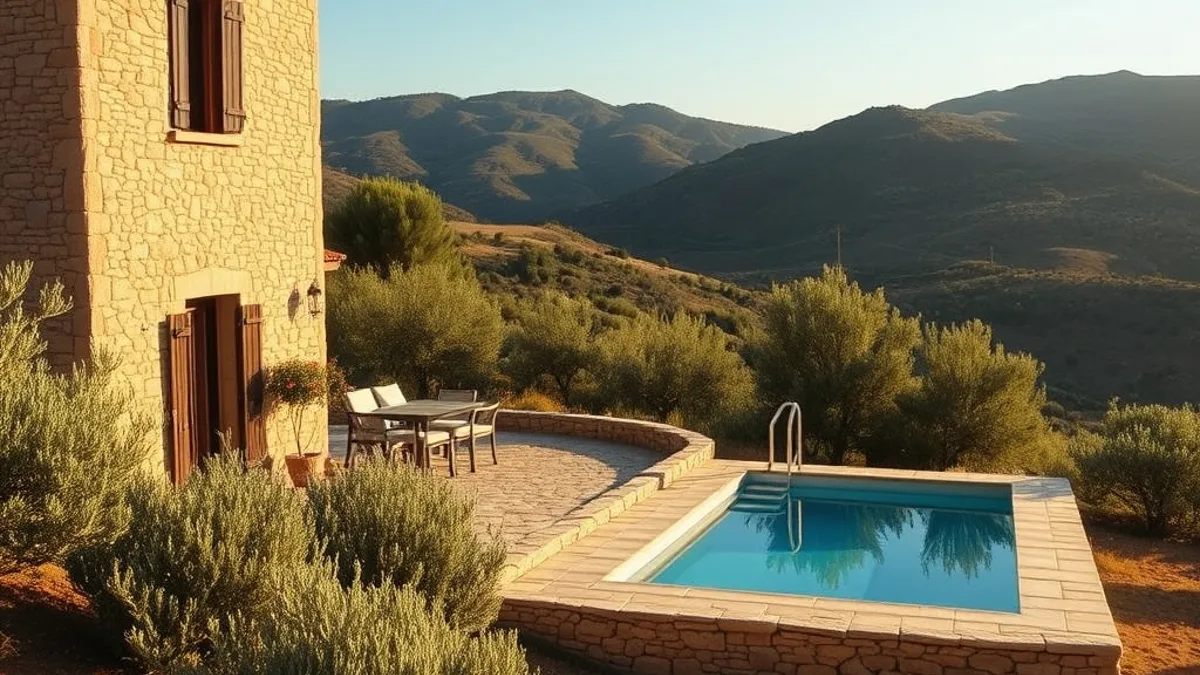
Crete’s villa market is built around space, and that starts with the regions. The Chania and Rethymno areas in the west combine genuine old-town charm, Venetian harbors and atmospheric dining streets with countryside villas tucked among olive groves a short drive away. It is a setup that lets you split your week between town evenings and poolside mornings without ever feeling stuck in a resort.
At the upmarket end, Elounda and the wider Lasithi coast in the east are known for larger sea-view villa estates, many with substantial grounds and long water views over Mirabello Bay. This is where Crete competes directly with Santorini on scenery, but with far more interior space behind the view.
What your money gets you
The headline difference is the pool. Private pools are standard on most Cretan villas, which typically cost €120-400 per night in high season, a fraction of Santorini’s caldera premium. For that rate you usually get a full-size pool, multiple bedrooms, a proper kitchen and outdoor dining space, rather than a compact cave suite with a plunge pool.
Village-adjacent villas add another layer of value. Staying within walking distance of a working Cretan village means tavernas, bakeries and small markets on your doorstep, plus a genuine look at local life, without the crowds of a purpose-built resort. You get culture and convenience in one base.
If the olive-grove setting appeals to you, it is not unique to Crete. villas set among Corfu’s olive groves show how a similar landscape works on another Greek island, which is useful context if you are still deciding between islands.
Price and Value: What Your Budget Buys on Each Island
The clearest way to see the price gap between these islands is to spend the same amount on each. A budget of around €300 per night gets you a modest caldera-view studio in Santorini, likely cave-style and on the smaller side. On Crete, that same budget typically secures a three-bedroom villa with a private pool, gardens, and space for the whole family to spread out.
That comparison reveals something important: Santorini’s premium is almost entirely about location. You are paying for the caldera view and the cliffside address, not for extra square meters or facilities. At the same price point, Crete usually delivers better space, more attentive service, and a longer list of amenities. If your priority is the view itself, Santorini justifies the cost. If your priority is how you live in the villa, Crete wins on value.
Timing changes the math
Shoulder-season rates drop sharply on both islands, and the biggest savings land in May-June and September-October. A caldera-view villa that feels out of reach in August can become genuinely affordable in early June, and Cretan pool villas drop well below their high-season rates. If your dates are flexible, shifting your trip by a few weeks can be worth hundreds of euros per night.
Finally, factor in the extras before comparing nightly rates. Santorini’s small size keeps transfer costs low, since most villas are a short drive from the airport or ferry port. On Crete, you will likely need a rental car to reach beaches, tavernas and sights, so add fuel and parking to your total. Neither extra is huge, but they narrow the gap a little more than most travelers expect.
When to Go and How Far Ahead to Book
Villa availability on both islands follows a predictable rhythm, and booking at the right time matters more than most travelers realize. The villa season on both islands runs roughly May to October, with July and August as the crowded, most expensive peak. During those peak weeks, the best properties can disappear months in advance, while shoulder-month travelers often have genuine choice even when booking later. The key is matching your booking timeline to your travel dates and your island, because Santorini and Crete behave very differently when it comes to availability. Here is a practical sequence to follow.
- Fix your dates and trip length first. Knowing whether you are traveling in peak summer or the shoulder months determines everything else, because rates and availability swing dramatically between the two. A flexible calendar is your single biggest money-saving tool, so decide before you start browsing listings.
- Book Santorini caldera-view villas 4-6 months ahead for summer dates. The stock of genuinely well-positioned caldera-view properties is limited, and the best ones are claimed early. Waiting until spring for a July trip usually means paying more for a lesser view.
- Give Crete a bit more flexibility, but not too much. The island’s much larger villa supply gives you more options closer to your travel date, though for July and August weeks, earlier is still safer.
- Target May-June or September-October for the best overall deal. These windows deliver warm seas, quieter villages and noticeably lower rates on both islands, and even late bookers can find quality villas.
One more tip for the shoulder months: some of the most memorable places to stay are not villas at all but family-run homes in the islands’ small villages. If you want a deeper dose of local life alongside your villa stay, it is worth reading about staying with local families in Greek villages before you finalize your base. Whichever route you take, locking dates early in the season window secures the best properties at the fairest prices.
Getting There and Getting Around
Logistics differ sharply between these two islands, and they should influence where you base yourself. Crete, as Greece’s largest island, is served by two airports, Heraklion and Chania, which together offer more flight options and more direct routes from European cities than Santorini. That makes getting to Crete easier for many travelers, especially those arriving on charter or seasonal direct flights.
Santorini has one small airport, plus frequent summer ferries from Athens. The ferry crossing is a classic Greek travel experience, but keep in mind that sailings can be affected by wind disruptions, particularly on gustier days. Build some buffer into your schedule if a ferry connection is essential to your plans.
Once you land, the two islands demand completely different approaches. Santorini is compact enough that you can walk between the cliff villages and get around without a car. Crete is the opposite: its size means driving distances of 1-3 hours between highlights, so a rental car is practically required. That also means your choice of villa region matters enormously, since basing yourself far from your priorities adds daily driving time.
- Match your Crete base to your top priorities. If beaches come first, look at the north or northwest coast; if you want old-town evenings plus countryside, the Chania and Rethymno regions keep both within easy reach.
- Book your rental car early for Crete in summer. Demand for automatic transmissions and family-sized vehicles outstrips supply in peak weeks, and arranging the car with your villa host’s advice can simplify parking at the property.
- On Santorini, use transfers and the local bus network. Most villa hosts can arrange a port or airport pickup, and buses link the main villages well enough that many visitors never miss having a car.
- Check ferry schedules close to departure. Summer timetables are frequent, but confirming your sailing a day or two ahead protects you from last-minute wind-related changes.
Which Island Base Fits Your Trip
So, Santorini vs Crete villas: which island deserves your budget? If you’re planning a short romantic stay and the caldera view is the whole point of the trip, Santorini is the clear winner. Nothing on Crete quite matches waking up above that blue dome of water, even if the villa itself is compact and the price is steep.
Crete wins for families, longer trips and travelers who want space, pools and beaches for their money. In the end, three factors settle the decision: your budget, your trip length and how far ahead you can book. Whichever island you choose, reserving your villa well before the summer rush gives you the widest choice of the best properties. Have you stayed on either island? Leave a comment below or share this article with a friend planning their Greek escape.