Choosing where to stay in Seville is confusing because the three most appealing neighborhoods offer completely different experiences within walking distance of each other. Santa Cruz, Triana and the old center all sit close together on the map, yet each delivers a distinct version of the city — from monument-side mornings to riverside tapas evenings. This Seville hotel guide breaks down what each zone actually feels like, so you can match your hotel to the trip you want rather than the first appealing photo you find.
Along the way, we’ll compare the character and trade-offs of each neighborhood, look at how the seasons change the calculus, and share practical tips for spotting a genuinely good hotel in any of the three zones. Whether you’re visiting for the first time or returning for a longer stay, the right base makes a real difference in a city built for walking.
Why a Seville Hotel Guide Starts with the Neighborhood
Seville’s three key hotel zones — Santa Cruz, Triana and the old center — sit within about 20 minutes of each other on foot, but staying in one feels like staying in a different city from the others. Santa Cruz is a maze of alleys and orange-tree courtyards pressed right up against the Cathedral and Alcázar. Triana lies across the Guadalquivir river, with a residential rhythm and its own proud identity. The commercial heart around Plaza Nueva and Calle Sierpes hums from morning to night.
Because the zones are so close, it’s tempting to think the choice doesn’t matter much. It does. The right neighborhood depends on what you prioritize: sightseeing access, local atmosphere or price. A hotel ten minutes from a monument you plan to queue for every morning is worth more than a cheaper room an hour’s bus ride away — but if you’re staying a week, that trade-off looks very different.
Season changes everything
Timing also reshapes the equation. A quiet riverside stay in April means long, pleasant walks along the water and into town. In August, when temperatures regularly exceed 40°C, the same hotel’s pool matters more than its location. Think about when you’re going before you decide where you’re going.
Santa Cruz: Staying in the Heart of the Old Jewish Quarter
Santa Cruz is the old Jewish quarter bordering the Cathedral and Alcázar, and its biggest selling point is simple: you can reach both monuments in under 10 minutes on foot. Instead of a long morning trek, you walk out of your hotel, turn a corner and you’re near the front of the queue. That alone makes it the choice for many first-time visitors.
The hotels here tend to be converted mansions with orange-tree courtyards at their center — the classic Andalusian setup. The trade-off comes inside: many rooms are small, and windows often face an interior patio rather than the street. That keeps things quiet, but check the room description carefully if you want daylight and a view.
The downsides to weigh
Santa Cruz is also the neighborhood most crowded with day trippers, who fill its alleys from roughly 10am to 5pm. Outside those hours it returns to the residents and hotel guests, and early mornings are genuinely lovely. Restaurant prices here also run higher than across the river, so budget accordingly if you plan to eat where you sleep. If you want monuments at your doorstep and don’t mind sharing the streets for a few hours each day, Santa Cruz delivers better than anywhere else in the city.
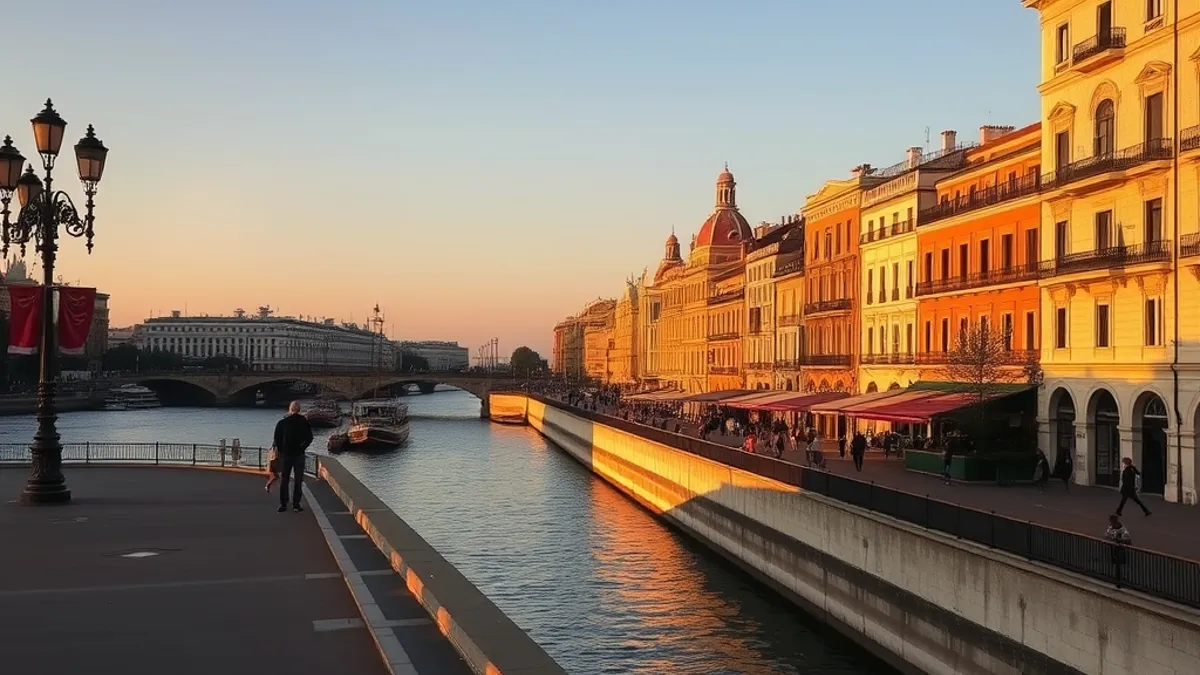
Triana: Riverside Character Across the Guadalquivir
Triana sits across the Guadalquivir river from the old town, and it feels like a different Seville: more residential, more local, and famous for its ceramics tradition. The streets here fill with neighbors rather than tour groups, and the tapas bars serve locals at local prices, without the tourist markups you’ll find closer to the Cathedral.
The practical question is the walk. Getting from Triana to the cathedral takes about 15-20 minutes via Puente de Triana, and you’ll make that crossing often. In practice, it’s a highlight rather than a chore — you cross the river with sunset views daily, and the bridge at dusk is one of the city’s best free experiences.
Who Triana suits best
Triana is best suited to travelers staying 3 or more nights who value evening atmosphere over rolling out of bed at a monument. If your plan is a dawn start at the Alcázar every single day, the extra walk adds up. But if you want to feel like you live in Seville for a few days — shopping at neighborhood markets, joining locals for late dinners — Triana gives you that while keeping the old town within easy reach. You trade convenience for character, and for many visitors that’s a trade worth making.
The Old Centre Around Plaza Nueva and Calle Sierpes
The zone around Plaza Nueva and Calle Sierpes is Seville’s busiest commercial district and, for many travelers, the most practical base. It sits roughly 10 minutes on foot from the cathedral, so you lose very little sightseeing access compared to Santa Cruz, while gaining the widest selection of hotels in the city. International chains sit alongside family-run properties here, and business-friendly hotels with larger rooms and reliable facilities are easier to find than in the old quarter.
Getting around is simple. Plaza Nueva anchors the district, and from Calle Sierpes — the historic shopping street — you can reach transport connections, pharmacies, banks and a dense cluster of restaurants within a few blocks. A pleasant walk south takes you through Parque de María Luisa to Plaza de España, one of the city’s signature sights. If you are a first-timer who wants everything within easy reach, this zone delivers.
The Trade-Off: Noise and Charm
The honest downside is atmosphere. Compared to Santa Cruz’s tangle of alleys and orange-tree courtyards, this part of town feels more functional, with wider streets, more traffic and noticeably more street noise, especially on weekends when bars and cafés spill onto the pavement. Architectural charm varies from building to building rather than surrounding you as it does in the old Jewish quarter.
Before booking, check whether your room faces an inner courtyard rather than the street. Courtyard-facing rooms are typically quieter and often open onto the kind of central patio that makes Andalusian hotels special. If the hotel’s description is vague, a quick message to the property asking for a quiet, interior-facing room is usually all it takes.
When to Book: Seasons and Prices for Seville Hotels
Timing shapes both price and comfort in Seville more than in most Spanish cities. April and May are the yearly peak: Semana Santa and the Feria de Abril fill the city with visitors, and demand pushes rates to their highest levels of the year. For those weeks, book 4-6 months ahead — good hotels in all three neighborhoods sell out their best rooms long before arrival. If you are set on a courtyard property, remember that these are the first to go, so treat your booking date as seriously as your dates of travel.
The shoulder months offer the sweet spot. In March, June, September and October, mid-range double rooms typically run around €90-160 per night, the weather is workable for walking, and availability is far better. If your dates are flexible, aim for one of these months and you will get more hotel for your money — often a better room category at the same rate you would pay for a basic room in peak season.
- July and August are about heat management, not sightseeing. Temperatures regularly exceed 40°C, so a hotel with a pool becomes the difference between a restful afternoon and a long, hot wait for sunset.
- Expect discounts on rooms without pools. Properties lacking one often cut rates in high summer, which can make sense if you plan to be out all day in air-conditioned museums.
- Check pool opening details before you pay. Some Seville pools are small plunge pools rather than swimming pools, and a few operate limited hours — confirm what you are actually getting.
- Spring bookings reward flexibility the least. If you wait until a month before Semana Santa or the Feria, you will typically be choosing from leftovers at premium prices rather than comparing options.
How to Spot the Best Seville Hotels in Each Neighborhood
Once you have picked a neighborhood, the next job is separating the genuinely good hotels from the ones with flattering photos. In Seville, the strongest signal is the building itself. Prioritize restored historic mansions with central courtyards — this layout is typical of Andalusian architecture, and a courtyard stays naturally cool, softening the summer heat before you even switch on the air conditioning. Unsurprisingly, these properties book out fastest in spring, another reason to reserve early for April and May.
Room orientation matters just as much. Street-facing rooms in the old center can stay noisy until late, particularly on weekends when the terraces are full. Ask for an interior-facing room overlooking the patio, and check during booking whether the hotel can confirm it — most will note the request on your reservation.
- Verify air conditioning, not just its existence. Some older buildings have systems that are weak in individual rooms; a direct question in summer months saves an uncomfortable night at 40°C.
- Don’t assume a pool from courtyard photos. Gorgeous patio images say nothing about whether a pool exists — check the facilities list and recent guest photos rather than the hotel’s own gallery.
- Ask about room size in converted mansions. Historic buildings often mean small rooms and bathrooms; if space matters, confirm dimensions before booking rather than discovering them on arrival.
It also helps to look beyond Seville for a benchmark of what a good historic conversion feels like. A boutique homestay such as Casa Schlatter, a homestay in a converted historic home in Florence, shows how old buildings can work as hotels without losing their character — the same logic applies when you judge a Sevillian mansion-turned-hotel. If a property gets the courtyard, the quiet and the cooling right, the rest usually follows.
Wrapping Up Your Seville Hotel Choice
So which neighborhood should you pick? If monuments at your doorstep matter most, Santa Cruz puts the Cathedral and Alcázar within a few minutes’ walk. If you’re staying three nights or more and want evening tapas without tourist markups, Triana across the river is your match. And if it’s your first visit and you want transport, shopping and dining all within a few blocks, the old center around Plaza Nueva is the practical choice.
Timing matters as much as location. For the two spring festivals that fill the city’s hotels, reserve 4-6 months ahead — converted historic mansions with courtyards are the first to go. In July and August, when temperatures regularly top 40°C, a pool can matter more than the view. Whichever zone you land in, a courtyard-centred historic building gives you the most Sevillian experience of all. If this guide helped you decide, leave a comment or share it with a fellow traveler.