You know you want an Alpine winter stay, but the choice between a catered ski chalet and a self-catering villa changes the whole trip. It shapes your budget, your mornings, who does the cooking and how close you wake up to the lifts. That is why the ski chalet vs villa question deserves more than a quick glance at photos before you book.
This guide breaks the decision down into the parts that actually matter. We compare what each option really costs per week, how slope proximity stacks up against village life, and how each handles groups from 6 to 16 guests. We also look at catering, amenities and daily routine, plus the timing of your booking. By the end, you should know which winter stay fits you best, whether that means someone else making dinner after a day on the mountain or a private villa where you set your own pace.
Ski Chalet vs Villa: The Core Difference
At their heart, these two options answer a different question. A catered ski chalet is a staffed holiday home: a resident host or team lives in or nearby, cooks breakfast and dinner six evenings a week, and keeps the place running while you ski. You arrive, unpack, and the daily rhythm is largely handled for you.
A villa in the Alps works more like renting a private house. It comes with a full kitchen and no fixed meal schedule, so you decide when to eat, what to cook, and how late breakfast runs. Some villas offer optional chefs or housekeeping if you want a taste of the catered life, but the default is self-catering.
Who each option suits
Chalets tend to attract skiers who want a social, package-like week. Shared dinners with other guests, a boot room handled by staff, and someone else doing the washing up all make for an easy, convivial routine — especially for couples or smaller groups who enjoy company at the table.
Villas suit groups who prize privacy and flexibility. If your crew includes fussy eaters, late risers, or people who want to cook together after a day on the slopes, controlling your own kitchen beats a set dinner hour. You trade convenience for freedom, and for many large families that trade is exactly right.
Keep that core distinction in mind as you read on — most of the practical differences flow directly from it.
Costs: What Each Option Really Costs Per Week
Money is where the chalet-versus-villa question gets sharpest, because the two are priced in completely different ways. Catered chalets are sold per person, typically at €800–€1,500 per week, and that price usually covers your food and wine alongside the accommodation. You know your total before you arrive, which makes splitting costs with friends refreshingly simple.
Villas work the other way around. You rent the whole property, typically for €1,500–€6,000 per week, and the per-head cost depends entirely on how many people you fill it with. A villa at the top of that range shared by ten people works out cheaper per person than a mid-range chalet bed; the same villa with only four guests can feel expensive.
Timing matters enormously for both. Peak weeks over Christmas, New Year and February half-term push both options to the top of their ranges, sometimes beyond, so a flexible January or late-March date can cut your bill significantly. Always check what a specific price includes, since catering, cleaning and extras vary between operators.
- Chalet pricing is per bed, not per property: if your group doesn’t fill the chalet, you may be paired with other guests or pay a small-group supplement, so confirm the policy before booking.
- Villa food is your own budget: a self-catered week means supermarket runs and cooking, and hiring a private chef or housekeeper adds a separate cost on top of the rental.
- Compare like with like: a chalet price with meals and wine included can look dearer than a villa rental, but once you add a villa group’s food, drinks and ski-pass logistics, the gap often narrows.
- Deposit and payment terms differ: villa owners and chalet operators set their own booking conditions, so check deposit size, balance deadlines and cancellation terms before committing to either.
Location and Ski Access: Slope Proximity vs Village Life
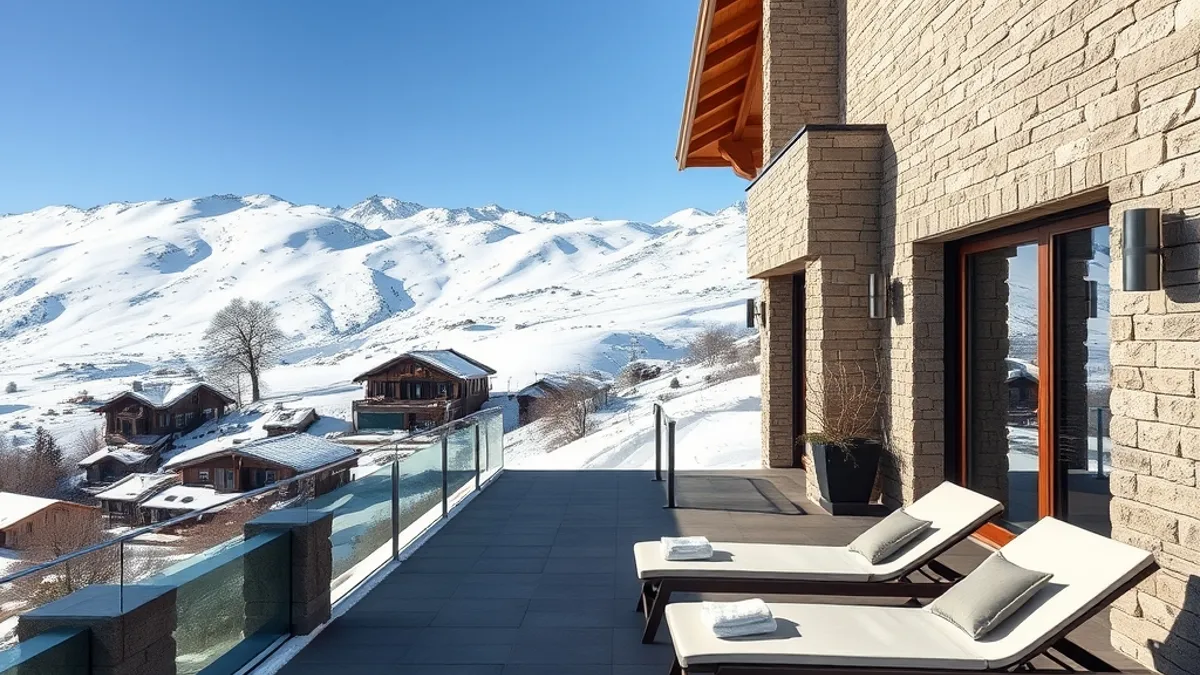
Where you sleep matters almost as much as what you sleep in. A true ski-in/ski-out property lets you clip into your skis at the back door and glide to the lift, then ride back to the same spot at the end of the day. That convenience comes at a price: ski-in/ski-out chalets and villas typically command roughly 20–40% higher rates than similar properties in the valley or lower village. For a large group, that premium can add up quickly, so it is worth deciding whether stepping into boots and walking a few hundred meters really bothers you.
Altitude plays a role too. Most Alpine resorts sit between 1,200 and 2,000 meters above sea level, which is where snow cover is generally reliable from December through April. Lower, valley-bottom villages can offer cheaper stays and easier road access, but you will often rely on a gondola or bus to reach the snow, and late-season skiing from the village itself is less certain.
Check the last stretch of the journey
Villas in particular tend to sit slightly outside resort centers, on hillsides or in quiet residential pockets. That usually means more space and privacy, but it can also mean a ten-minute walk in ski boots or a dependence on a shuttle. Before booking, ask the owner or agent exactly how far the nearest lift is, whether a bus or shuttle runs regularly, and what happens after the slopes close. A villa that looks like a bargain on a map can lose its charm if every morning starts with a cold hike or a long wait for transport.
Space and Group Fit: Sleeping 6 to 16
Group size is often the deciding factor between a chalet and a villa, and the two property types are built around very different ideas of how a ski week should feel. A catered chalet is essentially a shared house designed for group living: most sleep between 8 and 16 guests, with a large communal dining table, generous sofas around the fire and bedrooms that vary in size and view. The whole layout exists to bring people together at breakfast and dinner.
Villas, by contrast, are usually designed around separation. Most sleep 6 to 12 guests, but the space is distributed differently: you tend to get more private bathrooms, more en-suite bedrooms and separate living zones where different parts of the group can spread out. If you have ever shared a chalet with a snoring friend or a toddler on a different sleep schedule, you will understand why this matters.
Think about who is actually coming before you book:
- Families with young children often prefer villa layouts, because bedrooms on separate floors and extra bathrooms make nap times and early bedtimes far easier to manage.
- Friend groups chasing atmosphere usually lean toward chalets, where a shared dinner and a lively living room become part of the holiday itself.
- Mixed groups of couples should check bedroom configurations carefully, as chalet rooms often differ in size, and fair allocation can become a negotiation.
- Two families traveling together may find a villa’s separate living zones let each family keep its own rhythm while still sharing meals.
Catering, Amenities and Daily Routine
The daily routine is where chalets and villas diverge most sharply. In a catered chalet, staff handle the cooking, the cleaning and often an afternoon tea of cake and coffee when you come off the slopes. Breakfast is laid out before you wake, dinner is served six nights a week, and your days are effectively freed up for skiing and nothing else. For many guests, this is the entire appeal of the chalet formula.
A villa puts you in charge. You get a private kitchen and the freedom to eat what you want, when you want, whether that is a raclette night for twelve or leftovers after a long day. Some villa owners and agencies offer optional add-ons such as a private chef for certain evenings or housekeeping visits, but these come at extra cost and should be arranged before you arrive, especially in peak weeks.
Wellness extras: shared or private?
Both property types frequently come with wellness features such as saunas, hot tubs and heated boot rooms, so do not assume a hot tub means a villa. The practical difference is who you share it with. In a chalet, the hot tub and sauna are communal, which is great for atmosphere and less great if you were hoping for a quiet soak. In a villa, they are private to your group. If a post-ski soak is a daily ritual for you, weigh that difference carefully before booking.
When and How to Book Your Alpine Winter Stay
Alpine winter stays reward early planning, and the timing differs depending on which property type you choose. Peak weeks are the scarcest and most competitive, while quieter weeks give you more room to negotiate and browse. A clear sequence takes the stress out of the process: fix your dates first, then match your booking window to the property style, then verify the practical details before any money changes hands. Groups that skip the first step often waste weeks searching for properties that no longer exist for their dates, especially over the holidays. Work through these steps in order:
- Pick your week before your property. Christmas, New Year and February half-term are the peak weeks when availability disappears first, so knowing your dates narrows the search immediately.
- Reserve peak-week chalets 6–9 months ahead. These catered properties sleep larger groups and sell out fastest for holiday weeks, so early booking is the difference between choice and compromise.
- Book off-peak villas 4–6 months out. A villa week in January or late March needs less lead time, and waiting this long still gives you the best remaining selection.
- Confirm the details before paying a deposit. Check catering arrangements, shuttle or lift access and any local tourist taxes, as these change from year to year.
Keep the shape of the season in mind as you plan. It runs from early December to mid-April, and January stands out for the quietest slopes and the lowest rates of the winter. If your group can travel outside the school holidays, you will get more space, calmer lifts and better value from either property type. Late-season weeks can also work well, though snow conditions vary more toward the end, so check resort altitude and recent snow reports before committing.
One final tip: set calendar reminders for your booking window the moment you agree on dates. Popular properties in well-known resorts can sell their best weeks within days of opening reservations, and a reminder is the simplest way to make sure you are not the group settling for leftovers.
Which Winter Stay Fits You Best
So, which one fits? If you want someone else to handle breakfast, dinner and the dishes while you swap stories with other guests over shared hot tub time, a catered chalet is the easier choice. It works especially well for mid-size groups, since the per-person pricing tends to be predictable and the social atmosphere comes built in.
A villa makes more sense if privacy, flexible catering and a lower per-head cost for a larger family or group matter most. You cook when you want, eat when you want and set your own rhythm for the week. In the end, the decision comes down to three things: your group size, your budget style and how much of the daily routine you would rather hand over to someone else. If this helped you decide, leave a comment or share the article with the friends you are traveling with.