If you’ve ever priced a resort as a single traveler and felt like you were paying a penalty for not having a partner, you’re not alone. The good news: solo traveler resorts are more attainable than they first appear. Single occupancy often adds 10-30% over half the double rate, not double the price, and mid-range properties typically run $120-250 per night for a standard room on your own. With smart timing and the right questions, a resort stay can work beautifully for one person.
This guide walks you through what resorts really cost a solo traveler, when and how to book for the best solo rate, and how to choose the right room when you travel alone. We’ll also cover safety basics for solo resort stays, ways to meet people and avoid resort loneliness, and how to pick a resort that genuinely suits solo guests. By the end, you’ll have a clear plan for your solo resort trip.
What Resorts Really Cost a Solo Traveler
The base rate
At mid-range resorts, a standard room for one typically runs $120-250 per night, depending on the destination and what’s included. Luxury properties usually start around $350 and climb quickly from there, especially at beachfront or all-suite properties. Those numbers are for the room itself, so factor in meals, drinks, transfers and activities if you’re booking room-only.
The first thing to understand is the single supplement. Many resorts price rooms per person based on double occupancy, and when you travel alone they may add 10-30% on top of half the double rate to make up the difference. It’s rarely double the price, but it can sting if you don’t see it coming. Always check the solo price before booking rather than assuming the rate you saw applies to one person.
Package and season effects
All-inclusive packages can simplify budgeting since meals, drinks and many activities are covered upfront, but they often cost 30-50% more than room-only rates. If you like eating out and exploring, room-only plus pay-as-you-go can be cheaper; if you want zero daily math, the package may be worth it.
Timing matters just as much. Traveling in shoulder season, generally May-June or September-October, can cut resort rates 20-40% compared with peak months, and you’ll share the pool with fewer people too.
When and How to Book for the Best Solo Rate
Resort pricing moves with demand, and solo travelers who time it well can save noticeably without much extra effort. The single supplement is the main obstacle: solo occupancy often adds 10-30% over half the double rate, so the goal is to shrink that gap wherever possible. The trick is to book inside the window where rates have settled but availability is still good, and to compare at least two sources before you commit. Here’s how to work through it.
- Book 2-4 months ahead. This window usually offers the best balance of availability and price for solo rates. Booking 6 or more months out rarely saves money, since resorts tend to hold their early rates steady rather than discount them.
- Compare the resort’s own site against booking platforms. Check the solo rate on the resort’s official website first, then look at the major booking platforms for the same dates and room type. Note any difference in what’s included, not just the headline price. A slightly higher rate that covers breakfast or airport transfers can beat a cheaper room-only deal.
- Aim for shoulder-season dates. Traveling in May-June or September-October can cut rates 20-40% versus peak months, and you’ll also notice fewer crowds around the pool, restaurants and beach. Weather is often still pleasant in these windows, though it varies by destination, so check typical conditions for where you’re headed.
- Email the resort directly. Ask politely whether they offer solo-friendly rates or can reduce the single supplement. Smaller properties in particular sometimes have flexibility they don’t advertise online, especially for longer stays or last-minute gaps in their calendar.
One short email costs nothing and can change your total significantly, so it’s worth asking before you pay the standard solo price. Get any agreed rate confirmed in writing so there’s no confusion at check-in. If the resort won’t budge, the comparison you did in step two tells you exactly where to book instead. And if the solo price still stings, an all-inclusive package sometimes softens the blow mentally, even though it often costs 30-50% more than room-only — it trades a bigger upfront number for not having to budget day by day.
Choosing the Right Room When You Travel Alone
When there’s only one of you, every extra square meter is money you’re paying for space you won’t use. A standard room with one bed is the default for solo guests, and it’s usually all you need. The one thing worth doing at booking time is specifying your bed preference, whether that’s a king or twins, since resorts assign beds by availability and won’t guess correctly on their own.
Location within the resort matters more for solo travelers than it does for couples, mostly for safety and convenience reasons. A ground-floor room or one close to the main building and lobby tends to feel safer walking back after dinner, and it puts the front desk a short walk away if anything comes up. That said, a few small upgrades can be genuinely worth the money:
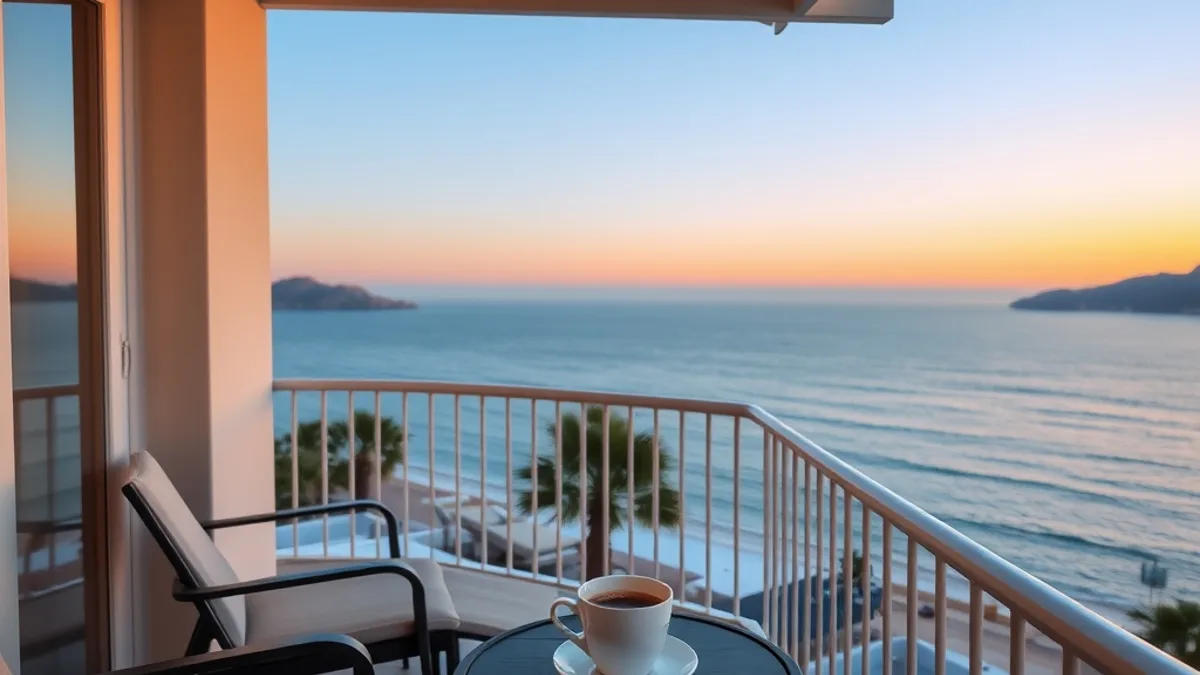
- A small balcony or terrace. This adds private outdoor space, useful for morning coffee or an evening read, at a fraction of what a suite costs.
- A room facing the pool or garden rather than a parking area. It makes the room a more pleasant place to spend a quiet evening alone.
- A room near the restaurant or activity area. If you plan to join group activities, being steps away makes it easier to say yes instead of talking yourself out of the walk.
On the other hand, skip suites and connecting rooms entirely; you won’t use the extra space or the second room. Put the difference toward extending your stay by a night or two instead. A modest room for a longer trip beats a fancy room you’ll leave after breakfast.
Safety Basics for Solo Resort Stays
Safety starts before you even check in. When comparing resorts, look for properties with a 24-hour front desk and clearly lit walkways between guest buildings, the pool and the dining areas. A resort that goes quiet after dinner can feel isolating, so it helps to see how other solo guests describe the evening atmosphere in reviews. Some properties, like the resort featured in this review of a Venice island resort, sit on private grounds with staff on site around the clock, which is exactly the setup that makes solo stays easier.
Once you arrive, a few simple habits cover most of the risks. Lock your passport, a spare card and backup cash in the in-room safe, and carry only what you need for the day. Before you leave home, send your travel dates, resort name and room details to a trusted friend or family member, and check in with them now and then during the trip.
- Ask at the front desk which paths, beaches or nearby streets to skip after dark. Staff know the property and its surroundings far better than online reviews, which may be months or years out of date.
- Test the in-room safe on day one with a small item, so you discover any problem while the front desk can still help.
- Keep the resort’s business card or a photo of the address in your pocket. If a taxi driver doesn’t know the property by name, showing the address in the local language solves it.
- Use the door lock and any deadbolt every night, and if your room has a sliding balcony door, check it is secured before you sleep.
Meeting People and Avoiding Resort Loneliness
Resorts can be wonderfully restful, but a week of solo dinners at a two-top table starts to feel long by day three. The good news is that resorts are one of the easiest places to meet people, because there is a built-in schedule of things to do together.
Use the daily activity calendar
Most resorts publish a daily program, and it is your best friend. Join the morning yoga class, sign up for the cooking demonstration, or tag along on a guided excursion the resort runs. Group activities give you a natural reason to talk to people, since you already share something to comment on. Say yes to things you might skip at home; a casual activity is a much easier icebreaker than a crowded pool.
Change where and how you eat
Where you sit matters as much as what you do. Eating at the bar or at a communal table puts you next to other guests, while a quiet corner table for two tends to keep you invisible. Bartenders and servers at resort bars are also great sources of local tips and often introduce solo guests to each other.
Day trips booked through the resort are another easy win. You spend a few hours with the same group of travelers, and shared experiences turn into dinner invitations quickly. Finally, plan one or two outings off-property, whether that is a nearby town or a market visit. It breaks up the stay so the week doesn’t blur into one long day, and it gives you fresh stories to share back at the resort.
Picking a Resort That Suits Solo Travelers
Not every resort is built with solo guests in mind, and picking the wrong one is the difference between a social week and a lonely one. Large honeymoon-focused properties can be lovely, but if every restaurant table seats couples and the entertainment revolves around pairs, a solo traveler can feel out of place. Smaller boutique-style resorts tend to have a more mixed crowd and a relaxed, less couple-centric atmosphere.
Look for a social calendar
If you want company, choose a resort that includes activities and runs a visible social calendar: group fitness sessions, themed dinners, excursions, game nights. Quiet retreats suit travelers who genuinely want solitude, but they rarely help you meet people. Also favor beachfront resorts near walkable towns. Being able to stroll out the gate to a café, a market or a beach bar gives you options beyond the resort, which matters a lot when you are on your own.
Read reviews the solo way
Before booking, filter reviews for mentions from solo guests and search for words like “solo,” “alone” or “single.” You are looking for two things: whether solo guests felt safe on the property, and whether the resort made them feel welcome rather than like an afterthought. Reviews that mention staff remembering names, solo-friendly seating or easy ways to join groups are strong signals. If several solo reviewers describe feeling ignored or unsafe, take that seriously and keep looking. A short email to the resort asking how they cater to solo guests can also tell you a lot by how quickly and warmly they reply.
Wrapping Up Your Solo Resort Plan
A resort stay on your own is entirely doable once you know where the traps are. Set your budget around $120-250 per night at a mid-range property, aim for shoulder season, and book 2-4 months ahead to get the best solo rate. Pick a standard one-bed room near the main building, and you’ll have both comfort and peace of mind covered.
Once you’re there, lean on the resort’s daily activities and communal dining to keep loneliness at bay, and check reviews from other solo guests before you commit to a booking. Resorts aren’t built only for couples — with the right timing, room and mindset, they can be one of the most relaxing ways to travel alone. If this guide helped you plan your trip, leave a comment or share it with a fellow solo traveler.