If you love national parks and mountain regions, you’ve probably assumed summer is the only time to go. But anyone who has queued for a trailhead parking spot in July knows the reality: crowds, peak prices and restaurants booked out weeks in advance. Spring lodge breaks offer a smarter alternative, with quieter trails, lower rates and nature at some of its most dramatic moments of the year.
In this guide, we’ll look at why the shoulder season works so well for lodge stays, what wildlife, waterfalls and wildflowers are actually doing in spring, and how to pick a lodge that suits changeable weather. We’ll also cover booking timing, a practical packing list, and lodge ideas from the US, the Alps and the UK. By the end, you’ll know exactly how to plan a spring trip that beats the summer rush without missing out on the best of the mountains.
Why Spring Lodge Breaks Beat the Summer Rush
Visit a popular mountain region in July or August and you’ll share every viewpoint, trail and restaurant with hundreds of other travelers. Come in late April or May instead, and the same trails, lookouts and lodge dining rooms are noticeably quieter. You can linger at a lookout without waiting for a photo spot to clear, and you can book a lodge dinner a day ahead rather than weeks in advance.
More time with the people who know the area
When occupancy is lower, lodge staff simply have more time for you. A front desk manager who is juggling a full house in August might barely manage directions; in spring, the same person can tell you which trail drains first after rain, where moose tend to graze at dawn, or which nearby café opens early. Those local tips often end up being the highlight of the trip.
The savings are real
Rates at popular lodges commonly drop 20-40% below July-August peak prices, and the deepest discounts usually land on midweek nights. That difference can turn a splurge-worthy lodge into an affordable one, or stretch a three-night stay into five. If your schedule is flexible, a Tuesday-to-Thursday spring booking is often the best value in the whole lodge calendar.
What Nature Is Doing in Spring
Spring is when the mountains are loudest, in the best sense. Snowmelt swells rivers and streams through late April and May, making this the best window of the year for waterfalls at full force and rivers running high. Trails that pass creeks and cascades feel completely different in spring than they do in the low, quiet water of late summer.
Wildlife is equally rewarding. Animals are active, feeding and moving after winter, and with far fewer visitors on the trails there’s less noise and movement to scare them off. Dawn and dusk remain the prime hours, so plan early starts and late evenings rather than expecting midday sightings. Lodges positioned near good habitat help here; a property like Signal Mountain Lodge in Grand Teton country puts you close to river valleys where early-morning wildlife viewing is often at its best.
Wildflowers add a third layer. Blooms start at lower elevations and move up the mountain through May and June, so you can effectively chase spring uphill for weeks.
- Waterfall timing matters: a cascade that trickles by August can roar in May, so check recent trail reports or ask lodge staff which falls are running near peak before you plan your hiking routes.
- Bring binoculars, not just a camera: much spring wildlife activity happens across rivers or in meadows at a distance, and binoculars let you watch beavers, deer and birds of prey without getting close enough to disturb them.
- Plan a bloom itinerary: if you’re staying into June, ask about higher-elevation trails where wildflower meadows open later, giving you a second wave of color after the valley flowers have peaked.
Choosing the Right Lodge for a Spring Stay
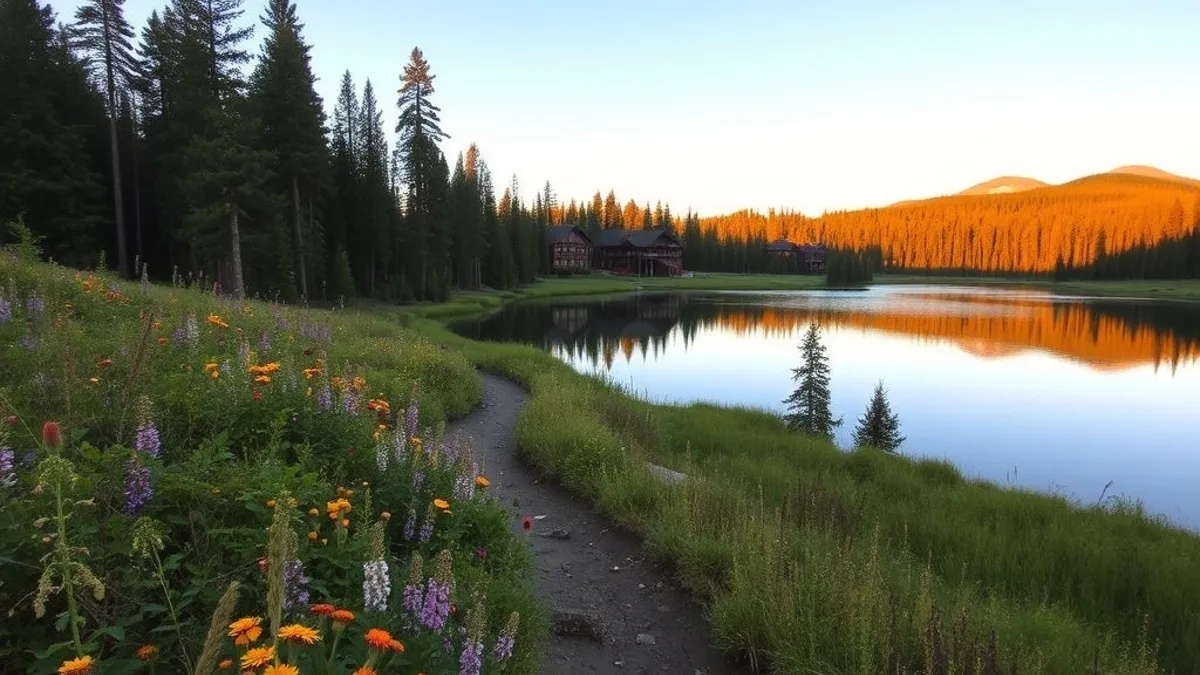
Not all lodges open at the same time in spring, and this is the single most important thing to check before booking. Valley and lakeside lodges are typically fully operational by April, with restaurants, activities and full staffing in place. High-altitude lodges are a different story: many don’t open until mid-May or early June, and some park roads serving them open late too. If you’re set on a specific high property, confirm its opening dates directly rather than assuming.
Spring weather is also changeable, so think about what you’ll do between showers. A lodge with a spa, heated pool or a proper lounge with a fireplace turns a rainy afternoon into a rest day rather than a wasted one. And location matters more in spring than in any other season: a lodge within walking distance of a trailhead lets you head out in a dry window and get back before the next one arrives, without needing to drive anywhere.
- Ask about partial openings: some lodges open with a reduced restaurant menu or limited facilities in early spring, so it’s worth asking exactly what’s running during your dates.
- Check road access: if a lodge sits up a mountain road, find out whether that road is plowed and open when you plan to visit, and whether any sections close in bad weather.
- Prioritize covered outdoor space: a veranda or covered terrace lets you sit outside with coffee even in a drizzle, which makes changeable spring days far more enjoyable than a lodge with only open decks.
Booking Timing and Rates for Shoulder Season
One of the best-kept secrets of shoulder season travel is how much earlier you can book. For summer lodge stays, you often need to lock in rooms six or more months ahead to have any real choice. For spring, booking 2-3 months ahead is usually enough to secure a good room and a decent rate, even at popular lodges.
That shorter lead time makes spring trips far more flexible. If you spot a promising weather window or a free long weekend, you can often still get in. The trade-off is that availability for the best rooms, like those with lake or mountain views, goes quickly, so it pays to check rates as soon as you have rough dates in mind.
Why midweek nights win in April and May
Midweek nights in April and May offer the deepest discounts of the whole shoulder season. Weekend demand from short-break travelers keeps Friday and Saturday prices firmer, but Tuesday and Wednesday nights can sit well below the summer peak. If your schedule allows it, a midweek stay also means quieter trails and a calmer lodge restaurant.
Before you pay a deposit, do one last check: spring is maintenance season, and some lodges partially close for renovations, deep cleaning or seasonal staffing changes. A quick email or phone call to confirm your dates directly with the lodge can save you from arriving to a half-open property. Ask specifically which facilities, like the spa or dining room, will be running during your stay.
Packing for Changeable Spring Weather
Spring in lodge country is a season of swings. Mornings can sit near freezing while afternoons reach the high teens Celsius, and a single day can deliver frost, sunshine and a rain shower in quick succession. The answer is not one thick coat but a layering system you can adjust as conditions change. Think of it as dressing in stages you can add or remove without stopping for long on the trail.
Start with a moisture-wicking base layer, add a fleece or light insulated mid-layer, and finish with something wind- and waterproof on the outside. That way you can strip down for a steep afternoon climb and bundle up again for a chilly dinner on the terrace. Merino or synthetic fabrics work best, since cotton holds sweat and dries slowly, which is miserable when temperatures drop in the evening.
- Waterproof boots with grippy soles: snowmelt turns trails into mud channels, and lower sections often stay boggy well into the afternoon, so boots with ankle support and deep tread make a real difference on descents.
- A packable shell jacket and rain cover for your daypack: spring showers tend to be short but sharp, and keeping spare layers dry matters as much as keeping yourself dry.
- A headlamp with fresh batteries: wildlife is most active at dawn and dusk, and with long dusk returns in low light, a hands-free light is far safer than relying on your phone.
- Thin gloves and a beanie: they weigh almost nothing, but early starts near freezing feel far more comfortable with them on.
One final tip: pack a spare pair of socks and shoes to leave at the lodge. Changing out of wet boots after a muddy hike is one of those small comforts that makes a spring break feel like a real holiday, and your fellow guests will thank you for it too.
Spring Lodge Ideas by Region
In the United States, spring arrives at different speeds depending on elevation. Lodges in and around Yosemite and Grand Teton open progressively through the season, with valley-floor properties welcoming guests first while higher-elevation lodges and some park roads follow later, often mid-May to early June. Check the opening schedule for the specific lodge you want before you commit to dates, and consider an early-season stay in the valleys, where waterfalls fed by snowmelt are at their thundering best.
The Alps: green valleys, white peaks
Spring in the Swiss and Italian Alps is a season of contrasts. Valley floors turn green, cows return to lower pastures, and hiking trails at low and mid elevations open up, while the high peaks keep their snow cover well into summer. That mix makes for spectacular photos and the chance to hike in the valley in the morning and see winter still clinging to the summits above. For a taste of what an Alpine lodge stay in this window feels like, this review of a lodge in Lenzerheide, Switzerland gives a good sense of the experience.
Scotland’s loch-side lodges
The UK offers a gentler version of spring. Loch-side lodges in Scotland enjoy mild spring days and long daylight for waterside walks, with roughly 13-15 hours of daylight at mid-latitudes giving you time for a full day on the shore path and still a relaxed evening back at the lodge. Spring also tends to be drier than the deep-winter months, so paths along the lochs are generally in good shape for easy, low-level walking.
Making the Most of the Shoulder Season
If you assumed summer was the only time to visit national parks and mountain regions, spring makes a strong case for the other side. Lodge rates often run 20-40% below the July-August peak, trails stay quiet, and nature is at its most active: waterfalls hit full volume from snowmelt, wildlife moves at dawn and dusk, and wildflowers climb the slopes.
The formula is simple. Book 2-3 months out, favor valley and lakeside lodges that open earlier in the season, and pack for layers so changeable weather never slows you down. Aim for late April to early June and you’ll catch the shoulder season at its best. If this convinced you to try a spring lodge break, leave a comment or share this article with a fellow nature lover.