If you’ve ever booked a resort that promised “beachfront paradise” and arrived to find red warning flags, churning surf and a sea you couldn’t wade past your knees in, you know the frustration. The word beachfront tells you where the hotel sits, not whether you can actually swim there. Plenty of gorgeous, postcard-worthy resort beaches are officially too dangerous for swimming much of the year.
The good news: you can spot a genuinely swimmable resort beach from your sofa, before you pay a deposit. This guide walks you through the checks that matter — how to read wave and swell data for your travel month, what satellite views of the shoreline reveal, which seasons bring calm water to the Caribbean, the Maldives and beyond, the questions to ask the resort directly, and the red flags hiding in reviews and guest photos. Run them in order and you’ll know exactly what kind of water you’re booking.
Why ‘Beachfront’ Doesn’t Mean Swimmable
“Beachfront” is a location label, nothing more. It means the resort sits on the coast — it says nothing about wave height, currents or whether the water in front of your room is safe to enter. Some of the most famous beachfront strips in the world are look-don’t-swim stretches, and parts of Los Cabos in Mexico are a classic example: officially too rough for swimming much of the year, despite the dazzling sand and luxury hotels lining it.
The photo was taken on the calmest day of the year
Resort marketing photos are almost always shot in the calmest week of the year, often during the dry season, when wind and swell drop to their minimum. That glassy turquoise image on the booking page may represent conditions for a handful of days annually, not the average. A single picture tells you almost nothing about what the water will be like during your specific week.
What actually separates swimmable from not
The difference between a swimmable resort beach and a look-don’t-swim one usually comes down to three things: how exposed the beach is to incoming swell, the shape of the seabed where you’d enter the water, and the seasonal wind patterns that whip up chop. Get a handle on those three factors and you can judge almost any beach from home — which is exactly what the rest of this guide shows you how to do.
Check Wave and Swell Data Before You Book
Before you fall in love with a resort, spend twenty minutes with free swell forecast sites. They show historical and forecast wave data for almost any coastline on earth, and they’re the single best tool for predicting whether your beach will be flat or furious during your stay. Brochures and booking photos can’t do this — a glossy image tells you nothing about what the water actually does in your travel month. The good news is that the data is public, easy to read and takes no special skill to interpret once you know what to look for. Here’s how to use these tools properly.
- Check the average wave height for your travel month. Don’t just look at the week you happen to be browsing. Pull up monthly averages for the month you’ll actually travel. Waves consistently above about 1.5 m (5 ft) make casual swimming unsafe for most guests, so treat that as your warning line.
- Look at swell direction, not just size. A beach facing open ocean catches swell that a cove two kilometers down the coast blocks completely. Two resorts can sit in very different water conditions even on the same island, so match the data to the specific stretch of shoreline in front of your hotel.
- Check wind forecasts too. Onshore afternoon winds can turn a flat morning sea into chop within hours. If you see regular strong afternoon winds in your travel month, plan swims for mornings and save beach walks for later in the day.
- Compare at least two or three years of monthly averages. One unusually calm season can mislead you. A pattern across several years is far more reliable than a single data point, especially at coastlines known for seasonal swings in swell.
Ten minutes with this data will tell you more about your future swimming than any resort brochure. Do it before you compare prices, not after — there’s no point falling for a deal on a resort whose beach will be unswimmable for your entire stay. Save screenshots of the monthly averages for your dates, because they make a useful reference if a reservation agent’s answers seem vague later. If the numbers look marginal, note them and bring your questions to the resort directly before you book. And if the data clearly shows rough water for your month, you’ve just saved yourself a disappointing trip — either pick different dates or a different shoreline altogether.
Read the Shoreline: Reef, Drop-Offs and Tides
Once you’ve shortlisted a resort, open satellite view and study the water in front of it. You can learn an enormous amount about swimmability from a bird’s-eye look, and it costs nothing.
What shelter looks like from above
A headland, reef line or offshore islet sitting in front of the beach usually means sheltered, swimmable water — the natural barrier breaks up swell before it reaches the sand. A beach facing wide-open ocean with nothing between it and the horizon takes the full force of every swell that arrives. The ideal entry is a gently sloping sandy stretch with no shorebreak. Watch for dark patches of reef close to shore, or a color change from turquoise to deep blue within a few meters — that’s a drop-off, and it needs caution.
Reef entries and tides
Reef and rock entries reward careful swimmers with the clearest water and the best snorkelling, but check the practical details: does the resort offer a sandy entry or a ladder, and can you only get in the water at certain states of the tide? Large tidal ranges can empty a lagoon at low tide or make a shallow entry disappear entirely. Note the tide times for your dates before you book, so you know how many usable swim hours each day really offers.
Match the Beach to the Season
Season is the single biggest factor in whether a resort beach is swimmable, and it matters more than the resort’s own star rating or price tag. The same stretch of sand can offer glassy, waist-deep water in one month and powerful shorebreak a few weeks later. Match the coastline to the calendar before you commit to a booking.
Caribbean and Gulf of Mexico coasts are at their calmest roughly December to April, when trade winds are steadier and swell is minimal. From June to November, hurricane season brings a higher chance of surf, stronger rip currents and days when swimming is simply closed off. That doesn’t mean you can’t travel then — many people do — but expect conditions to change quickly and plan water time flexibly.
On the other side of the world, Indian Ocean west coasts such as the Maldives and southwest India sit directly in the path of monsoon swell from about May to October. During that stretch, even postcard-perfect lagoons can turn choppy and gray. December to April is the flat-water window, when the same beaches look like the brochure again.
- The Red Sea and much of the Mediterranean stay swimmable most of the year, so your main planning task there is avoiding brief winter wind spells rather than an entire rough season.
- Shoulder months — the weeks just before or after peak season — often combine swimmable water with noticeably fewer guests around the pool and on the sand.
- If you want the calm-season peak at a popular calm-water resort, book 3 to 6 months ahead; the best-value swim-out rooms tend to go first.
- When traveling in a rough season, look for resorts with a sheltered lagoon or access to a second beach, so one weather system doesn’t end your swimming for the whole week.
Ask the Resort the Right Questions
Ask the Resort Direct Questions Before You Book
Marketing photos can’t answer the question that actually matters, but a resort’s staff can — if you ask precisely. Vague reassurances like “our beach is beautiful” tell you nothing. Before booking, send one direct question: “Is the beach in front of the hotel swimmable every day during the month we plan to visit?” Name your travel dates in the email so the answer applies to your trip, not to the resort’s calmest week. A confident, specific reply is a good sign. A vague answer is itself an answer.
Water safety is the second thing to pin down. Resorts that take swimming seriously usually have visible systems in place, and they’re happy to describe them. A staffed lifeguard or a published daily flag system is a strong swimmability signal. If a reservation team can’t tell you who watches the water or how conditions are communicated to guests, that silence is worth noting.
Finally, ask what happens when the sea turns. Good resorts on exposed coastlines have a plan B — a sheltered pool area, a shuttle to a calmer cove, or a daily update on water sports — and they’ll describe it without hesitation. It’s also worth understanding the price side: calm-water beachfront rooms typically run 20 to 40 percent above standard rooms in the same resort, so decide honestly whether swim-out access is worth that premium, or whether a standard room plus a short walk suits you fine.
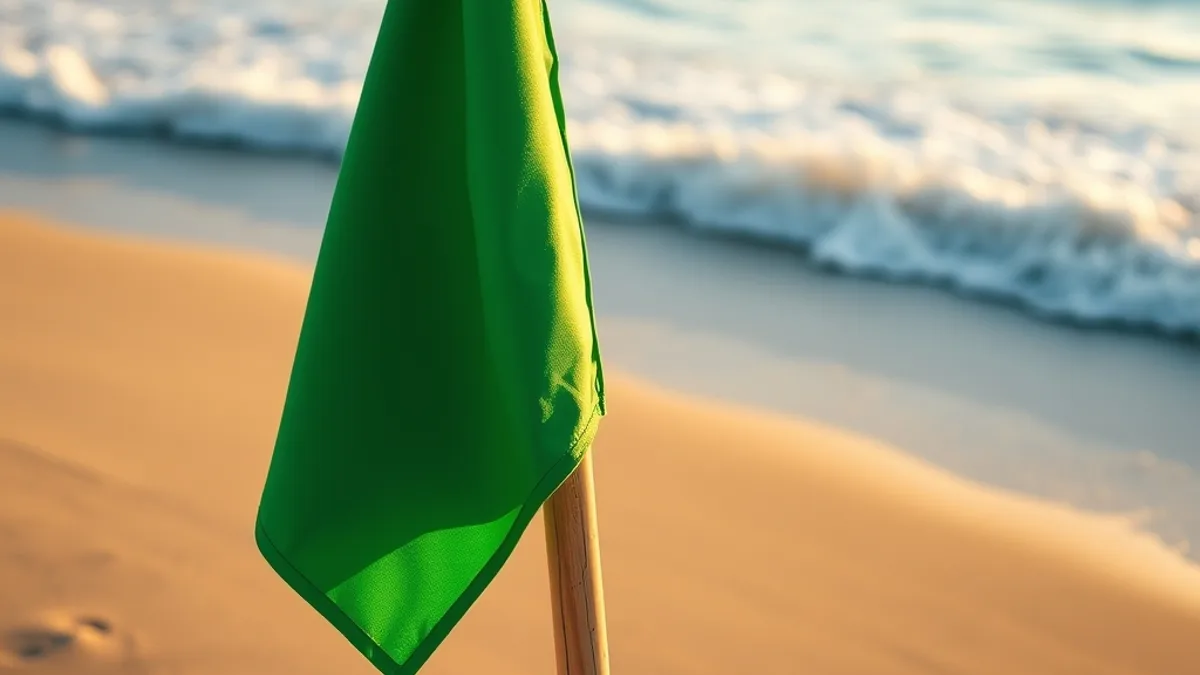
- Confirm whether there is a staffed lifeguard or a daily coloured flag system; resorts that publish flag status, for example on a board by the beach or on their app, take water safety seriously.
- Ask if the resort offers a shuttle, boat transfer or access to a calmer sister cove when the main beach is rough, and whether that service runs daily or only on request.
- Ask whether non-motorized water sports such as kayaking or snorkeling open or close based on conditions — a resort that tracks this daily is monitoring the water closely.
- If you’re traveling with children or weaker swimmers, ask specifically which part of the beach is shallowest and whether that area is inside the patrolled zone.
Red Flags in Reviews and Guest Photos
Reviews and guest photos are where marketing ends and reality begins. Before booking, search reviews for words like “rough”, “currents”, “red flag” and “couldn’t swim”. One bad week proves little — storms happen everywhere. What matters is repeated mentions across different months, which point to a pattern rather than a stroke of bad luck. If several guests from different seasons describe the same problem, take it seriously.
Guest photos are timestamped reality, and they rarely lie. Brown or churned water, an empty beach on a sunny day, and people wading knee-deep instead of swimming all point the same direction: the water in front of that resort is not doing what the brochure promised. Photos taken by real guests also show the beach at ordinary times of day, not staged at golden hour, so they give you a far more honest picture of typical conditions than anything the resort publishes.
Pay attention to angles, too. Official photo shoots are carefully chosen, and certain perspectives are chosen for a reason. If every published image is aerial or taken from the water looking back at the resort, ask yourself what those angles might be hiding — usually, it’s the shorebreak.
- Sort reviews by date and look specifically at ones written during your travel month from previous years; conditions in March tell you little about October.
- Zoom into guest photos of the shoreline itself: a line of white water hugging the beach, or waves breaking over a visible reef, tells you more than any posed sunset shot.
- Read the resort’s responses to reviews, not just the reviews; a management team that answers swim-safety questions with specifics clearly monitors conditions daily, while silence suggests it doesn’t.
- Watch for reviewers who mention using the pool instead of the sea for an entire week — guests rarely write that unless the ocean genuinely failed them.
Your Pre-Booking Swimmability Check, Summed Up
If you’ve ever arrived at a “beachfront” resort to find red flags flying and surf too rough to enter, you know the label alone tells you nothing. The encouraging part: a genuinely swimmable beach can be identified from home, well before any deposit changes hands. It takes a little detective work — checking conditions for your specific travel month, studying the shape of the shoreline, and asking the resort pointed questions — but each step takes minutes, not days, and together they remove most of the guesswork.
Season matters too, and it varies enormously by coast: the same stretch of sand can be glassy and inviting one month and rough and dangerous the next. Whatever destination you’re considering, line up your travel dates with its calm-water window before you commit. Run these checks and you’ll trade the risk of a look-don’t-swim beach for water you can actually swim in every day. If this helped you dodge a rough-sea disappointment, leave a comment or share the article with a fellow traveler.