You have found the villa: great views, good reviews, and the words “private pool” in the listing. What the listing usually does not tell you is whether that pool will actually be swimmable in the month you travel, or what heating will add to your bill. Villa pool heating is one of the most misunderstood details of a holiday rental, and it can be the difference between a pool you use every day and one you only photograph.
This guide explains how the four main heating systems work, when heating genuinely matters and when it is a waste of money. It covers the shoulder-season trips where heating pays off, what you can expect to pay as a guest, the exact questions to ask before booking, and the pitfalls that turn supposedly heated pools cold. By the end, you will know whether to pay the surcharge, book elsewhere, or skip heating altogether.
How Villa Pool Heating Works: The Four Systems
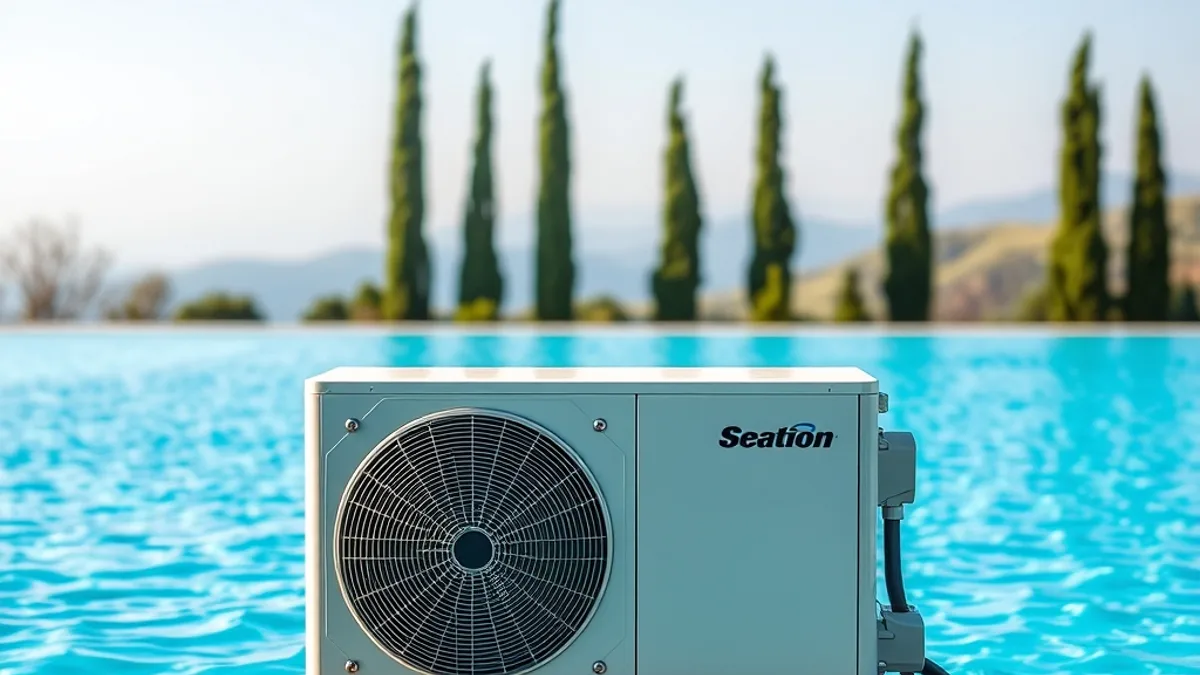
Most villa pools are heated in one of four ways, and the type of system tells you a lot about how warm the water will be and how much it costs to run. The standard setup in European villas is the heat pump, which does not generate heat at all. Instead, it draws warmth from the ambient air and transfers it into the water. This makes it remarkably efficient as long as air temperatures stay above roughly 15°C, which is exactly why heat pumps shine in Mediterranean spring and autumn but struggle on cold snaps.
Electric resistance heaters and gas heaters work differently: they warm the water directly and do it fast. The trade-off is running cost, which is far higher than a heat pump, so most villas treat them as backup for short-notice heating rather than the everyday system.
Solar systems and the cover factor
Solar mat and panel systems cost almost nothing to run once installed, but they depend entirely on strong sun. That makes them a summer-only solution, useful for topping up a pool that is already close to comfortable rather than transforming a cold one.
The final piece of the puzzle is not a heater at all. Some luxury villas pair a heat pump with a pool cover, and the cover alone can halve heat loss overnight. If you see a villa advertising both, that combination usually delivers the most consistent water temperatures for the money.
When Villa Pool Heating Really Matters
Heating matters in some months and is almost irrelevant in others, and the pattern depends heavily on where you are traveling. In Mediterranean climates, an unheated outdoor pool is typically genuinely swimmable from May to September. If your trip falls in that window, paying for heating usually adds little: the sun does the work for free.
Winter in the Canaries is different
The Canary Islands are the classic exception. From November to March, air temperatures of 20-24°C feel pleasantly warm for sunbathing and sightseeing, but without heating the pools sit around 18-20°C, which is brisk enough that most guests stop swimming. If winter sun is the whole point of your trip, pool heating is essential rather than optional, and it is worth reading our guide to Canary Islands villas for winter sun before you book.
Shoulder seasons and the north
April and October are the classic shoulder-season case. The days are warm enough for a holiday, but the pool has not caught up with the air, and heating is what turns a decorative pool into a usable one.
In Alpine and northern European villas, the picture changes again. Outdoor pools there are usually seasonal and often closed entirely outside summer, so heating mainly matters for indoor or covered pools, which are a different product altogether.
Shoulder Season Pool Trips in the Mediterranean
April and October bookings in Mallorca, Corfu and similar islands are the sweet spot of the Mediterranean season. You get warm days, quiet coasts and lower prices, but there is a catch: unheated pools sit at around 20-22°C, which feels refreshing for a quick dip and too cold for anything more. This is exactly the window where heating earns its keep, extending comfortable swimming without the crowds or the peak-season price tag. If you are browsing for spring or autumn, our pick of Mallorca villas near sandy bays is a good place to start your shortlist.
How warm-up works in practice
A heat pump warms water gradually, which is why timing matters. Running the system for two to three days before your arrival can lift the water into the 26-28°C comfort zone, and it should hold there for a week-long stay. Ask the owner to switch the heating on ahead of your arrival date rather than expecting it to be ready on day one.
One question to ask early
Not every villa keeps its pool running outside the May to September core season. Some close pools entirely from November to March, draining or covering them regardless of the heating system. Before you book a shoulder-season stay, confirm in writing that the pool will be both open and heated during your travel month.
What Villa Pool Heating Costs You as a Guest
Pool heating is rarely free, and the way owners bill for it varies more than most travelers expect. The most common setup is a flat weekly surcharge for a heat-pump heated pool, typically somewhere in the range of €150-400 per week depending on the pool size and the region. Because heat pumps are relatively cheap to run, owners prefer the predictability of a fixed rate over installing a meter.
Smaller properties often handle it differently. Some owners charge per day, others scale the price to the temperature you request. On many smaller villas this works out to a daily add-on of roughly €10-30, which can be easier on the wallet if you only plan to heat the pool for part of your stay.
The pricing picture changes when the villa relies on electric resistance or gas heating. These systems warm water quickly but burn through energy, so owners often pass real consumption on to the guest. If you insist on 28°C water during a cool spell, the cost can reach €20-50 per day. Before you commit, it helps to understand the common billing models:
- Flat weekly rate: the standard for heat pumps, charged whether you swim every day or not, so it pays off most on longer stays.
- Daily add-on: common on smaller properties, useful if you want heating only for the first days of your trip while the water warms up.
- Metered or consumption-based billing: typical with electric or gas systems, where the owner reads the meter or estimates usage and charges accordingly.
- Included in the rate: many higher-end villas fold heating into the nightly price, which is why you should always compare total prices rather than base rates between properties.
How to Check Before You Book
A heated pool is one of those details that listings describe inconsistently, so a few minutes of checking before you book can save you a cold and expensive surprise. Some owners run a proper heat pump all season, others switch the system on only on request, and a surprising number simply label the pool “heated” because a solar mat exists somewhere on the roof. The difference shows up in your swimming experience and in your final bill. The good news is that the process is simple, owners generally answer direct questions quickly, and a short exchange of messages before you pay the deposit gives you written proof of exactly what you are getting.
- Search the listing text first. Look for the words “heated”, “heat pump” or “pool open all year”. If none of these appear, treat the pool as unheated; an unlisted pool is almost always an unheated one, no matter how inviting the photos look.
- Message the owner with three specifics. Ask whether heating is available in your travel month, what it costs, and how many days of notice it needs. These three answers tell you everything: availability, budget impact, and whether the system can even be ready in time.
- Confirm a pool cover exists. An uncovered heated pool loses 1-2°C overnight and struggles to hold comfortable temperatures, so a cover is what makes the heating bill reasonable and the water consistently swimmable.
- Book heating early in shoulder season. Arrange it at least one to two weeks ahead of arrival, because heat pumps work slowly, needing roughly one to three days of running per degree of warm-up.
Do this before you pay the deposit, not after. Ask your questions in writing, through the booking platform’s messaging system where possible, so you have a record you can point to if the pool arrives cold. Once you have written confirmation of the system type, the cost and the warm-up time, you can compare villas on equal footing and budget the heating surcharge into your trip from the start rather than treating it as a nasty surprise at checkout. It is also worth asking whether heating is switched on by default or needs a separate request, because a system that nobody switched on three days before your arrival cannot rescue a week-long stay. A heated pool can be the highlight of a shoulder-season villa holiday, but only if you treat it as a booking detail that deserves the same scrutiny as the bedrooms and the view.
Pitfalls That Turn Heated Pools Cold
Even a villa with a proper heat pump and a fair weekly rate can deliver a disappointing pool if the conditions work against it. Knowing the common failure modes helps you spot them in listings and owner replies before they ruin a swim week.
Wind, caps and evening swims
Wind exposure is the hidden killer. A heated pool on an exposed coastal terrace can lose heat through evaporation faster than the heat pump replaces it, leaving the system running around the clock while the water stays lukewarm. Look for pools in sheltered courtyards or behind glass windbreaks, and ask directly if the terrace is open to sea breezes.
Some villas also cap heating at 26°C or switch the system off overnight. That matters more than it sounds if you swim in the evening: by the time you get back from dinner, the surface water may have dropped well below the comfortable 26-28°C range. Ask whether the system runs overnight and whether the owner sets a maximum temperature.
Reading between the lines
Beware of wording too. A “heated” indoor or covered pool is a different product from an outdoor one, and it often stays warm year-round at no extra charge, which can be a genuine bonus in winter. Our review of a beachside villa stay in San Juan del Sur shows how much the setting around a pool shapes the experience, not just the water temperature.
Finally, remember that photos of sparkling, inviting pools are usually taken in July. If you are traveling in April or October, scroll the reviews specifically for mentions from guests who traveled in your exact month. They will tell you whether the pool was the highlight of the week or an ornament nobody touched, and that single detail can decide between two otherwise similar villas.
The Bottom Line on Villa Pool Heating
So, does that “private pool” in the listing mean warm water in your travel month? It depends entirely on when you go. Heating matters most in the Canary Islands from November to March, and in the Mediterranean shoulder months of April and October, when an unheated pool sits too cold to enjoy. In July and August, heating rarely matters at all, since the Mediterranean sun does the job on its own.
On money: budget roughly €150-400 per week for heat-pump heating, and check before booking that the villa has a proper system, a pool cover, and enough warm-up time before you arrive. In the end, a two-line message to the owner about your travel month settles whether that pool will be the highlight of your stay or just an expensive ornament in the photos. If this helped you plan your trip, leave a comment or share the article with a fellow traveler.