A dream villa with a private pool and open staircase can turn into a parent’s nightmare the moment a curious toddler starts exploring. Villas offer space, privacy and freedom that hotels rarely match, but that freedom comes with risks most listings never mention: an unfenced pool, stairs without gates, balcony railings a small child could slip through. The good news is that the right villa safety features are easy to check for, if you know exactly what to ask.
This guide walks you through the questions that matter before you book. We cover why toddlers need more protection than any other age group, the pool and stair features to confirm in writing, the childproofing extras worth requesting, how to vet a villa through photos and messages, what toddler-proofed villas typically cost and when to book, plus a short checklist to keep handy. A few messages sent before you pay the deposit can make the difference between a relaxed family base and a week of watching your child’s every step.
Why Villa Safety Features Matter More for Toddlers Than for Any Other Age
Toddlers between 1 and 3 are the highest-risk age group in any holiday accommodation, and it comes down to how they move and think. They are fast, surprisingly strong climbers, and they have no ability to judge danger. A two-year-old cannot tell deep water from a puddle, and a three-step drop from a landing means nothing to them until it is too late. They also move in bursts: one moment they are next to you at the breakfast table, the next they are out the door heading for the pool.
Villas differ from hotels in ways that matter enormously here. A hotel pool is usually fenced, lifeguarded or at least separated from guest rooms. A private villa pool is typically unfenced by default, often just steps from the terrace door. Villa staircases are frequently open-riser designs that look striking in photos but leave gaps a small child can slip through or tumble down. Even balconies and terraces are built for adult aesthetics, not toddler containment.
Why an adult-perfect villa can fail a toddler
A villa that works beautifully for a group of adults can be genuinely unsafe for a two-year-old without added barriers. Wide open decks, split-level floors and unfenced water are features adults barely notice. None of this means you should avoid villas with a pool and stairs; it means you should confirm the barriers exist before booking, not after arrival. And even with the best fencing and gates in place, toddlers can drown silently in under 2 minutes, so constant adult supervision remains essential throughout the stay.
Pool Safety Features to Confirm Before You Book
The pool is the single biggest safety issue in any villa stay with a toddler, so it deserves the most questions before you book. The key feature is a proper barrier: a pool fence at least 1.2 m (4 ft) high with a self-closing, self-latching gate. A low hedge, a row of planters or an open deck edge is not a barrier, no matter how it looks in photos. Ask the host directly whether the pool area is fully enclosed, and ask them to say so in writing.
Next, get to know the pool’s shape and depth. A shallow end, wide steps or a beach entry gives a toddler a place to stand and play, which matters for supervised splashing. Ask for the maximum depth in meters so you know what you are dealing with. Also find out whether the pool can be covered, locked or netted overnight, since many private pools have no barrier at all outside swimming hours, and an uncovered pool near an open terrace door is a genuine overnight risk.
- Gate direction and latch height: ask whether the gate opens away from the pool and whether the latch sits high enough that a determined two-year-old cannot reach or work it themselves.
- Fence material and gaps: mesh, glass and metal fencing all work, but confirm there are no gaps a toddler could squeeze through and no climbable objects like planters or pool toys stacked against the fence.
- Distance from living areas: ask how far the pool sits from the terrace, bedrooms and kitchen, because a pool visible from the sofa is far easier to supervise than one hidden behind the villa.
- Pool alarm or cover type: some villas offer a pool alarm or a rigid safety cover; ask which system, if any, the villa uses and whether it is active year-round.
Finally, request recent photos of the pool area, because listing photos often hide the absence of fencing. Wide-angle shots taken from the house can make an unfenced pool look enclosed, and older photos may show a fence that has since been removed. Ask for pictures taken in the last few months that show the full perimeter of the pool.
Stairs, Balconies and Terraces: The Indoor Hazards Parents Forget
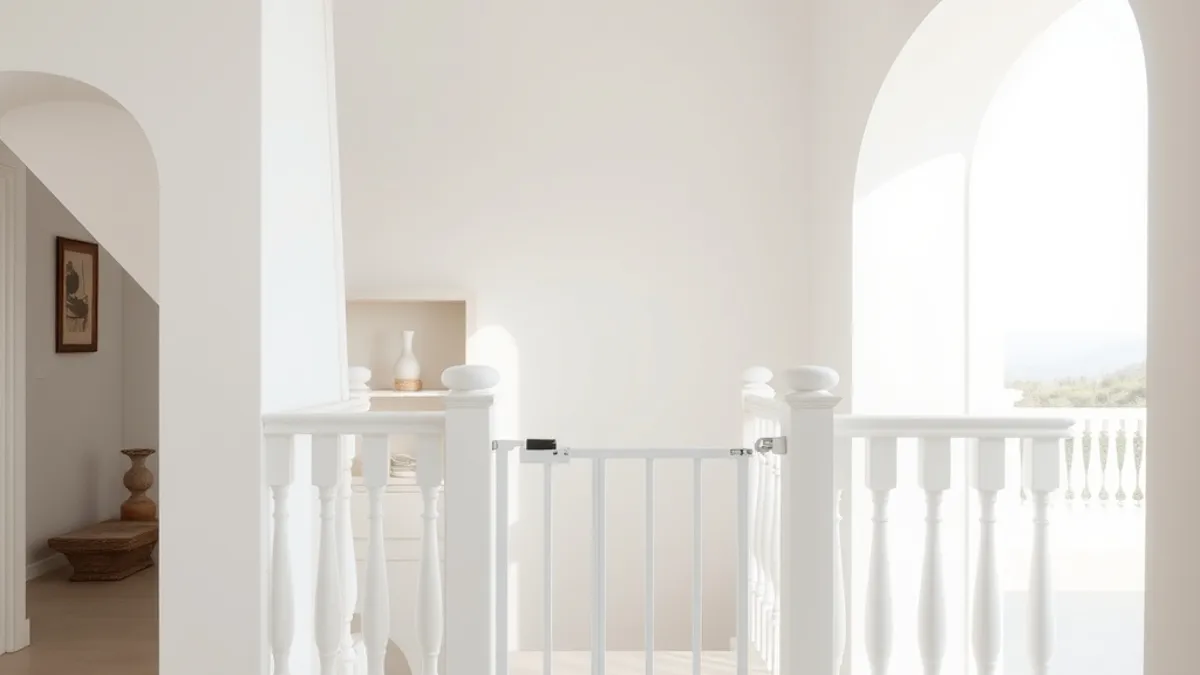
Indoors, stairs are the hazard parents most often forget until they arrive. Confirm with the host that stair gates are fitted at both the top and the bottom, not just one end. At the top of the stairs, hardware-mounted gates are safer than pressure-mounted ones, because they bolt into the wall or banister and cannot be pushed loose by a toddler leaning on them. Pressure-mounted models are acceptable at the bottom of a staircase, where a gate popping loose is annoying rather than dangerous.
Open-riser staircases are the other common trap. These stairs, popular in modern villa design, have no solid backing between each step, which means small feet can slip through the gap and little legs can wedge between treads. Ask for photos of the balustrade and the step gaps before booking, and check the vertical gaps in the railing too. If the gaps look wider than a toddler’s head, treat that staircase as a no-go zone that needs constant supervision or a temporary barrier.
- Railing gap measurement: ask the host to measure the vertical gaps in stair and balcony railings; gaps wider than 10 cm are a red flag for villa stays with small children.
- Climbable horizontal bars: railings with horizontal rails act like a ladder for a climbing toddler; vertical bars are far safer, so ask which design the villa has.
- Furniture near railings: check whether planters, loungers or tables sit close enough to balcony edges or terraces to give a child a step up over the railing.
- Bedroom layout: ask whether the bedrooms are on the same floor as the living area, since split-level layouts multiply stair trips every day and every trip is another gate to open and close.
Balconies and terraces deserve the same scrutiny as the staircase. Walk the railings mentally through the photos: look for gaps, loose panels and anything a toddler could use as a climbing aid. If the villa has a rooftop terrace or a raised deck, ask whether it can be locked or gated off entirely, because those areas are hardest to supervise while you are cooking or settling a sibling for a nap.
Gates, Locks and Childproofing Extras Worth Asking For
Once the big hazards are covered, the smaller childproofing details make the difference between a villa that is technically safe and one where you can actually relax. Most hosts are happy to add simple extras if you ask before arrival, but very few will think of them on their own. Send your requests as a short, friendly list at booking time so there is room to order or install anything missing.
Start with the exits. A self-closing gate on the pool area is essential, but garden gates and side doors matter just as much, since a determined toddler can reach the street or a driveway in seconds. If the villa has a pool fence without a self-latching mechanism, ask whether the latch can be adjusted or upgraded before you arrive.
Indoors, the priorities are electricity, cabinets and sharp edges. Many villa owners already store a box of childproofing gear from previous family guests, so it never hurts to ask. If they do not, confirm in writing that you may bring and fit your own supplies, including removable covers and locks that will not damage furniture.
- Outlet covers: European sockets often sit low on walls and accept small fingers more easily than the recessed sockets some parents are used to, so ask for covers or bring plug-in ones that fit the local socket type.
- Cabinet locks: request them specifically in the kitchen, where knives, glassware and alcohol bottles tend to live at toddler height in rental villas.
- Corner guards: glass coffee tables and sharp stone edges on terraces are common in villa furnishings, so ask for foam guards on anything at head height for a two-year-old.
- Storage check: confirm that cleaning products, matches and medicines are stored high or in a locked cupboard before arrival, not tidied away “somewhere upstairs”.
- Window locks: on upper floors, ask for locks that restrict openings, especially in villas without fly screens, since a wide-open window can be an unguarded drop.
How to Vet a Villa’s Safety in Listing Photos and Messages
Listing photos are marketing tools, and wide-angle lenses are very good at hiding what is not there. A pool that looks fenced in one photo may simply be standing next to a fence on a neighboring property. A low hedge can read as a barrier from the right angle, and a cropped shot can make an open staircase look perfectly enclosed. The fix is simple: treat photos as a starting point and turn your booking conversation into a structured safety check before you pay any deposit.
- Send a fixed checklist of questions. Ask the same four things every time: the height of any pool fence, whether stair gates are fitted at top and bottom, the width of balcony railing gaps, and which floor the bedrooms are on. A fixed list makes it easy to compare answers between villas and hard for a vague host to dodge.
- Request a short video walkthrough. Ask the host to film the pool area, the staircase and the terrace on their phone. Video shows fence latches, step gaps and furniture placement that wide-angle listing photos flatten or crop out entirely. It takes the host two minutes and saves you weeks of worry.
- Filter listings for family keywords. Search for the words family, cot, highchair and gate. Hosts who cater to toddlers usually childproof by default, so a listing that mentions a cot and a stair gate in the same breath is a promising sign.
- Mine the reviews. Read reviews from other families with young children and search them for words like pool, gate and stairs. One sentence from a parent who stayed with a two-year-old tells you more than ten polished photos.
Hosts respond differently to a checklist than to a casual question. A host who answers each point with specifics and photos is telling you they understand what families need, and that alone narrows your shortlist quickly. A host who replies with “don’t worry, it’s perfectly safe” and no details is telling you something too. Trust the specific answers, keep everything in writing so you can refer back to it at check-in, and you will arrive knowing exactly what awaits your toddler.
Booking Timing and What Toddler-Proofed Villas Cost
Toddler-proofed villas are a small share of total supply in most European destinations, and that shapes both when you should book and what you should expect to pay. Hosts who have already fitted pool fences and stair gates tend to fill their calendars early with repeat family guests, so the best stock disappears months before the summer rush.
When to book
For July-August travel, aim to book 4-6 months ahead. That typically means confirming your villa sometime between February and April, which feels early if you are used to booking trips a few weeks out. The payoff is real: you get first pick of villas that already have gates and fences, rather than negotiating childproofing with a host whose calendar is nearly full.
What family-friendly villas cost
In high season, family-friendly villas in popular European regions typically cost 150-400 EUR per night. The lower end of that range often buys you a comfortable three-bedroom villa with a shared or modest private pool, while the upper end usually means a larger property with better childproofing already in place.
If your dates are flexible, shoulder-season weeks in May-June or September cut prices noticeably and still offer warm pool weather in southern Europe. Pools that are pleasant in late May in Spain, Portugal or Greece let you combine a lower nightly rate with the same toddler-safety features you would fight over in August.
Finally, settle the gear question at booking, not on arrival. Ask whether childproofing equipment such as stair gates, cots and highchairs is included free or rented as an extra, and get that confirmation in writing with your booking. Arriving to discover the pool fence you were promised is “being ordered” is not a position you want to be in with a toddler in the car.
The Toddler-Safe Villa Checklist in Brief
A villa with a private pool and an open staircase can flip from dream to worry the moment a toddler starts exploring. The good news is that the fix is mostly a matter of asking the right questions before you pay. Confirm a proper pool barrier with a self-closing, self-latching gate, plus a lockable or netted pool, before any deposit changes hands. Check stair gates at both the top and bottom, ask about open-riser gaps, and make sure balcony railings have gaps under 10 cm.
Then vet the villa properly: send a question checklist, request a short video walkthrough of the pool, stairs and terrace, and read reviews from other families with young children. Book 4-6 months ahead for summer, since childproofed villas are a small share of the supply. With the right villa safety features confirmed early, a pool-and-stairs villa becomes a relaxed family base rather than a worry. If this helped you plan, leave a comment or share the article with another traveling family.