Design hotels promise more than a bed for the night, but many travelers aren’t sure what actually changes when they book one. Is it just a fancy lobby with the same cramped room behind it, or does the whole experience differ from a standard hotel? The honest answer is somewhere in between, and knowing the details beforehand makes a real difference to whether you’ll love it or leave frustrated.
This guide walks you through what a design hotel stay actually involves. We’ll define what sets these properties apart, look at what you really get in the rooms, and explain the service style and atmosphere. We’ll also cover the food and social spaces, break down typical costs, and help you choose the right property for your trip. Finally, we’ll weigh whether the premium is worth it for your kind of travel.
What Defines a Design Hotel Stay
The core of a design hotel is exactly what the name suggests: architecture, interiors and styling created by recognized designers or studios. This isn’t decoration added at the end of a build; the concept shapes everything from the building’s facade down to the door handles. Many properties work with a single design studio across the whole project, which is why the result feels coherent rather than assembled from a catalog.
Scale matters here too. Design hotels are usually independent or part of small groups, with most properties having 30-80 rooms. That’s a fraction of the 200+ rooms you’ll find at large chain hotels, and it gives each space room to have a distinct look. Corridors, stairwells and even elevators get individual treatment instead of a repeated template.
Public spaces as showcases
Lobbies in design hotels are rarely just places to check in. They double as galleries, lounges and co-working spaces, often featuring the property’s most ambitious elements. Expect 1-2 standout design features per property, such as a signature lobby installation or custom furniture, and these are usually placed where guests and passersby will actually see them.
How does this differ from a boutique hotel? The main distinction is scale of ambition. Boutique properties tend to favor cozy charm and intimate character, while design hotels go for bold statements. Think dramatic materials, striking lighting and architecture that takes a position, rather than a comfortable room with a few tasteful touches.
Rooms and Amenities: What You Actually Get
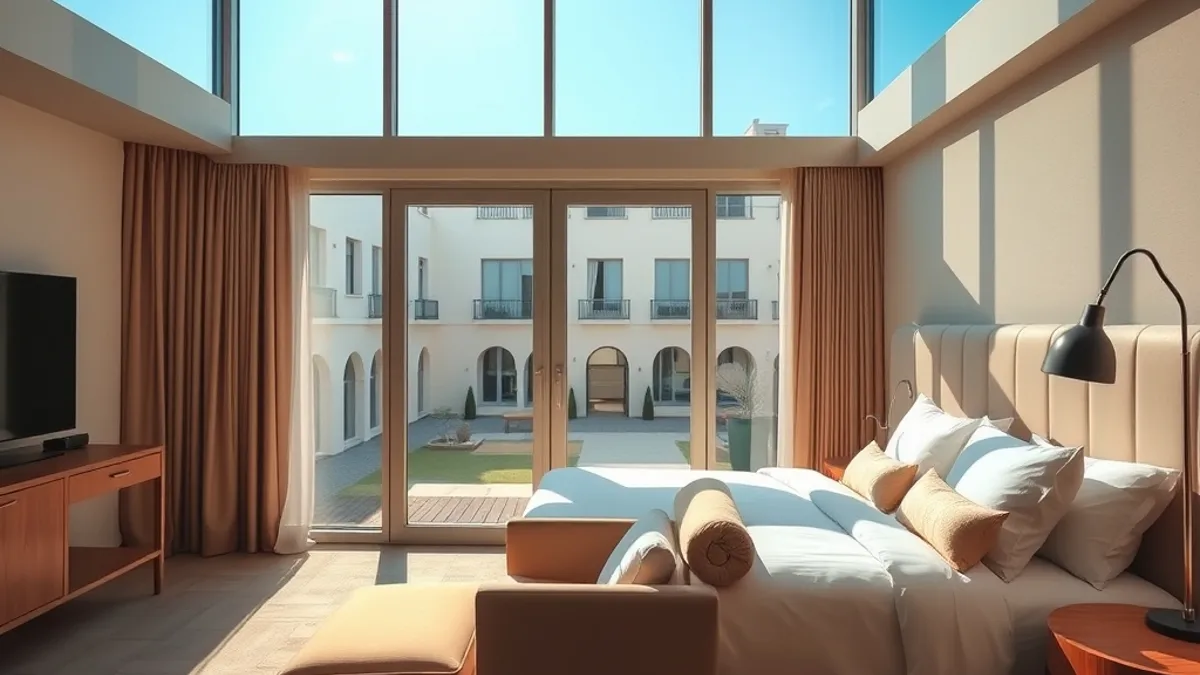
The first thing you’ll notice in the room is what’s missing: standardized chain fittings. In their place come custom furniture, curated art, quality lighting and premium bedding. The bed itself is usually a highlight, since good bedding is one area where design properties rarely compromise.
The space trade-off
Here’s the catch many travelers discover on arrival: room sizes can run smaller than chain hotels, because design elements take priority over square meters. A sculptural bathroom or a built-in seating nook eats floor space that a chain hotel would give to a desk and wardrobe. Check the square meters listed before booking, especially if you’re traveling with large luggage or plan to spend daytime hours in the room.
Amenities tend to be well chosen rather than extensive. Common features include rainfall showers, minibars stocked with local products and smart room controls for lighting and temperature. You’ll often find better showers and lighting quality than at mid-range chains, even in smaller rooms.
When form beats function
Be prepared for some trade-offs. Limited storage, unusual layouts or dim lighting are common in style-forward rooms. That floating wardrobe might look stunning but hold less than a standard closet, and moody lighting can make reading in bed a challenge. None of these are dealbreakers for most guests, but it helps to know they’re part of the package rather than a flaw in your particular room.
Service Style and Atmosphere
Service at a design hotel follows a different philosophy than a five-star chain. Staff numbers per guest are typically lower, and the culture skews younger and more informal. Don’t expect white gloves and formal titles; expect knowledgeable people who chat with you about the neighborhood rather than addressing you as “sir” or “madam.” For many travelers this feels refreshing, though those who prefer traditional formality should know what they’re walking into.
Recommendations with a local angle
The concierge approach reflects the property’s character. Recommendations lean toward local galleries, independent restaurants and design shops rather than standard tourist itineraries. If you want the classic sightseeing checklist, you can still get it, but the staff’s genuine enthusiasm usually sits with the places locals actually go. Ask specifically and you’ll often come away with a table or an exhibition you wouldn’t have found on your own.
Practical logistics are broadly similar to other hotels. Check-in usually opens between 2 and 3 pm, and late check-out until 12-1 pm is often available on request. Confirm both when booking if your arrival or departure times are tight, since smaller properties sometimes have less flexibility when rooms are limited.
The final layer is atmosphere, and it’s engineered deliberately. Background music, scent design and lighting scenes shape the mood throughout the property, shifting from energizing in the morning to subdued in the evening. Some guests find this immersive and memorable; others find a signature scent in the elevator a step too far. Either way, it’s a core part of what you’re paying for, so embrace it or choose a more conventional property.
Food, Drink and Social Spaces
Food is often where a design hotel earns its reputation. Many of these properties anchor themselves with a destination restaurant or rooftop bar that draws a crowd of non-guests, so the dining room can feel lively even on a quiet weeknight. If you are staying there, this works in your favor: you get a serious kitchen steps from your room, often with a bar program to match.
Breakfast is usually a different story from the sprawling buffet you might know from chain hotels. Expect a shorter, curated menu, often built around locally sourced ingredients, with a few well-executed dishes rather than dozens of average ones. It can feel more like a cafe morning than a hotel breakfast, which many travelers love and a few find limiting.
The social spaces deserve special attention, because they shape the whole atmosphere of your stay:
- Lobby bars often act as neighborhood hangouts, so evenings can bring locals in for cocktails and conversation rather than a purely guest-only scene.
- Lounges frequently double as co-working areas by day, which means you may share the space with laptops in the afternoon and drinks after dark.
- Room service menus are typically shorter and more design-led than at full-service chains, favoring a few signature plates over an around-the-clock full menu.
- Rooftop bars may have limited seating, so asking about guest priority or reserving a table in advance is a smart move in high season.
If you value quiet, ask for a room away from the restaurant or bar floor when booking. The energy that makes these spaces fun at 8 pm can carry late into the night.
How Much a Design Hotel Stay Costs
Let’s talk numbers. A design hotel room typically costs 20-40% more than a comparable standard mid-range room in the same city. That premium buys you the architecture, the custom furniture and the atmosphere, not necessarily more square meters or extra services, so it helps to know what you are paying for before you book.
Timing makes a real difference to the final bill. In Europe, shoulder season in April-May and September-October often brings rates 25-35% below peak summer prices, with better weather for city walking as a bonus. If your dates are flexible, shifting a trip by a few weeks can be the single biggest saving you make.
When to Book
Booking 2-3 months ahead usually secures the best room categories, including the standard rooms with the better views or layouts. For peak summer dates, allow 4-6 months, since the most distinctive properties have far fewer rooms than large chains and the best ones go first.
Finally, compare direct booking with online travel agencies before you commit. Direct booking often unlocks perks such as a room upgrade or breakfast included, which can easily offset a small difference in the nightly rate. Check both, do the math with the perks included, and book whichever genuinely comes out ahead.
How to Choose the Right Design Hotel
The first thing to check is who designed the property. A recognized designer or studio behind the project usually signals a stronger, more coherent concept, while anonymous styling can mean a hotel that merely looks the part. Most design hotels publish this information proudly, so it takes two minutes to verify.
Next, read recent guest reviews with a specific eye. Look for comfort complaints, since style-forward rooms sometimes sacrifice practicality, and a beautiful room with nowhere to put your suitcase gets old by day two. Recent reviews matter more than older ones, because management and maintenance change.
Matching the vibe to your trip is just as important. Minimalist design hotels suit short city breaks, where you spend your days out and want a striking base at night. Resort-style properties work better for longer stays, when you will actually use the pool, terrace and lounge areas. For an example of how a smaller property can balance character and comfort, this Casa 1810 Hotel Boutique review from San Miguel de Allende shows what to look for in practice.
A few extra checks before you commit:
- Study photos of standard rooms, not just the suites featured on the homepage, to see what your budget actually buys.
- Look for mentions of noise from the bar or restaurant, since social hubs are often located right off the lobby.
- Check whether the room descriptions mention storage, blackout curtains and adjustable lighting, the three things design-led rooms most often compromise on.
- Confirm the exact room category you are booking, as some properties sell several layouts under similar names.
Is a Design Hotel Stay Worth It?
So, is a design hotel stay worth it? If you value atmosphere, character and interiors you’ll actually remember, the answer is usually yes. You’re trading a bit of space and formal polish for a stay that feels personal rather than standardized, in properties of just 30-80 rooms where each space has a real point of view.
Value matters, too. Expect to pay 20-40% above a comparable standard mid-range room, with the best deals in shoulder season and when booking 2-3 months ahead. Travelers who love local flavor and thoughtful details will get the most out of it; those who want big rooms and predictable service may not. If a design hotel stay has impressed (or disappointed) you, share your experience in the comments below.