Remote lodges promise peace, wide-open views and nights that actually feel quiet. But they also come with a catch: once you arrive, there is no corner store down the street. Figuring out what to pack for a lodge stay before you leave home is the difference between a restful escape and a stressful scramble for basics.
This guide walks you through everything that matters, from why remote lodge packing is different in the first place, to layered clothing for fast-changing weather, off-grid gear and electronics, food and kitchen supplies for self-catering stays, and the health and toiletry items that are easy to overlook. We will also cover booking timing and pre-arrival prep, then wrap up with a final packing checklist recap you can use for your next trip.
Why Remote Lodge Packing Is Different
The biggest mistake travelers make with remote lodges is treating them like city hotels. In reality, many lodges sit 30-90 minutes from the nearest supermarket or pharmacy. Forget your phone charger, allergy medication or favorite coffee, and replacing it means a dedicated trip that eats half a day of your stay.
Weather is the second factor. Mountain and lakeside locations can shift dramatically in a single day, with temperature swings of 10-15°C between afternoon and nightfall. A sunny, warm arrival can turn into a cold, damp evening, and packing for only the forecast you checked at home is a common way to end up shivering in a cabin.
Dining is not guaranteed either
Unlike a city hotel with a restaurant downstairs, many remote lodges are self-catering or offer only limited on-site dining, sometimes a single meal service or a small shop with a handful of items. That means your packing list has to cover not just clothing and gear, but food planning and kitchen basics too. Think of it as packing for a small expedition rather than a weekend in town, and you will be in the right mindset.
Clothing Layers for Unpredictable Weather
Layering is the single most effective strategy for lodge stays in mountain or lakeside settings. The idea is simple: instead of one bulky jacket, you wear three lighter pieces you can add or shed as conditions change. Start with a moisture-wicking base layer against your skin, add an insulating fleece or wool mid-layer for warmth, and top it with a waterproof shell for wind, rain or drizzle.
If your stay falls in winter, from December to March, the three-layer system alone will not cut it. Add insulated outerwear rated for -10°C to -20°C conditions, especially if you plan to be outside after sunset or early in the morning. It is better to own one warm parka you barely use than to be stuck indoors because you underestimated the cold.
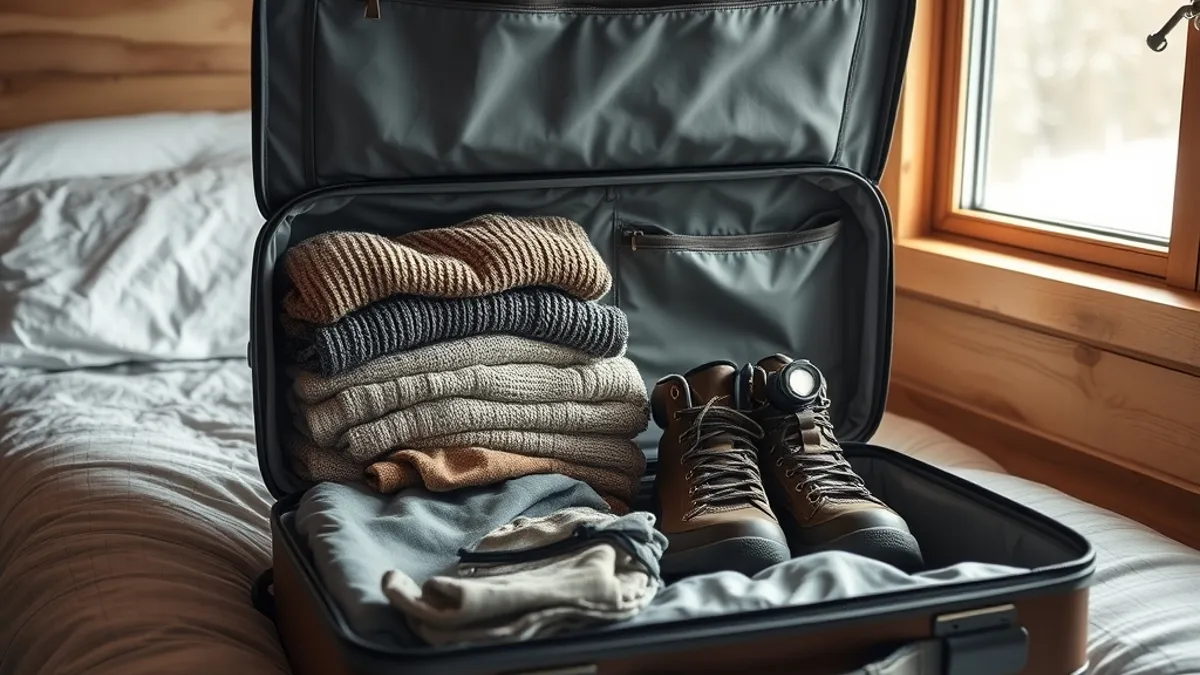
Footwear deserves equal thought. Sturdy, broken-in boots handle trails, mud and uneven gravel paths, while a second pair for indoors keeps you comfortable and keeps cabin floors clean.
- Broken-in boots: Wear them on several walks before the trip; new boots on a lodge stay almost always end in blisters, and a pharmacy may be an hour away.
- Camp sandals or slippers: Useful for evenings indoors, shared bathroom corridors and quick trips to the car, especially when boots are still damp from the day.
- Warm hat, gloves and buff: Bring these even in summer, when evenings can drop below 10°C, and a buff doubles as sun protection or a dust cover on windy days.
- Quick-dry socks: Pack at least two extra pairs so a wet afternoon hike never leaves you with damp socks the next morning.
Gear and Electronics for Off-Grid Comfort
Remote lodges rarely offer the plug-and-play convenience of a city hotel, so your electronics kit matters more than you might expect. Older lodge rooms in particular may have few outlets, sometimes just one or two shared between lamps, phones and cameras. A 10,000-20,000 mAh power bank solves this, letting you charge devices overnight without fighting over the single socket near the bed.
After dark, lodge grounds can be genuinely dark, especially in areas that avoid light pollution to preserve the night sky. Paths between cabins are often unlit, so a headlamp with 200+ lumens is essential for walking to dinner, the fire pit or the car after sunset. It keeps your hands free, which matters when you are carrying firewood or groceries.
Connectivity is the other gap to plan around. Mobile signal can be patchy or nonexistent, so download offline maps before you leave home and consider bringing a paper map as backup. For a sense of what a well-located but remote lodge actually offers, this Signal Mountain Lodge review from Moran, Wyoming gives a helpful real-world picture.
- Reusable water bottle: Choose an insulated one so drinks stay cold on hot drive days, and it doubles as your vessel for tea or coffee in the cabin.
- Small first-aid kit: Stock it for the basics between resupply trips, including bandages, antiseptic wipes and tweezers for splinters picked up on wooden decks.
- Spare charging cables: Cables fail more often than phones, and with the nearest shop potentially an hour away, a backup is cheap insurance.
Food and Kitchen Supplies for Self-Catering Stays
The kitchen situation at a remote lodge often comes down to you, since cooking facilities may be basic and dining options limited. The smart approach is to plan meals for 2-3 days between resupply trips, then top up on a town run when you pass through civilization. This keeps your cooler space manageable and your food fresh, without forcing you to haul a week of groceries down a gravel road.
When choosing what to bring, prioritize shelf-stable staples that survive a bumpy drive and a few days without refrigeration. Pasta, rice, canned goods and trail mix are classics for a reason: they pack flat, cook fast and work as backup meals if plans change. Think in terms of complete meals rather than individual ingredients, so you are not stuck with half a recipe and no way to finish it.
Here is what deserves a spot in your food box:
- Basic spices, oil and coffee: Lodge kitchens rarely stock consumables, and bland food gets old fast on day three. Decant oil and spices into small containers to save space.
- A lighter or matches: Even lodges with full stoves often have gas igniters that fail, and a campfire evening is much better with a reliable flame.
- A cooler bag with ice packs: Useful for the drive itself and for keeping cheese, butter and fresh produce usable for the first couple of days.
- Snacks for the road: The drive to a remote lodge can be long, and there may be nowhere to stop for food along the way.
One more step that saves real frustration: confirm before arrival whether cookware, dish soap and towels are provided. Some lodges have fully equipped kitchens, others offer little more than a hotplate. A short email beats discovering at dinnertime that there is no pot on the premises.
Health, Safety and Toiletries
When the nearest pharmacy could be an hour away, your toiletry bag doubles as your medicine cabinet. Build a full personal pharmacy before you leave: painkillers, blister plasters, antihistamines and any prescriptions you rely on. Think about the specific trip, too — hikers will want blister care and muscle relief, while anyone prone to allergies should pack accordingly rather than hoping for the best.
Insect protection matters more than most travelers expect. Near lakes and forests, from late spring through early autumn, mosquitoes and other biters can be relentless, especially at dusk. Bring a repellent that works for you, and consider treating clothing if you are particularly attractive to bugs.
Sun care is not just a summer concern. Pack sunscreen and lip balm with SPF even in winter, when snow reflection intensifies UV and can catch you out on a bright day on the slopes or a frozen lake. Add after-sun or moisturizer, since cold air and wood-fired heating both dry out skin quickly.
A few extras worth adding to the bag:
- Cash in small bills: Some remote lodges and nearby shops have limited card facilities, so small denominations make paying for extras and local purchases painless.
- Rehydration sachets: Handy after a long hike, a warmer lodge than expected, or a night of too much local wine.
- Any personal medical extras: Spare glasses, contact lens solution, inhalers — anything you would struggle to replace quickly in a small town.
- Basic wound care beyond plasters: A small tube of antiseptic cream and a few gauze pads cover the scrapes that plasters alone cannot handle.
Finally, keep all medications in your day bag rather than your main luggage, so they stay with you if bags are delayed or rooms are not ready on arrival.
Booking Timing and Pre-Arrival Prep
A stay at a remote lodge rewards early planning more than almost any other type of trip. The best properties are small, often with only a handful of rooms or cabins, and they cannot simply add capacity when demand spikes. Once a weekend fills up, there is no overflow wing and no walk-in option down the street. That scarcity shapes everything: when you book, what you pack, and how you plan the drive itself. A little preparation before you book — and again before you set off — makes the difference between a smooth, relaxed arrival and a stressful one spent troubleshooting on a gravel road with no signal.
- Book well ahead for peak dates: Reserve remote lodges 3-6 months ahead for peak summer (June-August) and winter holiday dates, when availability disappears first and prices tend to climb. If your dates are flexible, midweek stays are usually easier to secure and often quieter.
- Email the lodge before arrival: Confirm road access, parking and check-in logistics. Some lodges have seasonal road conditions, gates, or self-check-in procedures that are far easier to know about in advance than to discover at the end of a long drive.
- Clarify what is provided: Ask what the lodge supplies versus what you must bring, from bedding and towels to firewood. The answer directly shapes how much you pack and how much trunk space you need, especially if you are also carrying food and kitchen supplies.
- Share your route and arrival window: Give your itinerary and expected arrival time to someone at home, since remote roads may lack signal and help cannot come looking if nobody knows where you are. Note any planned stops along the way, too.
- Download what you need in advance: Offline maps, directions to the lodge and any confirmation emails are best saved to your phone while you still have reliable internet. A printed copy of directions is a sensible backup if your battery dies.
Treat the pre-arrival email as your single most useful tool. Lodge hosts in remote areas are usually happy to answer questions, and their answers will tell you things no listing page covers — whether the last stretch of road suits your car, where to buy firewood, or which cabin has the best morning light. Ask about arrival timing as well: some hosts prefer a set check-in window so they can greet you personally, while others leave a key or a code and appreciate knowing roughly when to expect you. Ten minutes of correspondence can save you an afternoon of guesswork, and it also puts a friendly face behind your booking before you ever arrive.
Final Packing Checklist Recap
Remote lodges promise peace and scenery, but arriving without the right gear can turn an escape into a stressful scramble. The good news is that packing well comes down to five pillars: layered clothing, off-grid gear, self-catering food, health supplies and pre-arrival planning. Cover each one before you leave home and you will be ready for whatever the weather, the kitchen or the trail throws at you.
The core idea is simple: remote lodges reward self-sufficiency, so pack as if the nearest shop is an hour away. Because it often is. Run through your list one final time, check it against what the lodge actually provides, and you can settle in and enjoy the quiet instead of improvising. If this checklist helped you plan your own lodge stay, leave a comment or share the article with a fellow traveler.