The idea sounds dreamy: snow falling softly outside, a warm glow inside your tent, hot cocoa in hand. Then the doubts creep in. What if the heater fails at 2 a.m.? What if you spend the whole night curled up, teeth chattering, waiting for sunrise? That fear of freezing keeps a lot of travelers from booking a winter tent trip, and honestly, it is a reasonable worry if you pick the wrong site or pack the wrong gear.
The good news is that a properly set up heated tent can be genuinely warm, and a little preparation goes a long way. This guide walks you through the winter glamping essentials that matter most: how to spot a tent that is truly winter-ready, when to book and what you can expect to pay, what to pack, how to stay warm through the night, the destinations where cold-season glamping shines, and how to choose a site that delivers on its cozy promises.
What Makes a Tent Truly Winter-Ready
Not every tent marketed for winter can actually keep you comfortable when temperatures drop. The fabric is the first thing to check. Insulated canvas or poly-cotton tents hold heat far better than the thin nylon used in summer models, which loses warmth almost as fast as you generate it. Canvas also handles condensation better, so you wake up drier.
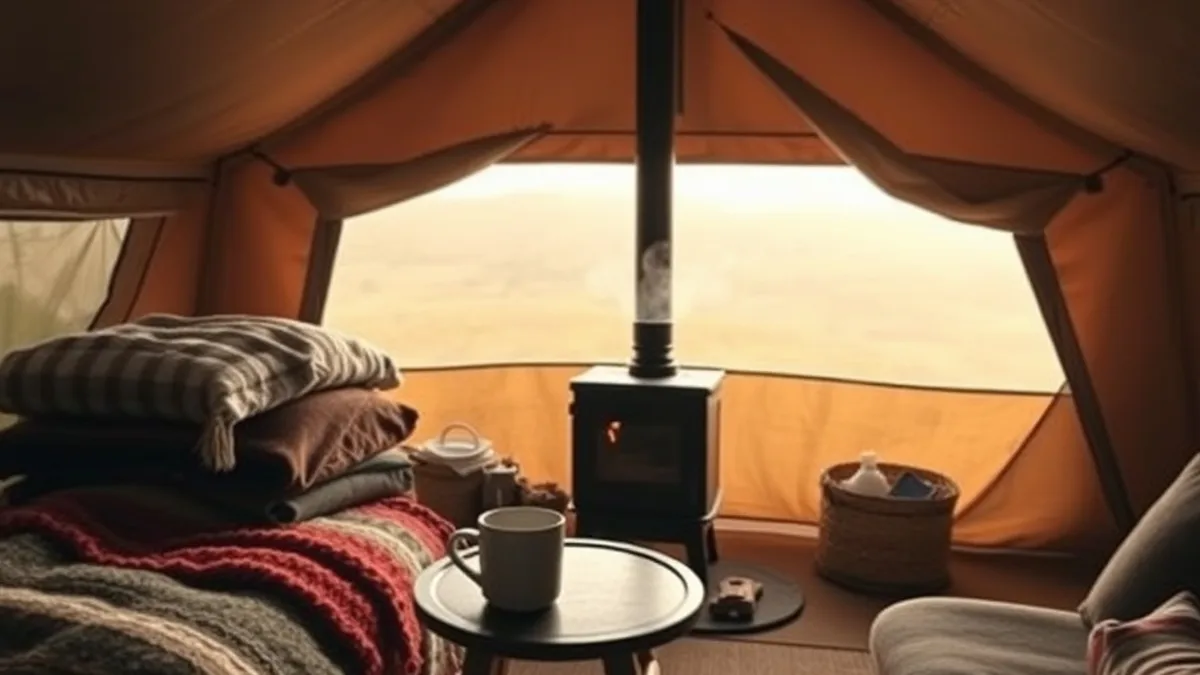
Heating is the second piece of the puzzle. The two setups you will encounter most often are a wood stove and a diesel heater. A wood stove gives you that classic crackling-fire atmosphere, but someone needs to feed it logs through the night. Diesel units run more quietly and need far less tending, which makes them the easier choice if you do not want to set an alarm for refueling.
Read the listing carefully
Look for the words “heated tent” spelled out explicitly, not just “four-season” marketing language. Some operators use that phrase to mean the tent will survive winter, not that you will be comfortable in it. If the description is vague, message the host and ask directly what heats the tent and how it is powered.
Finally, do not obsess over wall thickness. What happens under you matters more than what surrounds you. A raised platform keeps you off the frozen ground, and good ground insulation stops your body heat from draining straight into the earth. A tent with modest walls on a well-insulated platform will usually outperform a thicker-walled tent pitched on bare, cold soil.
When to Book and What Winter Glamping Costs
The core winter glamping season runs from November through March, and each month has its own character. December and January deliver the most atmospheric snow settings, with deep powder, frosted trees and long evenings by the stove. If you want that postcard scene, this is the window to aim for, though it is also when demand peaks.
How far ahead to book
For a regular winter weekend, reserving 2-3 months ahead usually gives you a decent choice of tents and dates. For Christmas and New Year, push that to 4-6 months ahead. Holiday weeks at popular snowy sites sell out early, and the best stove-equipped tents go first.
On price, expect winter rates to run roughly 20-40% above shoulder-season prices, especially for tents with wood stoves or diesel heaters. You are paying for the heating setup and the extra work of operating in cold conditions, so a higher rate is normal rather than a red flag. Just compare what is included before you book, since firewood and bedding can add up if charged separately.
One easy way to trim costs: travel midweek. In popular snowy regions, midweek stays are often cheaper and quieter than weekends, and you may get the sauna, hot tub or communal lounge nearly to yourself. If your dates are flexible, a Monday-to-Thursday stay can stretch your budget noticeably. For a sense of what a winter-ready site looks like in practice, this glamping review from Castel Volturno in Italy gives a useful real-world picture of what to expect on site.
Winter Glamping Essentials to Pack
Packing for a heated tent is a different exercise than packing for a hotel. Days can feel surprisingly mild, especially if you are hiking or exploring, but nights are the real test. Bring layered clothing rated for nights that can drop to -5°C to -15°C, starting with a thermal base layer and topped with an insulated jacket you can pull on the moment the sun drops. Layers let you adjust inside the tent too, since a good heater can make the space warmer than you expect. The goal is flexibility: you want to be comfortable reading in a warm tent at dusk and equally comfortable stepping outside to stargaze in freezing air.
Then there are the small comforts that make a big difference once darkness falls. Winter darkness arrives by late afternoon in many destinations, so a headlamp with fresh batteries should live in your jacket pocket, not buried in your bag. A small daypack for trips to the bathroom block or communal lounge is worth bringing as well. And because heated tents dry the air out noticeably, your skin and lips will feel it by morning if you come unprepared.
- Wool socks: pack at least two pairs so you always have a dry set; damp socks from snow or bathroom trips will chill you fast.
- Beanie: a large share of body heat escapes through your head, and a beanie doubles as a sleep aid on colder nights.
- Slip-on boots: lacing up boots at 3 a.m. is miserable; slip-ons make trips to the bathroom block painless.
- Lip balm and moisturizer: apply both before bed, since heated air can chap skin overnight.
- Refillable water bottle: dry heated air dehydrates you faster than you notice, and a filled bottle doubles as a hand warmer early in the evening.
Staying Warm Through the Night
Here’s the encouraging news: a quality heated tent does most of the work for you. A well-run setup holds its interior 15-20°C above the outside temperature, so even when the thermometer drops well below freezing, you can read in a t-shirt. The difference between a great night and a shivery one usually comes down to how the heat is managed, not how much of it there is.
Before you arrive, ask the host two practical questions. If the tent has a wood stove, find out whether staff refuel it overnight or whether you’ll need to wake up and feed it yourself. If it runs on a diesel heater, check whether it has a thermostat, which lets it cycle on and off automatically while you sleep. Either answer is fine, but you’ll sleep better knowing what to expect at 3 a.m.
Small habits that make a big difference
Change into dry base layers before bed instead of sleeping in the clothes you wore outside, since moisture from the day’s air pulls heat away from your body fast. Crack a vent slightly, even on the coldest night, to keep fresh air moving and let any stove fumes escape safely.
Finally, the low-tech trick that never fails: fill a hot water bottle and slip it into your sleeping bag about ten minutes before you get in. By the time you climb in, the bag is already warm, and the bottle keeps working well into the night.
Where Winter Glamping Shines
Winter glamping works in very different climates, and the best destination depends entirely on how much cold you actually enjoy. Some travelers want deep snow and crackling ice underfoot, while others just want crisp air and a wood stove without frost on the inside of the tent. Knowing your own tolerance makes choosing far easier.
Lapland is the classic pick for a proper snowy winter. Days are short and nights are long, which sounds daunting until you realize it’s exactly what a heated wilderness tent is built for: long evenings by the stove, snow-covered pines outside, and the chance of northern lights overhead. If that appeals, it’s worth reading up on staying with local hosts in Lapland to combine tent nights with a warmer base.
Prefer milder conditions? Canada’s Pacific Coast runs a rainy-season glamping scene through winter, with temperatures that rarely bite. And further south, Italy and Portugal keep a surprising number of glamping sites open all winter, trading deep frost for gentle Mediterranean days.
- Lapland, Finland and Scandinavia: expect true polar nights around midwinter, when the sun barely rises, plus activities like husky sledding and snowshoeing between stove-warmed evenings.
- Canada’s Pacific Coast, around British Columbia: think temperate rainforest settings, mild but damp air, and trails that stay walkable in winter, so pack waterproofs rather than heavy down.
- Southern Europe: sites in rural Italy and Portugal often pair winter openings with wine regions, olive groves and coastal walks, making them ideal for travelers who want scenery without scraping ice off the tent zipper.
Choosing the Right Winter Glamping Site
Two winter glamping sites can look identical online and feel completely different on a January night. The difference is almost always in the details, and the details live in reviews. When you read them, skip past the comments about pretty views and search specifically for mentions of heating reliability and cold-weather comfort. Phrases like “the stove went out at midnight” or “we stayed toasty all weekend” tell you more than any photo gallery.
Next, confirm exactly what’s included in the rate. Firewood, extra bedding layers and a supply of hot drinks make an enormous difference when temperatures drop, and some hosts charge separately for each. A site that includes unlimited firewood and a pre-warmed tent at check-in is worth more than one that looks cheaper on paper.
Finally, think about the practical layout of the site itself, especially after dark in winter. A few questions worth asking before you book:
- How far are the heated bathrooms? A two-minute dash across snow is very different from a five-minute walk, so ask for the actual distance and whether the path is lit.
- Are meals available on site? Some sites offer dinner or breakfast service in winter, which saves you from cooking in the dark after a cold day out.
- Is there a communal lounge? A heated shared space gives you somewhere to warm up, read or meet other travelers beyond the tent itself.
If you want a model of how these details come together, look at glamping around Poland’s Masurian lakes, where slow-travel sites lean heavily on comfort extras like lounges and included firewood.
Wrapping Up Your Winter Glamping Plan
The fear of shivering through a snowy night is understandable, but it comes down to one thing: a genuinely heated, insulated tent. When a stove or diesel heater is running properly, the difference between the canvas walls and the frosty world outside can feel like stepping from a winter’s walk straight into a warm living room. No amount of extra layers can replace that.
From there, the practical side is simple. Book 2-3 months ahead, pack clothing rated for nights of -5°C to -15°C, and choose a site where reviews confirm the heating actually works in cold snaps. Do that, and winter glamping becomes the coziest way to travel in the cold months rather than an endurance test. If this helped you plan your trip, leave a comment or share the article.