Chasing winter sunshine is easy. Finding it with privacy, space and a pool you don’t have to share with a resort crowd is harder. That’s the promise of winter villa breaks, but the challenge is knowing which destinations stay genuinely warm between November and February, and which just look good in photos while you shiver on a gray terrace.
This guide sorts the reliable options from the hopeful ones. We’ll look at why a villa often beats a hotel in the quieter months, then compare the Canary Islands for dependable warmth, the Mediterranean for mild sightseeing weather, and long-haul spots like the Caribbean for proper dry-season heat. You’ll also find practical advice on when to book, which winter facilities to confirm before paying a deposit, and how to choose a villa that suits cooler evenings as well as sunny afternoons. By the end, you should know exactly where your winter sun is waiting.
Why Winter Villa Breaks Beat Hotel Holidays in the Off-Season
Winter is when villas quietly outperform hotels. In the busy summer months, a hotel’s buffets, kids’ clubs and shared pools can feel like good value. Off-season, those extras shrink or close, and what’s left is a standard room. A villa, by contrast, gives you the same space and privacy year-round: your own kitchen, your own terrace, and no queue for a sun lounger.
Self-catering flexibility matters more in winter, too. When evenings turn cool, you can cook indoors, open a bottle of local wine and settle in, rather than trekking to a hotel restaurant that’s running a limited menu. Many villa guests also find they eat better and cheaper this way in quieter months, when local markets and shops are fully stocked but restaurants are thinner on the ground.
The price case for going off-season
Rates typically drop 30-50% versus peak summer in the Mediterranean, which changes the maths entirely. A three-bedroom villa with a private pool can cost less per person than a mid-range hotel room in July. You’re essentially buying a whole house for the price of a room, with the heating bill and quiet streets thrown in.
Then there’s the crowd factor, or lack of it. Popular coastal towns that feel unbearable in August become pleasant again from November onward: beaches with room to spread out, restaurants where you can walk in without a reservation, and parking spots that actually exist. If you’ve ever wondered what a place was like before mass tourism, winter is your answer.
Canary Islands: Europe’s Most Reliable Winter Sun
If you want the safest bet for winter warmth within a short flight of Europe, the Canary Islands are hard to beat. Tenerife, Gran Canaria and Lanzarote average 20-24°C in December and January, making them the warmest short-haul option from the continent. While much of the Mediterranean hibernates, you can swim, sunbathe and eat breakfast outside in the middle of winter.
That consistency is the real selling point. Some destinations trade on lucky weather; the Canaries trade on geography, sitting off the coast of Africa with a subtropical climate that barely dips all year. For a one-week break without long travel days, it’s an easy decision.
Which coast to choose
Location on each island matters more than visitors expect. South-facing coasts like Costa Adeje in Tenerife and Puerto del Carmen in Lanzarote stay driest and sunniest, sheltered from the trade winds. The north of each island is greener and more dramatic, but noticeably wetter in winter. If your priority is pool time and beach days, head south; if you want walking and lush scenery, pack a light rain layer.
Villa choice follows the same logic. Look for properties on the southern slopes with sheltered terraces, and check that pools are heated or at least usable in winter, since even mild islands have cool evenings. Our guide to Canary Islands villas for winter sun goes deeper on picking the right spot.
Getting there is refreshingly simple. It’s roughly a 4-4.5 hour flight from most European hubs, so you can leave home mid-morning and be on your villa terrace for dinner. No jet lag, no overnight stopovers, and no wasted days at either end of a one-week trip.
Mild Mediterranean Escapes for Sightseeing Season
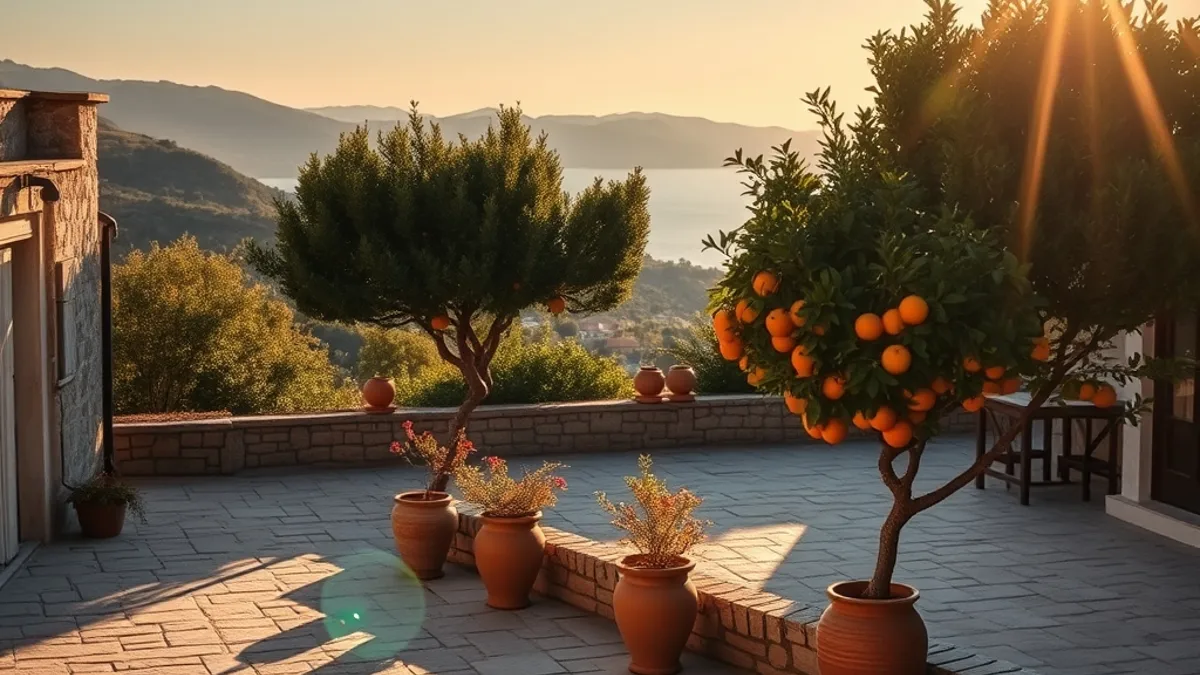
The Mediterranean in winter won’t give you beach weather, but it gives you something arguably better: perfect conditions for actually seeing the place. Sicily and southern Greece sit at 15-18°C in winter, ideal for hiking coastal trails, exploring ruins and wandering old towns without the summer heat that makes all three a slog. Ancient sites you’d sprint through in August become all-day affairs.
You also get the destinations at their most authentic. In Sicily, winter is citrus and almond season, with local markets at their best. In southern Greece, tavernas serve the people who actually live there, and you can stand in front of a temple without fighting for the view.
Choosing a villa that works in cooler months
Villa criteria change with the season. The pool that looked dreamy in the listing photos will sit around 15-16°C off-season if it’s unheated, which is a brisk dip rather than a swim. Look for villas with heated pools if swimming matters to you, and confirm it in writing before booking rather than assuming.
Indoor living space matters just as much. Evenings in January can be cool enough that you’ll want a comfortable lounge, a working fireplace or good heating, and a kitchen worth cooking in. A villa designed purely around outdoor summer living can feel bleak in February; one with generous indoor rooms turns cool nights into part of the charm.
Timing is where the Mediterranean really shines for value. The shoulder months of November and March offer the best balance of mild weather and low rates, well below what you’d pay in summer, with enough sunshine for terrace lunches and enough cool air for a serious day of hiking. Aim for those windows and you’ll pay a fraction of peak prices for a quieter, more comfortable trip.
Long-Haul Warmth: Caribbean and Central America
If you want proper heat rather than pleasant mildness, the Caribbean and Central America are where winter villa breaks earn their keep. The dry season runs from December through April, and on Nicaragua’s Pacific coast that means daytime highs around 30-32°C, calm seas and long stretches without a drop of rain. While Europe shivers, you can swim, surf and eat dinner outside in short sleeves.
The catch is timing. Christmas and New Year weeks command peak prices, and villas book out early for those dates. If your schedule allows it, traveling in late April or early May trims costs sharply while the weather is still largely dry and warm. You trade a little certainty about the skies for a much friendlier bill, and the beaches are noticeably quieter too.
Why Nicaragua’s Pacific coast works so well for villa stays
Nicaragua has quietly become one of Central America’s most rewarding villa destinations. Around towns like San Juan del Sur, you get the best of both worlds: villas within easy reach of the beach, plus a real town with local restaurants, markets and a working fishing harbor. The surf beaches along this stretch of coast draw a steady crowd of boarders, so there is plenty to do beyond lying by the pool. For a closer look at what a stay here actually feels like, this review of a villa stay in San Juan del Sur covers the experience in detail. One practical note: flights to this part of the world are long enough that a two-week trip usually makes more sense than a one-week dash, so plan your time off accordingly.
When and How to Book Your Winter Villa
Booking a winter villa is less about luck and more about asking the right questions at the right time. Winter dates behave differently from summer ones, and a villa that sounds perfect in the listing can disappoint if the owner shuts down facilities between November and March. Work through these steps before you commit, and you will avoid most of the surprises that catch winter travelers off guard.
- Book early for the popular weeks. Reserve 3-6 months ahead for January and February dates. Christmas and New Year weeks often need 6+ months, since those two weeks are the busiest of the whole winter season and the best villas go first.
- Read the cancellation terms carefully. Winter weather can shift, flights get rearranged and plans change more than in stable summer months. A flexible rate usually costs a little more, but that small premium is often the cheapest insurance you can buy on a winter trip.
- Confirm the winter setup in writing. Ask directly whether heating works, whether the pool is heated over the off-season and what the winter maintenance schedule looks like. Some villa owners close facilities or reduce services between seasons, and you want to know before paying a deposit, not after arriving.
- Get answers on services too. Check who handles the property in winter: is there a local manager, a cleaner, someone to call if the heating fails? A villa with reduced off-season staffing can leave you stranded when something goes wrong.
- Clarify payment and deposit timing. Some owners take a larger deposit or the full balance earlier for winter bookings, especially over the holidays. Ask for the payment schedule in writing so you know exactly what is due and when.
- Ask about arrival logistics. Shorter daylight hours mean you may reach the villa after dark, so request clear directions, gate codes or key collection details in advance. It is a small thing that saves real frustration on the first evening.
None of these steps takes more than a few emails, yet together they separate a smooth winter break from a frustrating one. Owners respond well to direct questions, and the answers tell you as much about the property as any listing photo. Do them before you pay, and the villa you book will be the villa you actually get.
How to Choose the Right Villa for a Winter Stay
A villa that shines in August can feel very different in January, so it pays to judge properties through a winter lens. The sun sits lower, evenings cool down quickly and some areas empty out once the summer season ends. Before you book, think about how you will actually use the space when the temperature drops after sunset.
The first filter is orientation and layout. A south-facing terrace catches the low winter sun all day, while a north-facing one can sit in shadow until spring. Sheltered outdoor space matters just as much: a courtyard or wind-protected deck lets you eat breakfast outside in January, which is half the point of a winter sun trip. And because evenings do get cool even in warm destinations, generous indoor living space is not optional, it is essential.
The second filter is the neighborhood. Ask the owner or agent about winter occupancy before you commit, because the answer shapes the whole feel of your stay.
- Seasonal resort developments: these can feel almost abandoned off-season, with closed pools, shuttered restaurants and empty streets, which suits some travelers and depresses others.
- Residential areas: these stay lively year-round because people actually live there, so local cafes, bakeries and shops keep normal hours through winter.
- Distance to a year-round town: even a quiet villa location works well if a functioning town is a short drive away for dinners and groceries.
Finally, match the destination to what you want from the trip. If the goal is genuine beach weather, the Canary Islands or the Caribbean deliver. If you are after culture, hiking and coastal towns without the summer heat, the Mediterranean in winter is the better fit. Choosing the villa follows naturally once the destination matches the goal.
Your Winter Sun, Sorted
Finding genuine winter sunshine comes down to matching the destination to the season. The Canary Islands deliver the most dependable warmth, with daytime highs of 20-24°C even in December and January. The Mediterranean stays milder at 15-18°C, better suited to sightseeing and coastal walks than beach days. For proper heat, the Caribbean dry season runs from December to April, though expect peak prices over Christmas and New Year.
Timing matters just as much as location. Booking 3-6 months ahead secures the best villas at the best rates, and confirming winter facilities like heated pools and indoor space means no unwelcome surprises on arrival. Get those two things right, and a warm, private winter escape is well within reach. Where would you head first? Let us know in the comments, or share this article with someone who needs some sun this winter.