You’ve booked the lodge, paid the deposit, and mapped out your route — only to realize you have no idea when you can actually get into your room. It’s a surprisingly common oversight, and a mistimed arrival can waste half of your first day sitting in the parking lot or killing time in town. Understanding lodge check-in and arrival times before you travel is one of the easiest ways to protect that first day, whether you’re driving in from a nearby city or flying into a remote area.
This guide walks you through what to expect. We’ll cover typical check-in windows and check-out times, how to plan your travel route around an afternoon arrival, and what to do if you show up early with bags in hand. We’ll also look at protecting a late booking after dark, how peak season queues differ from off-season arrivals, and when early check-in or late check-out is worth requesting — and when it costs extra.
Typical Lodge Check-In and Arrival Times Explained
Most lodges set check-in between 3:00 and 4:00 PM. That’s noticeably later than what you’d find at a downtown business hotel, and there’s a practical reason behind it: lodges tend to be larger properties with more ground to cover, and housekeeping teams often have to travel farther between rooms and cover far more rooms per staff member than their city counterparts.
Why the gap between check-out and check-in matters
Check-out usually falls between 10:00 and 11:00 AM. That leaves a five- to six-hour window in which housekeeping has to strip, clean, restock and inspect your room before the next guest walks in. Multiply that across a full lodge, and it’s easy to see why rooms are rarely ready before mid-afternoon. If you arrive at 1:00 PM hoping to walk straight in, you’re often competing with the cleaning schedule itself.
National park and ski lodges are the most rigid about their published times. Because they run at near-full occupancy in season, they simply cannot flex much for individual guests. If a park lodge lists check-in at 4:00 PM, assume that’s when the first rooms genuinely become available, not an optimistic estimate. Off the beaten path, smaller lodges have more wiggle room, and staff will often tell you honestly whether an early room is likely. Either way, always confirm the exact times for your specific property when booking, as they vary from lodge to lodge.
Planning Your Travel Route Around a 3-4 PM Check-In
Once you know your lodge’s check-in window, the smartest move is to plan your route backward from it. Rather than arriving exactly as check-in opens, aim to roll in 30 to 60 minutes later. By then, the first wave of rooms has been cleaned, the initial rush has cleared the front desk, and you can usually walk from car to room in minutes instead of joining a line of tired travelers.
Factor in the drive from town
Remote lodges can sit 30 to 90 minutes from the nearest town or airport, often along winding mountain or forest roads where you can’t make up time even if you’re running ahead. Build that drive into your day from the start. If the lodge is an hour from the airport and check-in opens at 3:00 PM, landing at 1:00 PM already puts you on a tight schedule once you factor in baggage claim and the rental car counter.
If you land in the morning, don’t treat the gap as dead time. Plan lunch in the nearest town, a short hike, or a bit of sightseeing between your arrival in the area and the 3:00 to 4:00 PM window. A scenic overlook or a local diner makes a much better holding pattern than a lodge lobby, and you’ll arrive rested rather than restless. Check current road conditions and drive times before you travel, since mountain routes can slow down considerably depending on the season.
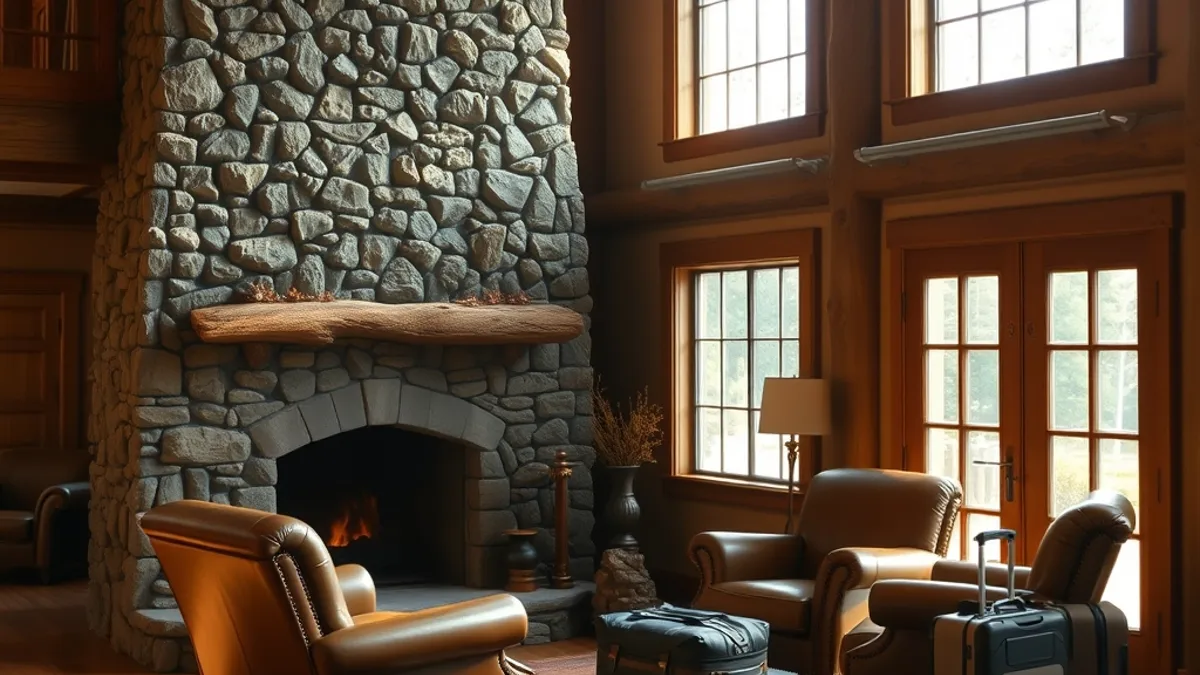
Arriving Early: Luggage Drop-Off and Using the Facilities
Showing up before your room is ready doesn’t have to mean hovering by the front desk. Most lodges let you drop your bags from late morning, even if the room itself won’t be cleaned until mid-afternoon. Hand everything over at the desk, keep a small daypack with essentials like sunscreen, water, snacks and layers, and you’re free to start enjoying the property right away. Just remember to keep valuables, medications and travel documents with you rather than in the stored bags, since you won’t have access to them again until your room opens up.
The grounds are usually fair game for arriving guests, so think of the wait as a bonus rather than a delay. A little orientation now saves you time for the rest of your stay. Here are some of the best ways to use those hours:
- Walk the trails first. Morning light is often the best time for photos and wildlife spotting around the property, and trails are quieter before the afternoon crowd arrives.
- Scout the amenities. Find the pool, hot tub, fire pit and dining room now so you’re not hunting for them in the dark after dinner.
- Grab a property map. Ask at the desk for one with trail distances and activity schedules marked, which helps you plan the rest of your stay on the spot.
- Book activities early. Guided walks, spa slots and equipment rentals often fill up first, so securing yours before check-in puts you ahead of the game.
- Ask about dining hours. Remote lodges often serve dinner within a narrow window, and you don’t want to discover the kitchen closed at 9:00 PM after a long day of travel.
Before you head off to explore, ask the front desk to text or call you when the room is ready. Most lodges are happy to do this, and it means you can be halfway up a trail instead of waiting in the lobby when the good news comes through. If you’d rather shower and change first, ask roughly when housekeeping expects to finish, then plan your walk to end back at the lodge around that time. Either way, a little coordination turns the pre-check-in stretch into one of the more relaxed parts of your arrival day.
Late Arrivals: How to Protect Your Booking After Dark
Arriving at a lodge after dark is one of the most common ways travelers lose a room or lose an hour of sleep. The fix starts before you leave home. If you expect to reach the property after 8:00 PM, call the lodge 1-2 days ahead and let them know. Most lodges release unclaimed rooms if they have not heard from you, so a quick phone call is usually all it takes to make sure yours is held.
Know the After-Hours Procedure Before You Go
Small lodges often run a skeleton front desk at night, so ask exactly how you will get inside. Some use key lockboxes, some leave a night box with envelopes and keys, and others ask you to ring a number when you pull up. Get the details in writing, either by email confirmation or in your booking notes, so you are not scrolling through a website in a dark parking lot.
Remote properties deserve extra caution here. A lodge that sits 30-90 minutes from the nearest town or airport may have limited staff after dark and few nearby alternatives if something goes wrong. Reading a detailed review of Signal Mountain Lodge in Moran, United States before booking a similar remote stay can help you understand what late arrival actually looks like on the ground, from parking to finding your cabin in the dark.
Finally, be honest with yourself about night driving. Mountain and forest roads you have never seen take longer in the dark, and wildlife or fog can slow you down further. Pad your estimated arrival by at least 30 minutes so the time you promised the front desk is the time you actually show up.
Peak Season vs Off-Season Arrival Strategy
The same lodge can feel like two completely different places depending on when you show up. Timing shapes everything: how long you stand in line, how easy the parking lot is, even how relaxed the front-desk staff seem. Plan for it rather than being surprised by it, and arrival day becomes part of the trip instead of a hurdle before it.
Beat the Rush in High Season
Lodges in US national parks see their busiest stretch from June through August, while ski destinations in Japan and the Alps fill up from December through February. During those months, properties often run at or near full occupancy, which means the afternoon check-in window brings a wave of arrivals all at once. Front-desk queues of half an hour or longer are common, and the parking area fills quickly.
If your travel dates land in the busy season, getting to the lodge early in the afternoon puts you ahead of that wave. Drop your bags, grab lunch nearby, and come back once your room is ready. Ski travelers heading to the Japanese Alps can see what a well-situated property looks like in this Morino Lodge Hakuba review of a lodge in Hakuba, Japan, which gives a good sense of how a smaller property handles things in practice.
Off-season is a different story. With fewer guests around, staff have more flexibility, and there is far less competition for parking, tables and trailheads. If your dates are flexible, traveling in the shoulder season is the simplest way to make arrival day easier on yourself, and you will often find better rates to go with it.
Early Check-In, Late Check-Out and When They Cost Extra
Standard times exist for a reason, but lodges know travelers do not always fit neatly inside them. Early check-in before 3:00 PM is sometimes possible, though it usually depends on whether a room has been cleaned and released that same day, and many properties charge a fee for the privilege. Late check-out works the same way in reverse: it is far easier to arrange the evening before, when the front desk can see the next day’s arrivals, than to negotiate on the morning itself while housekeeping waits on your room.
The single best move is to ask about both when you book, not when you arrive. A quick question at reservation time sets expectations and gives the lodge a chance to note your request. Here is what else can work in your favor:
- Loyalty programs sometimes include one late check-out per stay as a member perk, so check your benefits before paying for one.
- Early check-in fees are often waived for the first arriving guest in a party if the room category is the same as the one booked, so it never hurts to ask politely at the desk.
- If a guaranteed early arrival matters more than the fee, some lodges will let you book the previous night at a reduced rate rather than gamble on availability.
- Front-desk staff typically have the most flexibility in the first hour after opening and the last hour before the afternoon rush, so timing your request can matter as much as the request itself.
Fees and policies vary widely between properties and change from year to year, so confirm current terms directly with the lodge before you rely on either option.
Your First Day at the Lodge, Wrapped Up
So, when can you actually get into your room? For most lodges, the honest answer is mid-to-late afternoon, with check-out wrapped up by 10:00 or 11:00 AM the next morning. Once you accept that rhythm, arrival day stops being a gamble. Drop your bags from late morning if the lodge allows it, plan a hike or a long lunch to fill the gap, and you will barely notice the wait.
A couple of habits save the rest: call 1-2 days ahead if you will arrive after 8:00 PM so your room is held, and expect front-desk queues in peak season, when everyone lands at the same hour. Build those realities into your route and timing, and arrival day becomes part of the trip rather than a delay. Got a lodge arrival story or a tip of your own? Share it in the comments below.