Planning an African safari brings one decision that trips up almost every traveler: safari lodge vs tented camp. A solid-walled lodge and a canvas camp can sit in the same reserve, charge similar rates and still deliver completely different nights. Without knowing how comfort, price and wildlife access actually compare, it is easy to book the wrong style of stay for your trip.
This guide breaks the choice down piece by piece. We start with the core difference between the two, then compare comfort and amenities, run through what each type typically costs, and map out the best seasons for game viewing. We also look at where camps and lodges sit relative to the animals, share practical booking timing tips, and finish with a simple way to match a stay to your safari style. By the end, you will know exactly which one fits you.
Safari Lodge vs Tented Camp: The Core Difference
The difference starts with construction. A safari lodge is a permanent building: real walls, a solid roof, and usually a pool, restaurant and often a spa. In practice it feels like a full-service hotel that happens to sit in the bush, with staff, lounges and paved walkways between rooms.
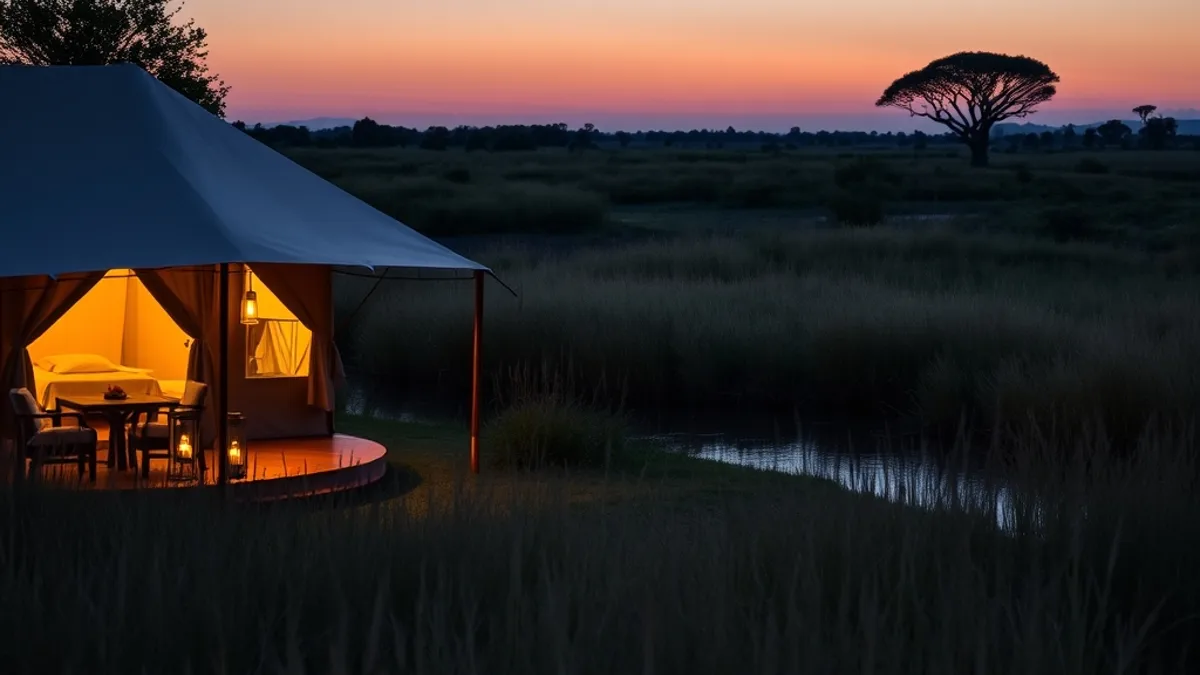
A tented camp works differently. Your accommodation is heavy canvas stretched over a platform, and the range is wide. At the simple end you get a basic dome tent with shared facilities. At the luxury end, camps offer spacious suites with real beds, en-suite bathrooms and hot showers, all still wrapped in canvas.
How each one feels at night
This is where the two styles truly split. A lodge insulates you from the bush. You hear the generator hum, not the hyenas, and the wall between you and the outside is literal.
A tent does the opposite. Canvas carries sound, so lions calling, elephants cracking branches or hippos grunting at the waterhole become part of your night. Many travelers say this is the moment they fell in love with safari, while others lie awake wishing for a thicker wall. Neither reaction is wrong, which is exactly why the choice matters before you book.
Comfort and Amenities Compared
Lodges win on predictable comfort. Because they are permanent structures, they reliably offer air conditioning, swimming pools and gyms, and many properties extend Wi-Fi across the whole site rather than just the main area. If you want your safari to feel like a resort holiday with game drives attached, a lodge delivers that without surprises.
Luxury tented camps, though, have closed the gap dramatically. Expect proper beds, hot showers, en-suite bathrooms and sometimes a plunge pool at the main tent. The main compromise is climate control, which is far rarer under canvas, so be ready for warm nights or cool mornings depending on the season.
At the far end of the spectrum sit mobile tented camps, which trade amenities for position. Here is how the three styles stack up beyond the basics:
- Permanent lodges: often add extras such as spas, conference spaces and kids’ clubs, making them the easiest choice for families or multi-generation trips.
- Luxury tented camps: typically run on solar power with bucket showers upgraded to plumbed systems, and many restrict Wi-Fi to the lounge to keep the bush atmosphere intact.
- Mobile tented camps: usually mean shorter or no drives to the animals because the camp moves with the herds, but you give up pools, gyms and most fixed infrastructure.
The honest answer is that comfort now depends more on the tier you book than the style itself. A top-end camp can outclass a mid-range lodge, but a budget camp will never match even a simple lodge on amenities.
Price: What Each Stay Type Costs
Price differences between the two styles are real but narrower than most travelers expect. Mid-range to luxury lodges typically run USD 300-800 per person per night, and that rate is usually full board with game drives included. You are paying for permanent infrastructure, staff numbers and amenities like pools and gyms.
Tented camps span USD 200-600 per person per night at the mid-range to luxury level, with simple options starting from around USD 100 for cost-conscious travelers. That makes canvas the more accessible entry point if you want to stretch your budget into extra nights or a second destination.
What your rate usually includes
At both lodges and camps, all-inclusive rates commonly cover two game drives of 3-4 hours daily, drinks and park transfers. That package structure is why headline rates look high: you are effectively paying for accommodation, meals, a guide, a vehicle and fuel in one number.
Before you compare prices, check exactly what each rate covers. Park fees, premium drinks, laundry and airport transfers vary widely between properties, and at USD 300-800 a night at a lodge, a few excluded extras add up quickly. Two quotes that look similar can differ by well over a hundred dollars a day once inclusions are accounted for, so always read the fine print rather than comparing sticker prices alone.
Seasons and Wildlife Viewing Windows
Timing shapes your safari more than almost any other decision. The dry season delivers the best game viewing because animals gather at permanent water sources and thin vegetation makes them easier to spot. In East Africa, that window runs from June through October. Southern Africa’s dry season typically falls between May and September, so plan your destination and dates together.
Chasing the Great Migration
If witnessing the Great Migration river crossings is on your bucket list, aim for July through September in the Serengeti-Mara ecosystem. This is when enormous herds brave the crocodile-filled rivers, and the drama draws visitors from around the world. Camps near the crossing points fill up fastest, so treat these months as the busiest of the year and plan accordingly.
Why the Green Season Deserves a Look
The green season, roughly November through April in East Africa, is the safari world’s best-kept secret. Rates drop, the landscape turns lush and photogenic, and newborn animals appear everywhere, which also means predator activity picks up. The trade-off is thicker vegetation and scattered water sources, so animals spread out and spotting takes more patience. Afternoon rain showers are common but usually brief. Photographers often prefer this season for its dramatic skies and softer light, and birdwatchers get migrating species that are absent during the dry months.
Location and Access to Game
Where you sleep determines how much time you spend watching animals versus driving to them. Permanent tented camps often sit inside or beside prime game areas, usually within a 30-60 minute drive of the best wildlife zones. That proximity means you can be among the first vehicles out at dawn, when predators are most active.
Lodges, by contrast, tend to cluster near park gates and reliable water sources. This gives you dependable access and easier arrivals after long travel days, but it can mean longer drives to reach animal hotspots deeper in the reserve. Ask any property for typical drive times to the areas where your target species are usually found.
Mobile camps: following the herds
Mobile tented camps take location strategy to its logical extreme. They relocate seasonally to stay close to the Great Migration, trading permanence for front-row wildlife positions. Before choosing one, consider:
- Camp layout: mobile setups are intentionally lighter, so expect simpler structures and fewer fixed features than permanent properties.
- Move days: when a camp relocates, there can be a transition period, so ask your operator how moves are handled and whether they affect your stay.
- Guide knowledge: mobile camps often employ guides who track the herds full-time, which can translate into sharper game driving.
Match the location style to your priorities: convenience and amenities near gates, or raw proximity to the action in a mobile setup.
How to Book and When to Reserve
Safari accommodation is small by design, and that scarcity drives the booking game. The best properties have limited beds, and peak-season demand far outstrips supply in famous parks. A lodge with 20 rooms and a camp with a handful of tents simply cannot absorb last-minute demand the way a city hotel can, so the travelers who plan ahead get the pick of the litter while everyone else scrambles for leftovers or pays a premium through intermediaries. A clear plan saves you both money and disappointment.
- Fix your dates and destination first. Season determines wildlife viewing quality, so lock in your travel window before contacting any property or operator. Deciding between East and Southern Africa changes everything else, from rates to what you will realistically see.
- Book 6-12 months ahead for peak season. Small camps may have as few as 6-12 tents, so prime dry-season dates at popular properties are often gone nearly a year out. If you have your heart set on a specific camp, treat the booking like a flight release, not an afterthought.
- Use the green season for flexibility. Bookings can often be made 2-3 months out, with better availability and discounted rates across many properties. You trade some spotting ease for lower prices and quieter game drives.
- Compare inclusions line by line. Park fees, drinks, laundry and airport or park transfers vary widely between lodges and camps, and these extras can meaningfully change the real cost. Two quotes that look similar on paper can differ by hundreds of dollars once you add them up.
- Confirm drive schedules and shared activities. Ask whether game drives are private or shared with other guests, as this shapes the daily experience. Also check vehicle capacity, since a crowded row of seats makes for cramped photography.
Once you have shortlisted two or three properties, email them directly with your dates and party size. Quick, detailed replies are usually a good sign of how the rest of your stay will be handled. Get written confirmation of the full rate breakdown before paying any deposit, and re-check entry requirements and park fee levels close to departure since they change periodically.
Which Stay Fits Your Safari Style
So, lodge or tent? If hotel-style comfort is what makes a holiday for you, pick a lodge: solid walls, air conditioning, a pool and a spa day after long game drives. If you would rather fall asleep to distant lion calls and feel the bush around you, a tented camp is the more honest safari.
Neither stay type wins outright. Your budget, the season you travel in and how much roughing it you enjoy decide the winner far more than any universal ranking. A luxury canvas suite can outshine a mid-range lodge, while a simple dome tent might test someone who wanted a bathtub. Match the stay to the trip you actually want, and the choice becomes easy. If this helped you decide, share the article or leave a comment with your pick.