You want a scenic Welsh escape with real beds, warmth and a view from your window, but choosing between Snowdonia’s peaks, Pembrokeshire’s cliffs and the Brecon Beacons’ moorland makes glamping in Wales harder to plan than it should be. Each region suits a different kind of trip, and booking at the wrong time or in the wrong place can mean cold nights, long drives or missed views.
This guide breaks the decision down. We’ll compare why glamping suits both beginners and seasoned campers, then look closely at Snowdonia (Eryri), Pembrokeshire and the Brecon Beacons (Bannau Brycheiniog) in turn. You’ll also find practical advice on when to go, how far ahead to book, and how to match the right structure to your travel style, so you can pick a region with confidence and get on with planning the fun parts.
Why Glamping in Wales Suits First-Timers and Seasoned Campers Alike
Wales is small enough that you can genuinely plan a trip around scenery rather than logistics. Mountains, coastline and open moorland all sit within a 2 to 3 hour drive of each other, so a single week can combine a summit hike, a beach walk and a stargazing night without ever feeling rushed. That compact geography is a big part of why glamping in Wales works so well for first-timers: you’re never far from a backup plan, a village shop or a pub lunch if the weather turns.
No gear, no problem
The other barrier glamping removes is equipment. Traditional camping demands a tent, sleeping bags, mats, a stove and the optimism that it will all stay dry. A glamping pod, yurt or safari tent comes with proper beds, heating and often a kitchen, so you can arrive with a duffel bag and a food shop instead of a car full of kit. For anyone unsure whether they’ll enjoy sleeping in the countryside, it’s a low-risk way to find out.
Wet weather is the real test, and this is where enclosed structures earn their keep. Welsh rain is a fact of life in any region, but reading a book under a blanket while rain drums on a yurt roof is a completely different experience from sitting in a dripping tent. A rainy day in a pod can still be a good day, especially with a kitchen for cooking and solid walls between you and the wind.
Snowdonia (Eryri): Mountain Pods and Dramatic Backdrops
Snowdonia (Eryri) is the region for hikers who want to wake up close to Wales’ highest peaks, which rise over 1,000 meters here. Staying in a glamping site in one of the mountain valleys puts you within striking distance of serious walking routes without the need for a long morning drive, so you can be on a trail before the car parks fill up.
Where to base yourself
Look for timber pods and cabins in valleys like Llanberis, Beddgelert and around Betws-y-Coed. Llanberis works well for walkers heading for the big summit routes, Beddgelert sits in a beautiful valley with gentler options nearby, and Betws-y-Coed makes a handy hub for forest walks and waterfalls. Sites in these areas tend to book out first for good reason, so if a specific pod with a mountain view matters to you, plan ahead.
One thing to take seriously is the cold. Because of the elevation, mountain sites stay cooler and wetter than the coast, and nights can feel sharp even in July and August. Pack layers, a warm hat for evenings outside and proper footwear regardless of the season. If you’ve only experienced glamping somewhere warmer, such as the coastal sites covered in this review of a glamping stay in Castel Volturno, Italy, expect a different packing list here. In return you get dramatic backdrops from your doorstep: crags, ridgelines and cloud rolling over the summits while you eat breakfast. Check that your pod has good heating before booking outside summer, and ask the site owner how well insulated the structure is if the listing doesn’t say.
Pembrokeshire: Coastal Glamping Near Cliffs and Beaches
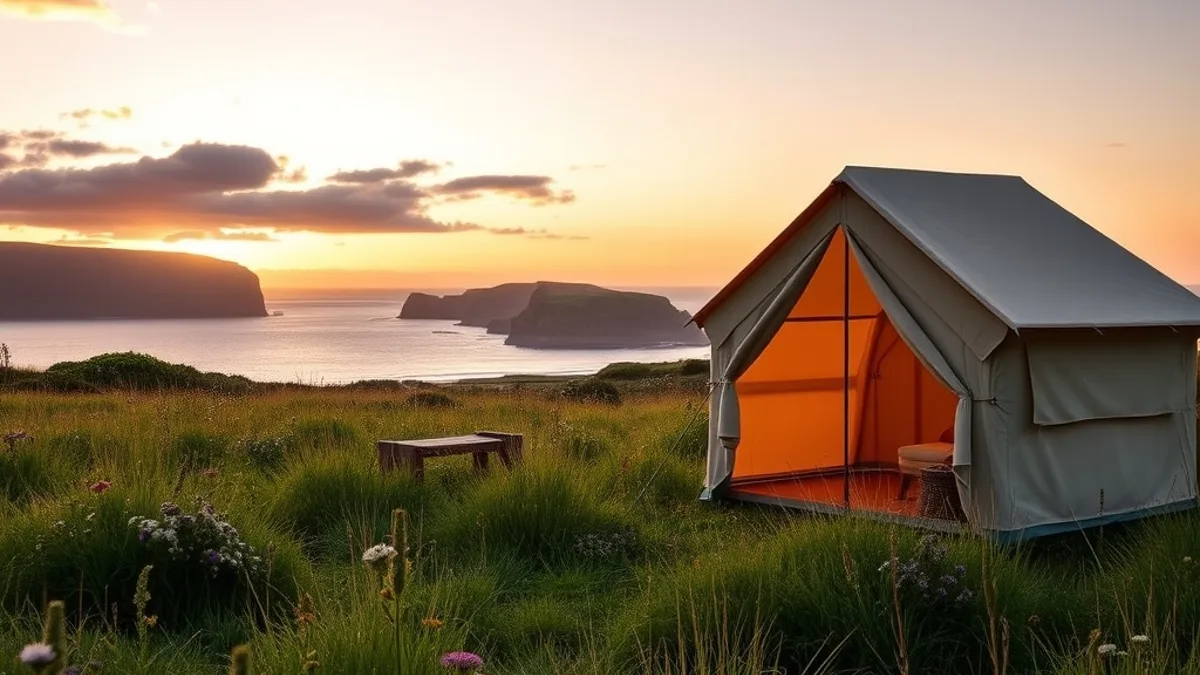
Pembrokeshire swaps summits for sea. The county’s glamping scene is dominated by safari tents and yurts, often set up on working farm sites a short drive from Tenby, St Davids or Solva. That mix of farmland setting and coastal access is what makes the region special: you get quiet fields, sheep for neighbors and cliff walks within easy reach.
Walking from your tent flap
The smartest way to choose a site here is to work backwards from the coast path. The Pembrokeshire Coast Path stretches 186 miles along the county’s shoreline, and sites within a few miles of it give you walking access without needing the car every day. Check the actual distance from your chosen site to a specific stretch of path or beach, because “near the coast” can mean anything from a five-minute stroll to a half-hour drive.
Weather-wise, sea breezes keep summer temperatures moderate in Pembrokeshire, which makes it comfortable for walking even in the middle of the season. The flip side is that those breezes can feel cool in the evenings, so bring an extra layer for sitting outside. If a sea view or a clifftop-adjacent pitch is on your wishlist, book those spots earliest, since they’re the ones that sell out first. Sites near popular towns like Tenby face the most competition, while those around St Davids and Solva can offer a quieter base with equally good walking nearby.
Brecon Beacons (Bannau Brycheiniog): Dark Skies and Open Moorland
The Brecon Beacons, known in Welsh as Bannau Brycheiniog, hold International Dark Sky Reserve status, which means the night skies here are protected from light pollution and genuinely dark. On a clear evening you can see the Milky Way with the naked eye, and glamping makes the most of it: book a yurt or geodesic dome with a clear roof panel and you can lie in bed watching stars drift overhead. Bring a red-light torch so you can move around without ruining your night vision.
Accessibility is the region’s other big draw. The national park sits roughly one hour from Cardiff by car, making it the easiest of the three regions for a short break. You can finish work on a Friday afternoon and be settled into your pod before dark, without a long cross-country drive at the end of it.
Waterfall country and gorge walks
The area around Ystradfellte, often called waterfall country, is laced with trails that pass a series of cascades tucked into wooded gorges. Many glamping sites in the southern and central parts of the park put these gorge walks within 20 to 30 minutes of your door. Wear proper footwear, as the paths can be muddy and slippery even after modest rain, and keep a dry layer back at your stay for the return.
Between the open moorland, the dark skies and the waterfalls, this region rewards travelers who want scenery and short walks rather than full summit days. It also tends to feel a little gentler than Snowdonia, which suits mixed-ability groups and families with younger children.
When to Go and How to Book the Best Sites
Timing shapes both the price and the experience of a Welsh glamping trip. Peak season runs from late May to early September, when sites are fullest and rates sit at the top of the range. If you want a specific pod, safari tent or sea-view yurt for a peak-season weekend, book 3 to 6 months ahead; the most popular structures are often gone long before summer arrives.
The shoulder months of April, May and September are the sweet spot for many travelers. You’ll typically find lower rates, quieter sites and still-decent weather, with fewer midges and more space in car parks at popular trailheads. For a real-world sense of what a well-run site offers outside the height of summer, this glamping site review near Combe Martin gives a good picture of what to expect.
Budget £70 to £180 per night depending on the structure type, the region and the season, with simple pods at the lower end and large safari tents at the upper end. Always check current prices directly with sites, as they change year to year.
- Ask about the heating source. Wood-burning stoves need lighting and tending, while electric heaters work instantly; knowing which you have matters on a wet October evening.
- Confirm insulation and structure type. A solid timber cabin holds warmth far better than a canvas tent in winter conditions.
- Check what’s included in the kitchen. Some winter stays reduce facilities, so verify whether you get a full kitchen, a fridge and hot running water before booking between October and March.
- Read the cancellation terms. Weather-disrupted off-season trips are common enough that flexible booking is worth prioritizing.
How to Choose Between the Three Regions
Choosing between Snowdonia, Pembrokeshire and the Brecon Beacons comes down to what you want to see when you step outside your door. Pick Snowdonia for summit hiking and dramatic mountain scenery, Pembrokeshire for beaches, cliffs and coastal path walking, and the Brecon Beacons for dark skies and easy access from south Wales. All three deliver, but each suits a different kind of trip.
Once you’ve settled on a region, match the stay type to your travel style. A snug timber pod works well for couples who want warmth and simplicity, while families usually need the space of a larger safari tent with separate sleeping areas. Stargazers should head straight for a dome, ideally one with a clear roof panel, and the Brecon Beacons is the natural home for those.
One practical step saves a lot of frustration: verify the actual driving time from any site you’re considering to your priority activity. Rural Welsh sites can look close on a map but add 30 to 45 minutes to any journey thanks to narrow lanes and winding roads.
- Check parking at trailheads. Popular starts for Snowdonia hikes fill early on summer weekends, so ask your host about the best arrival times.
- Look at mobile signal coverage. Some Pembrokeshire farm sites have patchy reception, which matters if you need to work or navigate.
- Ask about on-site extras. Fire pits, pizza ovens and farm animals can make a family stay, but they’re rarely listed in the main description.
- Consider who’s cooking. If you plan to self-cater every night, prioritize sites with a proper kitchen over those with just a camping stove.
Wrapping Up Your Welsh Glamping Plan
The good news is that you do not have to choose wrong. Snowdonia, Pembrokeshire and the Brecon Beacons each offer a distinct glamping experience within one small country, and all three deliver scenic escapes with real beds, heating and proper shelter. Start with the scenery you came for, whether that is mountain summits, cliff-top walking or star-filled skies, and the right region becomes obvious.
Then let timing do the rest. Shoulder months like April, May and September bring lower prices and quieter sites, while peak-season weekends between late May and early September need booking 3 to 6 months ahead, especially for the most popular pods and safari tents. Choosing the region first, then the stay type, keeps the trip focused on the landscape rather than the logistics. If this helped you plan your Welsh glamping trip, leave a comment or share the article with a travel companion.