Many travelers book a lodge for the scenery but end up indoors by 8pm, missing the firepit conversations and star-filled skies that make lodge evenings unforgettable. The truth is that lodge evenings are often the best part of the stay, and they deserve as much planning as your daytime hikes or game drives. This guide walks you through why the evening matters, how to choose a lodge built for firepit nights and stargazing, and how to time your visit around the moon and the weather.
From there, we cover the practical details: how to dress for a full evening by the flames, a beginner’s approach to stargazing, and slow evening rituals like dinners, walks and screen-free hours. With a little preparation, the hours after sunset become the reason you booked, not an afterthought between dinner and sleep.
Why Lodge Evenings Are the Highlight, Not the Afterthought
City hotels treat the evening as a gap to fill: restaurants, bars, maybe a show. Lodges flip that logic. When the sun goes down, the main event begins, and it costs nothing. A crackling firepit replaces the nightlife, dark skies replace the city glow, and a quiet terrace becomes the best seat in the house. There is no lobby noise, no traffic, just the fire, the cold air and the people around you.
The problem is that most guests plan their days in detail and leave the evening to chance. They book the sunrise hike, the guided excursion, the afternoon drive, then wander inside when the light fades. That is exactly when they miss the best window: lodge firepit evenings commonly run from 7pm to 10pm, which is also when the skies are at their clearest and the blankets and drinks come out. If you are only there for the daytime, you are paying lodge prices for half the experience.
Set an evening intention before you arrive
Before your trip, decide what your evenings are for. Maybe it is one night dedicated to stargazing, another spent swapping stories at the fire, and one deliberately slow evening with dinner and a book. Writing down that simple intention changes how you experience the whole stay. Instead of drifting indoors at 8pm, you will arrive with a plan, dress for the cold and be outside when the fire is lit. Travelers who treat the evening as a scheduled activity, not leftover time, consistently get more out of a lodge stay than those who do not.
Choosing a Lodge Built for Firepit Nights and Stargazing
Not every lodge is built for a night under the stars. Location does most of the work: dark-sky locations typically sit 60+ miles from major cities, far enough that light pollution drops off and the Milky Way can become visible on clear nights. A lodge an hour’s drive from a major metro may have lovely firepits, but its skies will rarely match a remote mountain property near a national park. Mountain and lakeside lodges are the sweet spot because they combine genuinely dark skies with sheltered outdoor seating that keeps the wind off.
Once you have the location, check how seriously the lodge takes its evenings. Some properties light their fires every night; others only run them during peak season or on weekends. Email before booking and ask directly. If firepit nights are central to your trip, this one question can save you from a disappointing stay.
What to look for when you book
- Fire-side spaces beyond the firepit itself: look for covered terraces and fire-side lounges, so a chilly or drizzly night does not force you indoors entirely.
- Room orientation: ask which cabins or rooms have private outdoor seating with an open view of the sky, not a wall of trees.
- Nighttime comfort extras: blankets, hot drinks and provided firewood are small details that extend how long you will happily stay outside.
- Red lighting: some stargazing-friendly lodges use dim, warm exterior lighting that preserves night vision; bright floodlights are a bad sign for sky watching.
Finally, timing your booking matters as much as the choice itself. Demand for firepit-side rooms and cabins peaks on autumn and winter weekends, so plan to book 2-3 months ahead if you want the best-positioned accommodation. Midweek stays in the same season are usually easier to secure and often quieter.
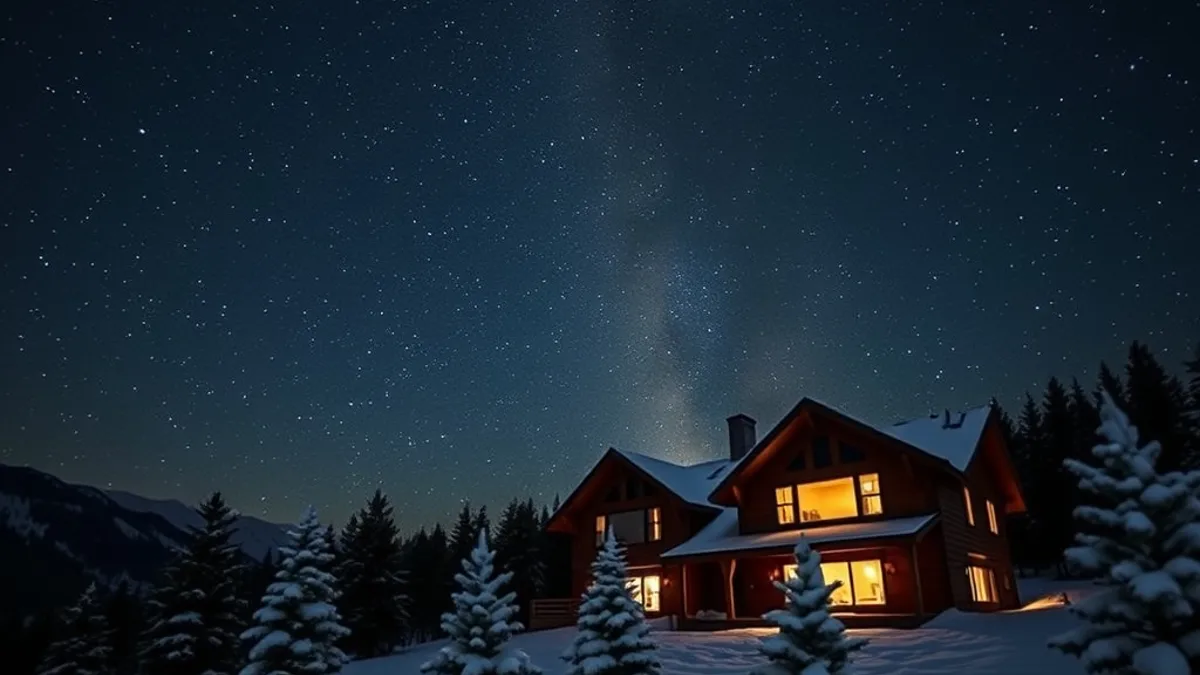
Timing Your Stay Around the Night Sky
The moon is the single biggest factor in how good your stargazing night will be. A bright full moon washes out fainter stars, so aim for a stay within 3-4 nights of a new moon, when the skies are at their darkest. Check the lunar calendar before you lock in your dates; shifting a trip by a week can be the difference between a handful of bright stars and a sky full of them. The best stargazing window runs roughly from 10pm to 2am, so plan your sleep schedule accordingly at least for one night of the stay.
Astronomical darkness and the season
It gets dark later than most people expect. In midsummer at northern latitudes, astronomical darkness can start as late as 10:30pm, which pushes serious stargazing well past bedtime. By contrast, October and February offer early, long dark hours, making them ideal months for travelers who want both a comfortable firepit evening and a proper look at the sky. That fits neatly with the wider pattern: late September through April is peak firepit season at most Northern Hemisphere lodges, when cold air combines with clear nights.
Watch the clouds, not just the sky
Dark skies are useless under a thick overcast, so start checking cloud-cover forecasts 3-5 days before your trip rather than relying on a general weather summary. Cloud cover is also surprisingly local: mountain lodges can sit under a solid cloud layer while nearby valleys stay clear. If the forecast looks poor for the lodge itself, ask staff about viewpoints a short drive downhill or across the valley; sometimes the clearest sky of the night is twenty minutes away by car.
Making the Most of the Firepit
The firepit is where lodge stays earn their keep. At most properties, the evening fire is lit around 7pm and tends to burn through until about 10pm, with blankets and drinks usually provided by staff. That three-hour window is the social heart of the place, so treat it like a booked activity rather than something you’ll drift into after dinner. The difference matters: arrive at 7pm and you’ll have your pick of the chairs closest to the flames; arrive at 8:30pm and you may be standing at the edge with a cold drink and numb toes.
Dressing for the firepit is about understanding how fire heat works. You’ll be warm on the side facing the flames and cold everywhere else, which is why layers beat one big coat. A moisture-wicking base layer underneath a windproof jacket handles conditions in the 30-45°F range that most lodge evenings bring, and it lets you stay out for the whole session instead of retreating indoors after half an hour.
- Ask at check-in whether the lodge offers s’mores kits for the fire, and find out if there’s a local tradition attached, such as a weekly firepit night or a signature hot drink staff prepare.
- Bring a small flask, or borrow one if the lodge keeps spares, so your tea, coffee or mulled wine stays hot through the evening instead of cooling in ten minutes on a cold night.
- Carry an extra layer in a daypack if you plan to move between the fire and a stargazing spot, since the temperature drop once you step away from the flames is sharper than most first-timers expect.
Finally, treat the firepit as your social hour of the trip. Lodges attract travelers who have spent the day hiking, driving mountain roads or spotting wildlife, and those people come with stories worth swapping. A simple “any recommendations for tomorrow?” opens more doors at a firepit than it ever will at a city hotel bar, and it often turns a quiet stay into the part of the trip you talk about for years.
A Beginner’s Guide to Stargazing From Your Lodge
Stargazing is one of those rare travel activities that rewards almost no effort at all, as long as you set yourself up properly. The good news is that lodge evenings give you everything you need: dark skies, a fire to return to, and time to slow down. A handful of simple habits make the difference between spotting a few bright stars and genuinely reading the night sky, and none of them require any special equipment or experience.
- Give your eyes 20-30 minutes to adapt before you judge the sky. Walk away from the fire, porch lights and windows, and resist checking your phone. Full dark adaptation takes time, and even a few seconds of white light resets the clock, so be patient.
- Set a free stargazing app to red-light mode before you head out. Holding your phone over your head to identify constellations works brilliantly, but white light ruins your night vision, while the red setting lets you check the sky without sacrificing the darkness you’ve earned.
- Bring a pair of 10×50 binoculars if you have them. They reveal far more than the naked eye, from star clusters to the detail on the moon, and unlike a telescope they need no setup, no tripod and no learning curve.
- Lie back on a reclining chair or a blanket instead of standing and craning your neck. Looking straight up while standing gets uncomfortable within minutes, whereas reclining lets you scan the sky for an hour without strain.
Once you’ve found a comfortable spot, the sky does the rest. The darkest, clearest stretch for stargazing typically falls between roughly 10pm and 2am, so an early firepit evening followed by a late sky session pairs perfectly. Dress as warmly as you would for the fire, bring the flask, and give yourself permission to simply lie still and look up. If you’re patient, you may catch a meteor streaking overhead or notice how much more of the Milky Way appears once your eyes have fully adjusted. It’s the rare travel activity where doing absolutely nothing is the whole point.
Evening Rituals Beyond the Fire: Food, Quiet and Slow Nights
A great lodge evening is more than the two hours you spend by the fire, and a little forward planning around meals and downtime makes the whole night flow better. The most common mistake is letting a set dinner seating clash with the sky: you sit down to eat at 8pm, emerge at 9:30pm, and the best of the evening is already behind you. A simple fix is to book your lodge dinner for the night before your stargazing night. That way, on stargazing night you can graze on the terrace, drift between the fire and the dark sky, and never worry about missing a seating time.
Embrace the slow night
Remote lodges are the natural home of the screen-free evening, and their patchy or limited Wi-Fi is genuinely a feature rather than a flaw. Rather than fighting it, build in one deliberate screen-free night during your stay. Leave the phone charging in your room, take a book or a deck of cards to the fire, and notice how differently an evening feels without notifications. For many guests, this is the night they end up remembering most.
A short walk before bed
Pair the firepit with a brief after-dinner walk along the lodge’s lit paths before you settle in for the night. These quiet circuits are often the easiest place to spot nocturnal wildlife: deer, foxes, owls and other night creatures are far more active around lodges than guests realize, and ten unhurried minutes can be enough. Keep your steps slow and your voice low, and you’ll usually hear the bush or forest before you see anything in it. After the walk, head back to the fire or straight to your stargazing spot, warmed up and ready for the best hours of the lodge evening.
Wrapping Up Your Lodge Evening Plan
Plenty of guests reserve a lodge with the views in mind, then find themselves back inside by 8pm, missing the firelit conversations and star-filled skies that make these stays memorable. The fix is simple: treat the evening as the main event. Pick a lodge built for dark skies, time your stay within 3-4 nights of a new moon, and arrive at the firepit when it opens rather than after the good seats are gone.
With the right layers, a stargazing app in red-light mode and one screen-free night, the evening stops being an afterthought and becomes the reason you booked. The best lodge trips are remembered for the firelit hours as much as the daytime views. If you’ve had a lodge evening worth retelling, share it in the comments below.