Both promise a night close to nature, but the cabin vs yurt glamping decision is harder than it looks. A canvas yurt and a timber cabin can sit in the same forest, cost similar money on paper, and still deliver completely different trips. Pick the wrong one and you could end up shivering in shoulder season, trekking to a shared bathhouse at midnight, or paying for space you didn’t need.
This guide breaks down how the two really compare, from insulation, heating and bathrooms to floor space, sleeping capacity and what you’ll typically pay per night. We’ll also cover seasonal timing, how far ahead to book each option, and a simple way to decide which one fits your group. By the end, you’ll know exactly which style of glamping matches your comfort level, your budget and your travel dates.
Cabin vs Yurt Glamping: The Core Differences
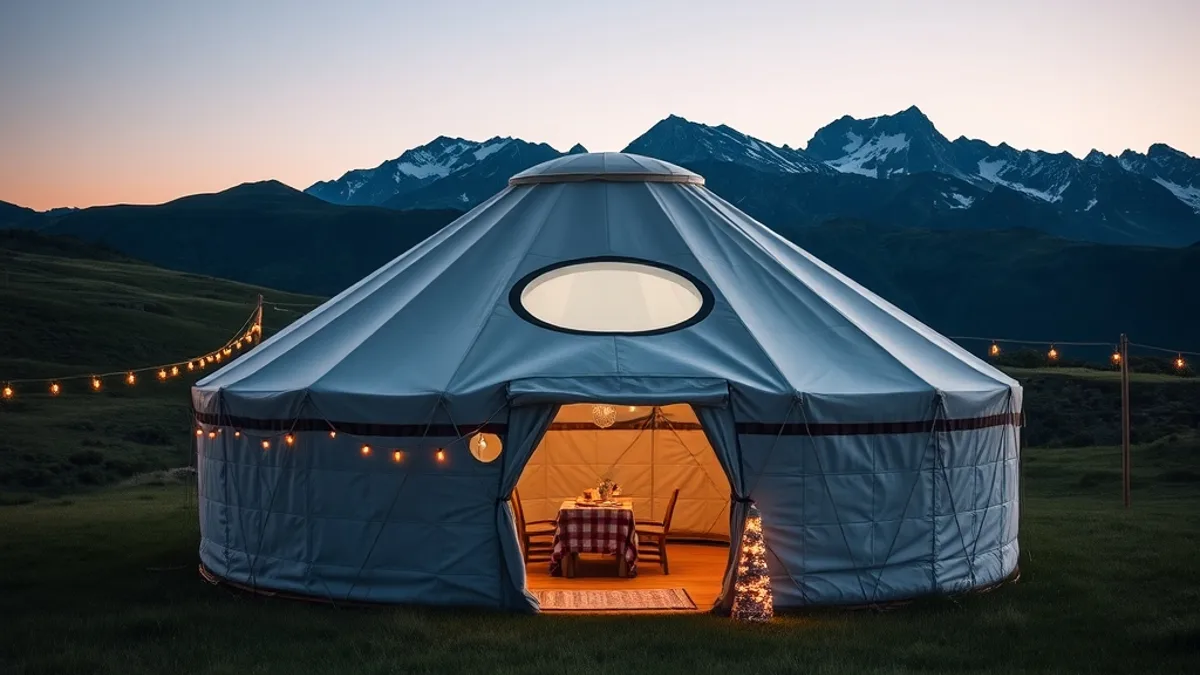
At first glance, a yurt and a cabin might look like they belong to the same category: a rounded roof, a wooden door frame, a deck with chairs. Step closer and the differences become obvious. A cabin is a rigid structure built from timber, with framed walls, real windows, a lockable door and usually insulation inside those walls. A yurt is engineered tension rather than carpentry — a lattice wall covered in canvas, held taut by a central compression ring and radial roof poles. It is, at heart, a very sophisticated tent.
Structure: solid walls versus tensioned canvas
That structural difference shapes everything else. Because a cabin has solid walls, it can support real windows with glass, proper doors, shelving, kitchens and bathrooms. Because a yurt is a fabric shell stretched over a frame, it relies on a clear plastic dome at the roof center for light and, in many setups, openings or vents for airflow. You get a remarkable feeling of space inside a yurt, but the material between you and the outdoors is canvas, not log or siding.
The floor plans reflect this too. A yurt is round, and a round building has no interior corners to hide walls in, so nearly every yurt is one open living-sleeping space: beds around the edge, a table or sitting area in the middle. Cabins, even small ones, are typically divided — a bedroom here, a loft there, sometimes a compact kitchen and a separate living area. If separate rooms matter to your group, this is the single biggest practical difference between the two.
It also helps to think of glamping as a spectrum running from camping to small holiday home. A yurt sits noticeably closer to the camping end: fabric walls, a shared or minimal bathroom setup at many sites, and an experience where you hear the weather. A cabin sits closer to the holiday-home end — a proper little house in the woods that happens to be booked by the night.
Comfort: Insulation, Heating and Bathrooms
When it comes to temperature control, cabins have a clear structural advantage. Insulated walls, real windows and solid doors hold heat in winter and block the summer sun, so the inside stays comfortable with minimal effort. A canvas yurt, by contrast, breathes with the weather: it warms quickly on a sunny afternoon and cools off fast once the temperature drops, which is part of its charm and part of its challenge.
Heating a yurt takes some hands-on work
Most yurt operators offer wood stoves or propane heaters, especially in the shoulder seasons when nights turn chilly. A crackling stove adds real atmosphere — few cabin stays match the glow of a fire in a round canvas room. The trade-off is that you have to tend it. Expect to refuel the stove during the night on cold evenings, and don’t count on the yurt being toasty when you first wake up. Cabins, meanwhile, usually run on electric or propane heating you simply set and forget.
Bathrooms are the other big comfort difference. Most glamping cabins include a private en-suite bathroom with a proper toilet and hot shower, which makes late-night trips and morning routines much easier. Yurt guests often walk to a shared bathhouse instead, sometimes a few minutes away down a gravel path. That’s not a dealbreaker for many campers, but it’s worth checking the specific listing before you book — some upscale yurt sites do add private bathrooms, and a few rustic cabins skip them.
If you want a sense of how comfortable a well-run canvas setup can be, this Under Canvas Lake Powell glamping review gives a good picture of what to expect from a upscale tent-style stay.
Space and Who Each Suits Best
Space is where these two options genuinely differ. A 20–24 foot yurt gives you roughly 300–450 square feet of open floor, and because there are no interior walls, that space works hard. A family of 4–6 can share one room comfortably, with a king or queen bed in the center and futons or bunks around the edge. Everything is visible at a glance, which parents with young kids often appreciate.
Cabins divide that same footprint differently. A two-bedroom cabin with a loft might sleep six, but the couple gets a closed door, the kids get the loft, and nobody watches anyone else fall asleep. If your group includes light sleepers, teenagers, or two couples traveling together, those separate bedrooms matter far more than a slightly smaller shared space.
The other difference is sensory. A yurt’s canvas walls let the outside in — you hear wind move across the roof, rain drumming overhead, and loons or owls calling at night. It’s part of the charm, especially on a slow trip like glamping beside the Masurian Lakes. A cabin, with insulated walls and real windows, muffles weather and wildlife. You know it’s storming only because you see it.
- Round rooms change furniture placement: a yurt’s curved walls mean awkward corners for dressers and luggage racks, so most operators supply low-profile beds and built-in shelving along the lattice wall.
- Lofts add usable space without adding footprint: a cabin loft over the main room can hold two twins, effectively turning a one-bedroom cabin into a six-sleeper.
- Nap time is easier in a cabin: with separate rooms, one adult can rest while kids play in the living area — in a yurt, everyone shares the same quiet.
- Light sleepers should lean toward canvas with caution: some yurt guests love the rain sounds, while others end up wearing earplugs; bring both if you’re unsure.
Costs: What You’ll Pay Per Night
Let’s talk numbers, because this is where yurts and cabins really separate. Expect to pay around $100–$250 per night for a glamping yurt, while a comparable glamping cabin typically runs $150–$350 per night. That’s a meaningful gap for what is often the same campground, sometimes even the same view.
Why the difference? Cabins cost more to build and maintain. They have framed walls, real plumbing, electrical systems and usually a private bathroom, and those costs get passed on to you. Yurts sit closer to upscale tent camping on the price ladder: canvas, a lattice frame and fewer utilities mean lower nightly rates for the operator and for you.
Where the real bargains are
Shoulder-season yurt stays can drop below $100 per night, especially when the yurt comes with a wood stove to keep things cozy. In my experience that’s the cheapest comfortable option in this entire comparison — a warm bed, a crackling fire and a fraction of a hotel bill. If your dates are flexible and you don’t mind cooler nights, book the edges of the season and pocket the savings. Just confirm the heating situation before you commit, because a yurt without a stove in the shoulder season is a very different experience.
It’s also worth knowing what you’re paying for before you hand over a deposit. Photos can flatter a listing, and the difference between a canvas yurt with a shared bathhouse and a cabin with your own bathroom is exactly the kind of detail you want confirmed in advance. I made that mistake once on a trip to Italy, and it changed how I book ever since. For an honest look at what a real glamping stay feels like day to day, I’d recommend reading this review of glamping at Laghi Nabi in Castel Volturno — it’s a good example of the questions to ask before you commit your money.
Seasons and Booking Lead Times
Timing matters more with yurts than with almost any other type of accommodation. Canvas yurts are best booked for May through October in most temperate climates, since the fabric walls simply aren’t designed for serious cold or heavy snow. Hard-sided cabins, on the other hand, run year-round, including in snow country where they’re often at their most atmospheric — think wood smoke, short days and a white landscape outside the window.
Lead times differ too. For summer weekends, reserve a yurt 3–6 months ahead — the good ones sell out fast because inventory is small and rates are attractive. Cabins typically need a bit less planning, often 2–4 months ahead, though popular national park areas can still fill early. Set a calendar reminder if you have fixed dates; waiting even a few weeks can mean settling for a weekday or a less desirable site.
If a winter trip is what you’re after, a cabin is usually the only realistic choice of the two. Beyond the season itself, a few practical details can make or break your booking:
- Ask whether the yurt’s wood stove or propane heater is included in the rate or rented as an add-on, since that affects both your budget and your packing list.
- Check if the bathhouse is heated in shoulder season — a cold walk to a shared shower in October is less charming than it sounds.
- Confirm cancellation terms before booking far ahead, because weather-dependent trips are exactly the ones that sometimes need to move.
- Midweek dates in peak summer are often still available a month out, which is a useful fallback if your weekend plans come together late.
How to Choose Between a Cabin and a Yurt
So how do you actually pick? Start with the season and the vibe you want. Choose a yurt if you’re traveling in the warm months and want atmosphere, value and a true under-canvas feel — you’ll hear the wind, watch the rain ripple across the fabric and pay less for the privilege. Choose a cabin if privacy, a private bathroom, separate sleeping spaces or cold-weather travel are on your list. Cabins are simply the more versatile pick across the calendar.
Group dynamics matter
Think honestly about your group. A family of 4–6 sharing one open yurt can be wonderful with young kids, but teenagers and couples’ friends often appreciate a cabin’s separate bedrooms and lofts. If anyone in your party needs their own quiet corner, that alone can settle the debate.
Read the listing carefully
Before paying, check three things in the listing. First, the heating type — a wood stove means tending a fire, while propane or electric heat means less work. Second, bathroom access: many yurt guests walk to a shared bathhouse, while most glamping cabins include an en-suite. Third, the exact diameter or square footage, since a 16-foot yurt and a 30-foot yurt are very different amounts of space. Five minutes of reading listings saves a lot of surprises at check-in.
The Bottom Line on Cabins and Yurts
So which one should you book? If comfort, privacy and a private bathroom top your list, the cabin wins — expect $150–$350 per night, with separate bedrooms and a structure that works in any season. If you’d rather spend less and feel closer to the outdoors, the yurt delivers that under-canvas atmosphere for $100–$250 per night, usually from May to October, and its open circular floor suits a family happy to share one space.
In short, cabins lean toward a small holiday home, yurts lean toward upscale tent camping, and neither is objectively better. The right pick comes down to your travel season, your group size and how much of a camping feel you want. If a warm-weather value trip sounds good, go yurt; if it’s a winter escape or you need real rooms, go cabin. Tried one or the other? Tell us about it in the comments or share this article with a friend planning a trip.