Nothing ruins a long-awaited villa holiday faster than arriving on a hot afternoon to discover the villa air conditioning is weak, noisy, or simply doesn’t exist. Listing photos showed the infinity pool, the sunset terrace and the sun-drenched living room, but said nothing about how you’d actually sleep through a warm July night.
Villas are private homes, not hotels with building-wide cooling, so what’s installed varies enormously from one property to the next. This guide walks you through the main system types, the questions to ask hosts before paying, the electricity surcharges some owners add, the destinations where you may not need cooling at all, and the red flags hiding in listings and reviews. Read it before you book, and you’ll greatly improve your chances of cool, quiet nights all holiday long.
Why Villa Air Conditioning Matters More Than You Think
When you book a hotel, you can reasonably expect some form of building-wide climate control, because hotels are designed and equipped as commercial properties. Villas are different. They’re private homes, often owned by families or individual investors, and they rarely have central building-wide cooling systems installed. Cooling, if it exists at all, is usually whatever the owner added room by room over the years.
That matters most in the height of summer. In Mediterranean destinations, July and August heat can push bedroom temperatures to levels where sleep becomes genuinely difficult. An uncooled bedroom with the windows open lets in noise, insects and warm air, and closing everything up makes it hotter still. Families with young children feel this hardest, since restless, overheated kids make for restless, exhausted parents the next morning.
The photos won’t warn you
Here’s the frustrating part: listing photos almost always showcase the pool, the sea views and the sunlit terrace, but they routinely omit cooling details entirely. Nobody photographs a wall-mounted air conditioning unit when they could photograph a sunset instead. That’s why you need to treat cooling as something you actively verify, not something you assume. The sections below show you exactly how.
Know the Cooling System Types Before You Book
Before you can ask a host sensible questions, it helps to know what you’re asking about. Cooling systems in villas fall into a few broad categories, and they perform very differently in real summer conditions. Split units are by far the most common setup in villa rentals, and ducted systems, while rare, offer a noticeably better experience. Portable units and ceiling fans sit at the budget end and are best treated as supplements rather than solutions.
When you message a host, ask directly which type is installed and in which rooms. A villa with split units in three of five bedrooms is a very different proposition from one with full coverage, especially when temperatures peak.
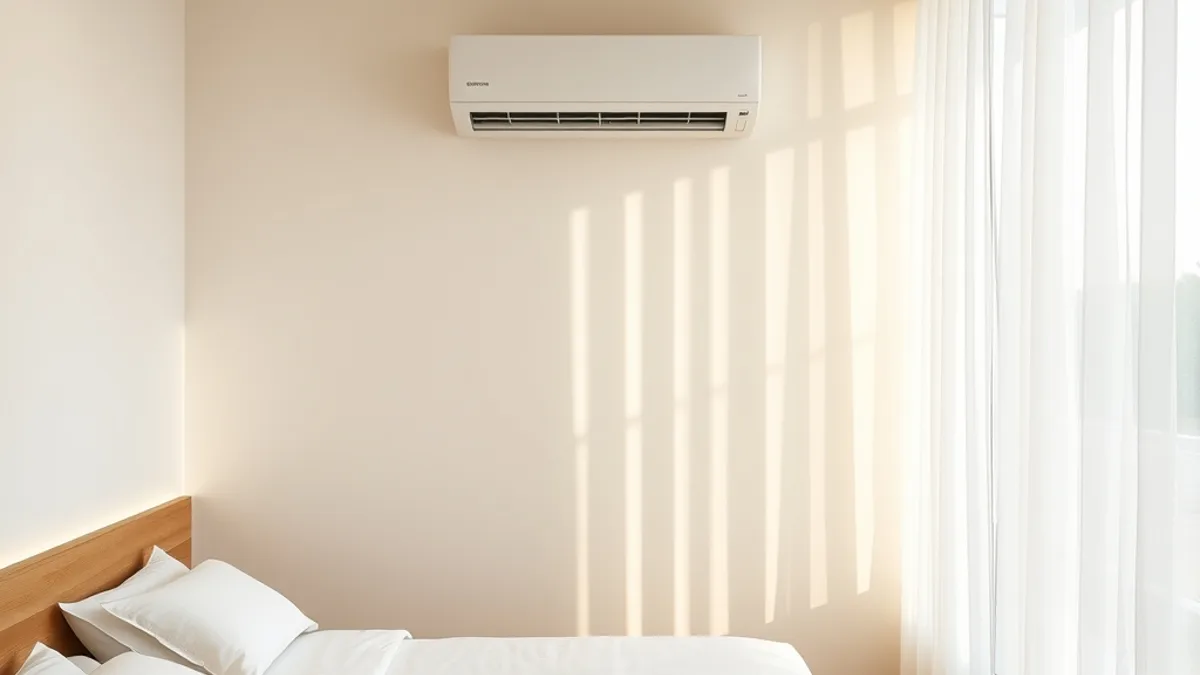
- Split units: wall-mounted units with an outdoor compressor, each controlled by its own remote, so you can set different temperatures per room and switch off empty rooms to save energy.
- Ducted or central systems: a single hidden system feeding cool air through ceiling vents across the whole villa, quieter and more even than split units, but found in a minority of rental villas.
- Portable units: freestanding machines on wheels that need a window or door for the exhaust hose, cool a single room only, and generate noticeable noise right beside the bed.
- Ceiling fans: silent, cheap to run and pleasant in mild weather, but they move air rather than lower the temperature, so they won’t rescue a hot August bedroom.
Knowing these differences also helps you read listings more critically. “Air conditioning” in the description might mean anything from full ducted cooling to one aging portable unit in the living room, so the type and the room coverage are what you need to pin down.
Questions to Ask About Villa Air Conditioning Before Paying
A few well-timed questions will tell you more about a villa’s cooling than the entire listing description ever will. Ask them before you pay, not after, because answers come far more readily from a host who still wants your booking than from one who already has your deposit. The good news is that this only takes ten minutes of messaging, and it can mean the difference between restful nights and a week of tossing in a stuffy bedroom. Here’s a simple sequence to follow.
- Ask about room coverage first. Find out whether the air conditioning reaches every bedroom or only the living area plus one or two rooms. A villa can advertise A/C truthfully while leaving half the bedrooms uncooled, so confirm that all bedrooms are covered before you pay a deposit.
- Get it in writing. Around 4-6 weeks before arrival, send a booking message asking for written confirmation that the A/C is installed and working. A reply in the platform’s messaging system gives you something concrete to point to if the system fails on arrival or was never as described in the listing.
- Ask about controls and limits. Some systems have timers, usage caps or remotes you may not be able to operate. Find out whether you can switch the units on and off yourself, or whether you need to ask the owner or a caretaker each time you want the bedroom cooled.
- Read the reviews with cooling in mind. Search recent guest reviews for mentions of cooling performance during summer months. Comments about sleeping comfortably in August, or complaints about heat and sleepless nights, tell you how the villa actually performs when it matters most.
These questions take ten minutes to send and can save you a week of broken sleep. For an example of how much a well-equipped villa adds to a stay, read our review of a beachside villa stay in San Juan del Sur, then apply the same scrutiny to cooling before your next summer booking.
Hidden Cooling Costs and Electricity Surcharges
If you have ever rented a villa, you may have noticed a line in the fine print about electricity being metered separately. This is more common than most travelers expect. Some villa owners install a meter on the A/C system and bill guests directly for the power they use, typically charging roughly €10-30 per day for air conditioning use in summer.
That might sound minor until you do the math. On a budget villa renting for a modest nightly rate, a daily surcharge in that range can double the effective cost of your stay during peak season. A villa that looked like a bargain in the listing can quietly become one of the more expensive options on your shortlist, simply because cooling was priced separately.
Get the Terms Before You Pay
The key protection here is timing. Ask the host or owner about any electricity surcharge before you pay the deposit, and request the terms in writing through the booking platform’s messaging system. You want to know whether the charge is a flat daily rate, whether it applies per unit or per villa, and whether there is any cap or fair-use allowance included.
Do not wait until arrival to sort this out. By then, you have already paid, you are standing in the driveway with your luggage, and the owner has very little incentive to negotiate. A host who is upfront about surcharges in writing before booking is usually one who has nothing to hide, while evasiveness at that stage tells you everything you need to know.
Choosing Destinations Where You May Not Need A/C
One of the smartest ways to save on villa cooling is simply to pick a destination and season where air conditioning is not essential. Climate varies enormously across the Mediterranean and nearby Atlantic islands, and the difference between needing full A/C and being comfortable with a ceiling fan can change both your booking budget and your packing list.
The Canary Islands are the standout example. Thanks to their Atlantic location, villas there typically enjoy year-round temperatures in the range of 18-26°C, which means many guests need little or no cooling at all, even in the middle of summer. Nights stay pleasant, and a cross breeze through open windows is often enough.
The Mediterranean mainland and islands are a different story, but timing helps. In shoulder-season months like May, June or September, destinations such as Corfu and Hvar usually stay mild enough that ceiling fans alone do the job, especially for sleeping. If a fan-friendly villa appeals to you, our review of Corfu villas surrounded by olive groves shows what that kind of stay looks like in practice. For a Hvar comparison, a detailed villa review can help you judge whether fan-only cooling is realistic for your dates.
- Mallorca in July and August: inland temperatures climb high enough that almost every villa needs full split or ducted cooling, so treat A/C in every bedroom as a requirement, not a bonus, when booking these months.
- Greek islands at peak season: the same applies in July and August, when stone villas that stay cool in spring can hold heat well past midnight, making working split units in each bedroom essential for sleeping.
- Canary Islands as an A/C-free option: because temperatures rarely leave the 18-26°C band, you can often prioritize other features, like a shaded terrace or pool, over cooling equipment when comparing villas.
Red Flags in Villa Listings and Reviews
Villa listings are written to sell, and cooling details are often where the vagueness hides. A property in a hot destination that only mentions “fan available” is telling you something, even if it never says so directly. If air conditioning were installed and working, the owner would almost certainly be advertising it in bold letters. Silence usually means the villa has no A/C, or has units in so few rooms that the owner would rather not draw attention to the gap.
Guest reviews are your second line of defense, and they are often more honest than the listing itself. Comments like “the unit was noisy” or “only downstairs cooled” are warning signs worth taking seriously. A noisy unit can wreck sleep just as effectively as no unit at all, and partial coverage means someone in your group will spend the week in the hot bedroom.
Warning Signs Worth Reading Closely
- “Additional charge may apply for A/C”: this phrasing hints at a metered electricity surcharge, so ask for the exact daily rate and terms before you pay anything.
- Reviews that mention sleeping outside or on sofas: guests relocating to cooler rooms or terraces at night is one of the clearest signals that bedroom coverage was inadequate.
- Photos of a single wall unit: if the gallery shows one split unit in the living room and nothing in the bedroom photos, assume the bedrooms are uncooled and ask directly.
- Reviews praising the view but complaining about heat: when multiple guests mention summer heat as a downside, the cooling system is probably undersized for the villa.
Finally, pay attention to how hosts answer your questions. A clear reply names the system type, the rooms covered and any limits. A vague answer, or one that changes the subject to the pool and the sea views, means you should assume the worst and keep looking. With so many villas on the market, there is no reason to gamble on a sleepless week. Even well-reviewed properties can have gaps, which is why it helps to read an honest, room-by-room account before you commit, like this detailed review of a villa in Hvar, Croatia that shows exactly the kind of cooling questions a careful traveler should ask.
Wrapping Up Your Cooling Checklist
A villa should deliver the cool, comfortable summer stay the photos promised, yet too many travelers arrive to find weak, noisy or missing air conditioning that no listing image ever revealed. The fix is simple: confirm the system type, room coverage and any electricity surcharge in writing before you pay a deposit, so nothing is left to arrive-and-see luck.
Then match your destination and season to your real cooling needs. A fan-only villa can be lovely in milder shoulder months, while a July or August trip calls for full split or ducted air conditioning in every bedroom. Read recent guest reviews and ask hosts direct questions to avoid a hot, sleepless first night. If this checklist helped you, share the article or leave a comment with your own villa cooling tips.