You’ve seen the glowing geodesic domes all over social media: half-sphere tents lit up at dusk, perched on a hillside or beside a lake, with a real bed visible through the window. They look dreamy, but before you spend $150–$400 a night, it’s fair to ask whether dome glamping actually lives up to the photos.
This guide walks through the whole picture. We’ll explain what these dome tents really are, the genuine pros like weather resistance and hotel-style comfort, and the honest cons such as bright mornings, thin walls and temperature swings. You’ll also find out what your first night actually looks like, when to go and how to book for the best value, and how to pick a site that matches your trip. By the end, you’ll know whether a dome night is worth your money or whether a regular cabin or campsite suits you better.
What Is Dome Glamping?
A dome glamping tent is a geodesic dome: a rounded structure built from triangular panels that connect into a stable, self-supporting shape. That geometry matters. Because the frame curves instead of standing flat, it sheds wind and light snow far better than a rectangular tent, which is why domes stay standing in conditions that would flatten ordinary canvas.
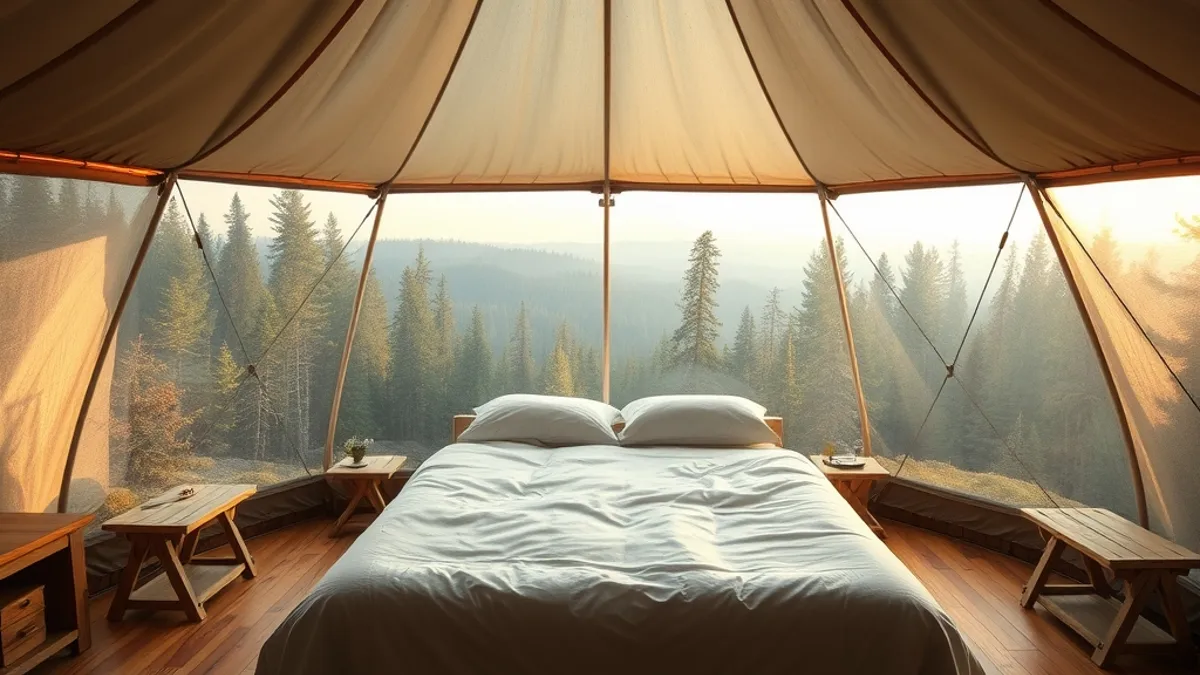
Step inside and you’ll usually find something closer to a small hotel room than a campsite. Most domes are set up with a real bed on a proper frame, wood or tile flooring instead of grass, and furniture such as a small table and chairs. Depending on the site, you might also get a wood-burning stove and even a private bathroom built into or attached to the dome.
Where you’ll find them
Dome sites have spread across Europe, North America and Asia, and the settings vary widely. You’ll find them on working farms, along lakeshores, on mountain slopes and even among vineyard rows. The location shapes the experience: a farm dome puts you near animals and family activities, while a mountain or lakeside dome is all about the view.
The Pros of Dome Glamping
The biggest reason travelers choose domes is that they solve the two classic camping problems at once: bad weather and discomfort. A curved geodesic frame spreads stress evenly across the entire structure, so gusts slide around it instead of pushing against flat walls the way they do on a rectangular tent. The aerodynamic shape also sheds light snowfall naturally, which means you can sleep through a storm instead of lying awake listening to fabric strain against the poles.
The second advantage is comfort. Most domes are 15–25 square meters and feel like a compact hotel room: a real bed with a proper mattress, heating for cool nights, and often an en-suite bathroom. You get the sensation of camping, being surrounded by nature the moment you wake up, without any of the physical misery that usually comes with it. Sites like the one featured in our Laghi Nabi glamping review in Castel Volturno, Italy show how close this gets to a boutique stay in a natural setting.
Here’s what those advantages look like in practice:
- Stargazing from bed: panoramic windows and skylights mean you can watch the night sky and wake up to a wide view without stepping outside or unzipping anything.
- No gear required: beginners don’t need to buy a tent, sleeping bags, mattresses or a stove, which saves hundreds of dollars on a one-time trip.
- No setup time: there’s nothing to pitch, so you arrive, unlock and start your evening instead of wrestling with poles in the dark.
The Cons of Dome Glamping
Dome glamping is not cheap. Expect $150–$400 per night, compared with $30–$80 for a regular campsite pitch. You’re paying for the structure, the bed and the location, but if you’re happy with a basic tent, the price gap is hard to ignore over a multi-night stay.
Light is the second issue, and it surprises first-timers most. Transparent panels let in the dawn sun very early, and nearby site lighting or a bright moon can keep the interior glowing at night. Bring an eye mask, because true darkness is rare.
Temperature is the third. Domes heat up quickly in direct midday sun, turning the interior stuffy, and they lose heat fast in winter unless the site has invested in proper insulation and a good stove or heater. Thin panel walls also mean you’ll hear your neighbors, the wind and the rain far more clearly than in a solid cabin.
A few practical drawbacks to plan around:
- Condensation: in cold weather, moisture from breathing and cooking can collect on the panels, so ventilate when you can.
- Privacy: clear windows work both ways after dark, so check whether sites provide blinds or curtains before booking.
- Limited storage: with 15–25 square meters of space, there’s little room to spread out luggage, so pack in soft bags rather than hard suitcases.
What to Expect on Your First Dome Night
Your first dome night starts with an easy arrival. Most dome sites use self-service check-in: you get a keypad code or a key box combination by email, walk straight to your unit, and skip the front desk entirely. A short orientation of around 10–15 minutes covers the heater, any stove, and the bathroom setup, so you can settle in well before sunset.
Facilities and noise
Facilities vary more than people expect. Most sites include a shared kitchen or a BBQ area you can use, but a private bathroom is usually reserved for higher-priced domes, so check what your rate includes before you book. Some lakeside sites, like the ones described in this slow travel glamping experience in the Masurian Lakes, make the shared outdoor areas part of the charm rather than a compromise.
On noise and light, set your expectations early. Transparent panels mean the sun will wake you at dawn, and nearby site lighting can glow through the fabric at night. Domes are also quieter than tents but far from silent: wind, rain and wildlife all carry through the fabric, so expect to notice them much more than you would indoors. Many guests find this part of the appeal, but light sleepers should come prepared.
What to pack
Packing for a dome is closer to packing for a cabin than a campsite, with a few specifics:
- An eye mask, since transparent panels let in light from early morning until late evening
- Warm layers for evenings, as temperatures drop quickly once the sun goes down
- Slip-on shoes for grass or gravel paths between your dome and the shared facilities
When to Go and How to Book
Timing makes a big difference to both price and availability. The best value sits in the shoulder months of May and October, when rates typically run 20–30% below the June–September peak. The weather is still pleasant in most regions, the sites are quieter, and you get the same views and stargazing for noticeably less money.
Summer weekends are a different story. Popular domes can sell out up to 6 months ahead, so book 2–4 months in advance if you want a specific site or a weekend date. Midweek stays are the easiest way to save at short notice, often costing 15–25% less than Friday and Saturday nights, and sites feel calmer too.
Before you pay anything, read the cancellation terms carefully. Many dome sites require 7–14 days notice for a refund, which is stricter than most hotels. If your plans might shift, look for a flexible rate or consider travel insurance rather than assuming you can cancel freely.
A few practical booking tips worth knowing:
- Compare the same dome across the operator’s own site and booking platforms, as direct bookings sometimes include extras like firewood or a late checkout
- Ask about minimum stay rules, since some weekend domes require two nights rather than one
- If you are new to glamping, a well-run established site such as the one covered in this review of glamping in Combe Martin in the United Kingdom shows what good service and setup look like
- Confirm check-in details in advance, because self-service sites send keypad codes rather than staffed arrivals
How to Choose a Good Dome Site
Not all dome sites are equal, and the differences show up in comfort more than in photos. Start with insulation and heating: good listings state both clearly, while cheap domes often skip them entirely. A dome without proper insulation heats up fast in direct sun and loses warmth quickly on cold nights, which can turn a scenic stay into an uncomfortable one.
Next, confirm the bathroom situation. A private en-suite, a shared bathroom block and a composting toilet are three very different levels of comfort, and the difference is not always obvious from the listing photos. If a site is vague about this, message the host before booking rather than guessing.
Recent reviews are your best filter. The two most common complaints about dome stays are wind exposure and summer heat, so read the last few months of feedback specifically for mentions of noisy nights or stuffy afternoons. A handful of recent comments will tell you more than any marketing description.
Finally, match the setting to your trip:
- Lakeside domes suit travelers who want water views, morning mist and swimming spots within a short walk
- Mountain or hillside domes work best for hikers, but check access roads if you are arriving in a regular car
- Farm domes are a strong pick for families, often with animals to feed and open space for children to roam
- Vineyard domes appeal to couples looking for scenery and tastings, though they tend to sit in exposed open terrain, so double-check wind reviews
Is Dome Glamping Right for You?
So, do the photos match the reality? Mostly, yes — with a few honest caveats. A dome gives you tent-style access to nature combined with real beds, heating and genuine comfort in a compact 15–25 square meter space, which is exactly what you’re paying $150–$400 a night for. The trade-offs you’ll actually notice are small ones: bright mornings through the panels, audible neighbors and wildlife, and temperature swings between sunny afternoons and cool evenings. What you’re not signing up for is exposure — a well-built dome handles wind and weather far better than a standard tent.
The best fit is a traveler who wants scenery, stargazing and a proper bed without buying any camping gear. For the best value, book shoulder-season midweek nights 2–4 months ahead rather than peak summer weekends. If that sounds like your kind of trip, a dome night is worth trying at least once. Have you slept in a dome yet? Share your experience or questions in the comments below.