You know you want a glamping trip, but choosing between a round felt yurt and a canvas safari tent feels like guesswork. Both promise a bed, a roof and a view of nature instead of a parking lot, yet the two stay types feel completely different once you are inside them. That is where this yurt vs safari tent comparison comes in.
We will walk through what each stay actually feels like from the inside, how they handle seasons and weather, what you can expect to pay and how far ahead to book. We will also look at the destinations where each one shines, from snowy mountain sites to warm savanna reserves, and finish with a simple way to decide between them. By the end, you will know exactly which one suits your trip, your group and your idea of a good night’s sleep.
What a Yurt Stay Actually Feels Like
Step inside a yurt and the first thing you notice is the shape. These are circular structures built on a lattice wall of wooden slats, covered in felt or canvas, with a central skylight at the top of the domed roof. Many also have a wood stove in the middle of the room, which becomes the heart of the space on cold evenings.
The layout inside
Most yurts sleep between 2 and 6 guests on beds arranged around the perimeter, leaving the center of the circle open for a stove, a small table or just floor space to sit and play cards. Because there are no interior walls, everyone shares one round room, which is part of the charm and part of the compromise. Bathrooms are often in a separate shared bathhouse, though some sites offer private facilities attached to the yurt or a short walk away.
The overall feeling is snug and enclosed, closer to a cabin than a tent. Sound is muffled, the felt walls block the wind and the skylight gives you a view of the stars from bed. Couples tend to love the intimacy, and small families appreciate how easily everyone fits into one warm circle. If you like the idea of a cozy hideaway rather than a room with a view, a yurt delivers exactly that.
What a Safari Tent Stay Actually Feels Like
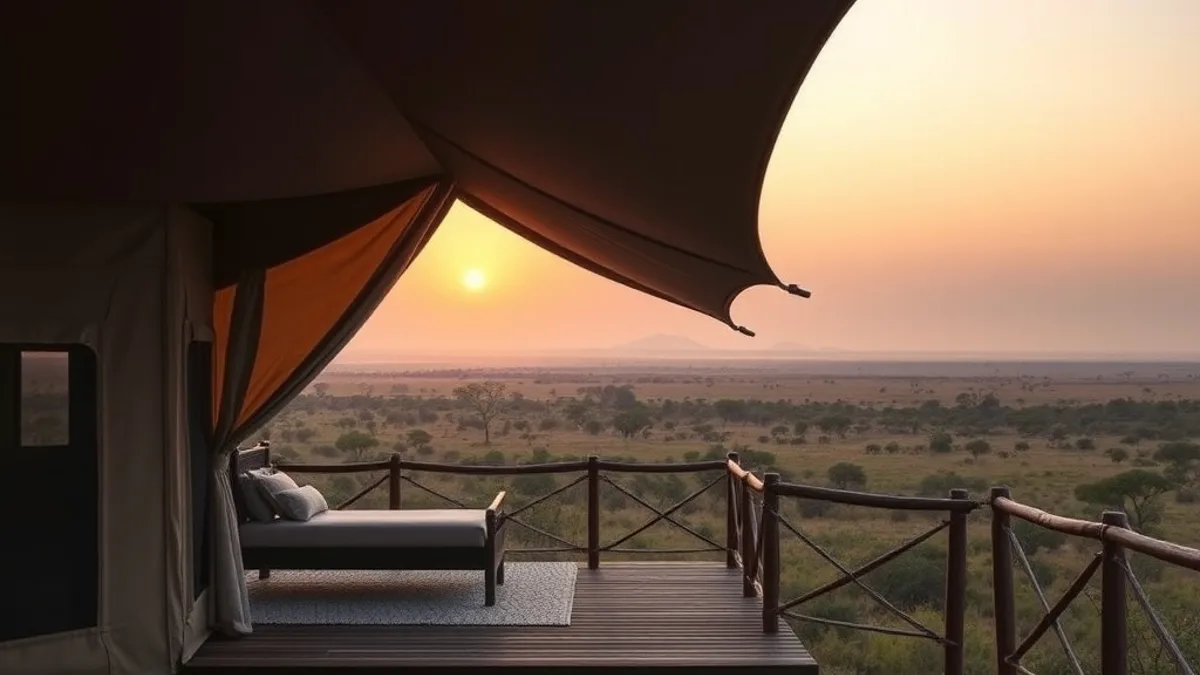
A safari tent is a very different animal. Picture a large canvas tent stretched over a fixed frame, usually set on a raised wooden deck, with real furniture inside rather than camping gear. The typical setup includes a king bed, a lounge area with chairs or a small sofa and, in many cases, an en-suite bathroom with a proper toilet and shower. You get the feeling of a hotel room that happens to have canvas walls.
Space and comfort
Most safari tents sleep 2 to 4 guests, and the layouts lean heavily toward hotel-like furnishings: proper linens, bedside tables, lamps and sometimes a writing desk. The deck or veranda in front is a genuine living space, often with loungers or a table where you can sit with morning coffee while watching the landscape. For a sense of how far this style can go, take a look at this review of a lakeside glamping resort in Castel Volturno, Italy, where safari-style tents sit right at the water.
The atmosphere is open and airy in a way a yurt is not. Canvas breathes, light filters through the roof and walls, and the boundary between inside and outside feels thinner. You hear the birds, feel the breeze and wake with the sun. If your idea of luxury is a king bed under canvas with a veranda for sunset drinks, the safari tent is your stay type.
Yurt vs Safari Tent: Season and Weather Fit
Season is the single biggest factor in the yurt vs safari tent decision, because these two stay types are built for opposite ends of the calendar. A yurt with a wood stove is a genuine winter shelter: the felt or canvas layers, the lattice walls and that central stove keep it usable through the cold months, roughly November to March in snowy regions. A safari tent, on the other hand, is a warm-weather structure, typically operating April to October in temperate climates when canvas is an advantage rather than a liability. If your trip dates fall in a shoulder month, ask the operator exactly when the site opens and closes for the season, since those dates can shift from year to year.
Weather behavior also differs between the two. Canvas safari tents can heat up noticeably at midday when the sun hits the roof, and heavy rain or wind makes the canvas drum and flap. Yurts, with their insulated covers and rounded shape, shed wind better and hold warmth long after the stove dies down. That said, a yurt in deep winter asks something of you too: lighting and feeding the stove, hauling firewood and accepting that the bathroom may be a walk away. Safari tent guests trade that effort for the risk of a hot afternoon or a noisy night.
- Wood stove yurts let you cook, dry gloves and warm the whole circle in one move, so winter trips feel less like camping and more like cabin life.
- Safari tent decks come into their own in dry, warm months, when the veranda effectively doubles your living space for most of the day.
- Midday heat in a canvas tent is manageable if your site offers shade or a fan, but check what cooling options exist before booking a summer stay.
- Storm noise in a safari tent is part of the experience for some travelers and a sleep-loser for others; light sleepers should factor that in.
Price, Size and Booking Lead Times
Glamping prices vary by region and season, but the ranges are fairly consistent across most operators. Expect to pay $120-$250 per night for a yurt and $150-$350 per night for a safari tent. Safari tents usually cost more because they come with hotel-style furnishings, en-suite bathrooms and large deck space that costs more to build and maintain.
Size differences matter just as much as price. Yurts span 16-30 feet in diameter, and that circular floor plan uses space efficiently, so a mid-sized yurt can comfortably hold a family. Safari tents usually sleep 2-4 guests, which makes them a better fit for couples or parents with one child than for a group of friends.
- Midweek stays often cost less than Friday and Saturday nights, so shifting your dates by a day or two can trim a noticeable chunk off the total.
- Shoulder-season dates sit at the bottom of each price range, while peak summer weekends and holiday weeks push rates toward the top.
- Bathhouse access affects the price too: yurts with a private bathroom typically sit at the higher end of their range, while shared-facility sites charge less.
- Minimum-stay rules are common on weekends and holidays, so a two-night minimum can effectively double the cost of a quick getaway.
Booking lead times follow the season. For summer stays, book 3-6 months ahead, since the best units at popular sites sell out first. Winter yurt trips need even more planning: book 6-9 months ahead, because winter dates are limited and snow-country yurts attract repeat guests who reserve the same weekends every year.
Where Each Stay Type Shines
Yurts cluster in the places where cold and snow make ordinary tents impractical. In North America, you’ll find them in mountain valleys, beside alpine lakes and on cross-country ski trails, from the Rocky Mountains to the Pacific Northwest. Nordic countries use them in similar settings, often on lake shores or at the edge of forests where winter lasts half the year.
Where safari tents dominate
Safari tents rule warm landscapes. African private reserves and national parks built the category, and the style spread to European countryside estates, French farms, Spanish olive groves and Italian hillsides. In the United States, safari tent campgrounds now operate in and around major national parks, letting you sleep under canvas minutes from the trailheads. A good example of the American park version is this glamping stay near Lake Powell, where tents sit within easy reach of the water and red-rock country.
The practical rule is simple: match the stay type to the landscape. Yurts belong in cold and alpine settings, where their insulation and wood stoves earn their keep. Safari tents belong in warm savanna and park settings, where the breeze through canvas and a veranda facing the view are the whole point. If a site offers yurts in July heat or safari tents in January snow, ask hard questions before booking.
How to Choose Between a Yurt and a Safari Tent
Both stay types deliver a memorable night under canvas, but they suit different trips. The fastest way to decide is to work through a few questions in order, rather than scrolling through photos and falling for whichever interior looks prettiest. A tent that photographs beautifully can still be the wrong choice for a snowy February weekend, and a snug yurt can feel cramped for a couple who wants morning light and veranda space. Answering the five questions below takes about ten minutes and usually makes the decision obvious.
- Fix your travel dates first. A winter trip between roughly November and March points you toward a yurt with a wood stove, while a warm-season trip fits the safari tent season that typically runs April to October in temperate climates.
- Count your group. Yurts sleep 2-6 guests on beds around the perimeter, so parties of four or more fit naturally. Safari tents usually sleep 2-4, which suits couples and small families.
- Decide how enclosed you want to feel. A yurt’s circular felt-and-canvas walls feel snug and cabin-like; a safari tent’s openings and veranda keep you connected to the air and the view.
- Rank your bathroom expectations. If an en-suite bathroom is non-negotiable, safari tents usually deliver it. If you’re happy using a shared or nearby bathhouse, a yurt widens your options and often lowers the price.
- Shortlist destinations that match. For a slow, lakeside warm-season trip, browse options like this Masurian lake glamping escape and see how the safari tent format works in a European setting.
Work through the list honestly rather than in the order that flatters the trip you already want. Dates come first because they eliminate half the options immediately: no safari tent will keep you comfortable in a snowstorm, and a wood-stove yurt can feel like overkill on a warm summer night. Group size comes second because it is just as rigid — a family of five has fewer workable choices than a couple does. The remaining three questions are matters of taste, and they are where most travelers actually learn something about what they want from a glamping trip.
One practical tip as you shortlist: read recent guest reviews for the season you plan to travel, not just the glowing summer ones. A safari tent that earns raves in July may draw complaints about storms or midday heat in shoulder season, and a yurt’s wood stove is only charming if the staff shows you how to run it.
If you genuinely can’t pick, look for a glamping resort that offers both stay types. Spending one night in each, on the same property, tells you more about your own preferences than any comparison chart, and you’ll know exactly which one to book next time.
The Takeaway
So the guesswork ends here. If your trip falls in the cold months, your group runs larger, or you crave a snug, enclosed space, a yurt at $120-$250 a night is your match. If you’re traveling in warm weather, want hotel-style comfort with an en-suite bathroom, and prefer open, airy nights under canvas, a safari tent at $150-$350 a night will suit you better.
Ultimately, it comes down to three things: the season you’re traveling, the size of your group, and how enclosed or open you want your nights to feel. Get those three answers clear and the right stay type picks itself. If this helped you decide, leave a comment or share the article with a fellow traveler.