You booked the flights, picked the room, and then you hit the dress code page: “resort casual,” “elegant evening attire,” “jacket required after 6 pm.” If those phrases leave you staring at your suitcase with no idea what to actually pack, you are not alone. Resort dress codes are notoriously vague, and the difference between turning up appropriately dressed and being turned away at the restaurant door often comes down to a few specific items.
This guide breaks the jargon down into plain language. We explain the three tiers most resorts use and what each one means in practice, then show you exactly where the rules apply — restaurants, bars, and terraces — and how to confirm the requirements before you fly. From there, you get practical evening packing lists for men and women, plus notes on how expectations shift between large all-inclusives, boutique properties, and family resorts. A short wrap-up pulls everything together so you can close that suitcase with confidence and skip the last-minute shopping trip on holiday.
What Resort Dress Codes Actually Mean
Most resorts sort their evening dress codes into three tiers, and once you can tell them apart, packing becomes much easier. The first tier is simply casual, which covers daytime venues and laid-back dinners where neat shorts, a t-shirt, and sandals are fine. The second — and the one that causes the most confusion — is resort casual, sometimes written as elegant casual. The third is formal or jacket-required, which you will mostly encounter at upscale properties and on designated formal nights.
What resort casual actually means
Resort casual usually translates to a collared shirt or blouse, trousers or dressy shorts, and closed-toe or dressy sandals. For men, that might be a linen shirt with chinos and loafers; for women, a sundress with block-heel sandals fits the bill. The key idea is “polished but not stiff” — you should look like you made an effort, without needing a suit or an evening gown. Jeans, athletic wear, and beach flip-flops generally fall outside this tier.
What formal or jacket-required means
Formal nights at upscale resorts typically ask men to wear a jacket, with ties optional at most properties. Women can reach for a cocktail dress, a dressy jumpsuit, or an elegant separates outfit. Some resorts only host one or two formal evenings a week, while a few enforce the code nightly in their main dining room — which is why it pays to know the details before you pack. If a resort’s website simply says “smart casual,” assume it means the resort casual tier and dress accordingly.
Where the Rules Apply: Restaurants, Bars and Terraces
Within a single resort, the dress code you need to follow can change from venue to venue, and the time of day matters just as much as the place. A pair of swim trunks that passed at lunch will almost certainly fail at dinner, so it pays to know which spaces expect what before you head out for the evening.
The general pattern is easy to remember: the more “special occasion” a venue feels, the stricter the code. Buffets sit at the relaxed end, designed for families coming straight from the pool, while specialty restaurants — the à la carte venues you usually have to book — enforce the strictest codes at large resorts. And there is a hard rule that applies almost everywhere: beachwear, swim trunks, and flip-flops are banned from most resort restaurants after 6 pm. If your ideal evening lingers from sunset into dinner, it helps to choose a property built for it — you can find inspiration in our guide to resorts made for sunset evenings.
Between those two extremes sit the rooftop and terrace bars, where the atmosphere is dressier than the pool deck but noticeably more forgiving than a specialty restaurant. Here is how the venue types typically break down:
- Buffets: The most relaxed dinner option, and the safest choice for the first night when you are tired from travel — a collared shirt and long shorts or trousers will rarely cause a problem.
- Specialty restaurants: These often require proper trousers and closed-toe or dressy shoes, and the code is frequently posted right on the reservation screen when you book a table, so read it before you confirm.
- Rooftop and terrace bars: Smart shorts and a shirt usually pass here, making them a good middle ground for an evening drink before changing for dinner.
- Lobby and lounge bars: Often treated as semi-formal spaces, closer to specialty restaurant standards than to the buffet — dress as if you were dining, not just having a nightcap.
How to Check a Resort’s Dress Code Before You Pack
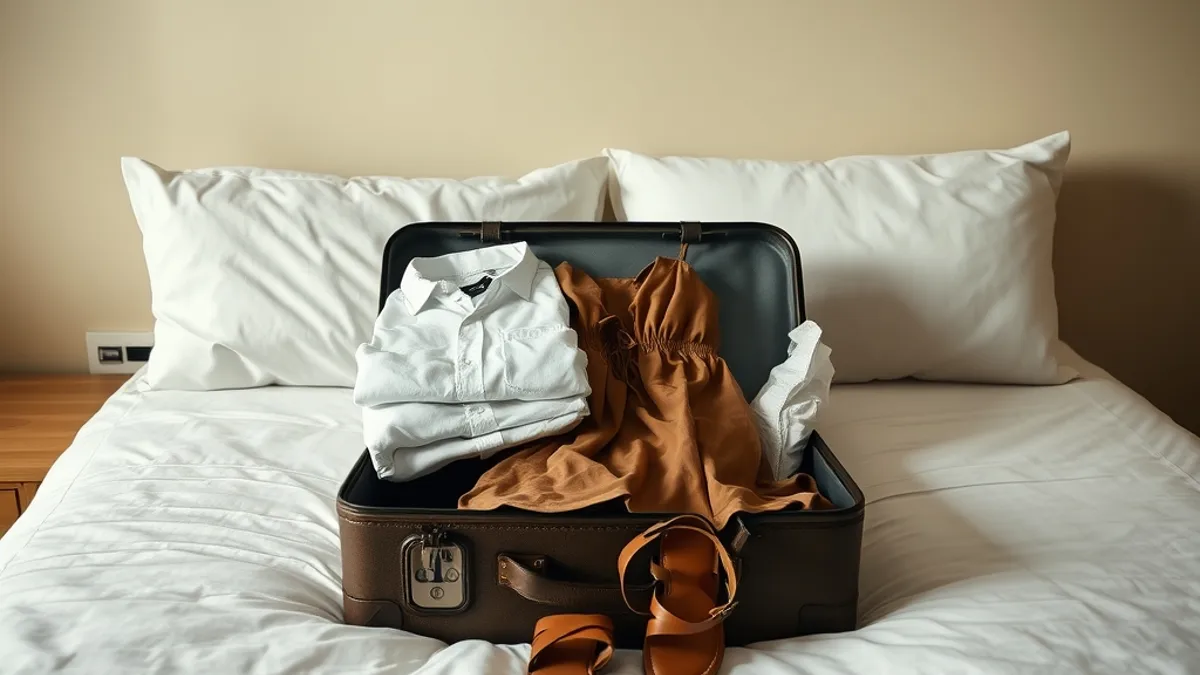
A few minutes of research before you pack can save you from both overpacking and embarrassment at the hostess stand. Resorts publish their dress codes in several different places, and the general FAQ is often the least useful of them — it tends to describe the property’s overall standard rather than the rules that apply to each individual venue. Because one hotel can run a relaxed buffet and a jacket-required steakhouse side by side, the details you actually need are usually buried on specific restaurant pages or in reservation confirmations. Here is a simple process to get accurate answers for the exact dates of your stay, so you know what to pack before your suitcase is closed.
- Check each restaurant’s individual page. Most resort websites list a dress code on each restaurant’s own page, or show it when you make a reservation. This matters because one property can run a relaxed buffet and a jacket-required steakhouse side by side, and the general FAQ rarely spells out that difference.
- Email the resort 2-3 weeks before arrival. Ask specifically about formal nights and any themed dinners scheduled during your stay, since these events change what you need to bring. A short email also gives you written confirmation you can refer back to if the code at the door differs from what you were told.
- Scan recent guest reviews. Reviews often reveal whether a code is enforced strictly or loosely in practice — some resorts turn away guests in dressy shorts, while others wave through nearly anything with a collar. Ten minutes of reading tells you which end of the spectrum you are dealing with.
Doing this homework also helps you judge whether a property matches your style in the first place. Some travelers actively enjoy a formal night and the excuse to dress up, while others prefer resorts where elegance stays low-key — a review of a property like the San Clemente Palace Kempinski in Venice can give you a feel for how upscale expectations translate into real evenings on site. Whichever way you lean, confirm the details before you fly rather than discovering them at the reservation desk. A quick check now costs you nothing; the wrong assumption can mean an awkward dinner or an unplanned shopping trip on holiday.
The Evening Packing List for Men
Men tend to overthink resort evenings, but the math is simple: two collared shirts will carry you through most of a week. Rotate a linen shirt with a plain button-down in a neutral color, and most restaurants will consider you perfectly turned out. The trick is choosing shades that work with both pairs of trousers you bring, so nothing depends on a specific combination being clean.
A lightweight blazer earns its space twice over. On formal nights, when upscale resorts usually expect a jacket, it is your ticket past the host stand. The rest of the week, air-conditioned dining rooms that sit around 18-20°C make it the most useful layer in your bag. Choose an unstructured style in a dark tone that resists wrinkles when rolled.
Footwear and accessories matter more than most men expect, since doormen and hosts often judge from the ankles up. Here is what to include:
- Loafers or dressy sandals in leather: pick one pair you can slip on without socks for terrace dinners, but avoid anything that reads as beachwear.
- A belt in the same tone as your shoes: a black belt with brown loafers is the fastest way to look unpolished, so match them before you zip the bag.
- A dark pair of tailored trousers: they pair with the linen shirt, the button-down and the blazer, effectively giving you three outfits from one item.
The Evening Packing List for Women
Packing for resort evenings is easier than it looks. For most women, two pieces do the heavy lifting: a sundress for casual and resort-casual nights, and one dressier outfit — a midi dress, a jumpsuit, or a silky blouse with tailored trousers — for formal dinners. Rotate accessories and you can stretch these across a full week without feeling repetitive.
The second essential is a wrap or pashmina. Upscale resorts keep formal dining rooms pleasantly brisk for guests in jackets, and air-conditioned interiors often sit around 18-20°C. A lightweight wrap slips into a handbag during dinner service and doubles as shoulder coverage on breezy terrace evenings.
Shoes deserve real thought. Gravel paths, wooden pool decks, and the occasional staircase make stilettos a poor bet at most properties. Block-heel sandals give you the dressed-up look restaurant codes expect while keeping you steady on uneven ground. A flat dressy sandal is a smart backup for longer walks from your room to dinner.
- A sundress in a wrinkle-resistant fabric: jersey or blends pack better than linen and survive a suitcase without needing the resort iron.
- One dressier outfit in a dark color: navy or black reads as formal under dining room lighting and hides accidental spills better than pastels.
- A wrap or pashmina in a neutral shade: it pairs with both of your evening outfits, so one layer covers every dinner of the week.
- Block-heel sandals with a strap: an ankle or slingback strap keeps them secure on staircases and boardwalks where slip-ons can slide off.
- Jewelry that packs flat: a single pair of statement earrings transforms the sundress without adding bulk or risking lost items.
Dress Codes at Different Types of Resorts
The type of resort you book shapes how much evening wardrobe planning you actually need. Large all-inclusive properties tend to have the most going on after dark: themed nights, rotating specialty restaurants, and multiple bars each with their own expectations. Because you might eat at a different venue every night, a one-week stay calls for 2-3 evening outfits you can mix and match. Check the dress code listed for each specialty restaurant when you book your dinner reservations, since these venues enforce stricter rules than the main buffet.
Boutique and countryside resorts
Smaller boutique hotels and countryside retreats usually lean toward relaxed elegant rather than anything formal. A smart shirt with trousers will get you into nearly every dinner or terrace evening at these properties. The atmosphere is often more intimate, and staff tend to care about the overall look rather than enforcing a checklist. That said, it never hurts to pack one dressier option in case the hotel hosts a special dinner during your stay.
Family resorts
Family-focused resorts are typically the most forgiving when it comes to evening dress, especially at buffets and casual poolside venues. The catch is that kids’ dress codes often mirror the adult rules in specialty restaurants, so if long trousers and closed-toe shoes are required for adults, children usually need something similar too. If you are traveling with kids, pack one presentable dinner outfit for each child rather than relying on swimwear and a cover-up every night. A quick email to the resort before you travel will confirm how strictly the kids’ rules are applied in practice.
Packing Smart for Resort Evenings
So what does all that dress code jargon actually mean for your suitcase? It comes down to three simple tiers: casual, resort casual, and formal or jacket-required. The strictest rules usually apply at specialty restaurants and at venues after 6 pm, where beachwear and flip-flops are out. Once you know which tier each evening falls into, the guessing game is over.
Best of all, you don’t need a separate outfit for every tier. A short list of versatile pieces — collared shirts or a dress, plus a blazer or wrap for cooler, air-conditioned dining rooms — covers every situation. Confirm the code with your resort before you fly, and you won’t find yourself shopping for a jacket on day two of your holiday. Got a packing tip or a dress code story of your own? Share it in the comments below.