Slovenia keeps popping up on glamping wish lists, and for good reason. The country packs alpine lakes, emerald rivers and vineyard-covered hills into a space smaller than New Jersey. But here’s the problem many travelers run into: with so many distinct regions, it’s hard to know which one fits your travel dates, your budget and the kind of trip you actually want. A riverside safari tent in the Soča Valley and a glass dome above a vineyard are two very different experiences, and they suit different seasons and spending levels.
This guide breaks down glamping in Slovenia by region, so you can match the destination to your trip. We’ll cover the classic alpine scenery around Lake Bled and Bohinj, the adventure-friendly Soča Valley, budget-friendlier forests in Pohorje and Styria, and the wine country of the Vipava Valley. Along the way, you’ll find practical tips on timing, typical price ranges and how far in advance to book, plus a simple framework for choosing and reserving the right stay.
Why Glamping in Slovenia Works So Well
Slovenia is one of those rare destinations where the distance between airports and wilderness barely matters. Ljubljana’s airport sits within a 1-2 hour drive of most major glamping regions, which means you can land in the morning and be watching the sun set over an alpine lake or a riverbank tent by evening. No domestic flights, no long transfers, no wasted days.
A surprising range of landscapes
The variety is what sets the country apart. Within short drives you can move from the turquoise lakes of the Julian Alps to the emerald Soča River rushing through limestone gorges, then wind your way south to gentle hills lined with vineyards. Few places this compact offer that kind of mix, and it makes multi-region trips genuinely easy to plan.
The glamping scene has kept pace with the scenery. What started with a handful of safari tents on forested campsites has expanded into a full spectrum of accommodations: canvas lodges with private bathrooms, wooden cabins tucked into pine woods, and glass domes where you can watch the stars from bed. Options now span everything from basic tents at friendly rates to luxury domes that can run €250+ per night in high season, so there’s a fit for most budgets and comfort levels.
One practical note: because the supply has grown so quickly, quality varies between operators. Look closely at what’s actually included in the price, such as heating, private bathrooms or hot tubs, before you compare rates across regions.
Lake Bled and Bohinj: Classic Alpine Glamping
If you close your eyes and picture Slovenia, you’re probably picturing Lake Bled: a small island church on a teal lake, a cliff-top castle above it, and the peaks of the Julian Alps all around. This is the country’s most iconic scenery, and the glamping here leans into it. Forested campsites around Bled and nearby Lake Bohinj, which sits roughly 50 km away in the same alpine region, offer canvas glamping tents and wooden cabins shaded by trees and just a short walk from the water.
When to go and what it costs
The best window runs from June to September, when the weather supports swimming, hiking and lake activities. This is also the most expensive glamping region in the country: expect rates of roughly €150-250+ per night in summer, especially for tents and cabins with lake access or premium setups.
Demand is the other thing to plan around. July and August weekends book out fast, so reserve 3-6 months ahead if you have your heart set on peak summer dates. If your schedule is flexible, June and September give you similar scenery with milder crowds and often better availability.
If lakeside glamping appeals to you but Slovenia’s peak prices don’t, it can be worth comparing nearby alternatives. A stay like Laghi Nabi, a glamping resort in Castel Volturno, Italy, shows how different lake settings can offer a similar tent-and-water experience at a very different price point.
Soča Valley: Riverside Tents for Active Travelers
The Soča River is famous for its color, a bright emerald that looks almost unreal against the gray limestone peaks around it. The valley stretches across Slovenia’s northwest, with Bovec and Kobarid serving as the main bases. Both towns attract a steady flow of rafters, kayakers, hikers and, in recent years, glampers who want to sleep close to the water.
Sleeping on the riverbank
What makes this region special for glamping is the setting: tents often sit directly on riverbank campsites, with mountains rising right behind them. You can fall asleep to the sound of the river and step out of your tent to it in the morning. Several sites put you within walking distance of rafting put-ins and trailheads, which is exactly why active travelers gravitate here.
Summer conditions work in your favor too. Temperatures in the Soča Valley typically average 20-28°C in summer, warm enough to make riverside safari tents comfortable without the sweltering heat you find further south. That same weather is what makes the river activities so appealing, since water levels and conditions are generally at their best in the warmer months.
Beyond rafting and hiking, the area has a quieter side worth building in time for. Kobarid is known for its history and its food scene, and the trails between villages make for easy half-day walks. For travelers who want their glamping stay tied to adventure rather than lounging, the Soča Valley is hard to beat.
Pohorje and Styria: Forest Domes on a Budget
If Lake Bled feels like a stretch for your budget, point your map northeast instead. The forests and marshland south of Maribor, around the Pohorje massif and the wider Styria region, offer a slower, greener kind of glamping. Stays here often cost 20-30% less than the Lake Bled area, which makes a real difference over a week-long trip.
This is dome and cabin country. Sites sit tucked into dense spruce forest or on the edge of peat bogs, where the loudest sound you’ll hear is the wind in the trees. The trails around Pohorje are quiet even in July, so families can wander for hours without crowds. Many properties lean into comfort: wood-fired hot tubs, generous decks and roomy layouts designed for kids who need space to run.
Timing matters here more than elsewhere. May and September are especially affordable, with milder crowds and rates that drop well below the summer figures. If your dates are flexible, a September weekend in a forest dome can cost less than a midweek July stay at Bled.
- Hot tubs are the signature perk: many forest domes and cabins come with private wood-fired or electric hot tubs, so you can soak under the trees after a day of walking.
- Marshland boardwalks: the peat bogs and wetlands south of Maribor have marked boardwalk paths that are flat and easy, ideal for families with younger children or strollers.
- Short drive from Ljubljana airport: the region sits comfortably within Slovenia’s compact geography, so you can land and be in your dome the same afternoon.
- More space per euro: sites here tend to offer larger pitches and bigger units than alpine resorts, so a family of four isn’t squeezed into a compact tent.
Vipava Valley and Wine Hills: Vineyard Domes and Autumn Stays
Slovenia’s southwest plays by different rules. The Vipava Valley and the surrounding wine hills enjoy a Mediterranean-leaning climate, which stretches the glamping season comfortably from April to October. While alpine sites are still shaking off winter, vineyard domes here are already welcoming guests under clear spring skies.
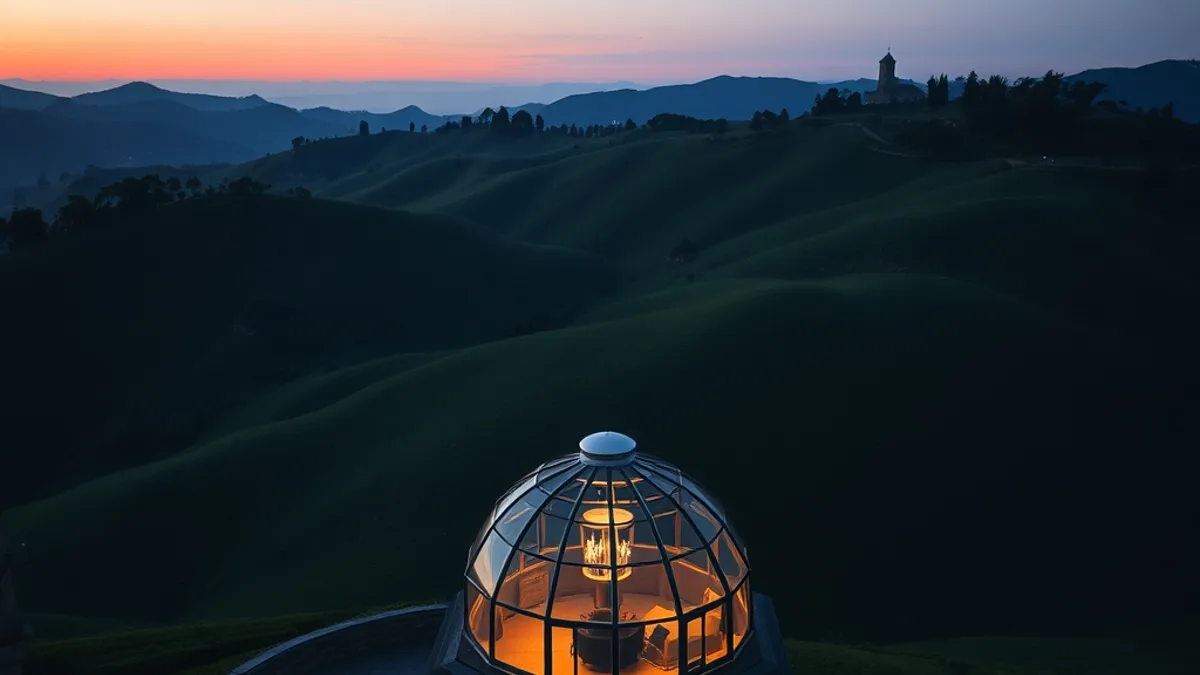
The setup is different too. Instead of safari tents on riverbanks, you’ll find glass domes and curved pods set directly among vineyard rows, often on small family estates. Waking up surrounded by vines, with a terrace for evening wine tasting, makes this the natural pick for couples who care more about food and wine than hiking boots. Many hosts double as winemakers, so a stay often includes a tasting of the estate’s own bottles.
Why autumn works so well here
Autumn is the sweet spot. The harvest season turns the hills gold and red, cellar doors open for tastings, and the weather stays warm enough for long dinners outside. Best of all, you get this scenery without peak-season pricing, so a dome that costs a premium in July can be noticeably cheaper in October. If you like the idea of slow, landscape-first travel, the same philosophy applies to Masurian lake glamping for slow travel, another region where the season and the scenery do the work for you.
How to Choose and Book Your Slovenian Glamping Stay
Slovenia is compact, but glamping here still rewards a little planning. The right region depends heavily on when you travel, and the right price depends on what your unit actually includes. A dome with a wood-fired hot tub and a basic canvas tent can photograph almost identically, yet they sit at opposite ends of the nightly rate range, which typically runs from around €80 for simple tents up to €250+ for luxury domes in high season. Work through the steps below before you book.
- Match the region to your season. Alpine lakes like Bled and Bohinj shine in summer, while the wine valleys are at their best in spring and autumn. Booking the alps for May or the vineyards for August means paying peak prices for off-peak conditions.
- Compare what’s actually included. Check for heating, private bathrooms, kitchenettes and hot tubs, since these features drive most of the price gaps between units on the same site.
- Count your travel time from the airport. Most major glamping regions are reachable from Ljubljana in roughly an hour or two by car, so decide whether you want a same-day arrival or a relaxed first night close to the capital.
- Reserve early for high summer. For July and August stays in popular alpine regions, book 3-6 months ahead. The best riverside and lakeside units go first.
- Use shoulder seasons for flexibility. In May and September, shorter lead times are usually fine, and you can often book a few weeks out and still have real choice.
One final habit worth building: read recent guest reviews for the specific unit you’re booking, not just the property overall. Two domes on the same site can differ sharply in privacy, view and insulation, and reviews will tell you which one justifies the extra euros. If reviews mention thin walls, shared facilities or road noise, take that seriously before paying a premium rate.
Final Thoughts on Slovenia’s Best Glamping Regions
Choosing the right region comes down to matching Slovenia’s landscapes to your season, budget and travel style. Lake Bled and Bohinj deliver that classic alpine drama, but you’ll pay peak prices for it, especially in July and August. The Soča Valley suits active travelers who want an emerald river at their tent’s doorstep, while Pohorje and the wine regions offer noticeably better value without sacrificing scenery or comfort.
Timing matters as much as location. Booking early for summer secures the most sought-after stays, while choosing shoulder seasons like May or September unlocks lower rates, quieter trails and shorter lead times. Whichever region you pick, Slovenia’s compact size means you’re never far from the next valley, lake or vineyard. Have you been glamping in Slovenia yet? Leave a comment with your favorite spot or share this article with someone planning their trip.