Coordinating a lodge trip for eight or more people sounds fun until you are the one holding the spreadsheet. One couple wants a suite, two friends are watching every dollar, someone insists on bringing the dog, and half the group has not even confirmed their dates. If you have ever tried to book a lodge stay for a big group, you know how quickly the excitement turns into a chain of unanswered group texts.
The good news is that most of the stress comes from avoidable mistakes: booking too late, choosing a property that cannot actually fit your group, and letting money questions stay vague. This guide walks you through why large group lodge bookings get complicated, when to reserve your dates, how to pick a layout that fits everyone, how to set a budget the whole group can live with, how to communicate with the lodge and your group, and which types of lodge stays work best for groups.
Why Large Group Lodge Bookings Get Stressful
Lodges are not hotels with hundreds of rooms. Many operate with a small inventory, which means your group is not just one booking among many. A group of 12 can easily wipe out half the rooms at a smaller property, and that cuts both ways. It gives you leverage to negotiate a group rate or even a full buyout, but it also means the lodge has a strong incentive to protect its calendar with minimum-night or minimum-room requirements before it confirms your block.
When budgets inside the group do not match
Friction often starts before the lodge is even involved. One person books their room first, picks the priciest option, and suddenly everyone else feels pressure to match. Meanwhile, the travelers with tighter budgets hesitate, wait for a cheaper room, and end up scattered in different properties or dropping out entirely. The fix is to agree on a rough per-room budget before anyone commits, so nobody feels locked into a rate they cannot afford.
The other common headache is the last-minute change. Two couples drop out a few weeks before arrival, and suddenly your group falls below the minimum number of rooms or nights the lodge required to hold the block. That can mean losing a discounted rate, forfeiting part of a deposit, or scrambling to rebook. Understanding these pressure points before you start is exactly why the timing, layout, and budget decisions in the next sections matter so much.
When to Book a Lodge Stay for a Large Group
Timing is the single biggest lever you have when booking a lodge for a large group. Get the calendar right and everything else, from rates to room assignments, becomes easier. The steps below take you from a rough idea to confirmed dates without the usual panic, and they work whether you are planning a family reunion, a friends’ getaway, or a club retreat.
- Count your group first. For groups of 10 or more, many lodges treat you as a group booking with different rules and rates. Knowing your realistic headcount, not your optimistic one, determines which properties can even host you.
- Reserve 6-12 months ahead. This is the standard window for groups of 10 or more, because small lodges simply do not have the inventory to absorb a large block on short notice.
- Book even earlier for peak dates. In mountain regions, peak lodge season runs June-August and December-February. If your trip falls in those windows, treat the 6-12 month range as your floor, not your ceiling.
- Consider shoulder season instead. Months like May, September, and October often cut rates by 20-40%. For a multi-room booking, that difference adds up fast and can make a nicer lodge suddenly affordable.
- Confirm the minimum stay before locking dates. Many lodges require a minimum stay of 2-3 nights for group bookings. Ask about this early so you do not fall in love with a two-night plan that the property will not accept.
Once your dates are penciled in and the minimum stay is confirmed, put a hold on the calendar if the lodge offers one. Even a soft hold buys your group time to collect commitments while the rooms stay out of reach for other travelers. Ask the lodge exactly how long the hold lasts and what happens if your headcount shifts before you sign anything.
Finally, write the agreed dates down and share them with everyone at once. Group trips fall apart over mismatched calendars more often than over price, so a single clear message with the confirmed window keeps your headcount steady and your booking safe.
Choosing a Lodge Layout That Fits Your Group
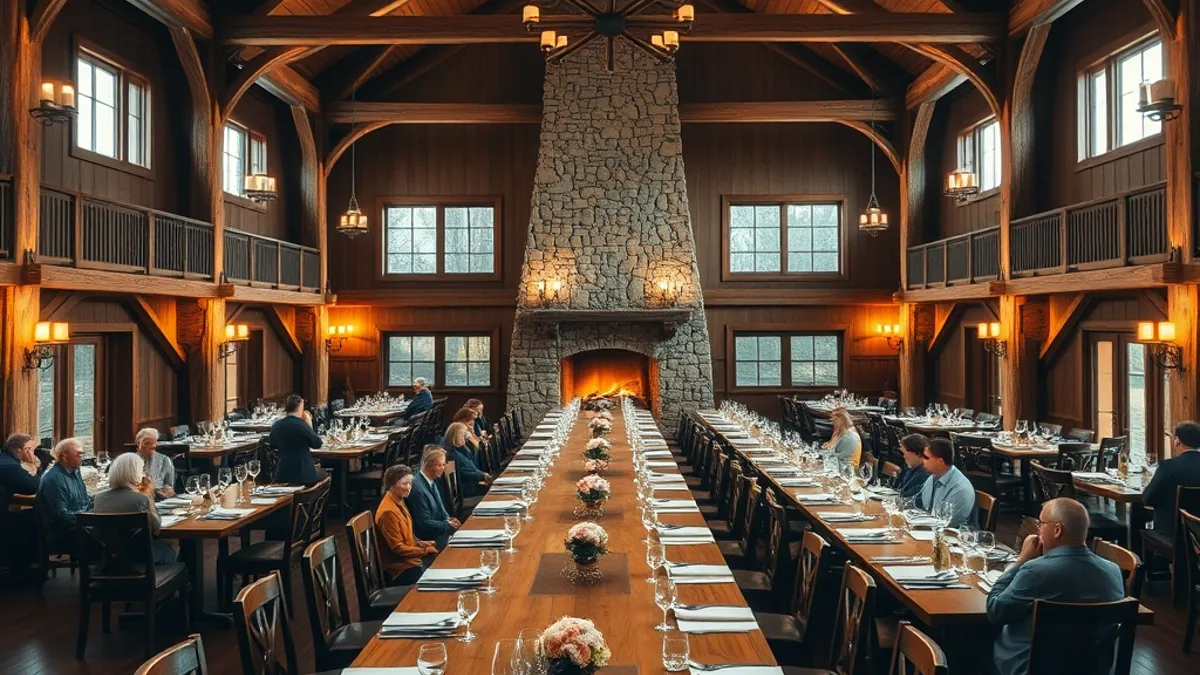
Layout matters more for groups than for couples. A lodge that feels charming for two can feel cramped and awkward for twelve, especially if everyone’s rooms are scattered across different wings. The sweet spot for large groups is a property with 10-40 rooms. Lodges in that range are often small enough to buy out entirely, which gives your group the whole place, plus you get shared common spaces built in.
Shared space is what keeps a group trip from dissolving into separate vacations under one roof. Prioritize properties with a communal dining hall, a fire pit, or a lounge, because those are the rooms where your group actually gathers. If the lodge has no common area, you will end up crowding into whichever room has the biggest bed or drifting off to separate corners.
- Connecting rooms: ideal for families with kids, since parents get privacy while staying a door away from children who are too old to share a bed but too young to sleep down the hall alone.
- Cabins: a good middle ground for groups who want a little separation at night but still want to walk a few steps to breakfast together in the main lodge.
- Suites: worth reserving for the couple or family who is paying the most, or for anyone celebrating an occasion, so premium budgets get visibly premium rooms.
- Room count per building: ask whether all your rooms sit in one building or wing; a group spread across distant buildings loses the easy, spontaneous gatherings that make lodge trips memorable.
Before you commit, ask the lodge to send a property map or room list. Matching your group to the actual floor plan takes ten minutes and prevents the classic mistake of booking rooms that do not suit the people assigned to them.
Setting a Group Budget Everyone Can Accept
Money is where most group trips quietly fall apart, so get the numbers on the table early. As a realistic starting point, expect group lodge rates of roughly $150-400 per room per night depending on the region and season. A safari region or an alpine resort in peak season sits at the top of that range, while a quiet lakeside lodge in the off-season can come in near the bottom.
Once you have a rough room total, divide it by the number of confirmed travelers and ask everyone for a per-person contribution right away. Lodges typically require group deposits of 25-50% of the total stay, and that money has to come from somewhere long before anyone packs a bag. Collecting early means you are never chasing six people for funds two days before a payment deadline.
The biggest source of friction is not the room rate itself but the extras, so settle those questions before anyone pays anything:
- Meals: some lodges offer half-board or full-board packages, which simplifies splitting costs but raises the per-person total, while self-catering keeps costs flexible.
- Activities: guided hikes, boat trips or spa treatments are usually booked and paid individually, so decide whether the group does them together or people opt in on their own.
- Transport: shared van rentals or airport transfers are cheapest when split, so confirm who is riding together before booking vehicles.
- Shared groceries and drinks: a simple group kitty, topped up equally at the start, avoids a stack of small IOUs at the end of the trip.
Communicating with the Lodge and Your Group
Booking a lodge for a large group is mostly a communication exercise, and it starts earlier than most people expect. Lodges rarely publish group rates on booking platforms, and the best deals are usually worked out directly by email or phone, where a reservations manager can discuss room blocks, buyouts and flexible terms. Before you write that first email, agree internally on your approximate dates, your headcount and how many rooms you need, because the manager will ask for all three. A vague inquiry often gets a vague reply, while a specific one tends to unlock real numbers and real options. It also helps to mention if you are considering a full buyout, since properties with 10-40 rooms can sometimes offer better terms when one group takes the whole place.
- Reach out to the lodge directly. Send an email with your dates, group size and room mix, and ask specifically about group rates, minimum-stay requirements and whether they can hold rooms while your group confirms. Ask how long they will hold the block without a deposit, since that window shapes your internal timeline.
- Appoint one point person. All questions, payments and headcount changes should flow through a single organizer. Lodges get frustrated coordinating with five different voices, and mixed messages lead to lost rooms or duplicated requests.
- Get the agreement in writing. Confirm the room list, the total, the deposit amount and the cancellation terms in a follow-up email so there is no ambiguity later. If terms were discussed by phone, summarize the call and ask the lodge to confirm.
- Set internal deadlines ahead of the lodge’s cutoffs. If the lodge needs a final headcount 30 days out, give your group a deadline 45 days out. That buffer gives you time to reassign rooms instead of losing deposits.
- Keep the group informed at each step. A short message after every milestone — rooms held, deposit paid, headcount finalized — keeps hesitant travelers engaged and reduces last-minute surprises. People who feel informed are far less likely to drop out.
Once these steps are in place, the organizer’s job becomes mostly maintenance rather than crisis management. Most group booking problems trace back to unclear deadlines and scattered communication, and both are easy to fix before they start. Handle the first email well, put every agreement in writing, and stay one step ahead of the lodge’s own cutoffs, and the rest of the process usually takes care of itself.
Real Lodge Stays That Work Well for Groups
The type of lodge you choose matters as much as the destination. Large groups rarely fit comfortably into boutique properties with a handful of rooms, but they thrive in lodges designed around shared space and flexible room configurations.
National park lodges
Lodges in and around major national parks are often built for volume, with dozens of rooms, multiple room types and on-site dining. That mix is a gift for a mixed group: grandparents get a standard room near the restaurant, families take adjoining rooms, and the early risers can grab breakfast without coordinating schedules. Having food on-site also removes the nightly debate about where the group is eating.
Alpine and lakeside lodges
Alpine lodges with apartments or chalet-style rooms suit groups staying several nights, since a kitchen and separate bedrooms let people live together without living on top of each other. Splitting one apartment between a family or two couples often brings the per-person cost down as well.
Lakeside and wilderness lodges, on the other hand, often have genuine buyout potential. Properties with 10-40 rooms are frequently small enough that your group can take the entire property, getting you private fire pits, dining rooms and docks. For milestone birthdays, reunions or friend-group trips, having the whole lodge to yourselves turns a simple stay into something that feels like a private retreat — and it is worth asking about, since buyout rates are often more reasonable than people expect.
Wrapping Up Your Group Lodge Plan
Booking a lodge stay for a large group feels overwhelming until you break it into a few decisions. Reserve 6-12 months ahead, aim for shoulder season dates, and pick a lodge with 10-40 rooms, shared spaces and a budget of roughly $150-400 per room per night. Do that, and most of the friction disappears before anyone packs a bag.
The rest comes down to people, not logistics. One point person handling the booking, clear internal deadlines and early deposits keep eight or more travelers with different budgets and expectations on the same page. What starts as a complicated coordination job becomes a straightforward reservation. If this helped you plan your group trip, leave a comment or share the article with the friends you’re traveling with.