Many lodges claim to welcome families, but “family-friendly” often turns out to mean little more than a cot on request. If you have ever arrived at a so-called family-friendly lodge with two kids only to discover the room sleeps two adults and one child, you know how quickly that gap between marketing and reality can derail a trip. The good news is that the warning signs are easy to spot before you pay a deposit — if you know what to ask.
This guide walks you through the checks that matter: what family-friendly should actually mean, how to read room configurations, what to look for in kids’ facilities and dining, the safety questions worth asking, and the specific questions to email before booking. Work through them and you will arrive at check-in knowing exactly what awaits your family.
What ‘Family-Friendly’ Should Actually Mean at a Lodge
A genuine family-friendly lodge offers rooms that sleep 4-6 guests or connecting rooms — not just a cot squeezed into a double. That distinction sounds small until you are standing in a reception at 4 pm with two tired kids and one front desk clerk explaining that the “family room” is a standard double with a fold-out pad. Real family lodges build their room inventory around families, and it shows in the floor plans long before it shows in the brochure.
Practical markers to look for
Walk through the lodge’s website photos and amenity list with a checklist in mind: high chairs in the restaurant, kids’ menus, baby baths available on request, and a pool or play area where children can actually burn off energy. None of these is extravagant on its own. Together, they tell you the lodge expects families every week of the year, not just during school holidays when it becomes convenient to say so.
The sharpest test is separating “children allowed” from “children catered for.” Any lodge without a firm policy accepts kids; a lodge built for them has thought through bed sizes, meal times and rainy afternoons. That second kind of family-friendly shows up in the details — the wording of the room descriptions, the photos of the dining room, the questions the reservations team answers without hesitation. The rest of this article shows you exactly where to look.
Room Configurations: The First Family-Friendly Lodge Test
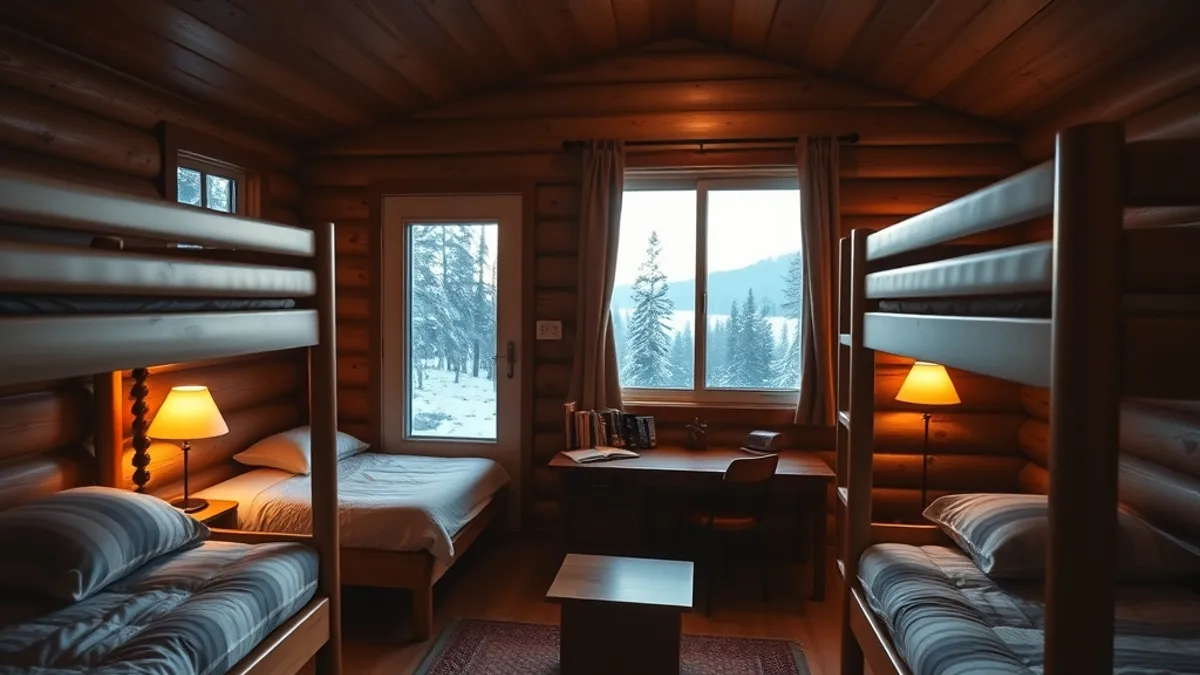
Room configuration is where family bookings most often fall apart, so make it your first test. Start by checking the maximum occupancy for each room type, not just the photos. Standard rooms often cap at 2 adults plus 1 child, which means a family of four may quietly need two rooms — a very different price from the one you budgeted.
Family suites typically sleep 4-6 guests, and they are the safer choice for most families. If connecting rooms are your preference, request them 2-3 months ahead for peak summer and holiday dates, because lodges hold a limited number and they go first. For school holiday travel in general, booking family suites 3-6 months ahead is the habit that saves the most stress.
Before you pay, ask the reservations team these specific questions:
- Children’s rates: many lodges let children under 6 stay free when sharing with parents, but policies differ, so confirm in writing.
- Rollaway bed costs: cots and high chairs are often free, but expect $10-25 per night for rollaway beds — enough to matter over a week-long stay.
- Cot quality: ask whether the cot is a proper crib meeting current safety standards or simply a fold-up travel cot supplied on request, and whether it is guaranteed available for your dates.
None of these questions makes you a difficult guest. Lodges that genuinely welcome families answer them quickly and in detail, and that response itself tells you a lot about what to expect on arrival.
Kids’ Facilities and Supervised Activities
A kids’ club can be the difference between a relaxing lodge stay and a week of entertainment planning, but only if it matches your family. Kids’ clubs at family-oriented lodges usually accept children aged 4-12, so check the age window against your own children before assuming anything. A club that starts at 6 or 8 leaves parents of toddlers doing exactly the work they hoped to hand off.
Hours, costs and staffing
Check the club’s hours and whether sessions are included in your rate or charged separately — per-session fees add up fast over a multi-day stay. Ask about staff supervision ratios too, and whether the same trained team runs activities daily or only brings in extra help during high season. A club that operates only in peak weeks is fine if that is when you travel, and useless if it is not.
Facilities beyond the club
Look past the club itself when judging how family-oriented a lodge really is. A playground, a games room for rainy days and a shallow section of the main pool all earn their keep. Loaner gear matters as well: bikes with child seats, for example, save you from packing your own and signal that the lodge expects young guests regularly. Ask for the activity schedule in advance so you know whether there is enough to keep your children engaged for the length of your stay, not just the first afternoon.
Dining Times and Children’s Food at Lodges
Here’s a question that catches a lot of parents out: what time does the lodge restaurant actually stop serving dinner? At many lodges, the answer is somewhere between 8 and 9 pm, which sounds perfectly reasonable until you realize your toddler goes down at 7:30. If the kitchen closes before your kids are even hungry for a second course, you’re eating cereal from the minibar.
Ask about kids’ menus and fallback options before you book
A genuinely family-oriented lodge will offer a proper kids’ menu with familiar, simple dishes, not just a shrug and smaller portions at adult prices. Ask whether half-portion pricing is available for older children who have outgrown nuggets but not appetite. These details tell you a lot about how often families actually stay there.
You should also confirm whether in-room dining exists as a fallback. When someone falls asleep on the drive back from a day out or a stomach bug strikes, being able to order plain pasta to your room saves the evening. If the lodge has no room service at all, ask if the restaurant will pack a simple takeaway plate — many will if you ask nicely.
Finally, check whether early sittings are offered. The best family lodges let you eat between roughly 5:30 and 6:30 pm, when children are still cheerful and nobody minds a spilled glass of juice. An early sitting also means you can use the quieter, more formal dining room without feeling like every clatter of cutlery is drawing stares. If the lodge only offers one late seating in a hushed, candlelit space, that tells you who they expect at dinner — and it probably isn’t your four-year-old.
Safety and Practical Checks Before You Commit
Safety is where marketing claims meet reality, so this is the stage where you stop reading brochures and start asking direct questions. A lodge can advertise a stunning infinity pool, but if there is no fence or barrier between the pool and your wandering two-year-old, that’s a problem you want to know about before arrival, not after.
Email the lodge and ask specifically about pool fencing, stair gates on internal staircases, and the height of balcony railings. Also ask whether the lodge provides outlet covers, corner protectors or other baby-proofing items on request — a “yes” usually signals staff who deal with young families regularly.
Laundry access matters more than most parents expect. With young children, any stay longer than three nights will generate a small mountain of stained clothing, and hand-washing in a bathroom sink gets old fast. Confirm whether there are guest laundry facilities, a same-day service, or at least a sink-friendly setup.
Location matters too. Remote lodges are part of their charm, but some can be 30-60 minutes from the nearest pharmacy, clinic or hospital. Ask for realistic travel times to urgent care, especially if you’re traveling with an infant or a child with allergies. A lodge like Kalaloch Lodge in Olympic National Park shows why this matters — beautiful, isolated settings come with real distances to services.
Finally, read recent reviews from families specifically. Filter for guests who traveled with children of similar ages to yours, because their experience is the most relevant data you’ll get. A glowing review from a couple means little when you’re packing diapers.
- Ground-floor room options: ask whether you can request a room without a balcony or on ground level if you’d rather skip railing worries entirely with a climbing toddler.
- Water depth in the kids’ pool area: some shallow sections are genuinely ankle-deep while others reach 60 cm or more; ask for the actual depth rather than trusting a photo.
- First aid training of staff: it’s reasonable to ask whether team members hold current first aid certification, particularly lifeguards or kids’ club staff.
- Wildlife and terrain hazards: lodges in nature settings may have unfenced drops, water features or local wildlife on site — ask what’s around the cabins and what signage or barriers exist.
Questions to Email the Family-Friendly Lodge Before Booking
Once you’ve shortlisted a lodge, a short, specific email will tell you more than any website ever will. The way a lodge answers your questions — quickly, precisely and helpfully — is itself a test of how seriously they take families. Vague replies about “wonderful facilities for all ages” usually mean nobody has actually thought about it.
Ask for proof, not promises
Request exact photos and floor plans of the family room or suite you’d actually book, not the showpiece suite featured in the gallery. Lodges often photograph their best room and let you assume the rest match. A floor plan shows you whether there’s genuinely space for a cot, whether the bathroom fits a baby bath, and whether connecting rooms share an internal door or are across the hall from each other.
Then confirm the essentials in writing: that a cot and high chair will be available for your specific dates, and that kids’ meals can be served during your stay. Availability is often limited, so this confirmation matters. Family suites are also the first rooms to sell out during school holidays, so once you’ve settled on your dates, lock in the room early rather than assuming a flexible standard room will solve the problem later.
Get the daily reality in writing
Finally, ask the lodge to send the daily activity schedule and pool hours before you pay. A kids’ club that runs only on weekends, or a pool that closes at 5 pm for cleaning, changes what your days will look like. When the lodge puts these details in writing, you arrive with matching expectations — and you have something to point to if the reality on the ground doesn’t line up. It takes ten minutes of emailing to avoid a week of disappointment.
The Bottom Line on Choosing a Lodge for Your Family
A lodge that is genuinely family-friendly shows it in the details: rooms that actually sleep your whole crew, a kids’ club with real hours and supervision, early dinner sittings, and safety features you don’t have to beg for. If those things only appear in a tagline and not in the answers to your questions, you’ve learned what you need to know before paying a deposit.
Two habits do most of the work here. Email specific questions before you book, and reserve family suites well ahead for school holidays. Do both, and check-in becomes a formality instead of a negotiation. If this helped you plan a smoother trip, leave a comment or share the article with another traveling family.