Glamping with a hot tub is one of those bookings that looks perfect in the photos: steam rising off the water, stars overhead, a glass of wine on the deck. Then you arrive, discover the tub takes three hours to heat, realize it is shared with four other tents, and find out the robes cost extra. The fine print matters more than the picture.
This guide walks you through what to check before you pay. We will look at what a hot tub glamping stay actually includes, when to book for the best weather and rates, how to judge privacy and setting, what a realistic nightly budget looks like, and the hygiene and etiquette rules worth knowing. We will finish with how to pick the right property so the stay matches the photo.
What Glamping With a Hot Tub Actually Includes
Not all glamping hot tubs work the same way, and the difference shapes your whole evening. Wood-fired tubs are the romantic option, but they need 2 to 3 hours to heat before your first soak. That means lighting a fire in the afternoon if you want to stargaze at night. Electric tubs stay hot on demand, so you can slip in whenever you like, though some travelers feel they lose a little of the ritual.
Private or shared?
Check whether the tub sits on your own deck or is shared with other guests on the property. A private tub means you can soak at midnight in a robe; a shared one means scheduling around other people and possibly waiting your turn. Neither is wrong, but they are very different experiences, and private setups usually cost more.
What comes with the tub
Ask exactly what is included. Some properties supply towels, robes and handle the water treatment themselves; others charge for extras or expect you to bring your own towel. If you plan to use the tub in rainy weather, look for a covered tub area in the photos or ask the host directly. An open deck is lovely on a clear night and far less appealing in a drizzle.
Best Seasons and How Far Ahead to Book
Timing makes a bigger difference to a hot tub stay than to most trips. Most hot tub glamping sites in temperate climates run from April to October, when nights are mild enough that soaking outdoors stays comfortable rather than shivery. The shoulder months of late spring and early autumn often bring the best combination: warm water, colorful scenery and fewer people competing for the same decks. If you want a sense of what a well-run site feels like in the quieter stretches of the season, this review of a lakeside glamping retreat in Castel Volturno, Italy gives a good picture of how the tub and the setting work together.
How far ahead to book
Summer weekends are the scarcest dates on the calendar. Book 2 to 3 months ahead for a summer weekend stay, and if you are chasing autumn foliage, push that to 4 to 6 months ahead. Foliage season is short, and the sites with covered tub areas and good sightlines go first.
Winter and midweek options
Winter hot tub glamping does exist in snowy destinations, and soaking in steaming water while snow falls around you can be memorable. Just confirm the practical details first: heated walkways so you are not trudging through ice in a robe, and properly insulated tents so the rest of the stay is comfortable too. If your dates are flexible, midweek stays often drop $50 to $100 per night below weekend rates, which can turn a splurge into a reasonable treat.
Privacy, Location and Setting
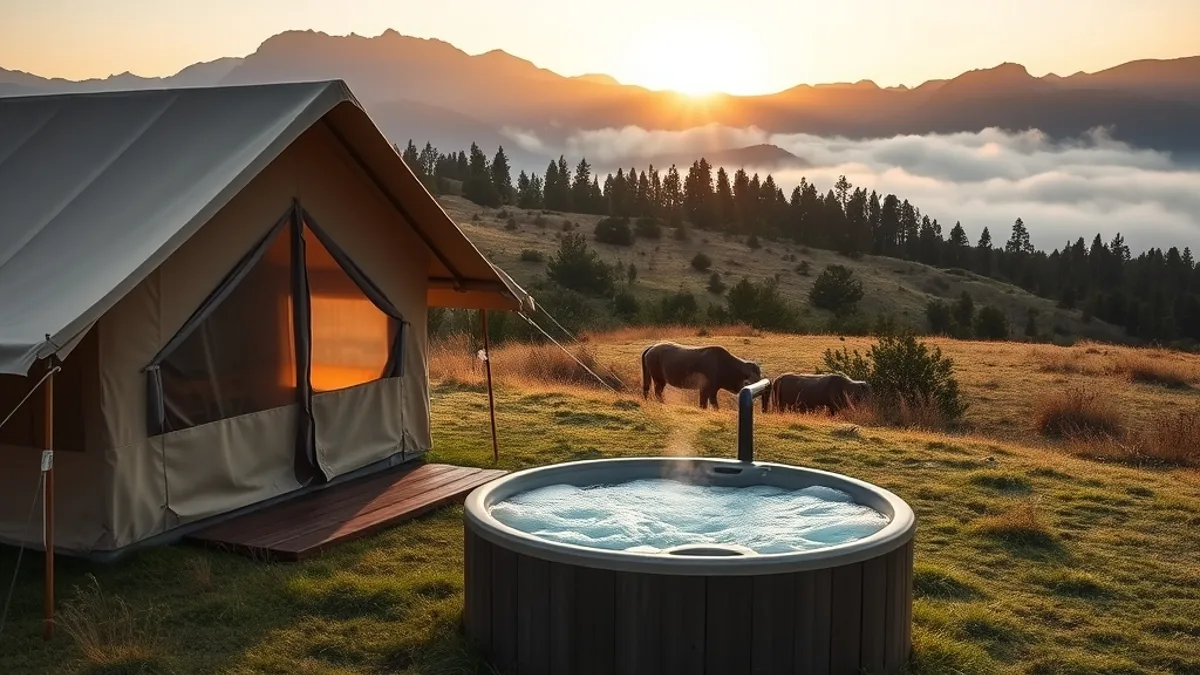
The setting around your tub matters as much as the tub itself. If seclusion is the whole point of the trip, ask the host directly whether the tub is positioned away from neighboring tents. Some properties cluster decks close together for efficiency; others deliberately space them out. A quick question before booking saves you from soaking three meters from someone else’s dinner table.
Choosing your backdrop
Lakeside and forest-edge sites offer the best backdrop for a soak, and you can judge this before you go. Study the site map and the photos for sightlines: can you see other tents from the tub deck, and can they see you? A tub angled toward open water or tree cover feels completely different from one facing a row of canvas. Lakeside glamping regions like the Masurian Lake district are a good example of how water views and tub-friendly evenings reinforce each other; this guide to slow-travel glamping in the Masurian Lakes shows what a water-focused setting looks like in practice.
Plan around the drive
One practical detail catches many first-timers: rural sites may mean a 20 to 40 minute drive to the nearest restaurants. That changes how you structure your evening. Either plan meals so you are back at camp before your soak, or bring food you can cook on site. The best evenings at these properties tend to be the ones where you never leave after check-in, so stock up on the way in and let the tub do the rest.
What a Hot Tub Glamping Stay Really Costs
Hot tub glamping sits at the premium end of the camping market, and the numbers reflect that. For two people, expect to pay somewhere between $150 and $400 per night, with the wide range explained by tent type, location and how the tub is set up. A basic safari tent with a shared tub sits at the low end, while a spacious lodge with a private deck tub commands the top of the range.
One of the biggest price factors is exclusivity. Having the tub all to yourself, on your own deck and available whenever you like, pushes the nightly rate noticeably higher than at sites where guests share a single tub. Whether that premium is worth it depends on how you travel; couples who want a quiet evening soak under the stars usually find it money well spent, while larger groups can often justify a shared setup instead.
Watch out for add-ons at wood-fired properties. Some hosts charge a firewood or heating surcharge, often in the $20 to $50 range per stay, since keeping a tub hot takes real fuel. Ask about this before booking so it does not surprise you on arrival.
- Meals included: some farm and lakeside sites bundle breakfast or a welcome basket of local produce, which can offset a higher nightly rate if you would otherwise eat out.
- Cleaning fees: a handful of hosts add a one-time cleaning or tub-preparation fee rather than folding it into the nightly rate.
The smartest way to compare properties is to calculate what you actually get per night. Two sites with identical headline prices can differ by $30 or more once meals and surcharges are counted, so read the inclusions list carefully before you commit.
Hygiene, Safety and Etiquette
A hot tub is only as appealing as it is clean, so hygiene should be near the top of your questions before booking. The standard practice is straightforward: shared tubs should be drained and cleaned daily, while private tubs are drained and refreshed between guest stays. Don’t hesitate to ask a host directly which schedule they follow; a confident, specific answer is a good sign, and vagueness is not.
Etiquette around the tub deck matters too, especially at sites where the tub is shared. Shower before entering, and keep glass bottles, food and electronics away from the water and the deck itself. Most hosts will thank you for it, and some will ask you to use plastic drinkware only.
Health-wise, very hot water is more demanding than people expect. Limit your sessions to 20 to 30 minutes, especially in tubs at the upper end of the temperature range, and drink water between soaks. Alcohol and long soaks are a poor combination, so pace yourself if the evening includes wine.
- Children: supervise kids closely around the tub and deck at all times, and note that many sites set a minimum age of 12 for tub use, so verify the rule if traveling with younger children.
- Footwear: bring flip-flops or sandals for the deck area, since wooden decking around tubs gets slippery when wet.
- Products: skip bath oils, bubble bath and heavy lotions before soaking, as they leave residue that shortens the water’s life and can affect the next guests.
- Cover care: replace the tub cover when you finish, since it keeps the water warm and keeps insects and debris out overnight.
None of this is complicated, and following it makes the experience better for everyone. If you notice a tub that looks cloudy or poorly maintained at check-in, raise it with the host immediately rather than waiting until the end of your stay.
How to Choose the Right Property
With hundreds of glamping properties now offering hot tubs, the difference between a great stay and a disappointing one usually comes down to a few specific details. The most reliable source is recent guest reviews. Filter or search reviews for mentions of the tub itself: did guests say the water was properly hot, how long did it take to warm up, and was it clean on arrival? A property can have beautiful photos and still fall short if the tub sits lukewarm by the second night or never quite gets there at all.
Before booking, message the host with two direct questions. First, is the tub heated and ready when you arrive, or do you need to fire it yourself? With wood-fired tubs, your first evening can turn into a project rather than a soak, so it helps to know whether someone at the property handles the heating for you or whether you are on your own with the firewood. Second, ask about the cleaning schedule and what happens if the tub has a problem mid-stay. A host who answers both questions clearly is usually a host who runs a well-organized property.
Consider a farm-stay setting
Farm-stay glamping sites often bundle the tub experience with animals, local produce and a genuinely rural pace, which suits travelers who want more than a tent with a view. A good example is the Agricampeggio Madonna di Pogi review from Tuscany, which shows how a working farm setting and glamping comfort can work together. This style of property tends to appeal to families and couples alike, since kids get the animals and grown-ups get the soak.
Read the fine print on cancellations
Finally, check cancellation terms carefully before you pay. Weather-dependent stays, especially in exposed or seasonal locations, often come with stricter policies than standard hotel bookings. Look for how far in advance you can cancel, whether bad weather qualifies for a refund or rebooking, and whether the deposit is recoverable. A few minutes reading the terms is far better than losing the full amount because a storm rolled in.
Wrapping Up Your Hot Tub Glamping Plans
A steaming tub under the stars makes for a gorgeous photo, but the fine print about heating times, privacy and extra fees is what actually decides whether your stay delivers. Glamping with a hot tub works best when you match the season, privacy level and budget before you book, not after you arrive.
Keep a few key numbers in mind: expect $150 to $400 per night for two people, book summer weekends 2 to 3 months ahead, and aim for the April to October season in temperate regions. A little pre-booking research on how the tub is heated and how often it is cleaned turns a photo-pretty stay into a genuinely relaxing one. If this guide helped you plan your trip, leave a comment or share it with a fellow traveler.