Finding a pet-friendly lodge sounds simple until you read the fine print. Many properties advertise themselves as welcoming to animals, then surprise you with weight caps, nightly fees and room restrictions that only surface after you’ve booked and hit the road. A “pets welcome” badge on a booking site tells you almost nothing about whether your 70-pound dog can actually stay, or whether it will cost you an extra hundred dollars.
This guide walks you through the policies to check before you pay a deposit. We’ll cover what “pet-friendly” actually means at a lodge, the fees and weight limits to confirm in advance, and the room and on-site restrictions that catch travelers off guard. You’ll also learn why pet-friendly rooms sell out early, how to match a lodge’s location to your animal’s needs, and the exact questions to ask before you confirm your reservation.
What ‘Pet-Friendly’ Actually Means at a Lodge
The phrase “pet-friendly” covers a wide range of policies, and two lodges using the same words can mean very different things. Some properties welcome dogs only, while others accept dogs and cats. A smaller number extend the welcome to other animals, but you should never assume your particular pet qualifies until you ask directly.
Breed restrictions are another common wrinkle. Some lodges exclude certain breeds regardless of the animal’s size or temperament, often for insurance reasons. If your dog is a breed that frequently appears on restricted lists, ask about this before booking rather than arguing at the front desk with your pet beside you.
Species and animal counts
Most lodges cap pets at 1-2 animals per room, so a household with two dogs and a cat needs explicit confirmation, not a hopeful assumption. Confirm that the policy covers your species and your number of animals in the same conversation. Get the answer in your confirmation email so there’s a record.
Seasonal policies
Ask whether the pet policy applies year-round or only during low season. Some lodges welcome animals in quieter months but suspend the policy during their busiest stretches. If your travel dates fall in peak season, verify that pets are accepted then specifically, because a policy that applied on your last off-season visit may not hold.
Fees, Deposits and Weight Limits to Check First
Money is where pet policies get expensive, so nail down the numbers before you hand over a card. Expect pet fees of $25-$150 per stay or $10-$50 per night, and ask whether the fee is charged per pet or per room. That distinction matters a lot for a family traveling with two dogs. A refundable deposit is common as well, typically running $50-$250 and returned after staff inspect the room for damage.
Weight limits are the other filter that disqualifies travelers late in the process. Common limits sit at 25-50 lb (11-23 kg), though some lodges accept dogs up to 80 lb (36 kg). If your dog is large, treat the weight limit as a yes-or-no question, not a detail.
- Ask if fees stack with taxes. In some destinations, pet fees are subject to local lodging tax, which nudges the final cost higher than the advertised rate.
- Clarify what the fee includes. Some lodges bundle a bowl, bed or treat package into the fee, while others charge the same amount and provide nothing.
- Ask when the deposit is refunded. Inspections usually happen at checkout, and refunds can take several days to appear on your statement depending on the lodge’s process.
- Request the policy by email. A written fee schedule protects you if a front desk agent quotes different numbers at check-in than the ones you were told when booking.
Get the full fee schedule in writing before you pay anything. A short email confirmation listing the fee, deposit and weight rules takes the lodge two minutes to send and saves you from an unwelcome line item on your final bill.
Room Access and On-Site Restrictions
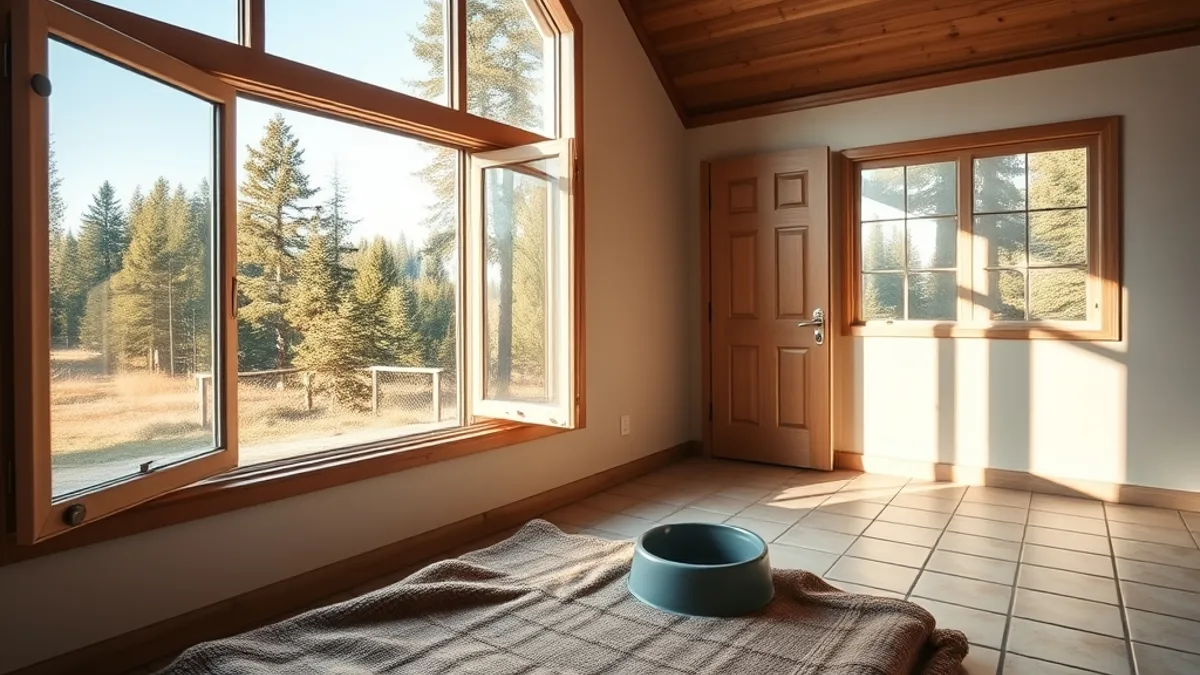
Even when a lodge accepts your pet, it may not accept your pet everywhere. Many lodges allow animals only in designated rooms, typically ground-floor units or rooms with exterior-access doors. These rooms make housekeeping easier and limit wear on corridors and elevators. If you had your heart set on an upper-floor room with a view, check whether pet-designated options include one before you book.
Where pets can and can’t go
Pets are usually banned from dining rooms, spas and pool areas, so plan your mealtimes accordingly. The upside is that many lodges do offer outdoor patio seating or ground-floor lounges where animals are welcome. On the positive side, look for a fenced exercise area on the property map or ask staff to describe one. A secure grassy space where your dog can stretch off-leash after a long drive is worth more than any welcome treat.
Leaving your pet alone
Ask about the rules for leaving pets unattended in the room, because policies vary widely. Some lodges require animals to be crated whenever you’re out, and a few prohibit leaving pets alone entirely. If your dog barks at every hallway sound or panics in a crate, be honest with yourself about whether this arrangement will work. Housekeeping staff also often skip pet-occupied rooms unless you arrange a time, so ask how cleaning is scheduled during your stay.
Booking Early for Pet-Friendly Rooms
If you have ever tried to book a lodge with a dog in tow during high season, you already know the frustration: the pet-friendly rooms vanish first. Lodges typically keep only a small share of their inventory open to animals, so those rooms carry a disproportionate amount of demand compared to standard rooms. A little planning goes a long way here, and the travelers who secure the best pet-friendly stays are usually the ones who start early and stay organized throughout the process.
- Count your lead time. For summer stays at national park lodges, which peak from June through September, aim to book 2-3 months ahead. The same window applies to winter ski lodges, where demand concentrates between December and March. Starting earlier rarely hurts.
- Ask how many pet-friendly rooms exist. Some lodges have only a handful, which explains why they sell out while standard rooms remain available for weeks. Knowing the number helps you judge how urgently to book and whether a waitlist is worth joining.
- Book directly when possible. Calling the lodge lets you confirm the pet policy at the same time you reserve, rather than discovering a restriction after arrival through a third-party booking. Direct contact also gives you a named contact for follow-up questions.
- Reconfirm at check-in. Policies can change between your booking date and your arrival, so state clearly at the front desk that you have a pet with you. Unannounced pets can trigger fees, and you want any charge agreed on your terms, not discovered on your final bill.
One more practical habit: keep your booking confirmation handy and note the name of whoever confirmed the pet policy, along with the date of the conversation. If a question arises at the front desk, a documented exchange makes everything smoother. It also helps to save any email replies about your pet in a folder on your phone, so you can pull them up in seconds if needed. These small steps take minutes but can save you real stress at check-in.
Matching the Lodge Location to Your Pet
The best pet-friendly lodge is one where your animal actually enjoys the stay, not just tolerates it. Location matters as much as policy, so look closely at the setting before you commit.
Start with the grounds themselves. Trail access directly from the property, grassy areas for morning relief breaks, and quiet nearby walking routes all make a stay easier than a lodge fronting a busy road. If the website photos don’t show the outdoor space, ask specifically what surrounds the rooms.
Match the setting to your dog’s energy
Active dogs thrive in lodges near parks and lakes, and US national park lodges are hard to beat for this. A place like Kalaloch Lodge in Olympic National Park puts beach and forest walks steps from your door, which is exactly the kind of setting that tires out a high-energy dog. Sedate older dogs, on the other hand, may prefer a quiet property with lawn space and little traffic.
Think about veterinary access
Remote lodges mean fewer vet options, and that trade-off deserves honest consideration. Before booking a secluded property, note the distance to the nearest animal clinic and save its details in your phone. If your pet has a chronic condition or is older, a lodge within reasonable driving distance of a town with veterinary services may be the smarter choice, even if the wilderness option looks more tempting.
Questions to Ask Before You Confirm
By the time you are ready to confirm a booking, you have probably compared prices, studied the photos and read a few reviews. Before you pay the deposit, though, a short phone call can save you from surprises that no photo reveals. Websites often summarize a pet policy in a single line, while the full details live with the front desk. Ask direct questions, take notes on the answers, and write down the name of the person you spoke with.
The three areas below cover the details that most often catch travelers off guard. Get specifics, not general reassurances, and ask the person to note the pet policy directly on your reservation. If the answer to any question is “it depends,” ask what it depends on, because vague answers tend to turn into extra charges at check-in.
- Restrictions and costs. Ask whether a weight or breed restriction applies to your specific dog, and request the exact fee and deposit amounts. A vague “we take pets” answer is not enough; you want the numbers and any breed list spelled out.
- Access and alone time. Confirm which rooms and areas your pet can enter, including whether ground-floor rooms are required. Then ask the crucial question: can your pet stay alone in the room, and if so, is a crate mandatory? Many lodges only allow unattended pets if they are crated.
- Provided amenities. Find out whether the lodge supplies bowls, pet beds, treats at check-in, or waste stations on the grounds. Knowing what is provided tells you exactly what to pack, and some lodges offer more than their website suggests.
After the call, follow up with a short email summarizing what you were told, including any fees, room assignments and crate rules discussed. A written record protects you if staff members on arrival interpret the policy differently, and it takes only a few minutes to send. If the lodge confirms by email, keep that message handy on your phone so you can show it at the front desk if questions come up during check-in.
Wrapping Up Your Pet-Friendly Lodge Search
Finding a lodge that truly welcomes your pet comes down to asking the right questions before you pay, not after you arrive. Many places advertise as pet-friendly, yet the weight caps, extra fees and room restrictions only surface at check-in. Check the species rules, fees ($25-$150 per stay), deposits and weight limits first, and get the full policy in writing so there are no surprises.
Timing matters too. Pet-friendly rooms are a small share of inventory and sell out early, so book 2-3 months ahead for peak season stays. Finally, match the lodge setting to your pet’s needs, from trail access to quiet grounds, and confirm every detail with the property before you book. If this guide helped you plan a trip with your four-legged companion, leave a comment or share it with a fellow traveler.