A luxury tent means little if the bathroom is a long walk away, poorly cleaned or shared with thirty other guests. Yet this is exactly the situation many glampers find themselves in, because glamping site bathroom facilities vary enormously from one property to the next. Some offer proper en-suite bathrooms with hot showers and flushing toilets; others expect you to cross a dark field to a bathhouse that has not been cleaned since breakfast.
This guide walks you through the whole decision. We start with why bathrooms make or break a glamping trip, then explain the difference between en-suite, private and shared setups. From there, you will learn what to verify about hot water, toilets and cleaning before you book, how to judge distance and night-time lighting, and how to read reviews and ask the right questions. We also look at how season and occupancy affect shared facilities, and finish with a simple checklist so you can book with confidence.
Why Bathroom Facilities Make or Break a Glamping Trip
Glamping sells itself on comfort: real beds, stylish interiors, wood stoves and views from your pillow. But the promise of a hotel experience in the outdoors often falls apart at the bathroom. Of all the complaints travelers raise after a glamping stay, bathroom quality sits at the top of the list, and it is the most common gap between what the photos promised and what actually awaited them.
Picture the scene. You have paid a premium for a gorgeous safari tent with a deck and a fire pit. Then night falls, the temperature drops, and you realize the nearest shower is a 50-meter walk across wet grass. That beautiful tent loses its appeal remarkably fast when every trip to the toilet involves a headlamp, muddy shoes and a shivering dash back to bed.
Why standards vary so much
Here is the frustrating part: bathroom standards vary more between glamping sites than between budget and mid-range hotels. A hotel at either price point will generally give you a working shower and a clean toilet, because plumbing is plumbing. Glamping is different. One site may have built proper en-suite wet rooms into every unit, while the site down the road calls itself “glamping” with a single shared block serving a whole field of tents.
The practical takeaway is simple. Never assume that the word glamping guarantees a certain bathroom standard, and never assume the photos on the booking page show the toilet situation. Treat bathroom facilities as a separate decision from the tent itself, and you will avoid the most common disappointment in this type of travel.
En-Suite, Private or Shared: Understanding Glamping site bathroom facilities
The first decision to make is which type of bathroom setup you want, because glamping sites generally fall into three categories. Each has trade-offs between comfort and price, and knowing the difference before you book saves you from unpleasant surprises on arrival.
En-suite units are the gold standard: a private bathroom built inside the tent or cabin itself, with no outdoor walk at all. This convenience typically costs 20-40% more than units that rely on shared bathhouses. If you are celebrating something or traveling with small children, that premium is usually money well spent. For a real-world example of how this works in practice, you can read our glamping review from Castel Volturno in Italy, which covers what an on-site setup looks like day to day.
Private external bathrooms offer a middle ground. These are dedicated bathrooms assigned to a single unit but located just steps outside, often in a small adjacent building. You keep the privacy and you usually avoid queues, but you still step outside, so weather and lighting matter more than with a true en-suite.
Shared bathhouse blocks are the cheapest option and can be perfectly pleasant, but the ratio is what counts. Well-run sites serve roughly 4-8 tents per shower. Beyond that, expect morning queues and stretched cleaning routines.
- Ask how many units share each bathroom block. A site with a handful of tents and two showers can feel more private than a large site with a ratio twice as high.
- Check whether private external bathrooms are lockable and assigned. A dedicated bathroom with your own key is a different experience from a “private” cubicle inside a shared block.
- Look at what “en-suite” actually includes. Some units offer a full wet room with toilet and shower; others provide only a toilet or a shower, so confirm the exact configuration.
- Consider the season when weighing price. The 20-40% premium for en-suites buys the most value in wet weather or peak season, when shared blocks face the most pressure.
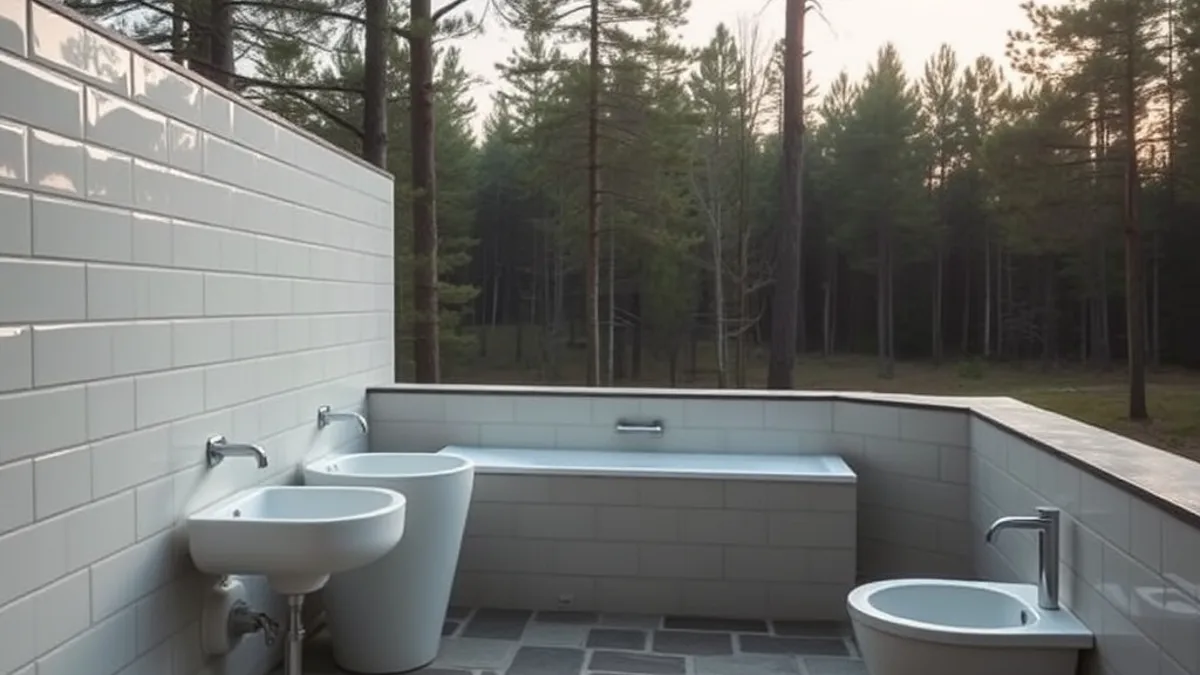
Hot Water, Toilets and Cleaning: What to Verify Before You Book
Once you know which setup you want, the details decide whether it will actually be pleasant. The single most important question is how hot water is produced. Gas or electric systems heat water on demand, which means a hot shower whenever you want one. Solar-heated systems are greener and common at eco-focused sites, but solar-powered hot water can run out by evening, which is precisely when you are most likely to want a shower after a day of activities.
Ask the site directly which system they use. If the answer is solar, find out whether they have a backup and how the water holds up on cloudy days or when the site is full. A morning shower person may be fine with solar; an evening bather should think twice.
Toilets: flushing, composting or long-drop
The next question is the toilet. Many glamping sites, especially eco-minded ones, use composting toilets or long-drop options instead of conventional plumbing. Some travelers do not mind at all; others find it a genuine dealbreaker, particularly on longer stays. If a proper flushing toilet matters to you, confirm it explicitly before booking rather than assuming that “glamping” means full plumbing.
Cleaning routines matter as much as hardware
Finally, look for sites that state a cleaning schedule openly. Family-run glamping operations often clean facilities twice daily, once in the morning and again in the late afternoon, which keeps shared blocks usable through the day. A site that publishes its routine is usually a site that follows one; a site that goes vague when asked is telling you something. Combine this with the hot water and toilet questions, and you will have a clear picture before you pay a deposit.
Distance, Lighting and Night-Time Practicalities
Distance is the detail that photos never show. A bathroom that looks lovely in a listing can still be a misery if it sits across a muddy field. Most guests agree that anything more than 50 meters from the tent becomes a real annoyance, and that applies doubly when it is raining or pitch dark. What sounds like a short stroll on a sunny afternoon feels very different at 2 am in a downpour.
Before booking, look closely at how the site handles night-time movement. Good operators think about this for you; careless ones leave you fumbling with a phone flashlight on uneven ground. Use this quick check:
- Path lighting: ask whether walkways to the bathhouse have fixed lights on a timer or sensor, since some sites switch everything off at a set hour to save power.
- Lanterns and torches: confirm whether each tent comes with a rechargeable lantern or headlamp, and whether there is a charging point so it is ready every night.
- Ground surface: a gravel or boardwalk path stays usable in rain, while a grass slope can turn slippery and treacherous after a storm.
- Layout on the map: request a site plan and check where your specific unit sits, not just the nicest tent shown in the photos.
Families with small children should simply skip this calculation and prioritize en-suite units. A toddler who wakes needing the toilet at midnight makes any external walk a logistics exercise. If you want to see how a well-planned site handles this in practice, read this Masurian lake glamping review for slow travelers, which shows how thoughtful layout removes the night-time trek entirely.
Reading Reviews and Asking the Right Questions
Let the reviews do the digging
Star ratings flatten everything into a single number, and a five-star review can hide the sentence “shower was cold by 9 pm”. Search review text directly for words like shower, toilet and bathroom. You will often find that the most useful detail sits in three-star reviews written by people who cared enough to explain exactly what went wrong.
Recency matters just as much as content. Filter reviews from the past 12 months, because older praise may not reflect current management. Glamping sites change hands, cleaning staff turnover, and a hot water system that worked beautifully three summers ago may be struggling now. A glowing review from five years back tells you almost nothing about the state of the bathhouse this season.
Ask before you pay a deposit
Then go straight to the source. Message the site directly and ask three specific questions: how the hot water is heated, what the water pressure is like at busy times, and how often the bathrooms are cleaned. A confident operator answers within a day and gives concrete answers, such as a twice-daily cleaning routine. Vague replies like “the showers are fine” are themselves useful information. Get these answers in writing before you hand over any deposit, so there is no ambiguity if the facilities disappoint on arrival.
Season and Occupancy: When Shared Facilities Feel Worst
Why timing changes everything
The same shared bathhouse can feel perfectly fine in June and grim in August. July and August bring peak occupancy, and shared facilities feel most strained and least pristine then. A block of showers designed for eight tents works well when half the site is empty; at full capacity, it means queues in the morning, wet floors all day, and cleaning schedules that struggle to keep up. If you are reading a review of a shared-facility site, check when the reviewer stayed before trusting their verdict.
Shoulder-season stays in May, June or September flip the equation. You get shorter queues, fresher facilities and often calmer surroundings, sometimes with milder booking prices. For a taste of what a big-water shoulder-season trip can look like, see this Under Canvas Lake Powell review of glamping by the water in the United States.
Booking windows that work
Plan according to your bathroom priority. If you want an en-suite unit for summer, book 3-6 months ahead, because the private-bathroom tents are always the first to sell. If you are happy with shared facilities and traveling in shoulder season, most sites can be booked 1-2 months out with no trouble. That flexibility is one of the quiet rewards of traveling outside peak weeks: better bathrooms per dollar, and far less competition for the best units.
Wrapping Up Your Bathroom Checklist
Choosing a glamping site comes down to one simple truth: the most beautiful accommodation in the world loses its charm fast if the bathroom is a long walk away, poorly cleaned or shared with thirty other guests. Start by deciding between en-suite, private external and shared facilities, and weigh whether the 20-40% price premium for an en-suite unit is worth it for your trip. For families or anyone who values convenience, it usually is.
Before you book, verify the hot water system, confirm a cleaning schedule and apply the 50-meter distance rule to any shared block. Then use reviews from the past 12 months and consider shoulder-season dates, when queues are shorter and facilities fresher. Get these details right and you can enjoy hotel-level bathrooms at a fraction of hotel prices. If this checklist helped you, leave a comment or share the article with a fellow traveler.