You’ve seen the photos: a polished silver Airstream parked beside a lake or desert mesa, string lights glowing, coffee steaming on the steps. It looks dreamy, but what does an Airstream and trailer glamping stay actually involve from morning to night? Who cleans, what’s inside, and how does booking even work? Most travelers scroll past those glossy images with no real sense of what they’re signing up for.
This guide walks you through the whole experience in practical terms. We’ll explain what trailer glamping is, where it works best, and how booking, rates and minimum stays play out in real life. You’ll get a look inside a typical trailer, a realistic picture of a day at a glamping site, and packing tips that make the difference between a fun trip and a frustrating one. By the end, you’ll know whether this style of travel fits you.
What Airstream and Trailer Glamping Actually Is
Airstream and trailer glamping means you sleep in a restored vintage caravan or a modern Airstream that already sits on a private site. The trailers are fixed or semi-fixed in place, so guests never tow anything, hitch anything, or drive anything. You simply arrive, unlock the door, and your accommodation is waiting.
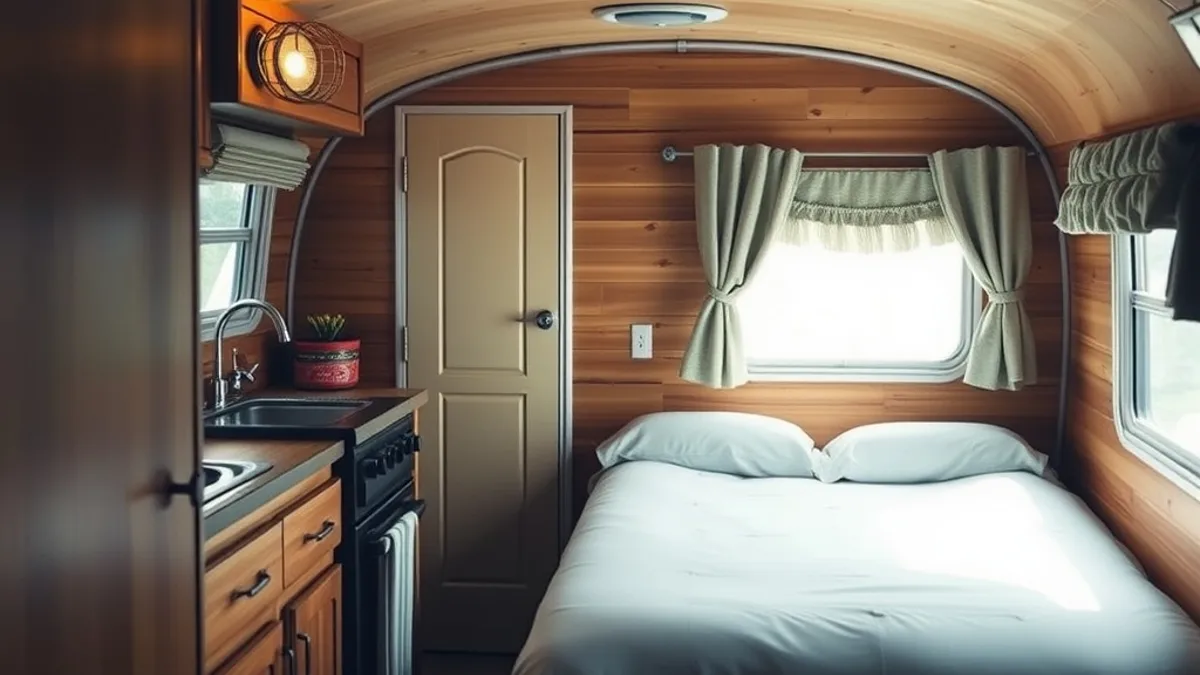
The interiors have usually been upgraded well beyond what the original builders imagined. Expect real beds with proper mattresses, heating or air conditioning, electrical outlets for charging devices, and often a small kitchenette with a two-burner stove and a compact fridge. Lighting, insulation, and finishes vary by operator, but the goal is hotel-like comfort inside a trailer shell.
How this differs from renting an RV
With an RV rental, you drive, park, connect hookups, and empty waste tanks yourself. Trailer glamping removes all of that. There is no vehicle to operate, no water hoses, no gray-water dumping, and no campground maneuvering. The host handles the infrastructure; you handle the vacation.
Sizes range from compact 16-foot caravans suited to couples up to 28-foot Airstreams with roughly 120 to 200 square feet of usable space. That sounds small, but a well-designed layout with storage and a dining nook can comfortably host two people for several nights.
Where Trailer Glamping Works Best: Landscapes and Regions
Location shapes the whole experience of a trailer stay. The same Airstream feels completely different under desert stars than it does on a windy bluff above the ocean, so it pays to match the setting to what you want from the trip.
Deserts, coasts, and countryside
Desert settings like Joshua Tree, Moab, and Marfa are the classic choice for Airstreams. The dry climate suits the aluminum shells, rain rarely disrupts plans, and the stargazing after dark is often spectacular. Coastal and lakeside sites add water views and morning swims, but they frequently come with higher rates and stronger winds that can rattle the trailer at night.
European vineyard and farm stays offer a slower rhythm, with trailers set among olive groves, pastures, or rows of vines. Mountain and national park gateways deliver the biggest scenery of all, though they also demand the longest booking lead times. For a sense of what a well-sited glamping operation looks like near dramatic water and canyon country, this review of a glamping stay near Lake Powell gives a useful picture of how location drives the experience.
Whichever region you choose, think about what you will actually do each day. A trailer is a cozy base, not a destination in itself, so the surrounding landscape matters more than the trailer’s Instagram appeal.
How Booking Works: Timing, Rates and Minimum Stays
Booking a trailer stay is straightforward once you understand the rhythm of pricing and availability. Unlike a hotel room, where rates shift mainly by room category, glamping prices move with the calendar and the landscape. The same trailer model can cost noticeably more on a clifftop or beside a lake than in a quiet inland field, and weekends behave very differently from midweek dates. Plan around the calendar first, then compare individual listings. A few practical habits make the process smoother: check the total price rather than the headline rate, confirm arrival logistics before you pay, and keep a shortlist of two or three sites in case your first choice is already taken. The four steps below walk you through the whole booking in order, from setting a realistic budget to messaging your host with the right questions before departure.
- Set your budget. Nightly rates typically run $90 to $300 depending on the trailer’s age, size, and location. A compact vintage caravan in a quiet field sits at the low end; a large Airstream near a famous park sits at the top.
- Book early for peak dates. For summer weekends, reserve 2 to 6 months ahead. For stays near national parks, start looking 3 to 12 months out, since demand there outstrips supply quickly.
- Play with your dates. Expect 2-night minimums on weekends and holidays. Weekdays are easier to book and often cheaper, so a midweek stay stretches the same budget further.
- Read the total price before paying. Cleaning fees and pet fees are frequently added on top of the nightly rate, and they can shift which listing is the better deal.
For a look at how a European lakeside glamping site handles stays and pricing in practice, this review of a glamping site in Castel Volturno, Italy shows what a booked stay actually involves. Once the reservation is confirmed, message the host with any questions about access, parking, and arrival windows before you travel. Ask specifically about road conditions for the final stretch, since some sites sit down gravel tracks that feel longer at night, and confirm where you should park relative to your trailer. If you are traveling in shoulder season, a quick question about heating and insulation can save you from a cold surprise. Hosts usually reply within a day or two, and their answers often reveal whether a site is well run. Finally, screenshot your confirmation and the host’s directions before departure: cell coverage at rural trailer sites can be patchy, and offline details make check-in far less stressful when you arrive after dark.
Inside the Trailer: Layout, Amenities and Comfort
Step inside a glamping trailer and the first thing you notice is how carefully the space is used. Most units sleep 2 to 4 guests, with a few family models handling up to 6, usually through a fixed double bed plus a converted dinette or bunk nook. Ceiling height tapers at the ends of the trailer, so the tallest guests typically sleep in the center.
Nearly every operator includes the essentials, so you can arrive with just a duffel bag. The exact mix varies by site, but you can usually count on the following:
- Bedding and towels: real mattresses with hotel-style linens, plus extra blankets for cool nights rather than thin sleeping bags.
- Kitchen basics: a two-burner stove or induction plate, pots, plates, cutlery and a small fridge, enough to cook simple meals without bringing your own gear.
- Coffee setup: a French press, moka pot or pod machine with coffee supplied, since morning brew is treated as part of the experience.
- Climate control: a heater, and in many modern Airstreams air conditioning, often with a thermostat rather than just a portable unit.
Bathrooms depend on trailer size. Larger units have en-suite toilets and showers, while smaller vintage caravans rely on private or shared facilities a short walk away. To see how one host handles the shared setup, this review of a glamping stay in Combe Martin, United Kingdom describes the arrangement in detail. Finally, if you are traveling in shoulder season, ask the host about insulation and heating before booking; restored vintage trailers vary widely, and some warm up quickly while others stay chilly until the heater runs all night.
A Day at a Trailer Glamping Site: What to Expect
Arrival at most trailer glamping sites is refreshingly low-key. Check-in usually runs from mid-afternoon to early evening, and instead of a front desk you will either get a lockbox code or a short greeting from the host who shows you where everything is. Some hosts text you the details a day ahead and only appear if you need them.
Mornings follow a rhythm that has nothing in common with a hotel. There is no breakfast buffet or housekeeping knock; instead, you make coffee in the trailer’s little kitchenette and drink it outside while the site slowly wakes up. Many guests spend an hour doing nothing more than sitting by the campfire area with a cup in hand.
Evenings around the fire
Once the sun drops, the fire pit becomes the center of social life. Most sites provide BBQ grills or firewood, and the darker surroundings make stargazing a genuine highlight, especially in desert locations. Some operators go further and organize communal dinners or live music on certain nights, which is an easy way to meet fellow travelers.
One thing to keep in mind: at busier sites, trailers sit close together, and quiet-hours rules are enforced. Sound carries in a small site, so expect the atmosphere to wind down early rather than turn into a party.
Packing and Practical Tips for a Trailer Stay
Packing for a trailer stay is closer to packing for a cabin than for camping, but the tight quarters change a few habits. Most trailers offer only 120 to 200 square feet of usable space, and storage is limited to a few shelves and the area under the bed. Space is genuinely limited, and temperatures swing more than newcomers expect: afternoons can be warm while mornings and nights turn cool, even during peak season from May to September. Layers are your friend, and slip-on shoes save you from lacing up every time you step in and out of the trailer. Pack for two to four people max in most units, and keep bulky gear in the car rather than inside.
Darkness is part of the appeal, but it takes adjustment. Most sites deliberately keep path lighting to a minimum, so a trip to the bathroom or the fire pit after sunset means relying on your own light source. Bring it with you everywhere, even for a short walk.
- A headlamp over a flashlight: it keeps both hands free for unlocking gates, carrying firewood or finding the bathroom path, and a spare set of batteries is cheap insurance.
- Soft-sided duffel bags: hard suitcases struggle with narrow trailer doorways and limited storage; duffels flatten out and slide under the bed.
- Offline maps downloaded in advance: many trailer sites sit outside strong cell signal zones, so load your route and the site’s directions before you lose service.
- A quick coverage check: message the host about which carrier works on site, and tell anyone who might need to reach you.
With those small adjustments, a trailer stay feels effortless. Since bedding, towels and kitchen basics are usually provided, you bring far less than a camping trip requires, yet everything you need is within arm’s reach.
Is Airstream and Trailer Glamping Right for You?
So what does a trailer glamping stay actually involve day to day? In practice, it blends hotel comfort with camping atmosphere: you sleep in a real bed, get climate control and kitchen basics, and skip every towing, hookup and waste-tank task that comes with an RV. Pricing usually lands between a budget motel and a small hotel in most regions, though it shifts with the trailer’s age, size and setting, so compare a few listings before you commit.
The format works best for couples and small families rather than large groups, simply because space inside is compact and thoughtfully arranged rather than roomy. Just keep the realities covered above in mind: tight layouts, deliberately dark sites and cooler nights once the sun drops. If that sounds like your kind of trip, leave a comment or share this article with a friend who needs a nudge.