Glamping for couples promises candlelit dinners under canvas and stargazing from a private deck — but the reality often falls short. Many couples book a stay hoping for romance and end up on a shared campsite, wedged between family tents, listening to a neighboring party until midnight. The difference between a magical escape and a disappointing weekend usually comes down to one thing: the setting you choose before you ever pack a bag.
This guide walks you through the decisions that matter. We start with what actually makes a glamping setting romantic, from privacy and spacing to the scenery that does the heavy lifting. Then we compare stay types for two, help you pick the right season and location, break down what romantic glamping really costs, and explain when and how to book. Finally, you’ll find the questions worth asking a host before you commit — so the tent you see in the photos is the quiet, private retreat you actually get.
What Makes a Glamping Setting Romantic
Ask any couple who has had a bad glamping trip what went wrong, and the answer is almost never the tent. It’s the setting. Romance in glamping rests on three pillars: privacy, scenery and the size of the site itself. Get these right and even a simple canvas tent feels special. Get them wrong and no amount of fairy lights will save the evening.
Privacy comes first
Privacy is the core factor, and it’s worth scrutinizing before you book. The best couple-focused sites offer genuinely separate units with generous spacing between tents, so you never hear a neighbor’s conversation or alarm. Just as important is what the site doesn’t have: no shared party zones, no bar with music spilling late into the night, no communal bonfire crowds. A unit might look secluded in photos while actually sitting ten meters from a playground or the site’s social hub — always check the layout.
Let the scenery do the work
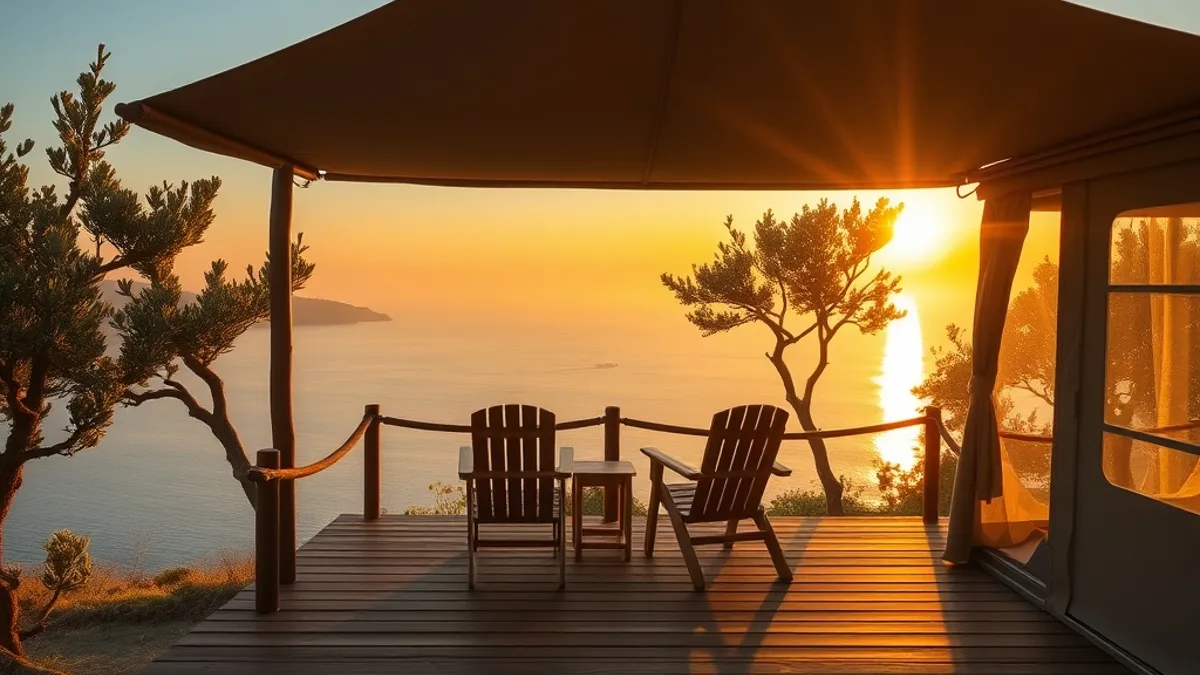
Natural scenery is what turns a night outdoors into a memory. Lakes, coastlines, vineyards and forest edges all beat generic open fields, because they give you something to look at from bed, from the deck and over morning coffee. A dome facing a valley or a tent on a lake shoreline needs little decoration; the view is the romance. A tent in a flat paddock, however stylish, leaves you staring at a fence.
Site size ties it all together. Small sites with 10 units or fewer keep noise down and evenings calm for two. With fewer guests, there’s less foot traffic past your tent, quieter mornings and a genuine sense of having the place almost to yourselves.
Choosing the Right Stay Type for Two
Once you know what makes a setting romantic, the next decision is the type of unit itself. Domes and safari tents are the classic choices for couples who want stargazing and panoramic views — domes often have transparent panels above the bed, while safari tents usually come with wide decks facing the scenery. Treehouses add another layer of seclusion, lifting you above the ground and away from sightlines, though that privacy typically comes at a higher price.
Whichever style appeals to you, check whether the unit is truly standalone. Some listings show a beautiful tent but place it in a row of identical tents on a regular campsite, which erases most of the privacy you were paying for. Look at the site map or ask the host directly how far the nearest neighbor is.
Comfort levels also separate a premium romantic stay from a basic one. A private bathroom — en suite or within 50 meters of your unit — is the single biggest divider. Trudging across a dark campsite to shared facilities at midnight is not romantic, so make this a non-negotiable in your search.
- Transparent domes: ideal for stargazing from bed, but ask whether the panels have blinds or curtains if you want darkness for sleeping.
- Safari tents: usually the most spacious option for two, often with real furniture and a covered porch for slow mornings.
- Treehouses: maximum seclusion and often the most memorable setting, but expect to pay more and check how stairs and access suit you both.
For a real-world example of how this plays out, our Selina Gerês review shows what glamping in Terras de Bouro, Portugal looks like in practice — a standalone unit set in a forested landscape, exactly the kind of placement that keeps evenings quiet for two.
Picking the Season and Location
Timing shapes the atmosphere of a romantic glamping trip as much as the location does. In Europe, June to September is peak season: the weather is most reliable, but small sites fill up fast and you’ll share the surroundings with more neighbors. If a quieter experience matters more to you than sunshine you can count on, the shoulder months are the sweet spot. May and late September offer mild weather with noticeably fewer people around, so evenings stay calm and mornings feel like your own.
Choose a location that works for two
For couples, convenience adds to the romance rather than detracting from it. Coastal and lake settings within 30 km of a scenic town make day trips easy — a morning walk, an afternoon in town for lunch or wine, and back to your tent before dark. A stunning but isolated site can feel romantic on paper, yet if every dinner requires a long drive, the trip becomes logistics instead of relaxation. Check what’s genuinely nearby before booking, not just what the listing highlights.
Match the climate to the mood you want
Think about the experience you’re actually after. Warm sea nights with open windows and the sound of waves suit couples who want a soft, summery escape. Crisp autumn forest evenings, with a fire pit and thick blankets, suit those who prefer coziness and atmosphere over heat. Neither is better — but booking a summer-style tent in a cold month, or a sealed dome in a heatwave, will work against you. Match the climate to the experience, and the setting will do the rest. If a slow, lakeside rhythm appeals to you, our look at lake glamping in Poland’s Masurian Lake District shows how water and quiet combine for exactly that kind of stay.
Budgeting: What Romantic Glamping Really Costs
Romantic glamping sits in a middle price band: a private unit for two typically runs €120-€300 per night in Europe, or $150-$400 in the US. That is well above a regular campsite pitch, but far below what a boutique hotel charges for the same amount of seclusion. What you are paying for is the stand-alone setting, the space between you and the next couple, and usually the view from your bed.
Where the extras fit in
Most sites offer romantic add-ons, and these are where budgets quietly grow. A wood-fired hot tub, a private fire pit setup or breakfast delivered to your tent typically adds €20-€60 on top of the nightly rate. These add-ons are popular for good reason — a soak under the stars or coffee at your doorstep often becomes the memory of the trip. If you want a sense of what one of these stays actually feels like on the ground, a detailed review of a lakeside glamping retreat in Italy shows what the extras delivered in practice.
The smartest budgeting move is deciding early which extras genuinely matter to you as a couple. One splurge on a private hot tub usually beats several small upgrades that spread your spending thin. If mornings are your thing, put the money toward breakfast delivery instead. Pick one or two treats, skip the rest, and your total stays close to the base rate without sacrificing the romance.
When and How to Book
Small, couple-focused sites have very little inventory, so timing your booking matters more than it does for hotels. A site with just a handful of units can sell out its best tents months before summer arrives. The most private units, the ones furthest from neighbors and closest to the best view, are always the first to go. The good news is that the booking process itself is simple if you follow a few practical steps and stay organized.
- Pick your dates and season first. If you are set on a summer stay at a small site, plan on reserving 3-6 months ahead. Decide before you search which extras you actually want, because locking in the wrong dates is the most common mistake couples make with these stays.
- Consider the shoulder season for flexibility. Stays in May or late September can typically be booked 4-8 weeks out. You will often find better rates, a wider choice of units, and fewer neighbors around you.
- Message the host before paying. Ask directly about unit placement, how close the nearest neighbor sits, and whether any groups or events are expected during your dates. A host who answers clearly and promptly is a good sign of how the stay will be managed on site.
- Confirm your extras at booking time. If a hot tub, fire pit, or breakfast delivery matters to you, request it when you reserve rather than on arrival. These add-ons often carry a small extra fee, and availability can be limited.
Once your dates and unit are confirmed, put the host’s contact details somewhere handy and save the booking confirmation offline, since signal can be weak at rural sites. A quick follow-up message a week before arrival about your arrival time and any weather-related notes makes check-in smooth. It also gives you time to sort out practicalities like packing layers or planning the drive, so the trip starts on the right foot from the moment you arrive.
Questions to Ask Before You Commit
Glamping units vary enormously in how well they handle real conditions, and a tent that feels magical on a warm summer evening can feel miserable on a cold, wet night. Unlike a hotel room, most units sit outdoors with limited insulation, thin walls and heating that may or may not exist. Before you commit to a booking, take a few minutes to ask the host specific questions. The answers tell you both whether the stay suits your trip and how professionally the site is run.
- Is the unit heated or insulated for your travel season? A dome that is comfortable in August may not have heating at all. If you are traveling in spring or autumn, ask what the nighttime temperature inside the unit typically feels like, whether there is a heater or wood stove, and whether extra bedding and blankets are provided. Hosts who take cold nights seriously will usually say so without prompting.
- How close are meals and restaurants? Ask whether breakfast is available on site or delivered to your unit, whether there is a restaurant within walking distance, or whether you will need to drive to the nearest town for dinner. On a romantic trip, discovering the nearest food is a 30-minute drive away after a long travel day is a frustrating surprise. Also ask about kitchen facilities if you plan to cook.
- What is the cancellation policy? An outdoor-focused trip depends heavily on weather, so ask what happens if conditions turn against you. Find out whether you can reschedule, get a partial refund or transfer your dates — policies differ widely between small independent sites, and some offer more flexibility than large booking platforms suggest.
Asking these questions also gives you a feel for the host. Someone who answers honestly about heating, dining options and cancellations is far more likely to deliver the stay they advertised. If answers are vague or evasive before you pay, treat that as useful information and keep looking.
Wrapping Up Your Romantic Glamping Plan
Romance in glamping comes from three things: privacy, scenery and a small site — not from the price tag alone. If you want a quiet evening for two, look for standalone units on sites with 10 units or fewer, set against a lake, coast, vineyard or forest edge. That combination is what separates a truly intimate escape from a tent row on a busy campsite with noise and neighbors all around.
Once you know what to look for, the plan is simple. Lock in your season, set a realistic nightly budget for a private unit for two, and reserve well ahead for summer dates at small couple-focused sites. Then ask the host the right questions about heating, facilities and cancellation before you pay. Get those details right, and one well-chosen dome or tent becomes an unforgettable couples escape. Have a favorite romantic glamping spot or a tip of your own? Share it in the comments or pass this article along.