Picture this: you book a remote lodge hoping for a brilliant night sky, only to arrive and find the glow of a nearby town washing out all but the brightest stars. It’s a frustratingly common problem, and one that a little research can prevent. Choosing the right lodge with stargazing in mind isn’t just about picking a pretty location on a map—it’s about understanding light pollution, moon phases, and the features that turn an ordinary stay into an unforgettable night under the stars.
This guide walks you through the whole process, step by step. We’ll cover why dark skies matter in the first place, how to check light pollution levels before you book, and which seasons and moon phases give you the best odds of clear, star-filled nights. You’ll also learn what lodge features make or break a stargazing experience, where to find dark sky properties around the world, and what booking tips and realistic costs to expect. By the end, you’ll know exactly how to pick a lodge that delivers on its promise of darkness.
Why Dark Skies Matter When Choosing a Lodge With Stargazing
If you’ve ever stepped outside at a lodge that promised “unforgettable stargazing” only to see a handful of stars and a glow on the horizon, you’ve experienced light pollution firsthand. Even lodges that feel remote can sit within the reach of a distant town’s lights. That faint dome of light on the horizon is enough to wash out the Milky Way, dim faint constellations and leave you wondering why the photos on the website looked so different from your own night sky.
This is where the Bortle scale comes in handy. It ranks sky darkness from Class 1, the darkest skies on Earth, down to Class 9, inner-city conditions. A lodge under Bortle Class 1-2 skies delivers near-pristine darkness, where the Milky Way casts a faint shadow and star clusters pop out without any equipment. By Class 4 or higher, you’ll notice obvious skyglow from surrounding development, and the difference from a suburban backyard starts to shrink fast.
Why certified dark-sky destinations win
The most reliable stargazing stays sit inside genuinely protected dark areas. Certified dark sky reserves, national parks and other officially recognized dark-sky destinations have strict rules about outdoor lighting, which means the darkness you drive into is the darkness you keep. A lodge in one of these areas can still have a bad night if clouds roll in, but you won’t lose the stars to a neighboring town’s parking lot lights. When a lodge advertises its location within or beside one of these protected zones, that’s a stronger signal than any marketing phrase about “million-star skies.”
How to Check Light Pollution Before You Book
Before you fall in love with lodge photos of glowing tents under a Milky Way sky, spend ten minutes verifying that the darkness is real. Light pollution maps and satellite imagery are free, easy to use, and far more honest than marketing shots. Here is how to check a property’s sky quality before you commit.
- Find the lodge on a light pollution map. Free online maps overlay Bortle classes on an interactive world map. Zoom in until you can see the lodge’s exact location, not just the general region. You want the pin to sit firmly in a Bortle Class 1-2 zone, which offers near-pristine darkness. If it lands near the edge of a Class 3 area, check the surrounding terrain for towns or highways that could push it into Class 4 or higher, where a visible glow dulls the sky.
- Measure the distance to the nearest big city. Even a city 40 or 50 miles away can throw a dome of light across the horizon. As a rule of thumb, look for lodges at least 60 miles (100 km) from any city of 100,000 or more people. Most light pollution maps show town locations, so this takes only a moment. In remote regions, also check for smaller but brightly lit sources such as ski resorts, mines, or a string of highway towns upwind of your view.
- Inspect satellite photos for the property itself. Switch to the satellite view on a mapping service and look at the lodge grounds. Large bright patches in the parking lot, along pathways, or around the main building often mean floodlights that stay on all night. Then read the lodge’s own website and look for language about shielded, low-level, or downward-facing outdoor lighting. Properties that care about dark skies usually say so plainly; if lighting is never mentioned, email and ask before booking.
Doing this homework takes minutes, and it saves you from the most common disappointment in stargazing travel: arriving at a “remote” lodge that turns out to sit under a hazy orange glow. A few checks on a map tell you more about sky quality than any photo gallery ever will.
Best Seasons and Moon Phases for Stargazing Stays
The single biggest factor in planning a stargazing stay is the moon. A full moon acts like a giant floodlight, washing out faint stars and the Milky Way completely. Aim for the days around the new moon, which gives you roughly 10 nights per month of properly dark skies. When you have a shortlist of lodges, check the moon phase calendar for your travel dates before committing. A few nights either side of the new moon still work well, but a stay centered on a full moon will disappoint.
Timing Your Trip by Season
In the Northern Hemisphere, the best stargazing season runs roughly September to March. Winter nights at mid-latitudes offer 8-10 hours of astronomical darkness, which means you can enjoy dinner, step outside, and still have hours of viewing ahead of you. The trade-off is cold: pack serious layers, hand warmers and a thermos, and look for lodges with outdoor fire pits or hot tubs so you can stay comfortable while you watch.
Summer brings milder temperatures, which makes it tempting, but nights are short. At mid-latitudes you may only get a handful of truly dark hours, and the Milky Way’s core does appear higher and brighter in summer. If a June trip is your goal, prioritize lodges that sit far north, where nights stay darker for longer. Otherwise, a shoulder-season visit in late September or early October often gives you the best combination of dark hours and manageable temperatures.
Lodge Features That Make or Break a Stargazing Night
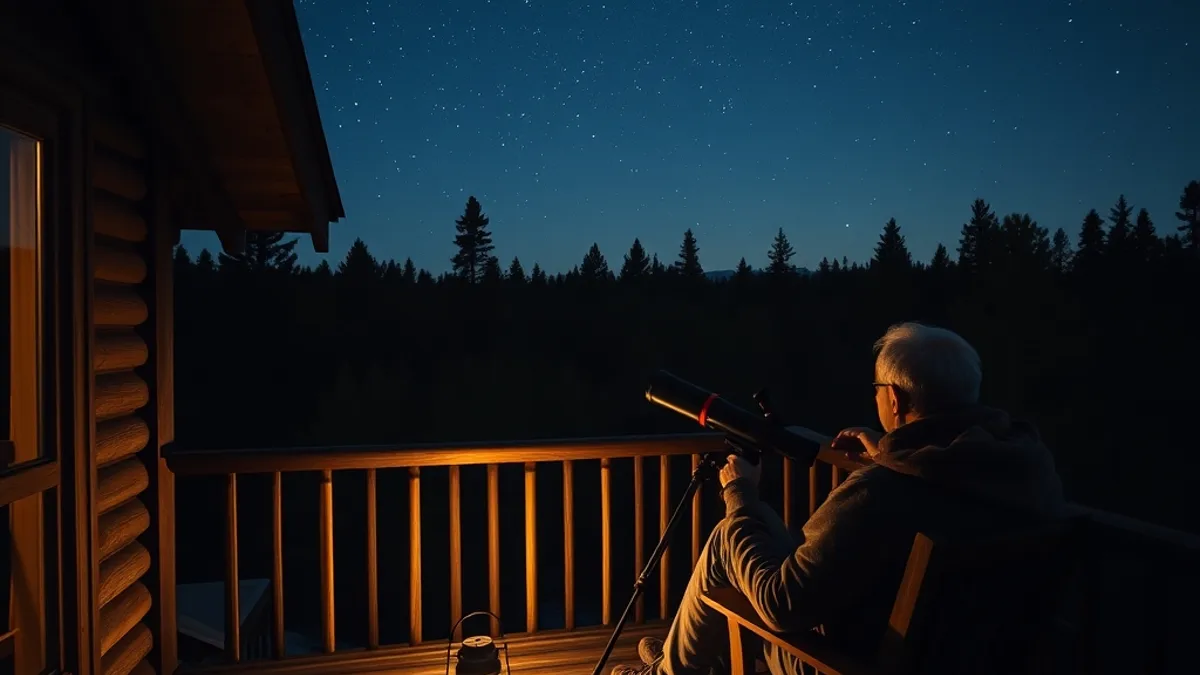
The difference between a good stargazing trip and a great one often comes down to what the lodge itself offers. A bed facing a skylight means you can fall asleep counting constellations, while a stargazing deck with loungers lets you settle in for a long session without craning your neck from the ground. Some properties go further and keep telescopes on site, sometimes with staff who can point out planets and deep-sky objects. Others provide star charts, blankets and even thermoses of hot drinks for guests who want to observe comfortably for a couple of hours.
Beyond the fun extras, pay attention to how the property manages its own lighting. A single floodlight left burning all night can ruin the view from your deck, so it is fair to ask questions before you book. Good dark-sky lodges are usually proud of their lighting policy and will answer in detail. If a reservation team seems vague about exterior lighting or dismissive of the question, treat that as a warning sign and look elsewhere.
- Skylights above the bed — ideal for watching the sky from under the covers on cold nights, especially in winter when astronomical darkness stretches to 8-10 hours at mid-latitudes.
- Hot tubs positioned with open sky views — a warm soak turns a chilly stargazing session into something you can happily stretch over an hour or more.
- Dimmed exterior lights after a set hour — ask what time the property switches to low-level lighting and whether paths stay safely marked without bright glare.
- Red-light flashlights provided — red light preserves your dark adaptation, which takes roughly half an hour to build and seconds to lose under white light.
- On-site dining — at genuinely remote lodges, dinner at the property means nobody has to drive unlit country roads back from a restaurant after dark.
Where to Find Dark Sky Lodges Around the World
The United States national parks are a natural starting point. Parks across the Southwest and the mountain West sit in some of the darkest skies in the country, and the small gateway towns around them have embraced low-light tourism. Lodges inside or near these parks often pair dark skies with daytime hiking, which makes the long drive out worthwhile.
High altitude helps in the Alps
Alpine valleys in Switzerland and the Dolomites combine two advantages at once: high elevation above much of the atmosphere’s haze and very little nearby development. Mountain lodges here often sit far above valley towns, so even when a village glows below, the sky overhead can stay remarkably clear. The trade-off is that nights can be cold, so check whether the lodge offers heated viewing areas or warm rooms with skylights.
Highlands and mountain Japan
The Scottish Highlands offer a different flavor of dark-sky stay, with lodges that lean into turf-roofed cabins, whisky by the fire and long winter nights. In Japan, mountain regions such as the areas around the Japanese Alps have developed their own lodge culture, blending dark skies with hot-spring bathing — stargazing from an outdoor bath is an experience hard to beat. Both regions reward travelers who want atmosphere and tradition alongside the astronomy, and both are best visited in the roughly September-to-March window when nights are longest.
Booking Tips and Realistic Costs for Dark Sky Lodges
Remote dark-sky lodges tend to have far fewer rooms than mainstream hotels, so availability disappears quickly when demand peaks. For summer dates and holiday periods, aim to book 3-6 months ahead. If you are flexible and can travel on shoulder dates, you will often find both openings and quieter skies — midweek stays, in particular, are easier to land and sometimes come with friendlier rates.
On price, expect nightly rates at true dark-sky properties to run roughly $150 to $400. The upper end usually reflects lodges with telescopes, guided astronomy sessions or particularly remote locations that cost more to operate — think diesel generators, staff housing and food hauled in over long distances. Budget properties in dark-sky regions exist too, but they may lack the sky-facing amenities that make these trips special, so weigh what you are actually paying for before assuming a cheaper room is a bargain.
It also pays to compare several lodges in the same region rather than fixating on one. If your first choice is full, a nearby property under equally dark skies can deliver nearly the same experience, and smaller lodges sometimes respond faster to direct inquiries than booking platforms do.
- Read the cancellation policy line by line — some remote lodges require deposits well in advance or have stricter terms than city hotels, since filling a canceled room in the countryside is harder.
- Ask about date changes, not just cancellations — if clouds roll in or you realize your dates clash with a bright moon, the ability to shift your stay by a few nights can save the trip.
- Time your booking to the moon calendar — new moon windows give roughly 10 nights per month of properly dark skies, and those specific dates sell out first at popular lodges.
- Confirm what is included — telescope access, guided night walks and meals may or may not be part of the rate, and at remote lodges you cannot simply drive out for dinner.
Wrapping Up Your Dark Sky Lodge Search
The disappointment of arriving at a “remote” lodge only to see a glow on the horizon is easy to avoid with a little homework. A great stargazing lodge combines Bortle Class 1-2 skies, thoughtful lighting and sky-facing amenities, so check all three before you commit. If the property sits far from large cities and dims its exterior lights at night, the Milky Way should be yours to enjoy.
Timing matters just as much as location. Plan your stay around the new moon, when you get roughly 10 dark nights per month, and aim for the September-to-March season in the Northern Hemisphere to maximize your hours of darkness. Finally, book 3-6 months ahead for popular dates and budget $150 to $400 per night to secure the best remote options. Have you found a lodge with unforgettable skies? Share your experience or questions in the comments below.