Booking a lodge for a multi-generational family trip can feel impossible at first. Grandparents want a comfortable, accessible base, parents want logistics that run smoothly, and kids just want somewhere to burn off energy. One standard hotel room block rarely keeps all three generations happy, and the wrong choice shows up fast once you are all under the same roof.
The good news is that a few specific checks separate a lodge that works from one that doesn’t. This guide walks through why lodges suit mixed-age groups in the first place, which room configurations actually fit families, how to weigh location and accessibility, and what activities keep ages 5 to 75 engaged. We’ll also cover a realistic budgeting and booking timeline, the exact questions to ask before you pay a deposit, and final tips for picking the right lodge. Get these details right before reserving, and the trip becomes far easier to plan.
Why Choosing a Lodge for a Multi-Generational Family Trip Is Different
A multi-generational group typically brings together 6 to 16 travelers across three generations, and each generation arrives with a different wish list. Grandparents usually care most about comfort and accessibility: a quiet room, a comfortable bed, and short walks to meals. Parents juggle everything at once, so convenience is their priority, from easy parking to meals that don’t require a 20-minute drive. Kids, meanwhile, simply need space to play, ideally outdoors, without anyone shushing them.
Why a standard hotel block falls short
Book a row of identical standard rooms and you get a row of identical problems. There is nowhere for the whole group to gather without crowding into one cramped room, and adults sharing a unit end up negotiating sofa beds. Lodges solve the shared-space problem differently, offering family suites, connecting rooms, and private cabins designed for groups rather than couples. That flexibility is exactly what a 6-to-16-person group needs.
Communal areas do the real work
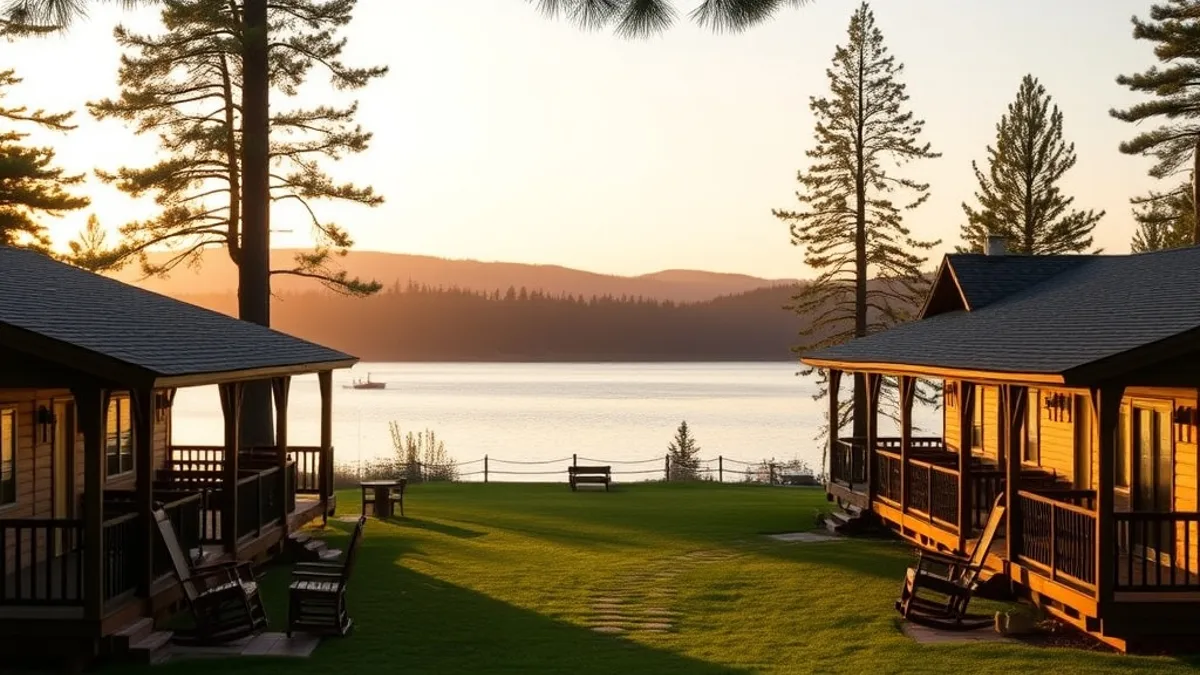
What makes a lodge genuinely suited to multi-generational groups is the layout of shared spaces. Great rooms, covered porches, and fire pits create natural gathering points, so the whole family can drift together in the evening without anyone organizing a formal event. Grandparents can sit by the fire, kids can roam a short distance away, and parents can actually finish a conversation. When comparing lodges, look at photos of the communal areas as closely as the bedrooms, because that is where most of your trip will actually happen.
Room Configurations That Fit All Generations
Room configuration is the single biggest decision you’ll make, and it deserves more scrutiny than anything else in the booking. Start by matching the unit type to your group. Connecting rooms and family suites commonly sleep 4 to 6 people, which works well for one nuclear family per unit. If you want separate kitchens and true independence, private cabins sleeping 6 to 10 are the better fit, especially for larger groups that plan to cook breakfast together.
Accessibility needs to be confirmed, not assumed. If any grandparent has limited mobility, ask specifically for at least one ground-floor room or confirm the building has elevator access, and get that confirmation in your booking notes. Also ask how far the accessible unit sits from the dining area and parking, because a “ground-floor room” across a gravel slope helps no one.
Details to confirm in writing
Verbal assurances have a way of evaporating by check-in. Before you pay a deposit, put these specifics in an email and ask the lodge to confirm them:
- Bed types per unit: Two queens beat one king plus a sofa bed when adult siblings share a unit, so ask for the exact configuration rather than “sleeps 6.”
- Crib and high chair policy: Ask whether cribs, rollaway beds, and high chairs are provided free or rented, and reserve them in advance since stock is often limited.
- Unit locations: Request that connecting rooms or cabins sit in the same building or cluster, with a note added to your reservation.
- Sofa bed quality: If a sofa bed is part of the sleeping count, ask whether it’s a proper sleeper sofa or a thin pull-out, since a teenager on a bad mattress can affect the whole mood.
Getting these answers in writing takes ten minutes and prevents the most common check-in disappointments.
Location and Accessibility for Mixed Ages
Location matters differently for a multi-generational group than for a couple or a group of friends. Aim for a lodge within a 2-hour drive of a major airport, which keeps the arrival day manageable for older relatives and lets you skip long, winding transfers that turn into motion-sickness complaints before you’ve even unpacked. A shorter transfer also means you can arrive, settle in, and still enjoy the first evening together instead of feeding everyone a gas-station dinner.
The remoteness trade-off
National park lodges trade remoteness for scenery, and that trade can be worth it, but only if you verify the details on the ground. Ask specifically about paved paths between rooms, dining, and parking, and whether the lodge operates a shuttle around the property. Gravel paths and steep walkways that seem charming on a website become genuine obstacles for travelers over 70, especially in rain or snow. If the lodge sits inside a park, also check how far the nearest town is for supplies and medical care, since a scraped knee or a forgotten medication shouldn’t mean a two-hour round trip.
On-site dining beats nearby restaurants
When you’re traveling with toddlers and elderly relatives, on-site dining matters far more than a list of good restaurants in town. After a full day of activities, nobody wants to load everyone back into cars and drive somewhere in the dark, manage a stroller through a parking lot, and wait for a table with a hungry three-year-old. A lodge restaurant or a reliable room-service-style option means dinner happens in ten minutes, grandparents can turn in early, and parents don’t have to coordinate a convoy. Look at the menu before booking too, since even a great on-site restaurant wears thin after four nights if the options are limited.
Activities That Work for Ages 5 to 75
The best multi-generational lodges offer a menu of activities rather than a single signature experience. When your group spans three generations, a morning that starts with a strenuous ridge hike needs to also include something a grandparent or a five-year-old can enjoy without sitting it out entirely. Ask for a full activity schedule before you book, not just the highlights on the website’s front page. A lodge that looks perfect in photos can still fall flat if the only daily offerings are a single guided walk and a pool table.
The ideal setup layers options by effort level. A guided nature walk on a flat loop trail, a slow boat tour or a heated pool gives less mobile travelers and young kids a genuine experience, while the stronger hikers in the family take on longer trails and meet everyone back at the lodge for lunch. Lodges that run activities in two or three tiers on the same day make this easy to coordinate, since you can split up after breakfast and swap stories over dinner without anyone feeling left out of the day.
- Kids’ clubs or supervised game rooms let parents join the harder hikes or an evening activity without arranging their own childcare; ask what ages the programming covers and whether it runs daily or only on weekends.
- Spas, saunas and quiet lounges give the older generation a retreat during the loud afternoon hours; check whether treatments need to be reserved well in advance for a group.
- At lake lodges, summer is the sweet season: swimming, paddling and fishing all work for mixed ages, so confirm which water activities are included versus rented.
- At ski lodges, look for beginner slopes served by their own lift and an on-site ski school, so first-timers and young children are not bused to another mountain for lessons.
Budgeting and Booking Timeline
Multi-generational trips are rarely cheap, but the costs are predictable if you plan around how lodges actually sell their rooms. Family-sized units are the scarcest inventory at any lodge, and they disappear first during school holidays. A realistic starting point is $250-600 per night for a family suite at a mid-range lodge, with private cabins running higher depending on size and amenities. Remember that a group of 6-16 travelers across three generations is effectively booking multiple units at once, so small per-night differences multiply quickly across the whole stay.
- Set a total trip budget with the whole family early, so everyone agrees on the room standard before anyone falls in love with a specific lodge. Decide whether meals, activities and gratuities are shared or paid individually.
- Book 6-12 months ahead for June-August stays and holiday weeks. Family suites and connecting rooms that sleep larger groups typically sell out long before standard doubles do.
- Target shoulder-season dates in May or September-October if your group’s schedule allows it. These months often cut lodge rates 20-40% compared with peak summer, and trails, pools and dining rooms are noticeably less crowded.
- Ask about group minimums before you commit. Some lodges require a 2-3 night minimum stay for multi-room bookings, especially during holidays, which affects both your dates and your total cost.
- Get the deposit and payment schedule in writing, including how much is due per room and when, since several households may be paying separately.
Build in a small buffer for extras that only appear at check-in: rollaway bed fees, activity rentals and service charges. Confirming these in advance keeps the final bill from surprising anyone in the group. It also helps to nominate one person as the payment coordinator, so individual households know exactly what they owe and when. If your group spans tight budgets, consider mixing room types — one family suite for the grandparents and parents, simpler rooms for adult siblings — rather than forcing everyone into the same price bracket. A little transparency about money early on prevents the awkward conversations that can otherwise follow a group trip home.
Questions to Ask Before You Commit
By the time you are ready to book, you have compared room configurations, locations, activities and prices. The last step is a short list of direct questions to the lodge, because the answers reveal things websites gloss over. Get responses in writing, ideally by email, so you have something to refer to if a detail changes between booking and arrival. A short email also gives the lodge a chance to assign someone to your booking, which helps when you arrive with a large group and need quick answers at the front desk.
Three questions matter most for multi-generational groups, and how a lodge answers them tells you a lot about how it handles families:
- Can the lodge guarantee adjacent rooms in the same building, not just “nearby” units? A vague answer here can mean grandparents in one wing and grandchildren in another, which defeats the purpose of traveling together. Ask them to note the room assignment in your confirmation.
- Is there a communal space large enough for the whole group to dine together one night? For groups of 6 to 16 travelers, ask whether the dining room takes large-party reservations or whether a private room can be reserved.
- What is the cancellation policy if part of the family drops out? Ask whether one household can cancel its rooms without forfeiting the group’s rate, and whether deposits are transferable between family members’ rooms.
If a lodge hesitates on all three, treat it as a signal. Lodges that regularly host extended families answer these questions quickly and specifically, and their staff will usually volunteer details you did not ask for. That confidence is a good sign your group will be in experienced hands.
Final Thoughts on Picking the Right Lodge
Reserving one property that keeps grandparents, parents and kids equally happy feels impossible until you know exactly what to check before paying. The difference comes down to preparation: the right lodge balances room configuration, accessibility, shared activities and a realistic budget. Get those four elements lined up, and a group of 6 to 16 travelers stops feeling like a logistics headache and starts feeling like a vacation.
The practical steps matter too. Booking early, targeting shoulder seasons and asking specific questions before you commit secures a trip every generation enjoys. Grandparents get comfort, parents get convenience, and the kids get room to run. If you have booked a lodge for a big family trip, share how it went in the comments or pass this article along to someone planning their own.